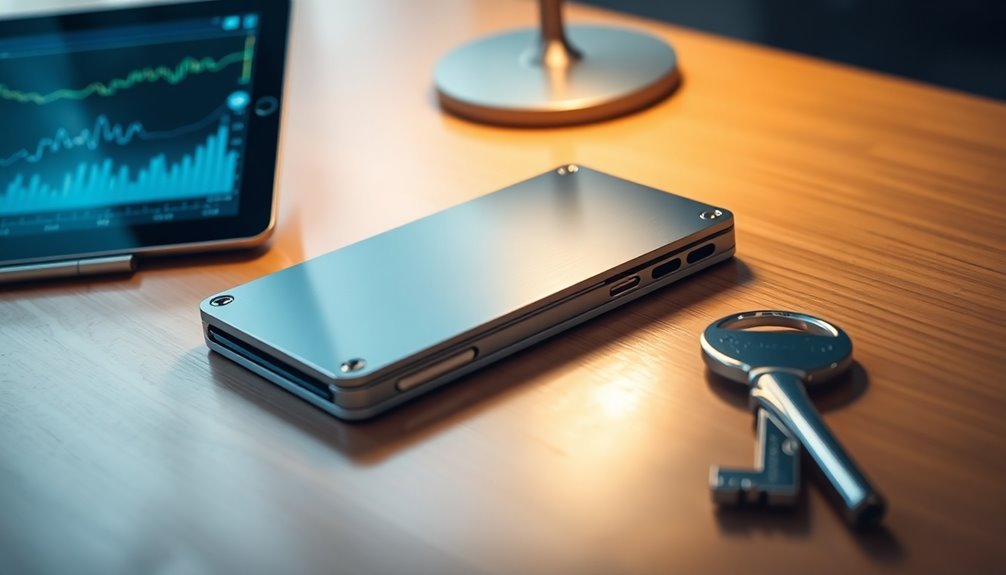

A crypto wallet is your essential tool for storing and managing digital assets like Bitcoin and Ethereum. It stores your private and public keys, allowing you to send and receive cryptocurrencies. There are two main types: hot wallets, which are online and convenient, and cold wallets, which offer better security by being offline. To safeguard your assets, use strong, unique passwords, enable two-factor authentication, and regularly back up your wallet data. Always treat private keys like cash. With the right practices, your digital assets can be safe and secure, but there's more to explore about ideal strategies.
Key Takeaways
- A crypto wallet is a digital tool that stores private and public keys for accessing cryptocurrencies on the blockchain.
- Hot wallets provide quick access for trading but carry higher risks of hacking compared to cold wallets, which offer better security for long-term storage.
- Use strong, unique passwords and enable two-factor authentication to enhance the security of your crypto wallet.
- Regularly back up wallet data and store recovery phrases offline to prevent loss of access to your digital assets.
- Stay vigilant against phishing attacks by verifying URLs and avoiding unsolicited requests to protect your private keys.
As an affiliate, we earn on qualifying purchases.
Understanding Crypto Wallets

When you plunge into the world of cryptocurrencies, understanding crypto wallets becomes indispensable. A crypto wallet isn't a physical container; it's a digital tool that stores your private and public keys. These keys are essential for accessing your cryptocurrency on the blockchain.
You'll find various crypto wallet options available, broadly categorized into custodial and non-custodial wallets. Custodial wallets are managed by third-party services, while non-custodial wallets give you full control over your private keys.
You also need to understand the difference between hot and cold wallets. Hot wallets are connected to the internet, making it easy to access your cryptocurrency for frequent transactions. However, this convenience comes with risks. Cold wallets, like hardware or paper wallets, provide enhanced security for long-term storage, making them ideal for safeguarding your digital assets.
Security measures are critical in the crypto world. Always use a strong password and consider enabling two-factor authentication to bolster your digital security. Regular software updates can also protect against potential threats.
With the right wallet and security practices, you can confidently send and receive cryptocurrencies, monitor your balances, and even interact with decentralized applications (dApps).
Types of Crypto Wallets

There are several types of crypto wallets, each designed to meet different needs and preferences. Understanding these options can help you protect your digital assets effectively.
| Wallet Type | Description | Security Level |
|---|---|---|
| Hot Wallets | Internet-connected wallets for quick access and transactions. | Lower (vulnerable to hacks) |
| Cold Wallets | Offline storage like hardware or paper wallets for long-term holding. | Higher (enhanced security) |
| Custodial Wallets | Managed by third-party services, storing your private keys. | Moderate (risk of mismanagement) |
| Non-Custodial Wallets | You control your private keys, offering greater security and autonomy. | Higher (requires personal management) |
| Web Wallets | Browser-based and user-friendly, but expose you to higher security risks. | Lower (vulnerable to attacks) |
Hot wallets are great if you're frequently trading since they offer quick access. However, they're more vulnerable to hacking. Cold wallets, such as hardware wallets, provide a secure option for those holding large amounts of cryptocurrency long-term.
Custodial wallets are convenient but put your private keys in the hands of third parties, which can be risky. In contrast, non-custodial wallets let you maintain control over your private keys, enhancing your security. Finally, web wallets are easy to use but come with significant security risks.
Security Best Practices

Understanding the types of crypto wallets lays the groundwork for implementing effective security measures. To guarantee your crypto wallet security, start by employing strong, unique passwords for both your wallet and associated email accounts. Weak passwords are a hacker's best friend, so make sure yours are complex and not easily guessable.
Next, utilize two-factor authentication (2FA) for added protection. This requires two forms of identification before you can access your wallet, considerably reducing the risk of unauthorized access. It's a simple step that can save you from potential losses.
Regularly back up your wallet data and securely store your recovery phrase offline. This guarantees that if you ever need to recover your wallet due to loss or theft, you'll have access to your funds. Be cautious about where and how you store your private keys; treat them like cash.
Stay vigilant against phishing attacks by verifying URLs and avoiding unsolicited requests for your private keys or sensitive information. Digital threats are everywhere, and being aware can considerably reduce your risk.
For high-value assets, consider using hardware wallets like Ledger. These devices store your private keys offline, offering superior security against online threats compared to software wallets. Additionally, regularly monitoring market trends can help you stay informed about potential risks and improve your overall security strategy.
Frequently Asked Questions
How Do I Make Sure My Crypto Wallet Is Safe?
To keep your crypto wallet safe, start by using strong, unique passwords and enable two-factor authentication.
Regularly update your wallet software to close any security gaps.
Store your recovery phrase offline in a secure place.
If you're holding significant amounts, consider a hardware wallet for added protection.
Finally, stay alert for phishing attempts by verifying links and emails before entering sensitive information to avoid falling prey to cybercriminals.
Can You Be Tracked by Your Crypto Wallet?
Imagine wandering a crowded street, your every move under a watchful eye. That's how it feels with a crypto wallet.
Yes, you can be tracked. Although wallet addresses seem anonymous, if linked to your identity—like through an exchange—you risk exposure.
Sophisticated analysis can trace your transactions. To enhance your privacy, consider wallets with privacy features or use privacy-focused cryptocurrencies.
Stay aware; your digital footsteps can leave a trail.
Which Is the Safest Crypto Wallet?
When you're looking for the safest crypto wallet, hardware wallets like Ledger and Trezor stand out due to their offline storage, reducing online attack risks.
Cold wallets, such as paper wallets, also offer strong security by keeping your private keys completely offline.
Additionally, consider multi-signature wallets for added protection.
Always prioritize reputable providers and implement practices like two-factor authentication and strong passwords to further safeguard your digital assets.
How Do I Make My Crypto Wallet Secure?
To keep your crypto wallet snug and secure, start by enabling two-factor authentication. It's like giving your wallet a cozy second lock.
Use strong, unique passwords, mixing letters, numbers, and symbols for extra charm.
Regularly back up your wallet data and stash your recovery phrase offline—think of it as your secret treasure map.
Keeping your wallet software updated and considering hardware wallets can further shield your digital assets from the harsh online world.
Conclusion
In a world where your digital assets can be both a treasure and a target, understanding crypto wallets is essential. By choosing the right type of wallet, you can enjoy the freedom of managing your cryptocurrency while also protecting it from potential threats. Embrace the convenience of technology, but never underestimate the importance of security. With the right strategies, you can safeguard your investments and navigate the exciting domain of crypto with confidence.