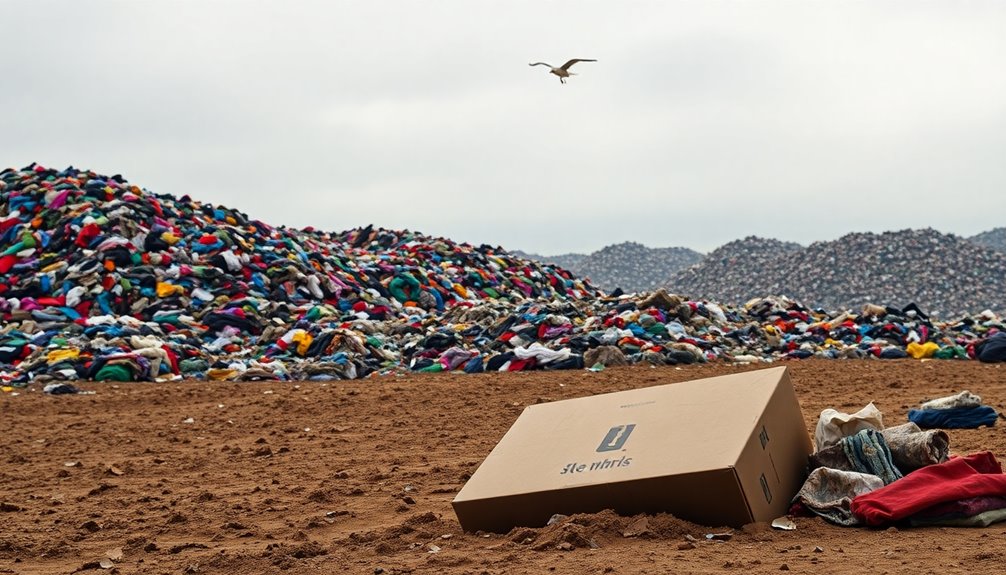

The online retail boom is significantly fueling textile waste in Europe, generating about 6.95 million tonnes in 2020 alone. As fast fashion thrives, we're discarding clothes faster than ever, viewing them as disposable. About 82% of this waste comes from post-consumer sources, and only 25% gets recycled properly. New regulations aim to change this by holding producers accountable and improving waste management practices. There's more to explore about the impact of our choices on this growing crisis.

Get tech for your team delivered free — and shop member deals
- Fast, free delivery on millions of items
- Access to Prime Big Deal Days deals on October 6–7
- Prime Video, Amazon Music and more included
Key Takeaways
- The rise of online shopping has led to increased textile waste, contributing significantly to Europe's growing waste crisis.
- Fast fashion trends encourage consumers to view clothing as disposable, exacerbating the problem.
- Approximately 82% of textile waste comes from post-consumer sources, highlighting the impact of consumer behavior.
- Poor waste management practices result in a majority of textile waste ending up in mixed household waste.
- Upcoming EU regulations aim to improve textile recycling and hold producers accountable for their products' lifecycle.

As the fashion industry continues to thrive, the textile waste issue in Europe has become increasingly pressing. In 2020 alone, the EU generated around 6.95 million tonnes of textile waste, averaging about 16 kg per person. You mightn't realize it, but 82% of this waste comes from post-consumer sources, like used clothing and household items. The rise of fast fashion, especially with the boom in online shopping, has significantly fueled this problem, contributing to a culture where clothing is often seen as disposable.
The textile waste crisis in Europe is alarming, with 82% stemming from discarded clothing and fast fashion's impact.
Most of this textile waste ends up in mixed household waste, leaving only about a quarter to be collected separately for reuse and recycling. This lack of proper management exacerbates environmental challenges, leading to increased emissions and pollution. As a consumer, your choices play a crucial role in this cycle. The trend of buying cheap clothes online encourages you to discard items without considering their potential for reuse or recycling. Approximately 16 kg of textile waste per person generated in the EU in 2020 further emphasizes the scale of the issue.
Fortunately, changes are on the horizon. Starting next year, EU Member States will be required to implement separate collection systems for textiles to help mitigate waste. The proposed Extended Producer Responsibility will hold producers accountable for their products' entire lifecycle, ensuring they take responsibility even after you've worn them.
The EU Waste Framework Directive will support these measures, aiming to improve recycling and sustainability across the region. However, to make a real impact, there's a pressing need to enhance sorting and recycling capacities. Your awareness of these issues can help drive change.
The variability in collection practices across countries highlights the need for consistent definitions and reporting to address discrepancies in waste management data.
Frequently Asked Questions
What Are the Main Causes of Textile Waste in Europe?
The main causes of textile waste in Europe include fast fashion, which encourages you to buy cheap clothing frequently.
Online shopping makes it easy to purchase more than you need, contributing to excess waste.
Additionally, a lack of recycling infrastructure means much of what you discard can't be processed effectively.
Social media trends and a disposable clothing culture further influence your buying habits, leading to a cycle of quick use and disposal.
How Does Online Shopping Contribute to Textile Waste?
Imagine a never-ending feast where each dish symbolizes a new outfit. You're tempted to indulge, grabbing more than you need.
Online shopping's like that feast—it's convenient and enticing. You find yourself buying frequently, drawn in by fast fashion and the pressure of trends.
With every click, those garments pile up, eventually discarded like leftovers. The cycle continues, leading to a mountain of textile waste that's hard to ignore.
You can change this story.
What Measures Are Being Taken to Reduce Textile Waste?
To reduce textile waste, the EU Parliament's implementing extended producer responsibility (EPR) schemes, making producers financially accountable for the collection and recycling of textiles.
You'll see this legislation cover products like clothing and footwear, with a requirement for separate collection by January 1, 2025.
There's also a push for innovation in recycling technologies and financial support for local authorities to manage waste effectively, encouraging sustainable practices across the industry.
How Can Consumers Help Mitigate Textile Waste Issues?
Imagine you find a beautiful, vintage jacket at a thrift store instead of buying a new one. You can help mitigate textile waste by making conscious choices like this.
Prioritize quality over quantity, opt for secondhand clothing, and support brands that focus on sustainability.
By repairing and caring for your garments, you extend their life.
Educating yourself on textile waste and sharing this knowledge can inspire others to join the movement towards sustainable fashion.
What Are the Environmental Impacts of Textile Waste on Ecosystems?
Textile waste has serious environmental impacts on ecosystems.
When you toss old clothes in the landfill, they take up space and can take centuries to decompose, releasing harmful methane gas. This gas contributes to climate change.
Chemicals from these textiles can seep into soil and water, harming aquatic life and affecting human health.
You can help by recycling, choosing sustainable fabrics, and supporting brands that prioritize eco-friendly practices.
Conclusion
You might think that online shopping is just a convenient way to get what you want, but it's contributing to a serious textile waste problem in Europe. Each purchase often leads to discarded clothing, piling up in landfills. By being mindful of what you buy and choosing sustainable options, you can help combat this issue. It's not just about convenience; it's about making a positive impact. Together, we can turn this trend around and create a cleaner future.
Fall Picks
fall essentials
As an affiliate, we earn on qualifying purchases.