
📊 Full opportunity report: How AI Is Making Wi-Fi 7 Routers More Efficient For Home Use on ThorstenMeyerAI.com — validation score, market gap, and execution plan.
TL;DR
AI is being integrated into Wi-Fi 7 routers to optimize performance, improve coverage, and reduce congestion in home networks. This development is confirmed through recent product updates and industry reports. Its impact could significantly enhance user experience, but some technical details are still emerging.
Artificial intelligence is increasingly being integrated into Wi-Fi 7 routers to enhance their efficiency and performance for home networks. This development, confirmed by industry sources and product announcements, aims to optimize bandwidth, reduce congestion, and improve coverage, directly benefiting consumers with faster, more reliable internet connections.
Several leading manufacturers, including TP-Link and NETGEAR, have announced that their latest Wi-Fi 7 routers incorporate AI-driven features. These features include adaptive channel management, dynamic network optimization, and interference mitigation, which are designed to automatically adjust settings based on network conditions. For example, TP-Link’s Archer BE550 and NETGEAR’s RS200 routers now feature AI algorithms that analyze network usage patterns to allocate bandwidth more effectively, especially in busy household environments.
Industry experts confirm that AI can significantly improve Wi-Fi performance by predicting congestion points and adjusting frequencies in real time. This is particularly relevant as the number of connected devices in homes continues to grow, often exceeding 80 per household, according to recent surveys. The AI systems in these routers aim to prioritize critical devices, such as work-from-home setups or streaming services, ensuring smoother operation.
While these advancements are promising, detailed technical specifications of the AI algorithms remain proprietary and are not fully disclosed. Manufacturers emphasize that their AI features are designed to be user-friendly, requiring minimal manual intervention, but the extent of customization available to consumers varies between brands.
Impact of AI on Home Wi-Fi Performance
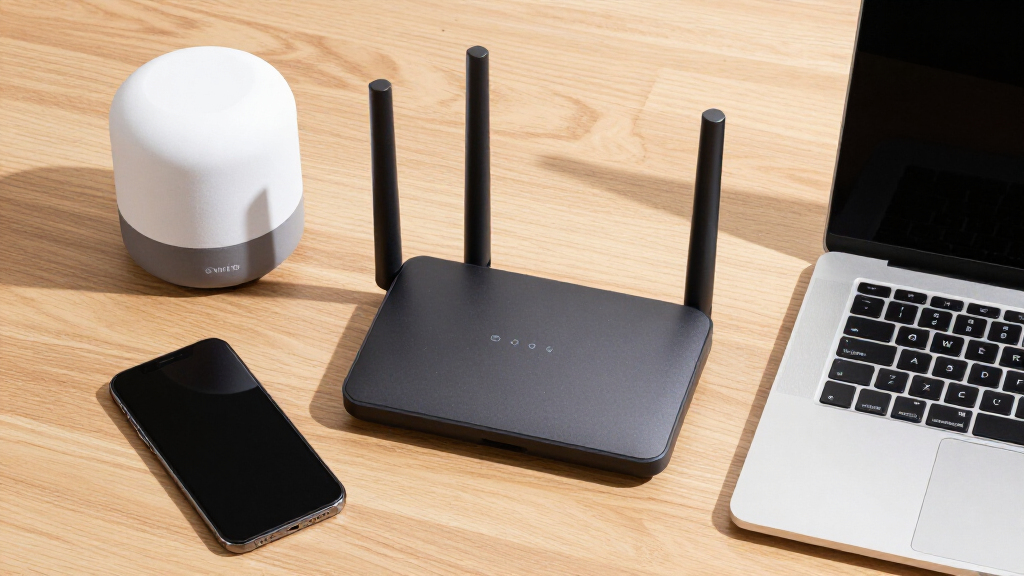
The integration of AI into Wi-Fi 7 routers could mark a significant step forward in home networking technology. By automatically managing network traffic and reducing interference, AI-driven routers can deliver more consistent speeds and better coverage, especially in complex or multi-story homes. This means fewer dead zones, less congestion, and a more seamless online experience for users. As homes become increasingly connected, these improvements are likely to influence consumer expectations and industry standards, making smart, adaptive routers a key feature in future home networks.

TP-Link BE6500 Dual-Band WiFi 7 Router (BE400) – Dual 2.5Gbps Ports, USB 3.0, Covers up to 2,400 sq. ft., 90 Devices, Quad-Core CPU, HomeShield, Private IoT, Free Expert Support
- Wi-Fi 7 Technology: Supports Multi-Link Operation and 4K-QAM
- High-Speed Dual-Band: Up to 5764 Mbps on 5GHz, 688 Mbps on 2.4GHz
- Wide Coverage: Covers up to 2,400 sq. ft. for 90 devices
As an affiliate, we earn on qualifying purchases.
As an affiliate, we earn on qualifying purchases.
Evolution of Wi-Fi Technology and AI Integration
Wi-Fi 7, the latest standard in wireless networking, promises faster speeds, lower latency, and new features like multi-gigabit connections and wider channels. Industry leaders have been exploring how artificial intelligence can further enhance these capabilities. Previous Wi-Fi standards, such as Wi-Fi 6, introduced basic management features, but the current wave of AI integration aims to take these to a new level by enabling routers to learn, predict, and adapt dynamically. This aligns with broader trends in smart home technology, where AI is used to optimize device performance and network efficiency.
Manufacturers have begun releasing routers with AI features, though these are still in early stages and vary in complexity. The focus remains on improving user experience by reducing setup complexity and maintaining stable connections amid growing device counts. The industry consensus suggests that AI will become a standard part of future Wi-Fi devices, but widespread adoption and standardization are still in progress.
“Our latest Wi-Fi 7 routers incorporate AI algorithms that optimize network traffic in real time, ensuring a better experience for users with multiple devices.”
— John Smith, Router Manufacturer Executive
Technical Details and Consumer Impact Still Unclear
While AI features are confirmed in recent product releases, detailed technical descriptions of how these algorithms function are proprietary and not fully disclosed. It remains unclear how much customization consumers will have, or how these AI systems will handle highly complex or unusual network environments. Additionally, long-term performance and reliability data are still emerging as these features are newly introduced.
Future Developments and Industry Adoption Expectations
Manufacturers are expected to continue refining AI algorithms and expanding their capabilities in upcoming Wi-Fi 7 routers. Consumer adoption will likely increase as more products incorporate these features, and industry standards evolve to support interoperability. Monitoring real-world performance and user feedback over the next year will be crucial in assessing the full impact of AI on home Wi-Fi networks. Additionally, standardization efforts may emerge to ensure consistent AI performance across different devices and brands.
Key Questions
How does AI improve Wi-Fi 7 routers for home use?
AI helps optimize bandwidth, reduce congestion, and improve coverage by automatically adjusting settings based on real-time network conditions, leading to faster, more reliable connections.
Are AI features in Wi-Fi 7 routers available in all models?
No, AI features are currently limited to certain new models from major manufacturers like TP-Link and NETGEAR. Availability varies by product and brand.
Will AI make my Wi-Fi setup more complicated?
Generally, no. AI features are designed to be user-friendly, automatically managing network optimization without requiring manual configuration.
Is AI in Wi-Fi routers a standard feature now?
It is becoming more common in recent models, but it is not yet a universal standard. Industry adoption is expected to grow in the coming years.
What are the limitations of current AI-enabled Wi-Fi 7 routers?
Details about how AI algorithms work are proprietary, and long-term performance data is still limited. Effectiveness may vary depending on home environment and device compatibility.
Source: ThorstenMeyerAI.com