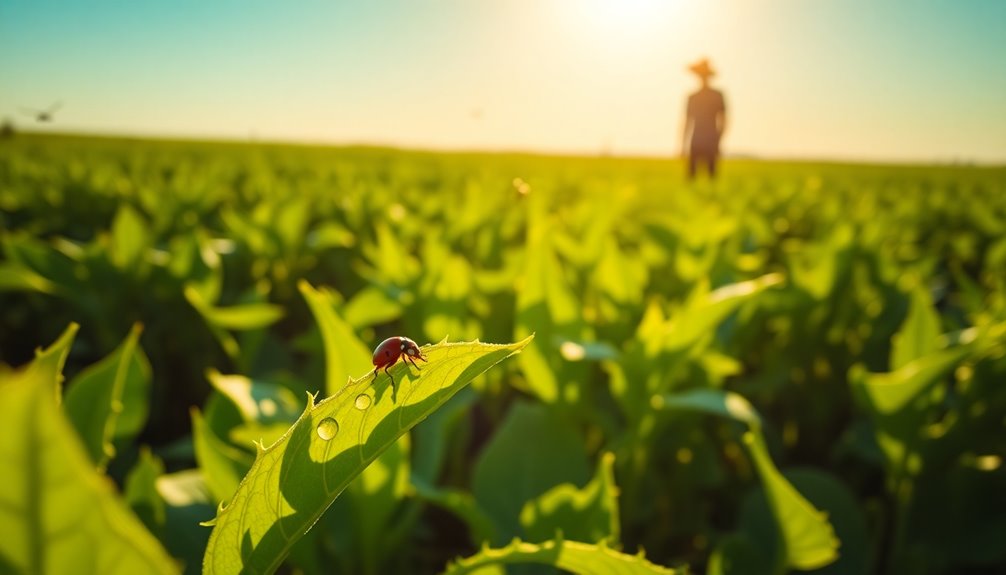

In your quest for eco-friendly farming solutions, consider integrated pest management (IPM) that combines biological controls, like using natural predators, with sustainable practices. Crop rotation and companion planting can enhance your crop health while reducing pests. These methods boost soil health and promote biodiversity. By adopting eco-friendly strategies, you not only improve productivity but also contribute to a healthier environment. Discover more innovative techniques that can elevate your farming practices and support sustainability.
Key Takeaways
- Integrated Pest Management (IPM) combines natural predators and cultural practices to sustainably control pests while minimizing chemical use.
- Companion planting enhances beneficial insect populations, reducing pest pressure and promoting healthier crop ecosystems.
- Crop rotation disrupts pest life cycles, improving soil health and reducing reliance on pesticides.
- Eco-friendly practices like organic farming promote biodiversity and improve overall ecosystem resilience against pests.
- Innovative systems like aquaponics and hydroponics conserve resources while maintaining effective pest management in controlled environments.

As climate change and environmental degradation become increasingly urgent issues, more farmers are turning to eco-friendly farming solutions that not only benefit the planet but also enhance productivity. You might be surprised to learn that many of these practices focus on sustainable pest management, which is crucial for maintaining healthy crops. Integrated Pest Management (IPM) stands out as a holistic approach that combines biological, cultural, and chemical strategies to manage pests sustainably.
By utilizing biological control methods—like introducing natural predators—you can effectively keep pest populations in check without relying heavily on synthetic pesticides. Crop rotation and companion planting are other effective techniques; they disrupt pest life cycles and encourage beneficial insects to flourish. These methods not only minimize chemical use but also contribute to environmental sustainability by preserving biodiversity and enhancing soil health through improved organic matter.
In addition to pest management, eco-friendly farming practices, such as organic farming and conservation tillage, play a significant role in promoting healthier ecosystems. Organic farming avoids synthetic inputs, allowing you to support biodiversity and produce pesticide-free food that contributes to better health outcomes. Furthermore, adopting conservation tillage minimizes soil disruption, reduces erosion, and enhances carbon sequestration, making your farming operation more resilient against climate challenges. You might also explore innovative systems like agroforestry, which integrates agriculture and forestry, benefiting the overall health of your farm. This practice improves soil structure and fosters a diverse ecosystem.
Alternatively, aquaponics and hydroponics are excellent water-conserving methods for urban farming, allowing you to grow crops efficiently. Lastly, if you're raising livestock, consider implementing pasture-based or rotational grazing. These practices mimic natural grazing patterns, promoting pasture health while enhancing soil fertility.
With these eco-friendly farming solutions, you not only contribute to a sustainable future but also improve your farm's productivity and profitability. Embracing these strategies can make a significant difference for both you and the environment.
Top picks for "plant pest warfare"
Open Amazon search results for this keyword.
As an affiliate, we earn on qualifying purchases.
Frequently Asked Questions
What Are the Most Common Pests Affecting Crops Today?
You'll find that aphids, cucumber beetles, and Japanese beetles are among the most common pests affecting crops today.
In regions like Illinois and Minnesota, these pests can wreak havoc on crops such as soybeans and squash.
Additionally, pests like cabbage loopers and potato leafhoppers threaten brassicas and potatoes.
To protect your crops, it's essential to stay informed about these pests and implement effective management strategies.
How Do Plants Naturally Defend Themselves Against Pests?
Imagine a soldier standing guard, ready to fend off intruders. Plants do the same; they wield armor like thorns and spines, making it tough for pests to feast.
Their hairy leaves create a prickly barrier, while thick cell walls resist damage. They also release chemical warriors—terpenoids and VOCs—to repel invaders.
When threats loom, plants can even prepare their defenses in advance, showcasing their remarkable resilience and strategic prowess in nature's battlefield.
Are There Any Risks Associated With Eco-Friendly Farming?
Yes, there are risks associated with eco-friendly farming.
You might encounter higher initial costs when adopting sustainable practices, and market fluctuations can impact your profits.
There's also a risk of reduced yields if methods aren't optimized, threatening food security.
Additionally, certain practices may inadvertently increase health risks, like mycotoxin contamination.
It's essential to stay informed and monitor your practices to address these challenges effectively while striving for sustainability.
How Can Farmers Implement These Eco-Friendly Solutions Effectively?
Imagine you're a gardener in a vibrant forest, where every plant plays a role in harmony.
To cultivate effectively, you'll embrace crop rotation, letting the soil breathe.
Introduce companions that repel pests while attracting helpful insects—like allies in your quest.
Practice conservation tillage to keep the earth intact and use cover crops as shields against erosion.
What Role Do Beneficial Insects Play in Pest Management?
Beneficial insects play a crucial role in pest management by acting as natural predators or parasites to control pest populations.
You can integrate them into your farming practices to reduce reliance on chemical pesticides, promoting environmental health.
By attracting these insects with specific plants and maintaining biodiversity, you enhance their effectiveness.
Regular monitoring ensures you apply the right beneficial insects for your specific pest issues, leading to a more sustainable and balanced ecosystem.
Conclusion
As we embrace eco-friendly farming solutions, we're not just cultivating crops; we're nurturing our planet. The battle against pests doesn't have to rely on harmful chemicals. Instead, by harnessing natural methods, we can promote biodiversity and sustainability. Isn't it time we shift our perspective and see pests not merely as threats, but as players in a complex ecosystem? By choosing innovative strategies, we can ensure a healthier environment for future generations while enjoying bountiful harvests today.