
To enhance water conservation in luxury estates, consider techniques like rainwater harvesting and greywater recycling. Harvest rainwater from roofs for irrigation and toilet flushing, reducing your reliance on municipal supplies. Install greywater systems to treat and reuse water from sinks and showers, conserving potable water. Combining both methods maximizes savings and boosts your estate’s eco-friendly profile. These strategies not only lower utility bills but also elevate your property’s value, making it a model of sustainability and responsible living. Discover how easy it can be to implement these practices in your home.
Key Takeaways
- Implement rainwater harvesting systems to collect and store rainwater for irrigation and toilet flushing, reducing reliance on municipal water supplies.
- Install greywater recycling systems to treat and reuse water from sinks, showers, and laundry for irrigation and toilet flushing.
- Combine rainwater harvesting and greywater recycling for a comprehensive and efficient water conservation system that maximizes savings and environmental benefits.
- Design landscapes and water systems strategically to promote sustainability while enhancing the luxury estate’s value and appeal.
- Position the estate as a model of eco-friendly living, demonstrating that luxury and environmental responsibility can coexist harmoniously.
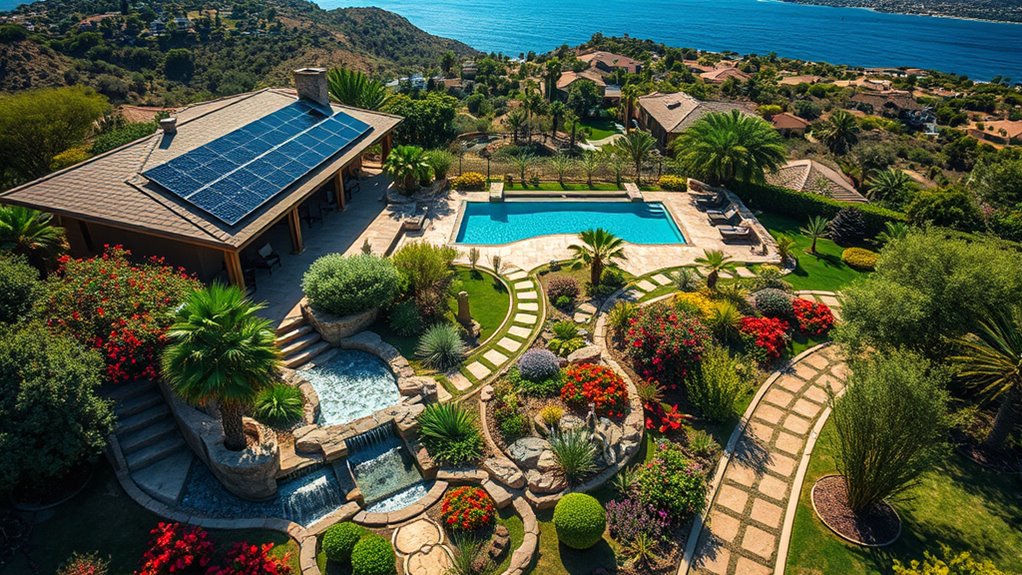
Water is a precious resource, and conserving it is essential for a sustainable future. When you own a luxury estate, you have the perfect opportunity to implement cutting-edge water conservation techniques that not only enhance your property but also contribute to environmental sustainability. By integrating systems like rainwater harvesting and greywater recycling, you can markedly reduce your water consumption and lower your utility bills.
Conserving water in luxury estates enhances both your property and the environment through innovative techniques like rainwater harvesting and greywater recycling.
Rainwater harvesting is a fantastic way to utilize natural resources. It involves capturing and storing rainwater from your roof and other surfaces for later use. You can install a collection system that includes gutters, downspouts, and storage tanks. This water can be used for irrigation, landscaping, or even for flushing toilets. Imagine the lush gardens you could cultivate with water sourced directly from the sky! By harnessing this free resource, you lessen your reliance on municipal water supplies and help mitigate the impact of droughts in your area.
On the other hand, greywater recycling is another effective technique you can incorporate into your estate’s water conservation strategy. Greywater refers to wastewater generated from activities like washing dishes, showering, and laundry—essentially, water that’s not contaminated with sewage. By installing a greywater system, you can treat and reuse this water for irrigation or toilet flushing. This not only conserves potable water but also reduces the amount of wastewater that goes into sewage systems. You’ll find that adopting greywater recycling can drastically decrease your estate’s overall water usage while maintaining the luxury standards you’ve set.
When you combine rainwater harvesting and greywater recycling, you create a robust water conservation system that maximizes efficiency. You won’t just be saving money; you’ll also be making a markedly positive impact on the environment. By taking these steps, you position your estate as a model of sustainability—showing others that luxury and eco-friendliness can coexist beautifully. Additionally, implementing these techniques can enhance your estate’s overall water efficiency, making it a leader in sustainable living.
As you plan your estate’s landscape and water systems, consider these techniques as essential investments in both your home and the planet. Adopting water conservation measures like rainwater harvesting and greywater recycling not only serves your immediate needs but also sets a precedent for responsible living. You’ll not only enjoy the elegance of your estate but also contribute to a more sustainable future for generations to come.
rainwater harvesting system for home
As an affiliate, we earn on qualifying purchases.
As an affiliate, we earn on qualifying purchases.
Frequently Asked Questions
How Can I Incorporate Rainwater Harvesting in My Luxury Estate?
To incorporate rainwater harvesting in your luxury estate, start by designing an efficient drainage system. Install gutters and downspouts to direct rainwater into a rainwater storage tank. Make certain the tank’s capacity meets your needs while considering local regulations. You can then use this stored water for irrigation and non-potable household purposes. Regularly maintain your system to guarantee it functions effectively and maximizes your estate’s sustainable water use.
What Are the Costs Associated With Installing Smart Irrigation Systems?
You might think installing smart irrigation systems is just a drop in the bucket, right? But hold on! A proper cost analysis reveals these systems typically range from $1,500 to $5,000, not including ongoing system maintenance. Sure, you’re saving water, but your wallet might feel a little lighter. Investing in technology might seem luxurious, but remember, even the richest need to watch their spending—especially when it comes to watering their lush lawns!
Are There Tax Incentives for Implementing Water-Saving Technologies?
Yes, there are often tax incentives for implementing water-saving technologies. You might qualify for tax credits or government rebates when you invest in efficient systems. Check with your local government or tax advisor to find specific programs available in your area. These incentives can considerably reduce your upfront costs and encourage sustainable practices. By taking advantage of them, you not only save money but also contribute to conserving valuable water resources.
How Can I Educate My Staff About Water Conservation Practices?
Imagine a lush garden thriving under your care, where every drop of water counts. To educate your staff about water conservation practices, start with engaging training sessions that highlight conservation awareness. Use vivid visuals and real-life examples to illustrate the impact of their actions. Encourage discussions, provide resources, and set clear expectations. By fostering a culture of responsibility, your team will feel empowered to contribute to sustainable practices, making a significant difference together.
What Plants Are Best for Drought-Resistant Landscaping in Luxury Estates?
For drought-resistant landscaping, you should consider using native flora and xeriscape plants. These species are well-adapted to your local climate, requiring less water and maintenance. Look for varieties like succulents, ornamental grasses, and local wildflowers. They not only save water but also enhance your estate’s aesthetic appeal. By incorporating these plants, you create a beautiful, sustainable landscape that thrives even in dry conditions, benefiting both your property and the environment.
Conclusion
By implementing smart water conservation techniques, you can substantially reduce your estate’s water usage while maintaining its luxury appeal. Did you know that homeowners can save up to 50% on water bills by using efficient irrigation systems and native landscaping? This not only helps the environment but also enhances your property’s value. So, embrace these sustainable practices and enjoy a beautiful, eco-friendly estate that stands out without compromising on elegance or comfort.