
When damp mopping in a two-story home, you want floors to look visibly damp without being wet or shiny. Use a well-wrung mop to prevent excess water from pooling, especially on stairs and landings. Avoid over-saturating the floor to protect the finish and prevent warping. Maintaining proper moisture not only keeps your floors safe and shiny but also helps extend their life—discover helpful tips to keep everything in balance.
Key Takeaways
- Floors should be damp, not wet or shiny, to avoid slipping and damage.
- Properly wring mops to prevent excess water pooling on floors or stairs.
- Use absorbent, well-wrung mops and microfiber materials to control moisture.
- Keep moisture levels low on stairs and landings to prevent slips and warping.
- Regularly monitor and adjust dampness to balance effective cleaning with safety.
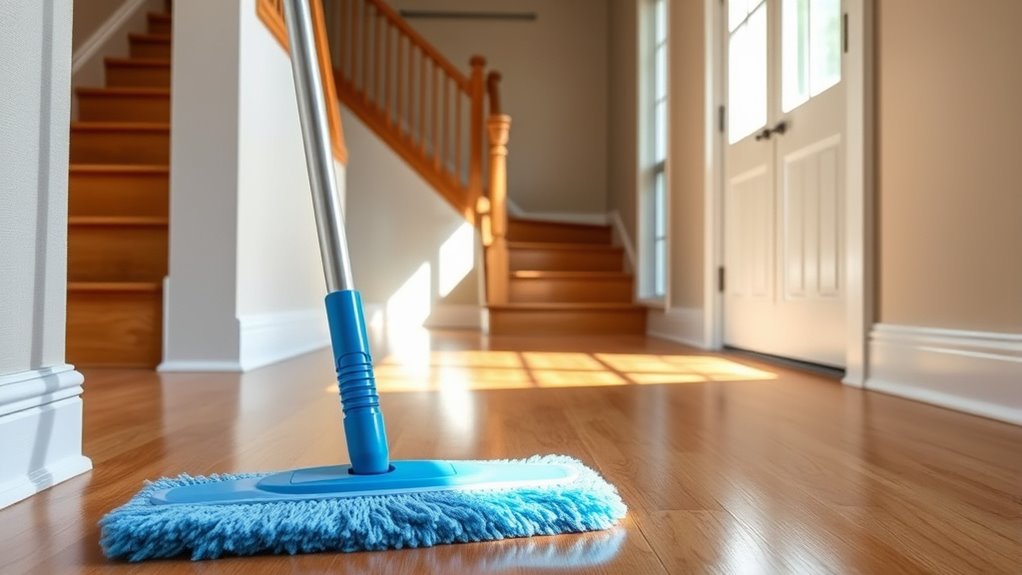
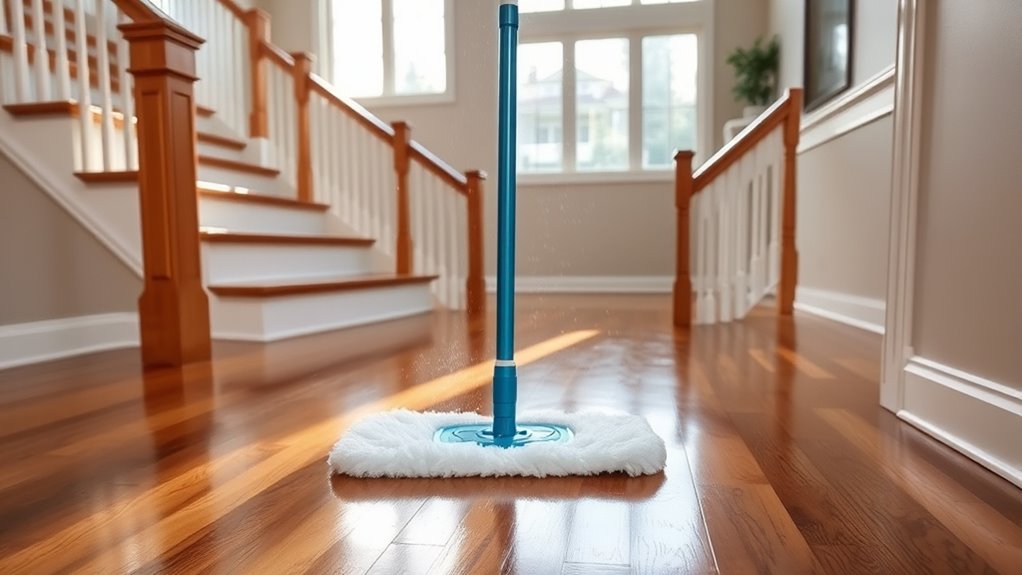
Cleaning with a damp mop is essential for maintaining the beauty and safety of your two-story home, but it’s important to do so correctly to prevent accidents and damage. When damp mopping, the key is controlling moisture levels so that the floor remains visibly damp but not wet. Excess water pooling on surfaces increases the risk of slips, especially on stairs and landings, so you need to ensure your mop isn’t dripping or overly saturated. Using a mop that absorbs well helps you achieve the right dampness without excess moisture. Proper wringing of the mop before each pass is critical to avoid leaving pools of water on your floors.
Ensure your mop is well-wrung to keep floors damp but not wet, preventing slips and damage.
The moisture level should be just enough to loosen dirt and grime without creating a slick surface. Floors should look damp but not shiny or puddled. This balance helps protect your floor finish, particularly on hardwood or high gloss surfaces, which can suffer damage from excessive moisture. Overly wet mops can strip away the protective coating, dull the shine, or cause warping in wooden floors. To support both safety and floor health, consider using quick-dry formulas or cleaners designed to minimize residue and moisture retention. These products dry faster and reduce the slip hazard, making your cleaning routine safer. Additionally, using a well-maintained air purifier while cleaning can help remove airborne dust and allergens that may be stirred up during the process.
Proper dilution of cleaning concentrates is also essential. Following manufacturer instructions—typically around 2 ounces per gallon of water—ensures you get effective cleaning without over-wetting the surface. Neutral pH cleaners, with a pH around 7.0 to 8.0, are best for maintaining the integrity of your floor’s finish without causing corrosion or dullness. When disinfecting, choose film-free, no-rinse formulations that leave minimal residue, preserving the high gloss and clarity of your floors. This approach simplifies cleaning and reduces the risk of buildup that can make floors slippery or hazy.
In a multi-level home, safety during damp mopping becomes even more critical. Use mop handles or attachments that allow safe access to upper floors without overextending or risking falls. Start cleaning from the top to prevent dripping onto already cleaned areas below. Employ microfiber or similar materials that pick up dirt efficiently with less moisture, and always wring your mop thoroughly. Consider adding floor mats or anti-slip treatments on stairs to enhance safety when floors are damp. Regular damp mopping prevents dirt buildup, extending the life of your floors, but always monitor moisture levels carefully to avoid creating hazards. Using effective cleaning products like Spartan’s no-rinse floor cleaner can help ensure floors dry quickly and stay safe. Proper technique and the right products make damp mopping both effective and safe in your two-story home.

Microfiber Mops for Hardwood Floor Cleaning – BPAWA Flat Floor Mop with 4 Washable Pads for Laminate Wood Tile Vinyl Home Kitchen Bathroom – 59" Adjustable Handle
Microfiber Mops for Floor Cleaning: Flat floor mop with adjustable long handle, flexible lightweight but sturdy, great for…
As an affiliate, we earn on qualifying purchases.
As an affiliate, we earn on qualifying purchases.
Frequently Asked Questions
Can Damp Mopping Prevent Mold Growth Effectively?
Damp mopping can help prevent mold growth if done correctly. You should use a wrung-out mop, avoiding excess water that can seep into surfaces and promote mold. Regularly change the water and clean with appropriate solutions. Keep humidity levels between 30-50%, fix leaks promptly, and ensure good ventilation. When combined with these moisture control measures, damp mopping becomes an effective part of your mold prevention strategy.
How Often Should I Damp Mop in a Two-Story Home?
Wondering how often you should damp mop in a two-story home? Typically, you should damp mop high-traffic areas like kitchens, bathrooms, and entryways weekly. Bedrooms and living rooms can wait every two weeks unless dirt or spills prompt more frequent cleaning. Do you notice more dust or grime? Adjust your schedule accordingly, especially if you have kids, pets, or allergies. Using the right mop and minimal moisture helps protect your floors too.
What Are Signs of Excess Moisture After Mopping?
You’ll notice excess moisture after mopping if you see puddles or standing water on the floor. Floors might feel sticky, look dull or cloudy, or have streaks and smears. If they feel slippery or take too long to dry, it’s a sign of over-wetting. Additionally, you might see cupping, crowning, or warping in hardwood floors, indicating moisture has penetrated deeper than surface level.
Is It Safe to Use Vinegar for Damp Mopping?
Sure, using vinegar for damp mopping is safe—if you don’t drown your floors in it. Dilute it properly, especially on hardwood, and use a barely damp mop. Avoid saturating surfaces, and always dry quickly to prevent damage. Remember, vinegar’s acidity can harm sensitive floors over time, so think of it as an occasional treat, not your daily cleaning secret. Your floors will thank you, mostly.
How Do I Dry Floors Quickly After Damp Mopping?
To dry floors quickly after damp mopping, open windows and doors for cross-ventilation, and turn on fans to increase airflow. Use a microfiber mop or towels to blot remaining moisture, and consider using a wet vacuum to extract hidden water. Raise the room temperature slightly and let in sunlight if possible, as these steps accelerate evaporation. Removing furniture and rugs also helps moisture escape faster.
well-wrung damp mop
As an affiliate, we earn on qualifying purchases.
As an affiliate, we earn on qualifying purchases.
Conclusion
Just like Icarus warned us about flying too close to the sun, remember that too much water can cause more harm than good. Keep your damp mop just moist enough to clean effectively, and avoid puddles that seep into your home’s foundation. By staying cautious, you protect your home’s structure and your peace of mind. So, tread carefully, and clean wisely—your two-story sanctuary depends on it.
Microfiber Mops for Hardwood Floor Cleaning – BPAWA Flat Floor Mop with 4 Washable Pads for Laminate Wood Tile Vinyl Home Kitchen Bathroom – 59" Adjustable Handle
Microfiber Mops for Floor Cleaning: Flat floor mop with adjustable long handle, flexible lightweight but sturdy, great for…
As an affiliate, we earn on qualifying purchases.
As an affiliate, we earn on qualifying purchases.

Quick Shine Multi Surface Floor Finish 64oz | Cleaner & Polish to use on Hardwood, Laminate, Luxury Vinyl Plank LVT, Tile & Stone | Safer Choice w/Clean Shine Technology | Shine-Protect-Refresh
Use on Hardwood, Laminate, LVT-Luxury Vinyl Tile, LVP-Luxury Vinyl Plank, Tile or Stone floors
As an affiliate, we earn on qualifying purchases.
As an affiliate, we earn on qualifying purchases.