Sustainability in robotic cleaners involves using biodegradable materials and energy-efficient technologies that lower their environmental impact. By incorporating eco-friendly plastics, these devices can break down naturally and reduce landfill waste. Advanced energy-saving features optimize performance, cutting down on power consumption and helping you save on energy bills. Plus, with responsible manufacturing practices, these cleaners contribute to ethical production. If you’re curious, there’s even more to discover about how these innovations shape a cleaner, greener future.
Key Takeaways
- Robotic cleaners utilize biodegradable plastics to minimize environmental impact and enhance overall sustainability through natural breakdown processes.
- Battery recycling initiatives promote responsible disposal of lithium-ion batteries, preventing environmental contamination and encouraging consumer participation.
- Advanced technologies in robotic cleaners optimize energy use, resulting in lower power consumption and reduced carbon footprint during operation.
- Sustainable manufacturing practices ensure ethical sourcing, fair labor, and responsible production methods, contributing to an environmentally conscious brand reputation.
- Energy-efficient technologies further minimize resource consumption while enhancing cleaning performance, promoting eco-friendliness and sustainability in robotic cleaners.
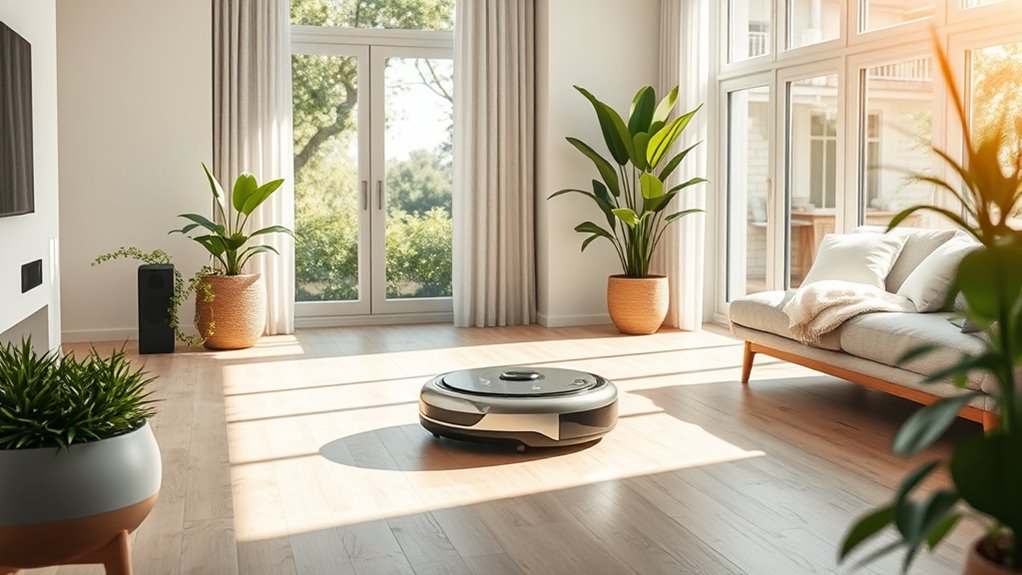
As you explore the world of robotic cleaners, you’ll find that sustainability is becoming a key consideration in their design and functionality. Manufacturers are increasingly focusing on creating products that minimize environmental impact while still delivering the performance you expect. One of the most significant areas of focus is the materials used in these devices. Many companies are now incorporating biodegradable plastics into their designs, which breaks down more naturally than traditional plastics. This means when your robotic cleaner reaches the end of its life, it won’t contribute to the growing landfill problem as much as its predecessors.
Sustainability is reshaping robotic cleaners, with biodegradable materials reducing landfill impact and enhancing eco-friendliness.
Battery recycling is another essential component of sustainable robotic cleaners. Batteries, especially lithium-ion ones, can have a considerable environmental impact if not disposed of correctly. Many brands are implementing take-back programs, encouraging you to return your old batteries to designated facilities. By participating in these programs, you play an important role in promoting battery recycling and ensuring that harmful materials are kept out of the environment.
Additionally, these robotic cleaners are designed to be energy-efficient, often using advanced technologies to consume less power while delivering maximum cleaning performance. This means that not only do they clean effectively, but they also help lower your energy bills and reduce your carbon footprint. Many models now come with smart features that optimize cleaning patterns and schedules, allowing the robot to work more efficiently when energy costs are lower, like at night.
Moreover, the push for sustainable manufacturing practices extends beyond the materials. Many companies are embracing ethical sourcing and fair labor practices, ensuring that the production of these robotic cleaners is as responsible as possible. By choosing a robotic cleaner from a brand committed to sustainability, you’re not just making your home cleaner; you’re also supporting a cleaner planet. Furthermore, the integration of energy-efficient technologies enhances the overall sustainability of these devices, ensuring minimal resource consumption during their operation.

ROPVACNIC Robot Vacuum Cleaner Robot Vacuum and Mop Combo with 5200Pa Suction, Personalized Cleaning Adjustments, Self-Charging Robotic Vacuum Cleaner, Advanced Obstacle Avoidance
- 2-in-1 Vacuum and Mop: Integrated advanced mopping technology
- Personalized Water Adjustment: Four-stage water control for stains
- Smart Control Options: Multiple modes via app and voice
As an affiliate, we earn on qualifying purchases.
As an affiliate, we earn on qualifying purchases.
Frequently Asked Questions
How Do Robotic Cleaners Impact Indoor Air Quality?
Robotic cleaners can improve indoor air quality by enhancing air circulation while effectively reducing dust and allergens. They capture particles that might otherwise contribute to poor air quality. However, it’s vital to take into account VOC emissions from certain cleaning products. If you use these products, you could inadvertently increase harmful chemicals in the air. To guarantee better air quality, opt for low-VOC cleaners and regularly maintain your robotic cleaner for peak performance.
Are There Any Biodegradable Robotic Cleaner Options Available?
Yes, there are biodegradable robotic cleaner options available! In fact, studies show that around 8 million tons of plastic end up in oceans each year. Some companies are now using biodegradable materials in their products, allowing for eco-friendly disposal. These cleaner options not only help maintain your home but also reduce environmental impact. By choosing these alternatives, you’re actively contributing to a cleaner planet while keeping your space tidy.
What Is the Lifespan of a Typical Robotic Cleaner?
A typical robotic cleaner lasts around 5 to 10 years, depending on factors like battery longevity and material durability. If you take good care of it, replacing worn parts and keeping it clean can extend its life. Regularly checking the battery and ensuring it’s charged properly helps maintain performance. So, if you invest in a quality model and practice proper maintenance, you’ll enjoy a longer lifespan from your robotic cleaner.
Can Robotic Cleaners Be Repaired Instead of Replaced?
When it comes to robotic cleaners, you can often repair them instead of replacing them, saving you some serious dough. Many manufacturers offer repair options for common issues, like battery replacements or brush repairs. Depending on the problem, the repair costs can be a fraction of what a new unit would set you back. So, before you throw in the towel and buy a new one, consider fixing your current cleaner.
How Do Different Brands Compare in Sustainability Efforts?
Different brands vary widely in their sustainability efforts. Some prioritize brand commitments to eco-friendly practices, using recycled materials and reducing waste. You’ll find that companies investing in material innovations often produce more energy-efficient models, which can help lower your carbon footprint. When comparing brands, look for those that highlight their sustainable initiatives and certifications, as these can indicate a genuine effort to minimize their environmental impact while still delivering effective robotic cleaning solutions.
Conclusion
In exploring sustainability in robotic cleaners, you’ll find that using recyclable materials and prioritizing energy efficiency isn’t just a trend—it’s essential for our planet’s future. The theory that eco-friendly design leads to better performance holds true; cleaner robots crafted from sustainable materials often boast longer lifespans and lower energy consumption. By choosing these innovative devices, you’re not only enhancing your home but also contributing to a greener, more sustainable world. Every small choice counts!