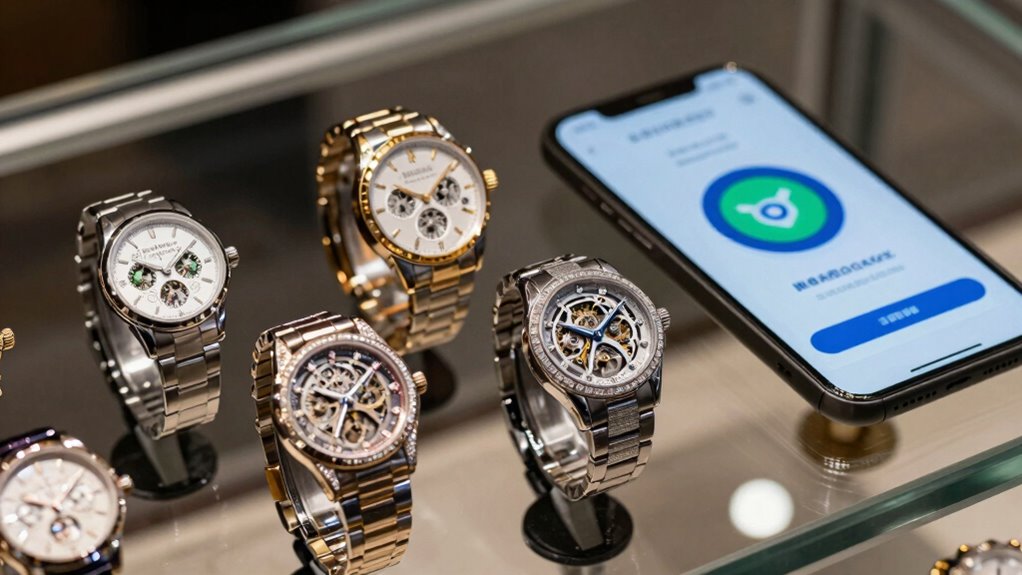

On-chain verification is useful because it offers a secure, tamper-proof way to prove authenticity and track an item’s history. It creates an immutable record that anyone can verify quickly, reducing fraud and counterfeit risks. This transparency builds trust in the value of your luxury fashion, watches, and collectibles. With all details stored on a decentralized network, you gain confidence that what you’re buying is genuine. Explore further to see how this technology protects your investments and enhances market trust.

Get tech for your team delivered free — and shop member deals
- Fast, free delivery on millions of items
- Access to Prime Big Deal Days deals on October 6–7
- Prime Video, Amazon Music and more included
Key Takeaways
- Ensures tamper-proof records of authenticity, reducing counterfeiting in luxury fashion, watches, and collectibles.
- Provides transparent provenance tracking, building trust for buyers and sellers.
- Simplifies verification with easy access to digital history, eliminating physical documentation.
- Increases item value by certifying genuine origin and ownership history.
- Safeguards against digital and physical duplication, enhancing market security and integrity.
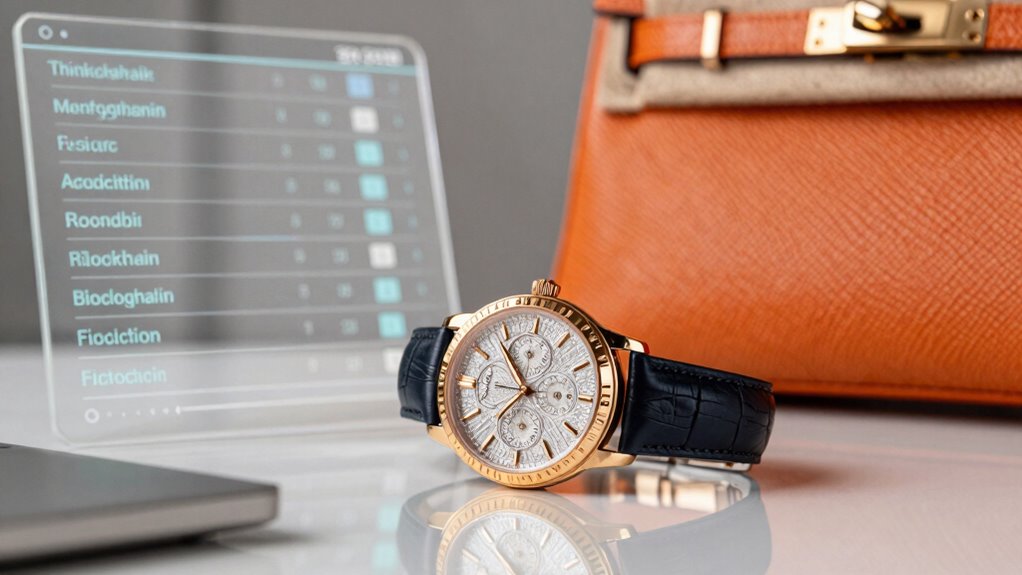
In today’s luxury markets, verifying authenticity can be a challenge, especially as counterfeits and fraud become more sophisticated. That’s where on-chain verification steps in, offering a new level of security and confidence. When you buy a luxury item like a designer handbag, a rare watch, or a collectible, you want to be sure it’s genuine. Traditional methods like certificates of authenticity or physical tags can be forged or lost. But with on-chain verification, digital authenticity becomes a reality, giving you a secure and transparent way to confirm an item’s legitimacy.
On-chain verification leverages blockchain technology to create an immutable record of an item’s provenance. Every time a luxury piece is sold or transferred, that transaction can be recorded on the blockchain, ensuring a permanent history that’s tamper-proof. This provenance tracking means you can trace the entire lifecycle of your purchase, from the manufacturer to the current owner. When you access this data, it’s reliable and impossible to alter, giving you peace of mind that the item is authentic and correctly documented. This transparency is especially useful in the secondary market, where the risk of counterfeits is higher. Buyers can verify the authenticity of a product before completing a transaction, reducing fraud and increasing trust.
Digital authenticity also simplifies the verification process. Instead of relying on physical documents or expert appraisals, you can access a digital record stored securely on the blockchain. This record contains key details like the maker, serial number, and ownership history. Because it’s stored on a decentralized network, it’s resistant to hacking or tampering. As a result, you don’t have to worry about counterfeiters duplicating certificates or forging documents. The blockchain’s transparency ensures that only genuine items have a verified digital identity, making it easier for you to identify authentic products at a glance. Additionally, blockchain-based verification can help to prevent digital record duplication and manipulation, further safeguarding authenticity.
Furthermore, on-chain verification enhances the overall value of luxury items. When provenance is clear and verified, items become more desirable and retain their value better over time. Collectors and investors can confidently buy and sell knowing that the history is verified and trustworthy. This not only protects your investment but also encourages more transparency and integrity within the luxury market. In a world where fakes are increasingly sophisticated, on-chain verification offers a straightforward, reliable way to safeguard your purchases, ensuring that each item you acquire is genuine, well-documented, and securely tracked. Additionally, the use of blockchain technology helps to prevent counterfeiters from duplicating digital records, further safeguarding authenticity.
on-chain verified luxury handbags
As an affiliate, we earn on qualifying purchases.
As an affiliate, we earn on qualifying purchases.
Frequently Asked Questions
How Secure Is On-Chain Verification Against Hacking Attempts?
On-chain verification is quite secure against hacking because it relies on blockchain durability and advanced encryption techniques. Blockchain’s decentralized nature makes it hard for hackers to tamper with data, and encryption secures sensitive information. You can trust that your verified items are protected from counterfeiting and fraud, as the robust security measures guarantee that data remains unaltered and resistant to hacking attempts.
Can On-Chain Verification Be Easily Transferred Between Owners?
In the blink of an eye, on-chain verification makes ownership transfer straightforward. You simply update the blockchain with a new owner’s digital signature during the authentication process, guaranteeing a seamless transfer. This system guarantees authenticity stays intact, and the process remains transparent and tamper-proof. You don’t need to worry about counterfeit risks, as each transfer is securely recorded, making on-chain verification highly reliable for moving assets between owners.
What Are the Costs Associated With Implementing On-Chain Verification?
Implementing on-chain verification involves costs related to blockchain scalability and transaction fees. You’ll need to take into account the cost-benefit analysis, weighing the security and authenticity benefits against expenses. As blockchain networks evolve, scalability improvements may reduce costs over time. You should also factor in development and maintenance costs for integrating verification systems. Ultimately, the investment can be worthwhile if it enhances trust and reduces counterfeit risks in your products.
How Does On-Chain Verification Impact Resale Value?
On-chain verification acts like a digital fingerprint, boosting your item’s resale value by ensuring its authenticity. With proven provenance tracking, buyers feel confident they’re investing in genuine pieces, which can command higher prices. By providing tamper-proof digital authenticity, you make your collectibles, watches, or fashion items more appealing, attracting passionate buyers who value transparency. This trust elevates your item’s desirability, ultimately increasing its market worth over time.
Are There Privacy Concerns With On-Chain Verification Data?
Yes, there are privacy risks with on-chain verification data. Since blockchain is transparent, your ownership details and transaction history become visible to anyone, potentially exposing sensitive information. While this data transparency guarantees authenticity, it can also compromise your privacy. You need to weigh the benefits of proof of authenticity against these privacy risks, especially if you prefer to keep certain details confidential.
Conclusion
As you explore the potential of on-chain verification, it becomes clear that this technology isn’t just about authenticity—it’s about redefining trust in luxury. Imagine a future where counterfeit fears fade and every piece carries an unbreakable proof of origin. But what’s next for your collection? The true revolution might just be around the corner, waiting to change how you experience and protect your most prized possessions. Are you ready to unleash its full potential?
Halloween Picks
halloween
As an affiliate, we earn on qualifying purchases.