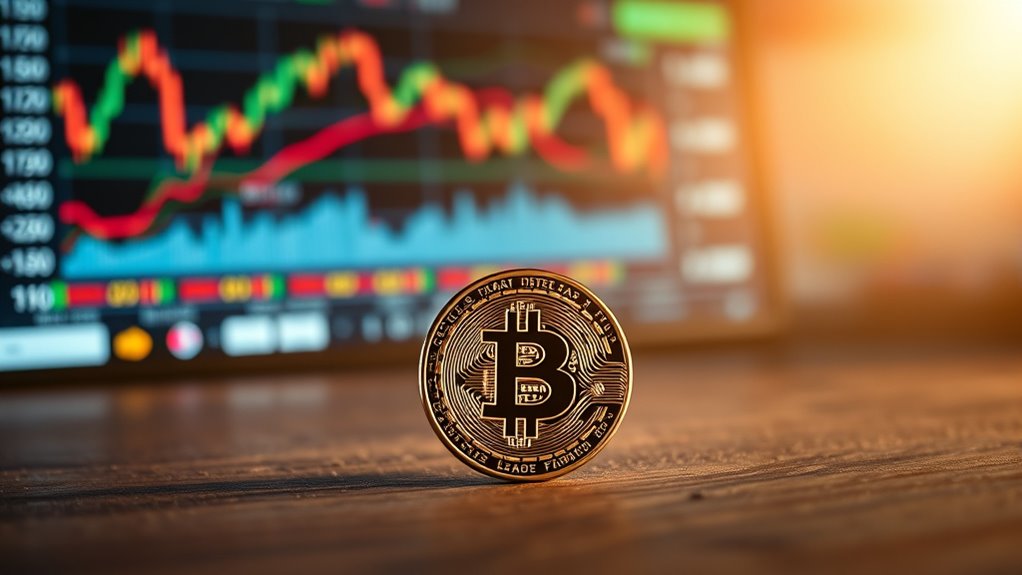

You might find it surprising that Bitcoin is increasingly viewed as a potential shield against inflation in emerging markets. As local currencies face rapid devaluations and economic instability, more investors turn to digital assets for stability. But how effective is Bitcoin really in protecting wealth during these turbulent times? Exploring its role reveals a complex picture shaped by market dynamics and investor perceptions that could reshape your understanding of financial resilience.

Get business pricing on tech for your team
- Business-only prices and quantity discounts
- Tax-exempt purchasing
- Multiple users, one account, clear invoices
Key Takeaways
- Bitcoin is increasingly adopted in emerging markets as a hedge against high inflation and fiat currency devaluation.
- Its limited supply and transparency appeal as a store of value amid economic instability.
- Empirical evidence shows Bitcoin’s returns often spike after inflation shocks, indicating a potential hedging role.
- Market volatility and limited access to advanced hedging tools pose challenges to its effectiveness for individual investors.
- Bitcoin’s correlation with traditional markets and global liquidity can diminish its reliability as an inflation hedge over time.

In emerging markets facing soaring inflation, Bitcoin has gained attention as a potential store of value. You might notice that in countries like Turkey and Argentina, Bitcoin wallet activations have surged over 28%, even as local inflation rates approach 50%. This spike reflects a growing belief among consumers that Bitcoin could serve as a safeguard against the devaluation of their fiat currencies. When prices skyrocket and traditional savings lose value rapidly, many see Bitcoin as an alternative, appreciating its limited supply and transparency. However, this adoption isn’t without challenges. Retail users often find it difficult to access micro-hedging tools like futures or options, which are essential for managing volatility effectively. Bitcoin’s annualized volatility hovers around 60%, meaning it can deliver large losses during downturns, complicating its role as a reliable hedge. Despite these hurdles, the increasing number of users in these economies signals a perception of Bitcoin as an alternative asset amid unstable currencies. Additionally, its market behavior is influenced heavily by global liquidity and sentiment, which can sometimes overshadow local inflation dynamics.
Empirical data supports Bitcoin’s potential as an inflation hedge, at least under certain conditions. From August 2010 to January 2023, models show that Bitcoin’s returns tend to spike following U.S. CPI inflation shocks. This suggests that during episodes of rising inflation, Bitcoin can respond positively, reinforcing its perceived role as a store of value. But it’s *significantly* to understand that this hedge effectiveness depends heavily on the inflation measure used. For example, Bitcoin’s hedging properties are more apparent when analyzing CPI shocks than core measures like PCE. Early in Bitcoin’s development, especially before institutional adoption grew, its inflation-hedging ability appeared stronger. However, after the COVID-19 pandemic, this property seems to have weakened, as Bitcoin became more mainstream and integrated into traditional financial markets. This indicates that Bitcoin’s effectiveness as an inflation hedge might be context-specific and could diminish as it becomes more correlated with broader market movements.
Bitcoin wallet for emerging markets
As an affiliate, we earn on qualifying purchases.
As an affiliate, we earn on qualifying purchases.
Conclusion
As you consider Bitcoin’s role as an inflation hedge, remember its potential to act as a store of value in unstable economies. Its limited supply and transparency make it appealing, yet volatility and market sentiment can undermine its reliability. So, can you truly rely on Bitcoin as a safe haven amid economic chaos, or is it just another risky asset in your portfolio? Ultimately, understanding its nuances helps you make smarter, more informed decisions in emerging markets.
Fall Picks
fall essentials
As an affiliate, we earn on qualifying purchases.