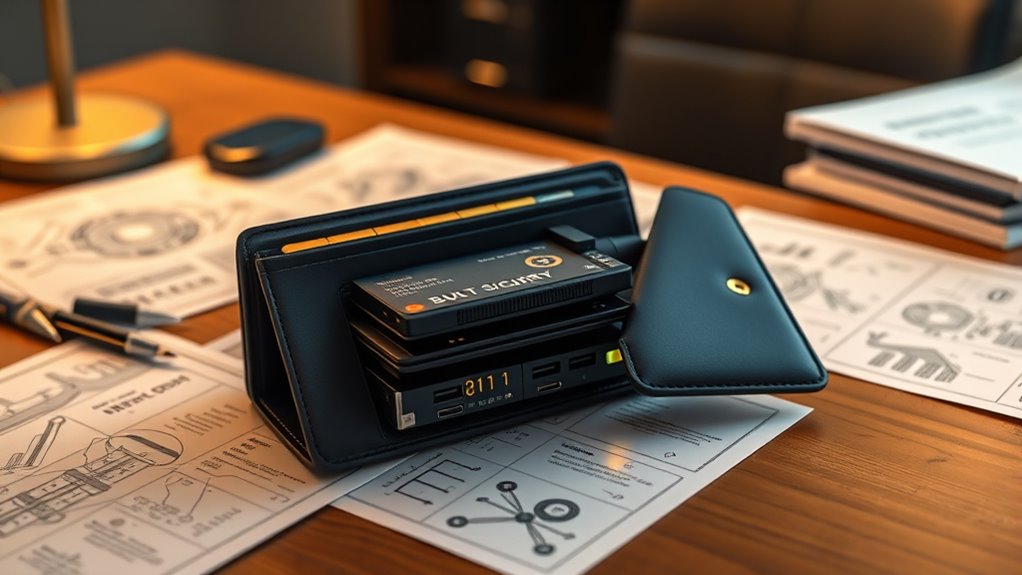

If you’re serious about securing your Bitcoin holdings, multi-signature wallets offer a robust solution. They require multiple private keys to authorize transactions, reducing the risk of theft or accidental loss. With flexible configurations, they support shared control among teams or partners. But understanding how they work and how to implement them properly is essential. Curious about how multi-sig can transform your approach to digital asset security?
Key Takeaways
- Multi-sig wallets require multiple private signatures to authorize Bitcoin transactions, enhancing security and preventing unauthorized access.
- They distribute control across several keys, safeguarding assets even if one key is lost or compromised.
- Configurable as M-of-N setups, allowing flexible thresholds for transaction approval based on security needs.
- Widely used by businesses, DAOs, and exchanges to enforce collective decision-making and protect funds.
- Leading platforms like BitGo and Trezor offer reliable multi-sig solutions to mitigate theft, fraud, and single-point failures.
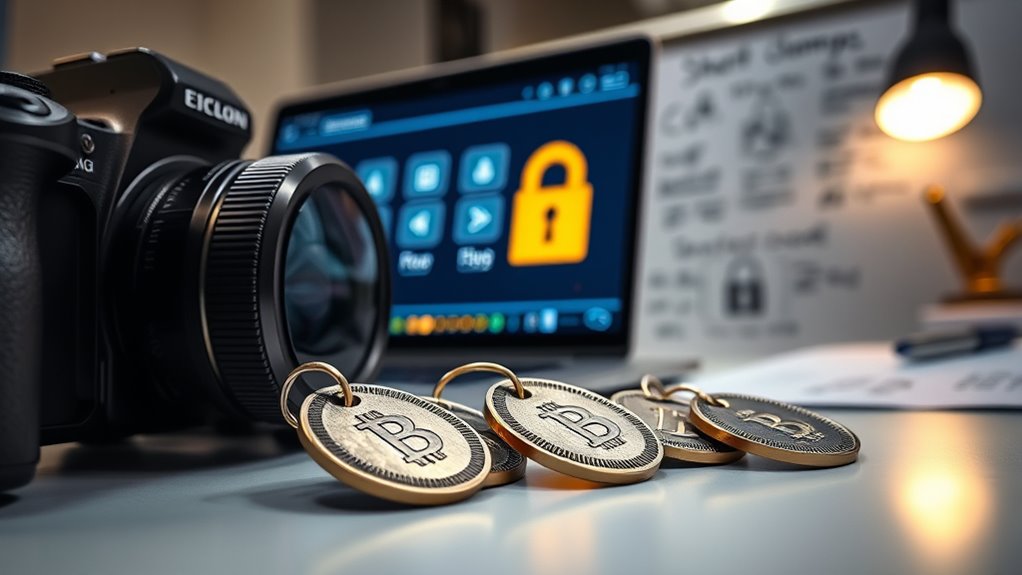
Are you concerned about the security of your cryptocurrency assets? If so, multi-signature (multi-sig) wallets could be the solution you need. A multi-sig wallet requires multiple signatures from different private keys to authorize a transaction, considerably boosting security. Instead of relying on a single key, which can be lost or stolen, multi-sig wallets spread control across several keys. This setup protects your assets from various threats, including hacking and accidental loss. The concept isn’t new; it has roots in traditional banking and security practices that predate digital currencies. Today, many blockchains, exchanges, and custodians adopt multi-sig wallets because they provide a reliable layer of protection, fostering user confidence.
Multi-sig wallets enhance cryptocurrency security by requiring multiple private keys for transactions.
The main advantage of a multi-sig wallet is its ability to prevent unauthorized transactions. With multiple private keys required for approval, it becomes nearly impossible for someone to hijack your funds unless they compromise several keys. If a device fails or a key gets lost, the remaining keys still hold control, ensuring your assets remain accessible. This system also discourages fraud and unilateral decision-making, promoting transparency among multiple stakeholders. It’s especially useful in shared or institutional settings, where multiple parties need to approve transactions, such as business accounts or organizational funds.
Here’s how it works: a unique multi-sig address is created, linked to several private keys. To spend funds, a predetermined number of signatures—say, two out of three keys—must sign a transaction. Until the required signatures are gathered, the transaction remains pending. Once the threshold is met, the transaction gets broadcast to the blockchain for confirmation. This flexible setup can be configured as 2-of-3, 3-of-4, or other combinations depending on your security needs. The more signatures required, the higher the security, but it also means more coordination among signers.
Multi-sig wallets are widely used across various scenarios. Businesses utilize them to secure company funds, demanding multiple approvals for transactions. Decentralized autonomous organizations (DAOs) depend on multi-sig wallets to enforce collective decision-making. Families and joint accounts use them to share control securely. Many exchanges and custodians implement multi-sig to protect customer assets from hacking attempts. For high-value accounts, multi-sig provides an essential extra layer of security, reducing the risk of theft or loss. Research indicates that multi-sig wallets have been effective in preventing numerous security breaches.
Several platforms offer multi-sig solutions. BitGo, a pioneer since 2013, remains a leading provider. Other popular options include Argent, Safe, Trezor, and Coinbase, each offering different features and configurations. The choice depends on your security requirements, ease of use, and compatibility with your assets. Multi-sig transactions are often described as M-of-N, indicating how many signatures are needed out of the total keys. This flexible, proven approach ensures your digital assets are better protected against evolving threats.

Bitkey Bitcoin Hardware Wallet – Secure Wallet for Self Custody, No Seed Phrase, 2-of-3 Multisig Security, NFC Device, iOS and Android Compatible
BITCOIN HARDWARE WALLET FOR TRUE SELF CUSTODY: Secure your bitcoin with a dedicated hardware wallet designed for self…
As an affiliate, we earn on qualifying purchases.
As an affiliate, we earn on qualifying purchases.
Conclusion
Multi-signature wallets are like a sturdy lock with multiple keys, giving you unmatched security for your Bitcoin. By sharing control among trusted parties, you prevent single points of failure and keep your assets safe from theft. Whether for personal, business, or group use, Multi-Sig wallets let you collaborate confidently. Embrace this powerful tool to protect your Bitcoin like a fortress—strong, reliable, and built for peace of mind.

Trezor Safe 5 – Crypto Hardware Wallet with Secure Element & Passphrase, Color Touchscreen, Haptic Feedback, Bitcoin Security, Supports 1000s Coins & Tokens, Quick & Simple Setup (Charcoal Black)
UNPARALLELED SECURITY: Protect your assets with Trezor Safe 5's NDA-free EAL 6+ Secure Element, offering robust defense and…
As an affiliate, we earn on qualifying purchases.
As an affiliate, we earn on qualifying purchases.

Keystone – Cryptocurrency Hardware Wallet Air-gapped, 4-inch Touch Screen, Store Your Crypto Securely (Keystone 3 Pro)
Visit guide.keyst.one for speedy set up. If you are facing charging/battery issue, please update your Keystone to V-1.5.6…
As an affiliate, we earn on qualifying purchases.
As an affiliate, we earn on qualifying purchases.

Carhartt Men’s Full Grain Saddle Leather Wallets, RFID Blocking Bifold, Trifold, and Front Pocket Options, Gifts for Men
FULL-GRAIN SADDLE LEATHER CONSTRUCTION | Crafted from premium full-grain saddle leather with triple-needle contrast stitching and a reinforced…
As an affiliate, we earn on qualifying purchases.
As an affiliate, we earn on qualifying purchases.