
TL;DR
An open-source engine named TurboFieldfare allows running the 26-billion-parameter Gemma 4 model on M-series Macs with just 2GB of RAM. This development could expand AI accessibility on Apple hardware.
A new open-source engine called TurboFieldfare has been developed that allows running the Gemma 4 26B AI model on any M-series Mac with just 2GB of RAM. This breakthrough was shared on Show HN, highlighting its potential to make large language models more accessible on consumer hardware.
The engine, named TurboFieldfare, is written in Swift and Metal, leveraging Apple’s native technologies for high performance. The developer claims it can handle the Gemma 4 26B-A4B-IT model, a large language model with 26 billion parameters, in a resource-constrained environment, as detailed in this guide.
The project aims to democratize access to powerful AI models by removing the need for specialized hardware or cloud-based solutions. The developer, who shared the project on Show HN, has not publicly disclosed all technical details but emphasizes its efficiency and compatibility with current M-series Macs.
Potential Impact of Running Large Models Locally
This development could significantly lower the barrier for individual developers, researchers, and hobbyists to experiment with large language models. By enabling operation on consumer-grade hardware with minimal RAM, it broadens the scope of AI applications and reduces reliance on cloud services, which can be costly and raise privacy concerns.
Moreover, it showcases the capabilities of Apple’s M-series chips and native development tools like Swift and Metal for AI workloads, potentially influencing future AI deployment strategies on Mac hardware.
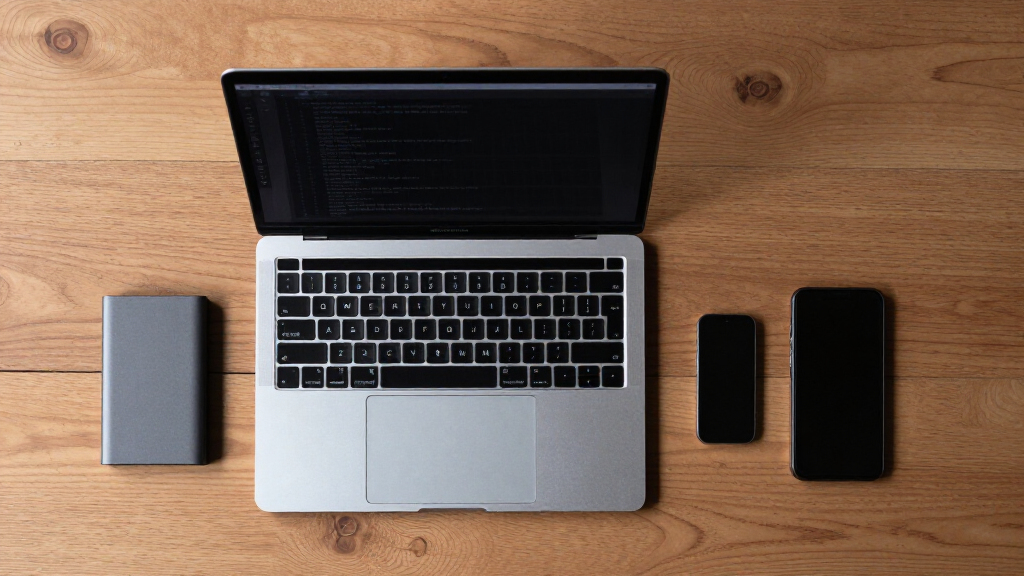
Apple M-series Mac compatible AI model running engine
As an affiliate, we earn on qualifying purchases.
As an affiliate, we earn on qualifying purchases.
Background on AI Model Optimization and Apple Hardware
Large language models like Gemma 4 26B typically require significant computational resources, often relying on cloud-based GPU clusters. Recent efforts have focused on model compression, quantization, and hardware-specific optimizations to enable smaller devices to run these models.
Apple’s M-series chips, introduced in late 2020, have been praised for their performance and efficiency, but running large models locally remains a challenge. Prior to this, most large models needed dedicated servers or cloud infrastructure. The development of TurboFieldfare suggests a new approach to optimizing model inference on Mac hardware.
“This engine demonstrates that with the right optimizations, large language models can run efficiently on standard consumer hardware, opening new possibilities for AI accessibility.”
— Developer of TurboFieldfare
Technical Details and Performance Benchmarks Still Unclear
It is not yet clear how TurboFieldfare manages to run such a large model within 2GB of RAM or what the performance trade-offs are. Details about latency, accuracy, and stability are still emerging, and the developer has not shared comprehensive benchmarks.
Additionally, the extent of compatibility with different Mac models and potential limitations remain to be confirmed.
Next Steps for Adoption and Technical Validation
Further testing and peer review of TurboFieldfare are expected to follow, including performance benchmarks and real-world use cases. The developer may release more technical details or open-source the project fully, enabling broader community engagement.
Expectations include potential adaptations for other models and hardware configurations, as well as integration into existing AI workflows on Mac.
Key Questions
How does TurboFieldfare enable running large models on limited RAM?
The developer claims to use optimizations in Swift and Metal, likely involving model quantization and efficient inference techniques, to reduce memory usage while maintaining functionality.
Is TurboFieldfare available for public use?
The project was shared on Show HN, suggesting it is accessible to the community, but full open-source release details are not yet confirmed.
What Macs are compatible with TurboFieldfare?
It is designed for any M-series Mac, but specific hardware configurations and performance details are still emerging.
Does running large models locally impact performance or accuracy?
Performance and accuracy implications are still unclear, as detailed benchmarks have not been published.
Could this approach be applied to other large AI models?
Potentially, if the optimization techniques are generalizable, this could open doors for running various large models on consumer hardware.
Source: hn