To create an executive home office that feels refined but not overbuilt, focus on sleek, minimal furniture with clean lines, including adjustable ergonomic chairs and streamlined desks with hidden storage. Use neutral colors and layered lighting to promote professionalism and comfort. Incorporate sound-absorbing materials for focus and opt for tasteful accessories to add personality without clutter. Thoughtful, practical choices elevate your space, and exploring more ideas can help you achieve the perfect balance of elegance and function.

Get business pricing on tech for your team
- Business-only prices and quantity discounts
- Tax-exempt purchasing
- Multiple users, one account, clear invoices
Key Takeaways
- Opt for sleek, minimalist furniture with hidden storage to maintain a clean, uncluttered space.
- Incorporate neutral color palettes and subtle accents for a calm, authoritative atmosphere.
- Use layered lighting combining natural and soft artificial sources to enhance professionalism and warmth.
- Add tasteful accessories like art or streamlined lighting to personalize without overwhelming.
- Incorporate acoustic treatments that blend seamlessly, reducing noise while maintaining a polished look.
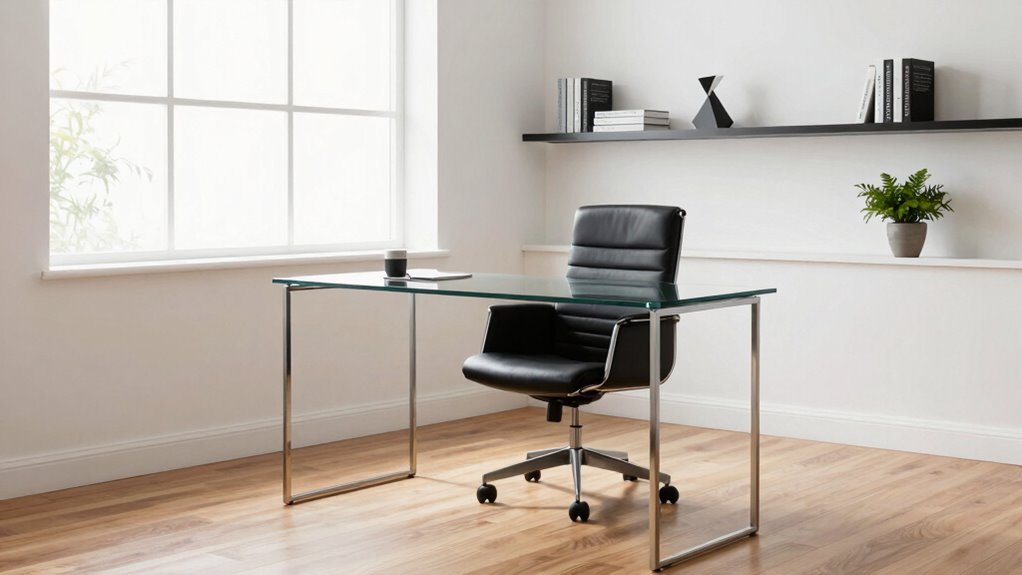
Creating a functional and comfortable home office can considerably boost your productivity and well-being. When designing a space that feels professional yet not overbuilt, the key is balancing style with practicality. Start by choosing ergonomic furniture that supports your posture and reduces fatigue. An adjustable chair with lumbar support and a desk at the right height ensure you stay comfortable through long work sessions. Ergonomic furniture isn’t just about health—it’s about creating a space that invites focus and efficiency. Keep your furniture simple and sleek, avoiding overly ornate or bulky pieces that can make the room feel cluttered or intimidating.
Prioritize ergonomic, sleek furniture to enhance comfort, focus, and a clutter-free, professional home office environment.
Next, think about acoustic treatments. Noise distractions can diminish your concentration and make your workday less productive. Incorporate acoustic panels or sound-absorbing materials into your design to create a calm environment. You don’t need to cover every wall; strategically placing panels behind your desk or in corners can make a significant difference. Using rugs, curtains, or upholstered furniture can also help dampen sound and add a touch of sophistication. These treatments don’t have to be obvious or industrial-looking—they can blend seamlessly with your decor, giving your office a polished, executive feel without becoming overbearing. Additionally, selecting soundproofing solutions that match your decor can enhance both functionality and aesthetics.
To achieve a professional look that’s not overbuilt, focus on clean lines and minimal clutter. Opt for a streamlined desk with hidden storage to keep your workspace tidy. Keep surfaces clear of unnecessary items, and use smart storage solutions to hide cables and supplies. Incorporating ergonomic furniture and thoughtful organization can further enhance your workspace efficiency. Additionally, choosing versatile furniture pieces that can serve multiple purposes can maximize space and reduce clutter. Incorporate a few tasteful accessories—like a framed piece of art or a sleek desk lamp—to add personality without clutter. Good lighting is essential; a combination of natural light and layered artificial lighting can make your space feel bright and inviting, yet professional.
Color choices also matter. Stick to a neutral palette with subtle accents to evoke a calm, authoritative atmosphere. Avoid overly bright or busy patterns that can distract or overwhelm. Instead, choose muted tones and textures that convey confidence and stability. The right color scheme can influence your mood and productivity, making your environment more conducive to focus. The goal is to create a space that feels welcoming yet professional, where you can focus without feeling overwhelmed by your environment. Additionally, integrating air fryers or kitchen appliances into your home office setup can be a practical way to keep healthy snacks nearby during busy workdays, enhancing your overall productivity and comfort.
Ultimately, designing a home office that feels executive, not overbuilt, involves thoughtful choices. Prioritize ergonomic furniture for comfort, acoustic treatments for focus, and a minimalist aesthetic for a refined look. Keep the space organized and uncluttered, and select colors and decor that project professionalism. With these elements in place, your home office will inspire productivity and confidence, making it a true extension of your professional persona.
ergonomic adjustable office chair with lumbar support
As an affiliate, we earn on qualifying purchases.
As an affiliate, we earn on qualifying purchases.
Frequently Asked Questions
What Colors Promote Focus in a Home Office?
You should choose colors based on color psychology to promote focus in your home office. Blues and greens are ideal because they foster calmness and concentration, enhancing your mood and productivity. Neutral shades like soft grays or warm beiges also work well, providing a professional, understated environment. These colors support mood enhancement, helping you stay attentive and motivated during work sessions, creating an executive feel without overbuilding.
How Much Storage Is Ideal Without Clutter?
Think of your storage as a silent partner, quietly keeping your space organized. You need enough storage solutions to hold essentials, but not so much that clutter manages you. Aim for a balance—hidden cabinets, sleek shelves, and drawers that fit your workflow. Regular clutter management keeps your workspace tidy and focused. When storage works seamlessly, your office feels spacious, professional, and ready for action without feeling overstuffed.
Best Ergonomic Furniture for Small Spaces?
For small spaces, the best ergonomic furniture includes a supportive ergonomic chair and a compact desk. Choose a chair with adjustable height and lumbar support to keep you comfortable during long work sessions. Pair it with a sleek, space-saving desk that fits your needs without crowding the room. Opt for multifunctional pieces whenever possible, and keep clutter minimal to maintain a professional, executive feel.
How to Incorporate Personal Style Subtly?
You can subtly incorporate personal style by adding artistic accents and personal artwork that reflect your personality. Think of these elements as whispers of your identity, blending seamlessly into your professional space. Use elegant frames or minimalist decor to showcase your favorite pieces without overwhelming the room. This balance keeps your home office feeling sophisticated and uniquely yours, all while maintaining a polished, executive vibe.
Tips for Maximizing Natural Light?
To maximize natural light, choose lighting fixtures that complement your space without overwhelming it. Use sheer or light-colored window treatments to allow sunlight to filter in while maintaining privacy. Position your desk near windows to take advantage of daylight, and keep window areas clear of heavy furniture or clutter. Reflective surfaces like glass or metallic accents can also bounce light around, creating a bright, inviting atmosphere that feels professional yet comfortable.
Conclusion
Creating a home office that feels both executive and inviting isn’t about overdoing it—think timeless, like a well-tailored suit. Keep your space functional yet stylish, blending modern touches with classic elements. Remember, even in this digital age, a touch of old-world charm can make your workspace feel special. So, channel your inner Gatsby, and craft a space that’s efficient, elegant, and uniquely yours—no flapper dress required.
Evergreen bestsellers Picks
bestsellers
As an affiliate, we earn on qualifying purchases.