
📊 Full opportunity report: Apple Is Reaching For Chinese Memory. Europe Doesn’t Even Have That Option. on ThorstenMeyerAI.com — validation score, market gap, and execution plan.
TL;DR
Apple is lobbying Washington to purchase memory chips from China’s CXMT, highlighting its dependence on Chinese suppliers. Europe has no similar options, revealing a critical supply chain vulnerability.
Apple is lobbying Washington for permission to buy memory chips from Chinese manufacturer CXMT, a company on the Pentagon’s blacklist, in a move that underscores its dependence on Chinese supply chains amid ongoing global shortages. This development is significant because it reveals how Apple navigates complex geopolitical restrictions to secure critical components, while Europe lacks similar leverage or options.
This week, reports emerged that Apple is actively lobbying the U.S. government to approve purchases of memory chips from CXMT, a Chinese firm on the U.S. Pentagon’s blacklist. The move follows Apple’s recent price hikes on Macs and iPads, which the company attributes to a global memory shortage. The company’s ability to potentially source from China highlights its unique position, leveraging Washington’s permission, its domestic supplier Micron, and the Chinese manufacturer as fallback options.
In contrast, Europe faces a starkly different situation. The EU manufactures less than 10 percent of the world’s semiconductors by value and is almost entirely dependent on U.S. and Asian suppliers for memory chips. The number of European DRAM makers has dwindled from over twenty in the 1990s to just a handful today, with no significant domestic production of commodity DRAM or high-performance memory like HBM. Prices for memory components have surged, with some segments rising sixfold year-over-year, and Europe bears these costs without influence over supply or pricing.
European tools such as subsidies, regulation, and certification are insufficient to address the physical and technological gaps in memory fabrication. Major capacity constraints are already booked by U.S. hyperscalers and AI labs, with OpenAI reportedly controlling around 40 percent of global DRAM wafer output through 2029. The EU’s recent “tech sovereignty package” offers some measures like demand aggregation and emergency powers, but cannot create the physical manufacturing capacity that is missing.
Apple is reaching for Chinese memory. Europe doesn’t even have that option.
The shortage exposes America’s dependence — and Europe’s far more brutally. Apple has a domestic supplier, political weight, and the China option. Europe has no memory of its own, no seat at the table, no leverage on what counts.
- EU makes < 10% of the world’s semiconductors
- Effectively no DRAM, no HBM from Europe
- 3–4 memory makers worldwide — none European
- Pure price-taker: memory ~4× in 3 quarters
- ASML: EUV monopoly — no leading-edge chip without it
- Zeiss: precision optics, unrivalled worldwide
- imec · CEA-Leti · Fraunhofer: world-class research
- Infineon, NXP, STMicro: automotive · power · SiC
The shortage is a sovereignty test — Europe fails on supply but still holds the leverage in its hand. If even Apple can’t buy its way out, Europe’s answer isn’t to buy its way in, but to run two tracks: press the unique chokepoints as real leverage — and cut dependence wherever it can without Brussels: local-first, open weights, quantization, right-sized hardware. Bury the 20% dream, defend what’s yours, need less.
Implications of Apple’s China Dependence for Europe
This situation exposes Europe’s vulnerability in the global semiconductor supply chain, especially in memory chips, which are critical for AI, high-performance computing, and consumer electronics. Europe’s lack of domestic manufacturing capacity means it is a price-taker and lacks leverage to influence supply or prices. The reliance on external suppliers makes Europe susceptible to geopolitical tensions, supply disruptions, and price shocks, potentially hampering its technological competitiveness and security.
Furthermore, the episode underscores the importance of building strategic chokepoints and upstream capabilities, such as EUV lithography and research, to reduce dependence on external sources. Europe’s current position—controlling key manufacturing tools but lacking full fabrication capacity—places it at a strategic crossroads in the global chip industry.
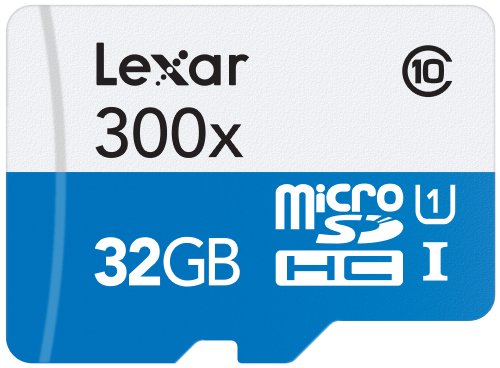
Lexar High-Performance MicroSDHC 300x 32GB UHS-I/U1 w/Adapter Flash Memory Card – LSDMI32GBB1NL300A
Premium memory solution for tablets, sports camcorders, and smartphones
As an affiliate, we earn on qualifying purchases.
As an affiliate, we earn on qualifying purchases.
Europe’s Semiconductor Industry and Geopolitical Constraints
Europe produces less than 10 percent of the world’s semiconductors by value, with a shrinking number of domestic memory chip manufacturers. The EU’s efforts to boost local capacity through the 2023 Chips Act and flagship projects like Intel’s Magdeburg fab have faced delays, stalling, or collapsing due to high costs and technological barriers. The dense, complex supply ecosystem in East Asia and Taiwan’s tacit process knowledge make full autarky unrealistic for Europe in the near term.
Meanwhile, key European players like ASML hold monopoly power over EUV lithography machines, which are essential for advanced chip manufacturing. The U.S. export controls against China rely heavily on Dutch cooperation, emphasizing Europe’s strategic importance in the global supply chain. The continent’s focus has shifted toward building indispensability through controlling critical upstream technologies rather than complete self-sufficiency.
Several European institutions and think tanks advocate for a strategy of ‘indispensability,’ emphasizing the expansion of key chokepoints like ASML and research institutions, rather than aiming for full autarky, which remains unattainable in the foreseeable future.
“Europe is almost entirely dependent on U.S. and Asian suppliers for semiconductors and memory chips, with limited domestic capacity.”
— European Commission official

64MB (2X32MB) EDO Non-Parity 60NS SIMM 72-PIN 5V 8X32
Number of Modules: 2
As an affiliate, we earn on qualifying purchases.
As an affiliate, we earn on qualifying purchases.
Unclear Impact of U.S.-China Tensions on Apple’s Strategy
It is not yet clear whether the U.S. government will approve Apple’s request to purchase Chinese memory chips or if geopolitical tensions will escalate further, potentially blocking such moves. The broader impact on global supply chains and European industry remains uncertain, especially as the U.S. continues to tighten export controls against China.
high-performance HBM memory
As an affiliate, we earn on qualifying purchases.
As an affiliate, we earn on qualifying purchases.
Next Steps in Semiconductor Supply Chain Strategies
Apple’s lobbying efforts will likely continue, with possible approval or rejection by U.S. authorities. Meanwhile, Europe will assess its own capacity-building initiatives, such as the Chips Act 2.0, aiming to expand upstream capabilities and strengthen strategic chokepoints like ASML. The industry will monitor how geopolitical tensions and technological investments shape the global chip landscape in the coming months.
European-made memory modules
As an affiliate, we earn on qualifying purchases.
As an affiliate, we earn on qualifying purchases.
Key Questions
Why is Apple seeking Chinese memory chips now?
Apple is facing a global memory shortage and is exploring all options, including Chinese suppliers like CXMT, to secure supply amid rising prices and constrained capacity.
What does Europe’s lack of options mean for its tech industry?
Europe’s limited domestic memory fabrication and dependence on external suppliers make it vulnerable to supply disruptions and price increases, hindering its competitiveness and security.
Could Europe develop its own memory chip industry?
While possible in the long term, Europe’s current technological and infrastructural gaps mean full autarky in memory chips is unlikely before the next decade, emphasizing reliance on strategic chokepoints and upstream capabilities instead.
How might U.S.-China tensions affect global chip supply chains?
Tensions could lead to restrictions on exports, impacting companies like Apple and Europe’s industry, with possible shifts in supply routes and increased reliance on certain chokepoints like ASML.
What is the significance of ASML in this context?
ASML’s monopoly on EUV lithography makes it a critical strategic asset for Europe, enabling it to influence downstream manufacturing and serve as leverage in global supply chain negotiations.
Source: ThorstenMeyerAI.com