Mandarin Oriental has officially become a private company in a $4.2 billion deal, with Jardine Matheson acquiring the remaining 11.96% shares. The deal values the hotel group at a significant premium and simplifies its corporate structure, giving it more flexibility for expansion and asset management. This strategic move involves asset sales, including a major property to Alibaba, and positions the company for future growth without public market pressures. If you want to understand what’s next, keep exploring the details.
Listen free for 30 days with Audible
Thousands of audiobooks and originals — cancel anytime.
As an affiliate, we earn on qualifying purchases.
Key Takeaways
- Jardine Matheson acquires remaining 11.96% shares, privatizing Mandarin Oriental at a valuation of approximately $4.2 billion.
- The deal involves a $3.35 per share offer, including cash and a special dividend, with premium over pre-announcement prices.
- Privatization streamlines ownership, offering greater flexibility for expansion and reducing market pressures.
- Asset monetization, including a $925 million sale to Alibaba, funds the buyout and supports future growth plans.
- Regulatory approvals are pending, with completion targeted by February 28, 2026.
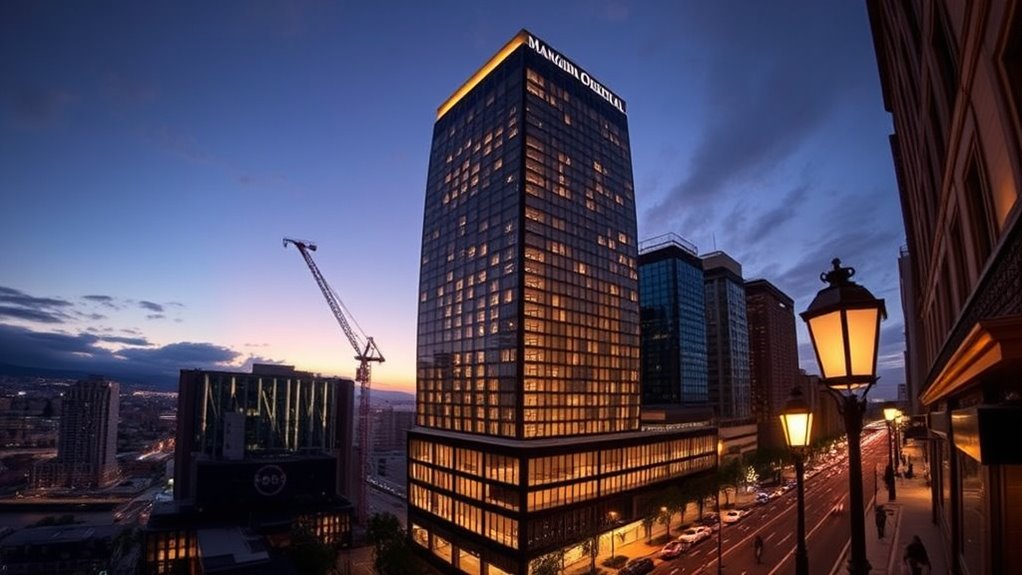
Did you see that Mandarin Oriental is now becoming a private company? This shift comes after Jardine Matheson, its controlling shareholder, acquired the remaining 11.96% of shares through its subsidiary Bidco. The deal values Mandarin Oriental at about $4.2 billion, with an offer price of $3.35 per share. This price includes $2.75 in cash and a $0.60 special dividend. The acquisition is financed through cash reserves and committed facilities, making it a strategic move to streamline ownership and support future growth.
The premium offered is substantial—52.3% above the stock’s closing price before the deal was announced—highlighting the confidence Jardine Matheson has in the company’s prospects. This premium not only rewards shareholders but also signals the company’s commitment to consolidating ownership under its umbrella, simplifying the corporate structure. The move toward privatization is expected to give Mandarin Oriental more flexibility to pursue expansion plans without the pressure of public market scrutiny, allowing the company to focus on best practices in hospitality and customer experience.
Strategically, the acquisition aims to support Mandarin Oriental’s expansion ambitions. The company recently announced new properties, including a hotel in Seoul and a golf resort in Dubai, signaling a focus on growth in key markets. In North America, the company is refining its operations, including a recent layoff related to redeveloping its Miami property, reflecting a focus on optimizing existing assets. Overall, Mandarin Oriental manages 44 hotels, 12 residences, and 26 luxury homes across 27 countries, with plans to open new properties in Vienna and further develop in Dubai.
In addition to expanding its portfolio, Mandarin Oriental is actively monetizing assets to fund growth and support the buyout. It has agreed to sell the top 13 floors of its One Causeway Bay property to Alibaba Group and Ant Group for $925 million. The space will serve as Alibaba’s Hong Kong headquarters, with the sale expected to complete by the end of 2025. The proceeds from this sale, along with the $0.60 dividend, help finance the deal and bolster the company’s valuation. This sale is part of the company’s broader asset divestment strategy to strengthen its financial position.
The transaction is overseen by the Mandarin Oriental Transaction Committee to guarantee transparency and avoid conflicts of interest, especially since some directors serve on both boards. Regulatory approval and shareholder acceptance are still pending, with completion expected by February 28, 2026. This deal not only simplifies Mandarin Oriental’s corporate structure but also positions it for future growth, despite the broader economic fluctuations affecting the hospitality industry. The market has reacted positively, recognizing the strategic value of this privatization move at a significant premium.
As an affiliate, we earn on qualifying purchases.
Frequently Asked Questions
Will This Change Affect Mandarin Oriental’s Global Management Team?
This privatization won’t immediately change your global management team. The leadership remains focused on strategic growth, portfolio expansion, and operational excellence. While the parent company, Jardine Matheson, gains more control, management continuity continues with incremental leadership changes. You’ll likely see more streamlined decision-making and stronger alignment with corporate goals, but day-to-day management roles should stay stable, emphasizing growth and guest experience without wholesale management overhaul.
How Will the Transition Impact Existing Employee Benefits?
The shift to private ownership might lead to some shifts in your benefits, but the core programs are likely to remain stable. You could see changes aimed at improving employee experience, like updated healthcare options or expanded development initiatives, as the company seeks to retain talent and boost engagement. However, there’s also a risk of cost-cutting measures, so staying informed about any benefit adjustments is wise during this period.
Are There Plans to Expand Into New Markets Post-Privatization?
Yes, there are plans to expand into new markets after privatization. You’ll see ongoing growth in key regions like Greater China, with new hotels in Beijing, Chengdu, and Nanjing, as well as emerging markets across Asia and Europe, including Madrid and Vienna. This expansion aims to reinforce your luxury experience globally, leveraging innovative technology and strategic acquisitions to guarantee you enjoy exceptional service wherever you stay.
What Are the Future Investment Strategies for the Company?
You’ll find the company doubling down on its asset-light strategy, despite the irony of selling prime properties to fund growth elsewhere. They plan to focus on high-yield markets like North America and Asia-Pacific, prioritizing culturally significant locations. By streamlining ownership and investing in luxury innovations, they aim to stay ahead. It’s a delicate dance of divestment and reinvestment, all orchestrated to keep the brand at the top of the luxury hospitality game.
How Will This Affect Current Hotel Loyalty Programs?
Your loyalty program remains unchanged for now, with no announced modifications following the privatization. While the ownership shift might lead to future adjustments, there’s no immediate impact or planned changes. Stay alert for official updates, as the private ownership could speed up program revisions without public notice. In the short term, your current benefits and points stay valid, but keep monitoring for any upcoming announcements from Mandarin Oriental.
Conclusion
As you imagine the Mandarin Oriental stepping into its new private chapter, it feels like a quiet dawn breaking over a serene harbor. The $4.2 billion deal isn’t just a number; it’s a turning point, much like the first light illuminating calm waters after a storm. With this shift, you sense a fresh beginning on the horizon—where ambition and tradition merge seamlessly, much like the gentle ripple that hints at a new day quietly unfolding, just beyond the horizon.
Flea & tick season Picks
flea and tick prevention
As an affiliate, we earn on qualifying purchases.