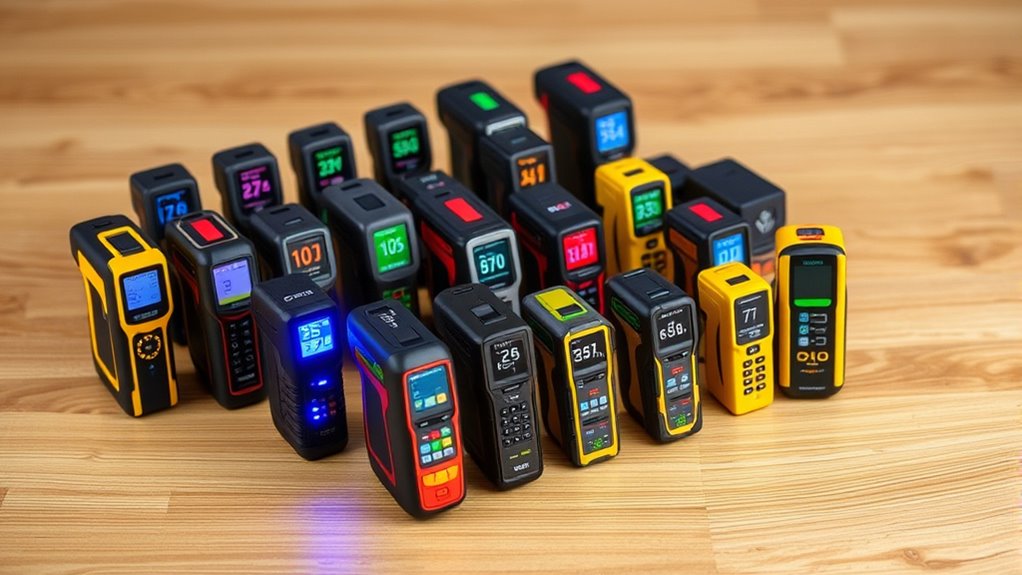

Finding the right stud finder can make hanging shelves or mounting TVs much easier, but with so many options, choosing one isn’t straightforward. The Franklin Sensors ProSensor M90 stands out as the best overall for its accuracy and ease of use, while the PREXISO 2-in-1 Stud Finder with Laser Level combines functionality with precise laser guidance for versatile projects. However, tradeoffs exist: some models excel at detecting metal or live wires but lack depth or multi-sensor capabilities, which can lead to missed studs or false readings. Continue reading to see how these options compare and which models suit your specific needs.

Get tech for your team delivered free — and shop member deals
- Fast, free delivery on millions of items
- Access to Prime Big Deal Days deals on October 6–7
- Prime Video, Amazon Music and more included
Key Takeaways
- Multi-sensor models like the Franklin Sensors ProSensor M210 consistently detect multiple studs more accurately than single-sensor options.
- Detection depth varies widely; premium models often reach over 1.5 inches, reducing guesswork for thicker walls.
- Features like live wire detection and AC wire warnings are essential for safety, especially in older homes.
- LCD displays and audio alarms significantly improve usability, but simpler models may suffice for casual use.
- Price doesn’t always equate to performance; some budget models deliver surprisingly accurate results, but more advanced features tend to cost more.
| Stud Finder Wall Scanner for Wood and Metal Detection, 3/4 Inch Depth, Yellow |  | Best Budget-Friendly Basic Model | Power Source: 9V battery (not included) | Operating Frequency: 10 KHz | Display Type: LED/Beeping | VIEW ON AMAZON | See Our Full Breakdown |
| Franklin Sensors ProSensor M90 9-Sensor Stud Finder Wall Scanner |  | Best for Precision and No Calibration | Sensors: 9 | Detection Depth: 1.5 inches | Power: Requires 2 AAA batteries (not included) | VIEW ON AMAZON | See Our Full Breakdown |
| Zircon StudSensor A100 Stud Finder with Live Wire Detection |  | Best for Safety with Dual Detection Modes | Detection Depth (Standard): 3/4 inch | Detection Depth (DeepScan): 1 1/2 inches | Live Wire Detection: Up to 2 inches | VIEW ON AMAZON | See Our Full Breakdown |
| ProSensor M210 13-Sensor Stud Finder with Live Wire Detection |  | Best for Deep and Full-Width Detection | Number of Sensors: 13 | Detection Depth: 1.7 inches | Live Wire Detection: Yes | VIEW ON AMAZON | See Our Full Breakdown |
| Franklin Sensors ProSensor M150/X990 9-Sensor Stud Finder with AC Wire Warning |  | Best for Accurate, No-Calibration Detection with Safety | Number of Sensors: 9 | Deep Scan Depth: 1.5 inches | Battery: Two AAA batteries (not included) | VIEW ON AMAZON | See Our Full Breakdown |
| Franklin Sensors ProSensor M210 13-Sensor Stud Finder, Wire Warning, Green |  | Best Overall for Precision and Ease of Use | Sensors: 13 | Detection Depth: 1.7 inches | Includes: Bubble level, wire warning, pencil caddy | VIEW ON AMAZON | See Our Full Breakdown |
| Franklin Sensors ProSensor MAX 13-Sensor Stud Finder, 2.5-inch Deep Detection |  | Best for Deep Wall Detection and Full Stud Width | Number of Sensors: 13 | Detection Depth: 2.5 inches | Material: Plastic | VIEW ON AMAZON | See Our Full Breakdown |
| PREXISO 2-in-1 Stud Finder with Laser Level, Rechargeable Cross Line Laser |  | Best for DIY Projects Combining Stud Finding and Laser Level | Laser working range: up to 10m/30ft | Detection depth: up to 1.5 inches for wires | Power source: Type-C rechargeable battery | VIEW ON AMAZON | See Our Full Breakdown |
| Mecurate 5-in-1 Stud Finder Wall Scanner for Studs, Metal & Live AC Wires |  | Best for Versatility and Safety on Drywall | Detection Modes: Standard, Deep, Metal, AC | Display: HD LCD | Includes: Battery, pouch, manual | VIEW ON AMAZON | See Our Full Breakdown |
| Povlen Stud Finder Wall Scanner Detector with Wood, Metal, AC Wire Detection |  | Best for Speed and Durability in Wall and Floor Scanning | Detection Modes: Wood, metal, wires, studs | Maximum Detection Depth: up to 2.36 inches | Batteries: 1 9V (included) | VIEW ON AMAZON | See Our Full Breakdown |
| Stud Finder Wall Scanner – 5 in 1 Stud Finder Tool with HD LCD Display and Smart Chip |  | Best Overall for Versatile Detection | Detection Modes: Stud scan, deep scan, metal scan | Display: HD LCD with backlight | Sensor Technology: Smart micro-sensor chip | VIEW ON AMAZON | See Our Full Breakdown |
| Stud Finder Wall Scanner, 5-in-1 Multifunction Stud Locator with HD LCD Display and Audio Alarm |  | Best for Balanced Detection and Ease of Use | Detection Modes: 5 modes (stud, metal, AC wire, edge & center) | Display: HD LCD with backlight | Detection Range: Studs: 13mm, 25mm, 38mm; Metal: 60mm; AC: 51mm | VIEW ON AMAZON | See Our Full Breakdown |
| Craftsman Stud Finder, 3/4-Inch Depth (CMHT77633) |  | Best for Basic Detection on Limited Depth | Depth Range: 3/4 inch | Works on: wallpaper, fabric, drywall | Detects: wood and metal studs | VIEW ON AMAZON | See Our Full Breakdown |
| Stud Finder Wall Scanner – 5 in 1 Stud Finder Tool with HD LCD Display, Detects Wood, Metal, and Live Wires |  | Best for DIY and Versatile Detection | Display: HD LCD with backlight | Detection Modes: Stud scan, deep scan, metal scan | Sensor Technology: Smart micro-sensor chip | VIEW ON AMAZON | See Our Full Breakdown |
More Details on Our Top Picks
Stud Finder Wall Scanner for Wood and Metal Detection, 3/4 Inch Depth, Yellow
This simple wall scanner offers a straightforward way to find wood and metal studs, making it ideal for quick household projects. Compared to the ProSensor M90, it lacks advanced sensors but compensates with ease of use and affordability. Its LED indicators and beeping alert help users identify studs behind various wall surfaces without calibration. However, the detection depth is limited to 3/4 inch, which may fall short in thicker walls, and it requires a 9V battery (not included). It’s a fitting choice for casual DIYers who prioritize simplicity and cost over advanced features.
Pros:- Very affordable and easy to operate
- Effective on wallpaper and painted walls
- Lightweight and portable
Cons:- Battery not included, adding an extra step
- Limited detection depth in thicker walls
Best for: Homeowners tackling basic wall mounting or hanging tasks on standard walls
Not ideal for: Professional contractors needing deep detection or advanced modes for complex projects
- Power Source:9V battery (not included)
- Operating Frequency:10 KHz
- Display Type:LED/Beeping
- Item Weight:3.2 ounces
- Item Dimensions:2.56″L x 1.57″W x 1.57″H
- Color:Yellow
- Material:Plastic
- Protection Rating:IP54
Our verdict“This model suits casual users who need a simple, inexpensive stud finder for light tasks without advanced features.”
Franklin Sensors ProSensor M90 9-Sensor Stud Finder Wall Scanner
The ProSensor M90 stands out for its 9-sensor array that provides full-width, highly accurate detection of studs, surpassing basic models like the Stud Finder Wall Scanner B089M1WDQH. Its design requires no calibration, making it faster and more reliable for precise wall scanning, especially in professional or detailed DIY projects. It detects both wood and metal studs up to 1.5 inches deep, with a clear LED display indicating stud centers. The main tradeoff is the need for AAA batteries (not included), and it isn’t compatible with rechargeable batteries. This pick makes the most sense for users who need accuracy and speed for frequent or detailed wall work.
Pros:- High accuracy with 9 sensors for reliable detection
- Full-width detection with clear LED indication
- No calibration needed, saving time
Cons:- Requires AAA batteries, which are not included
- No rechargeable battery compatibility
Best for: Experienced DIYers and contractors needing quick, precise stud detection without calibration
Not ideal for: Occasional users or those seeking a budget-friendly option with basic features
- Sensors:9
- Detection Depth:1.5 inches
- Power:Requires 2 AAA batteries (not included)
Our verdict“This model is ideal for professionals and serious DIYers who demand rapid, accurate stud detection without fuss.”
Zircon StudSensor A100 Stud Finder with Live Wire Detection
The Zircon StudSensor A100 offers versatile detection with its LCD screen, SpotLite Pointer, and V marker, making it a clear upgrade over basic models like the Stud Finder Wall Scanner B089M1WDQH. Its ability to detect live wires up to 2 inches deep adds a layer of safety for mounting electrical fixtures. It features two scanning modes optimized for different wall thicknesses, which helps improve accuracy across various surfaces. However, it requires calibration before each use and has a detection depth limited to 3/4 inch in standard mode, which may be insufficient for very thick walls. It’s best suited for those who want reliable detection with added electrical safety.
Pros:- Accurate edge detection for hanging projects
- Live wire detection enhances safety
- Two scanning modes improve flexibility
Cons:- Requires calibration, adding setup time
- Battery not included
Best for: Homeowners mounting shelves or TVs where live wire detection and safety are priorities
Not ideal for: Professionals needing deep wall scans or advanced features beyond wire detection
- Detection Depth (Standard):3/4 inch
- Detection Depth (DeepScan):1 1/2 inches
- Live Wire Detection:Up to 2 inches
- Battery:9V alkaline
Our verdict“This device is well-suited for safety-conscious users doing standard mounting tasks with electrical considerations.”
ProSensor M210 13-Sensor Stud Finder with Live Wire Detection
The ProSensor M210 combines 13 sensors for unmatched accuracy, especially compared to the StudSensor A100. Its ability to scan up to 1.7 inches deep and show the full width of studs makes it ideal for detailed wall work. It detects live wires and metal objects, all without calibration, which speeds up workflows significantly. Its size and weight are slightly more substantial, but this is a small tradeoff for the depth and precision it offers. The lack of a digital display for detailed readings might be a drawback for some, but for most, the full-width visual and deep detection capabilities outweigh this minor limitation.
Pros:- 13 sensors for precise, reliable detection
- Deep scanning up to 1.7 inches
- Shows full width of studs for precise marking
Cons:- Requires two AA batteries, not included
- No digital readout for detailed info
Best for: Experienced DIYers or contractors needing deep, accurate scans with live wire detection
Not ideal for: Users who prefer lightweight, handheld tools or basic detection for casual projects
- Number of Sensors:13
- Detection Depth:1.7 inches
- Live Wire Detection:Yes
- Material Type:Plastic
- Item Dimensions:7.5 x 3.35 x 3.33 inches
- Item Weight:11.36 ounces
Our verdict“Ideal for those needing deep, full-width detection with reliable live wire safety features in complex wall setups.”
Franklin Sensors ProSensor M150/X990 9-Sensor Stud Finder with AC Wire Warning
The ProSensor M150/X990 offers a balanced combination of accuracy and safety, with 9 sensors that detect studs and live wires up to 1.5 inches deep. Its full-width display makes it easier to locate the edges of studs, similar to the ProSensor M90, but with the added feature of AC wire warning. The quick, no-calibration setup makes it ideal for frequent use in drywall projects. Its main limitation is the need for AAA batteries, which are not included, and its detection depth may be insufficient for thicker walls. This model appeals to users who want reliability and safety without the complexity of more advanced tools.
Pros:- High accuracy with 9 sensors
- No calibration required for quick use
- Detects live AC wires for safety
Cons:- Requires AAA batteries, not included
- Limited to 1.5 inches depth
Best for: DIY enthusiasts and homeowners seeking dependable detection with safety features for everyday projects
Not ideal for: Heavy-duty professionals needing deep wall scans or digital detail
- Number of Sensors:9
- Deep Scan Depth:1.5 inches
- Battery:Two AAA batteries (not included)
- Features:AC wire warning, full-width display
Our verdict“This sensor strikes a good balance for users wanting reliable, safe detection in standard drywall applications without calibration hassle.”
Franklin Sensors ProSensor M210 13-Sensor Stud Finder, Wire Warning, Green
The ProSensor M210 stands out as the most accurate option thanks to its 13 sensors, providing precise detection of studs and deep scans up to 1.7 inches. Unlike the simpler Franklin Sensors ProSensor MAX, which emphasizes deep detection, the M210 offers full width detection and additional features like a built-in bubble level and wire warning, making it ideal for detailed drywall work. Its ease of use without calibration makes it particularly appealing to DIYers who want reliable results quickly. The main tradeoff is that it requires 2 AA batteries (not included), and it doesn’t have a rechargeable option. This pick makes the most sense for homeowners needing accurate, full-width detection without fuss.
Pros:- Highly accurate with 13 sensors for precise detection
- Full width and deep scanning capabilities
- No calibration required, easy to operate
Cons:- Requires 2 AA batteries not included
- No rechargeable battery option
Best for: DIYers and homeowners seeking accurate, full-width wall scanning without calibration hassle
Not ideal for: Professionals needing a rechargeable, high-volume tool or those who prefer a more budget-friendly, basic model
- Sensors:13
- Detection Depth:1.7 inches
- Includes:Bubble level, wire warning, pencil caddy
- Power:2 AA batteries (not included)
Our verdict“This is the best choice for users who prioritize accuracy and ease of use in wall scanning.”
Franklin Sensors ProSensor MAX 13-Sensor Stud Finder, 2.5-inch Deep Detection
The ProSensor MAX offers robust detection up to 2.5 inches deep, making it the ideal tool for thicker walls or plaster surfaces. Its 13 sensors detect the full width of studs, unlike simpler models that only find edges, and it performs well across drywall and plaster without calibration. Compared to the M210, it emphasizes deeper scans, which is useful for more substantial walls but comes at a higher price point. Its primary tradeoff is that it relies on batteries and is designed mainly for wall studies, limiting versatility for other tasks. This model is better suited to professionals or serious DIYers working with thicker or more complex wall structures.
Pros:- Detects full width of studs, not just edges
- Deep detection up to 2.5 inches
- No calibration needed, easy to operate
Cons:- More expensive than basic models
- Requires batteries which need replacement
- Primarily designed for wall detection, limited for other uses
Best for: Homeowners or contractors needing deep, full-width detection in thick walls
Not ideal for: Casual DIYers or those on a tight budget, as it’s more costly and dedicated to wall detection
- Number of Sensors:13
- Detection Depth:2.5 inches
- Material:Plastic
- Power Source:Battery
- Weight:1.1 pounds
- Color:Yellow
Our verdict“This pick is best for detailed wall work where depth and full-width detection are priorities.”
PREXISO 2-in-1 Stud Finder with Laser Level, Rechargeable Cross Line Laser
The PREXISO 2-in-1 merges a stud finder with a manual laser level, making it a versatile tool for hanging shelves or mounting TVs. Its ability to detect wood, metal studs, and live AC wires, combined with a laser that projects up to 30 feet, offers precision for various DIY tasks. Compared with the Mecurate 5-in-1, which focuses solely on wall scanning, this device emphasizes convenience, especially for those who frequently hang or align objects. Its main drawback is that the laser is manual and not self-leveling, requiring user adjustment. Additionally, it needs calibration before use, and the laser, while useful, is less suitable for rough or dusty surfaces. This tool makes the most sense for DIYers who want both wall scanning and laser guidance in one device.
Pros:- Combines stud finder and laser level in one device
- Automatic edge marking with visual and audible alerts
- Multiple fixing methods for various surfaces
Cons:- Laser is manual, not self-leveling
- Not suitable for rough, dusty, or coarse surfaces
- Requires calibration before use
Best for: Home DIY enthusiasts needing a combined stud finder and laser level for hanging projects
Not ideal for: Professional contractors who require rugged, self-leveling laser tools or extensive wall scanning capabilities
- Laser working range:up to 10m/30ft
- Detection depth:up to 1.5 inches for wires
- Power source:Type-C rechargeable battery
- Laser safety class:Class II (< 1mW)
Our verdict“This is a practical choice for DIYers seeking a dual-function tool for hanging and alignment tasks.”
Mecurate 5-in-1 Stud Finder Wall Scanner for Studs, Metal & Live AC Wires
The Mecurate 5-in-1 wall scanner offers versatile detection modes, making it suitable for various drywall projects. Its high-definition LCD display clearly shows the location of studs, metal, and live wires, providing greater confidence during installation. Compared with the Povlen, which emphasizes speed and durability, the Mecurate prioritizes detailed detection and safety with its multiple modes and alerts. This scanner’s main tradeoff is that performance may vary on non-drywall surfaces, and it requires calibration before each use, which can slow down workflow. Nevertheless, for drywall work, its multi-mode detection and safety features make it a reliable choice. This device is best for homeowners or professionals working primarily on drywall with a need for multi-mode detection.
Pros:- Versatile multi-mode detection for studs, metal, and wires
- Clear high-definition LCD display
- Built-in safety alerts for live wires
- Includes accessories and manual
Cons:- Performance can vary on non-drywall surfaces
- Requires calibration before each use
Best for: Drywall-focused DIYers and contractors needing multi-mode detection with safety alerts
Not ideal for: Users working on lath and plaster walls or in dusty environments, where calibration and LCD visibility might be limited
- Detection Modes:Standard, Deep, Metal, AC
- Display:HD LCD
- Includes:Battery, pouch, manual
Our verdict“This scanner is ideal for drywall projects requiring multi-mode detection and safety features.”
Povlen Stud Finder Wall Scanner Detector with Wood, Metal, AC Wire Detection
The Povlen TH570 offers a quick, durable option for locating studs, metal pipes, and live wires in walls, floors, and ceilings. Its multiple scanning modes and LCD display with audio alerts support efficient and safe detection in various environments. Compared with the Mecurate 5-in-1, which provides detailed multi-mode detection, the Povlen emphasizes speed and ruggedness, making it well-suited for quick inspections in construction or remodeling sites. Its main compromise is that detection depth can vary depending on wall material, and some users find the device slightly bulky, which impacts maneuverability. This device makes sense for users prioritizing durability and quick results over multi-mode detail.
Pros:- Accurately detects studs, metal pipes, and live wires
- Durable, shock-resistant, and dust-resistant design
- Bright LCD with audio alerts for quick identification
Cons:- Detection depth varies with wall material
- Device can feel bulky for precise maneuvering
Best for: Construction workers or contractors needing a tough, fast wall scanner for multiple surfaces
Not ideal for: Homeowners working mainly on drywall or those needing detailed multi-mode detection for delicate projects
- Detection Modes:Wood, metal, wires, studs
- Maximum Detection Depth:up to 2.36 inches
- Batteries:1 9V (included)
- Material:ABS
Our verdict“This scanner is best suited for rugged, quick inspections where durability and speed are valued over detailed multi-mode detection.”
Stud Finder Wall Scanner – 5 in 1 Stud Finder Tool with HD LCD Display and Smart Chip
This 5-in-1 stud finder stands out for its ability to detect wood studs, metal, pipes, and live AC wires behind various surfaces, making it a comprehensive choice for home safety and DIY projects. Its bright LCD and audio alerts ensure clear feedback, and multiple scan modes add versatility. Compared to the Stud Finder Wall Scanner, 5-in-1 Multifunction, it offers similar detection features but emphasizes a user-friendly display and quick results. The main tradeoff is that it relies on batteries, which are not included, and dense materials could cause false positives. This model is ideal for homeowners who want an all-in-one tool that balances accuracy with ease of use.
Pros:- Accurate and quick detection of studs, pipes, wires, and metal
- Bright, backlit LCD display with audio alerts enhances usability
- Multiple scan modes for diverse detection needs
- Suitable for walls, floors, and ceilings
Cons:- Requires batteries (not included), adding to ongoing costs
- Potential false positives with dense materials
- Limited to wall, floor, and ceiling surfaces
Best for: DIYers and homeowners seeking a reliable, multi-material detector for various wall types
Not ideal for: Professional contractors needing deep, high-precision detection or working in dense wall materials
- Detection Modes:Stud scan, deep scan, metal scan
- Display:HD LCD with backlight
- Sensor Technology:Smart micro-sensor chip
- Power:Battery (not included)
Our verdict“This pick suits DIY enthusiasts who want a versatile, easy-to-use scanner for various materials and safety checks.”
Stud Finder Wall Scanner, 5-in-1 Multifunction Stud Locator with HD LCD Display and Audio Alarm
This 5-in-1 multifunction device is designed for reliable detection of studs, metal, wires, and pipes behind walls, floors, and ceilings, with a focus on straightforward operation. Its auto calibration and ergonomic grip make it particularly user-friendly, especially compared with the Stud Finder Wall Scanner – 5 in 1. While it offers multiple detection modes and visual alerts, some users find the calibration slightly slow, and the detection depth varies with wall material density. It’s a practical choice for DIYers who prioritize ease of use without sacrificing detection accuracy.
Pros:- Accurately detects studs, wires, and pipes behind various surfaces
- Auto calibration reduces setup time and user error
- Ergonomic design for comfortable handling
- Multiple detection modes for different scenarios
Cons:- Requires 9V battery replacement, adding ongoing maintenance
- Detection depth can fluctuate with wall material density
- Calibration process may be slightly time-consuming for some users
Best for: Homeowners and hobbyists who want accurate, multi-material detection with simple calibration
Not ideal for: Professional renovators needing deeper detection or working with very dense walls
- Detection Modes:5 modes (stud, metal, AC wire, edge & center)
- Display:HD LCD with backlight
- Detection Range:Studs: 13mm, 25mm, 38mm; Metal: 60mm; AC: 51mm
- Power:9V battery
- Calibration:Auto calibration with visual and audio alerts
Our verdict“This device is well-suited for DIYers who value a straightforward, reliable multi-material scanner with minimal fuss.”
Craftsman Stud Finder, 3/4-Inch Depth (CMHT77633)
This simple Craftsman model detects wood and metal studs up to 3/4 inch deep, making it suitable for basic wall projects on drywall, wallpaper, or fabric surfaces. It lacks digital displays or advanced features but compensates with durability, thanks to its shock-resistant and water-resistant body. Compared with the multi-material scanners, it offers less versatility but excels in rugged environments or quick detection tasks. Its depth limitation means it’s best for light-duty projects where deep scanning isn’t necessary. It’s a good starter tool for casual DIYers or those working on lighter wall surfaces.
Pros:- Works on various surfaces including wallpaper and fabric
- Detects both wood and metal studs
- Durable, shock-resistant, and water-resistant body
Cons:- Limited to 3/4 inch depth detection, restricting use on thicker walls
- No digital display or advanced detection features
- Basic functionality may require manual calibration
Best for: Beginners and casual DIYers working on standard drywall or fabric surfaces with shallow stud depths
Not ideal for: Professional renovators or those needing to locate deep or dense materials
- Depth Range:3/4 inch
- Works on:wallpaper, fabric, drywall
- Detects:wood and metal studs
- Body Material:shock-resistant, water-resistant
Our verdict“This model makes sense for beginners seeking a straightforward, rugged tool for shallow, quick wall checks.”
Stud Finder Wall Scanner – 5 in 1 Stud Finder Tool with HD LCD Display, Detects Wood, Metal, and Live Wires
This 5-in-1 scanner features an intelligent sensor chip and a bright LCD display, making it adept at locating studs, metal, and live wires behind multiple surfaces. Its multiple scan modes and audio alerts are designed for DIYers and professionals alike. Compared to the Stud Finder Wall Scanner – 5 in 1, it emphasizes smart sensor technology for quick, accurate detection, but some users report false positives in certain wall types or difficulty detecting very deep materials. It’s a flexible tool for general home projects, especially where safety from live wiring is a concern. The main tradeoff is that it depends heavily on battery power and can be less reliable with very dense or thick walls.
Pros:- Accurate and quick detection of studs, metal, and wires
- Bright LCD display with backlight improves visibility
- Multiple scan modes for different materials
- Designed for both DIY projects and professional use
Cons:- Requires batteries (not included), adding ongoing cost
- May have difficulty detecting very deep or dense materials
- Some false positives reported in certain wall types
Best for: DIY homeowners and small contractors needing a reliable, multi-surface scanner for quick detection
Not ideal for: Heavy-duty professional applications requiring deep, high-precision scanning in dense materials
- Display:HD LCD with backlight
- Detection Modes:Stud scan, deep scan, metal scan
- Sensor Technology:Smart micro-sensor chip
- Power:Battery (not included)
Our verdict“This pick is ideal for DIYers who need a versatile, easy-to-operate wall scanner with reliable safety features.”

How We Picked
To determine the best stud finders, I evaluated each product based on accuracy, ease of use, build quality, and feature set. I prioritized models that provided reliable stud detection at various depths and included safety features like live wire detection. Durability and user interface also played key roles, especially for those unfamiliar with technical tools. The ranking reflects a balance of performance, value, and versatility, with top picks excelling across multiple criteria while some budget options trade advanced features for affordability.Factors to Consider When Choosing Stud Finders
Choosing the right stud finder depends on your specific project needs and how often you plan to use it. To make an informed decision, consider factors like detection depth, sensor technology, usability, and safety features. Understanding these details can help prevent mistakes like missing studs or accidentally drilling into live wires, which can be costly or dangerous. Here are key considerations to guide your purchase.Detection Depth and Sensor Technology
Not all stud finders detect studs at the same depth, which matters if you’re working with thicker drywall or paneling. Models with multiple sensors or advanced electronic detection tend to be more accurate, especially for locating studs behind multiple layers of material. Single-sensor devices are often cheaper but may miss deeper studs or produce false positives, so weigh your wall types and project scope when choosing.
Safety Features and Wire Detection
Safety should be a priority, especially when working in older homes with hidden wiring. Features like live wire detection and AC wire warnings help prevent electric shocks and costly mistakes. While more sophisticated models include these warnings, some budget options omit them, which could be risky for DIYers unfamiliar with electrical systems.
Ease of Use and Display
An intuitive interface, clear LCD screens, and audible alerts make locating studs straightforward, especially for beginners. Some models have smart chips or calibration features that improve accuracy, but overly complex interfaces can frustrate casual users. Simpler models with basic indicators are often sufficient for occasional projects but may lack precision for detailed work.
Build Quality and Durability
Since stud finders are handheld tools, durability matters. Look for models with sturdy casing and reliable sensors. Cheaper units might break or give inconsistent readings after a few uses, so investing in a well-built device can save money long-term. Also, consider whether the tool is lightweight and ergonomic for comfortable operation.
Additional Features and Value
Extras like laser levels, multi-function detection, or LCD displays add convenience but usually increase cost. Evaluate whether these features align with your typical projects. For occasional use, a simpler model may suffice; for frequent, more complex tasks, spending extra on advanced features can improve accuracy and efficiency.
Frequently Asked Questions
How accurate are budget stud finders compared to premium models?
Budget stud finders can be surprisingly accurate for basic tasks like locating framing behind drywall, but they often lack depth or wire detection features found in premium models. Cheaper units might give false positives or miss studs at greater depths, which can be frustrating for more detailed projects. For occasional use, a budget model may suffice, but for frequent or professional work, investing in a more advanced device pays off in reliability and safety.
Can a stud finder detect metal pipes or electrical wiring?
Many modern stud finders include metal detection or live wire detection capabilities, which are essential for safely working around existing plumbing or electrical lines. Devices without these features may miss metal pipes or wires, leading to potential hazards or costly mistakes. If your walls are older or unknown, choosing a model with multi-sense detection ensures better safety and accuracy.
Should I prioritize depth or multi-sensor technology when choosing a stud finder?
Depth and sensor technology serve different needs. Deeper detection is vital for thicker walls or hidden structures, while multi-sensor setups improve overall accuracy by scanning multiple points simultaneously. If you work with a variety of wall types, a multi-sensor model that also offers good depth detection provides the best balance. For simple drywall projects, depth may be less critical than reliable sensor coverage.
Are LCD display models worth the extra cost?
LCD displays make it easier to interpret readings, especially in complex wall environments. They often show the location, depth, and type of material detected, reducing guesswork. While more expensive, they are especially helpful for beginners or DIYers tackling precise installations. If you frequently work on walls or want more certainty, investing in an LCD-equipped model enhances accuracy and confidence.
How often should I calibrate my stud finder?
Calibration needs vary by model, but generally, calibrating before each use ensures accurate readings. Some devices automatically calibrate when turned on, while others require manual calibration. If your tool has been dropped or shows inconsistent results, recalibrating is a good idea. Proper calibration minimizes errors, especially when detecting at greater depths or in complex wall setups.
Conclusion
For most DIYers, the Franklin Sensors ProSensor M90 offers excellent accuracy and ease of use, making it the best overall choice. Those seeking a versatile tool with additional features like laser leveling should consider the PREXISO 2-in-1 Stud Finder with Laser Level. Budget shoppers can find reliable performance in simpler models, but for frequent projects or professional work, investing in a high-end, multi-sensor device like the Franklin Sensors ProSensor M210 provides the best reliability. Beginners will benefit from LCD displays and straightforward interfaces, while experienced users should prioritize models with advanced detection depths and safety features. Ultimately, matching the tool to your specific needs ensures better results and safer work in every project.
As an affiliate, we earn on qualifying purchases.Fall Picks
fall essentials