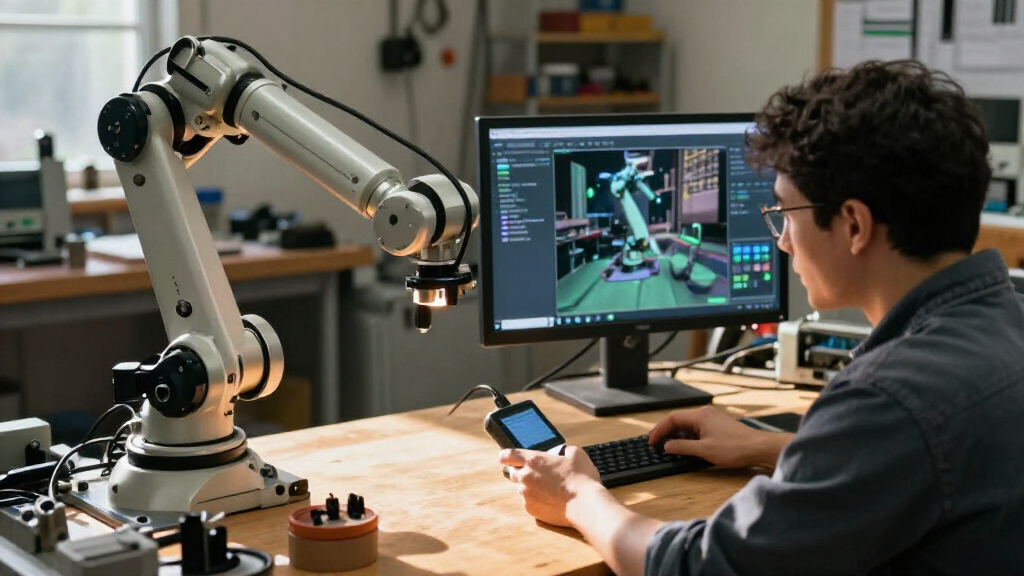

🔍 Read the full analysis: 7 Ways AI Is Changing Physical World Engineering on ThorstenMeyerAI.com

Get business pricing on tech for your team
- Business-only prices and quantity discounts
- Tax-exempt purchasing
- Multiple users, one account, clear invoices
TL;DR
OpenAI’s website lists a page titled “Accelerating engineering for the physical world.” The material provided contains only the title and URL, leaving the project, methods, timing and evidence unconfirmed; it does not support claims about seven specific ways AI is changing engineering.
OpenAI’s website lists a page titled “Accelerating engineering for the physical world,” pointing to a potential focus on engineering beyond digital tasks. But the source material available for this report includes only the page title and URL, so it does not establish what OpenAI describes, whether the work involves a product or research effort, or whether any results have been demonstrated.
The supplied reference identifies an OpenAI URL ending in “accelerating-engineering-for-the-physical-world” and gives the page title as “Accelerating engineering for the physical world.” It does not include the page text, publication date, supporting documents or linked announcements. The confirmed information is therefore limited to the existence of a page identified by that title in the supplied reference.
The material does not name a model, tool, engineering team, partner or intended user. It offers no details about which tasks might be addressed, how any system works, whether it has been tested, or whether access is available. It also contains no performance measurements, comparisons, direct quotations or attributed claims from OpenAI or outside experts.
The requested framing of “seven ways” cannot be substantiated from this source. Design, robotics, manufacturing, infrastructure and industrial processes are possible areas suggested by the broad phrase “physical world,” but none is identified in the available material as part of OpenAI’s work. Listing them as confirmed developments would go beyond the evidence.
Why Engineering Claims Need Evidence
Engineering affects products, buildings, infrastructure and industrial operations, so tools that genuinely improve engineering work could have consequences beyond the technology sector. Depending on the task and evidence, useful changes might involve development time, cost, reliability or safety. Those are potential stakes of the subject, not outcomes established by this page reference.
For readers, the distinction matters because a broad title is not proof that a system has changed how engineers work. To judge a claim of faster or better engineering, readers would need to know what task was measured, what existing process served as the comparison, and under what conditions testing took place. Independent evaluation and accounts from engineers using the work could help establish its practical value. None of that evidence appears in the supplied material.
Products Worth Considering

Anker SOLIX C1000 Gen 2 Portable Power Station with 100W Solar Panel

Bose SoundLink Max Portable Bluetooth Speaker, IP67 Waterproof and Dustproof, Up to 20 Hours of Battery Life, Black

Bose QuietComfort Wireless Noise-Cancelling Headphones, Cypress Green
As an affiliate, we earn on qualifying purchases.
What the OpenAI Title Says
The title signals a topic involving engineering for the physical world, rather than work described solely as digital. But that phrase is not a technical description: it does not say whether the subject is product design, software for industrial systems, robotics, manufacturing or another field. Nor does the title alone confirm that a particular artificial-intelligence system is involved.
The source material also does not show whether the page reports completed work, a planned initiative, a case study or a product announcement. Without the full text and a publication date, the timing and status of any development remain unverified. The title can identify an area of interest, but it cannot supply the missing details about scope, methods or impact.
The Project Details Are Missing
The central unanswered question is what OpenAI actually announced or described. The page body was not included in the material reviewed, so the project’s purpose, participants, engineering disciplines and technical approach cannot be confirmed. It is also unknown whether the work is available to anyone, being tested with partners or still at an early stage.
No evidence is provided about real-world trials, safeguards, human review, limitations or measurable outcomes. There is no stated baseline against which speed, cost, reliability or other results could be compared. The absence of those details in the supplied material does not show that the full page lacks them; it means claims about capability or impact cannot be verified from what is available here.
Review the Full Announcement
The next reporting step is to examine the complete, dated OpenAI page and check any supporting documentation or linked announcements. If it describes a tool or project, follow-up reporting should establish its intended users, the engineering tasks it addresses, its availability and whether it has been tested in operational settings.
Any performance figures should be reported with their measure, testing window and comparison baseline. Independent assessment and evidence from engineering teams would help show whether the work changes practice or remains a proposal. No launch date, follow-up milestone or further announcement is identified in the source material provided.
Key Questions
What has OpenAI confirmed in the available material?
The supplied reference identifies an OpenAI page titled “Accelerating engineering for the physical world.” It does not provide the page text or confirm the details of a project.
Does the source explain seven ways AI is changing engineering?
No. The available material contains a title and URL, not a list of applications or evidence about changes to engineering practice. Specific examples would need confirmation from the full page or other sources.
Is there evidence that an engineering tool has been released?
No release, product, access information or launch date is confirmed in the material provided. The page’s title alone does not establish that a tool is available.
What would show whether the work is effective?
Readers would need details on the task tested, conditions, comparison baseline and measured results, along with information about limitations and independent evaluation. Those details are not present in the supplied reference.
Primary source: OpenAI · via ThorstenMeyerAI.com