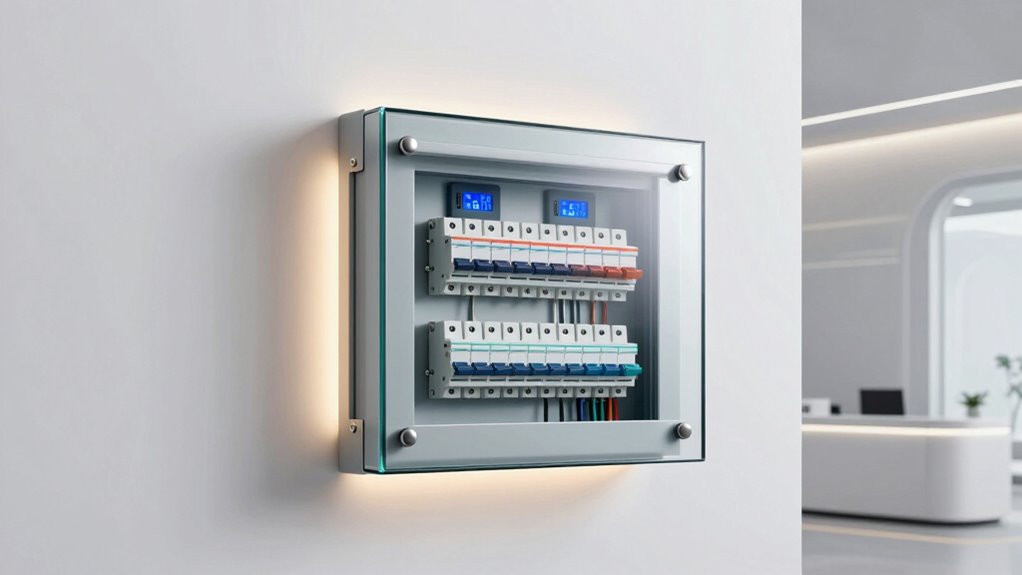

When it comes to managing energy efficiently in a smart home, a reliable electrical panel with advanced energy management capabilities is essential. The best overall pick, Emporia Vue 3, offers comprehensive real-time monitoring and automation features that suit most homeowners. For those seeking seamless integration, the Refoss Smart Home Energy Monitor with open API stands out for its flexibility, while the ABB ReliaHome Flex Kit excels in load management for larger systems. Buyers face tradeoffs such as ease of installation versus customization and upfront cost versus long-term savings. Continue reading for a full breakdown of the top options to find the best fit for your needs.

Get business pricing on tech for your team
- Business-only prices and quantity discounts
- Tax-exempt purchasing
- Multiple users, one account, clear invoices
Key Takeaways
- Top picks differentiate mainly by their integration options and scalability, impacting suitability for different home sizes and smart setups.
- Real-time data and automation features are more common in higher-tier models, but they come with increased complexity and cost.
- Open API and local control options offer better privacy and customization, favored by DIY enthusiasts and advanced users.
- Ease of installation varies widely, with some systems requiring professional setup while others are more DIY-friendly.
- Tradeoffs often involve balancing initial investment against potential energy savings and future expandability.
| Emporia Vue 3 Home Energy Monitor – Smart Home Automation Module and Real-Time Electricity Usage Monitor |  | Best Overall for Real-Time Monitoring and Automation Integration | Certification: UL Listed | Supported Systems: Single phase, 3-phase, Wye | Sensor Type: Clamp-on sensors | VIEW ON AMAZON | See Our Full Breakdown |
| Connected Energy Meter – Drivia with Netatmo |  | Best for Simple, Compatible Smart Monitoring | Model: Connected Measurement Module | Brand: Legrand | Included Transformer: 80A Closed Current Transformer | VIEW ON AMAZON | See Our Full Breakdown |
| Refoss Smart Home Energy Monitor with 16 60A Circuit Sensors |  | Best for Multi-Circuit Monitoring with Local Control | Number of circuits monitored: 18 | Sensor current capacity: 60A per sensor | Supported systems: Single-phase, Split-phase, 3-phase Wye | VIEW ON AMAZON | See Our Full Breakdown |
| SIEMENS INHEM010 Inhab Smart Home Energy Monitor 200A Main Current Transformer (CT) Kit |  | Best for 3-Phase Installations and Add-On Flexibility | Maximum primary current: 200A | Cable length: 1m | Inside diameter: 21mm | VIEW ON AMAZON | See Our Full Breakdown |
| Smart Home Energy Monitor 2×80A, Dual-Channel WiFi Electricity Usage Tracker with App Control |  | Best for Dual-Channel Household Monitoring and Solar Compatibility | Channels: 2 | Current per channel: 80A | Connectivity: WiFi | VIEW ON AMAZON | See Our Full Breakdown |
| Emporia Vue 3 Home Energy Monitor – Smart Home Automation Module and Real-Time Electricity Usage Monitor |  | Best Overall for Comprehensive Home Energy Management | Certification: UL Listed, CE Listed | Installation: Circuit panel, supports single-phase, split-phase, 2-wire, 3-wire, 3-phase systems | Sensors: Supports up to 16 branch sensors (sold separately) | VIEW ON AMAZON | See Our Full Breakdown |
| ABB ReliaHome Flex Kit with Hub and Wireless Controllers for Residential Load Management |  | Best for Load Balancing and Overload Prevention | Includes: 1 Hub, 2 Wireless Controllers | Load Capacity: 60 A | Connectivity: Ethernet, Wireless (mesh network) | VIEW ON AMAZON | See Our Full Breakdown |
| SIEMENS Inhab Smart Home Energy Monitor with Circuit Sensors |  | Best for Whole-Home and Circuit-Level Monitoring | Circuit Level Sensors: 16-50 Amp | Main Sensors: 2-200 Amp | Compatibility: USA and Canada | VIEW ON AMAZON | See Our Full Breakdown |
| Refoss Smart Home Energy Monitor with Open API, Home Assistant, No Cloud |  | Best for Privacy-Focused, Custom Automation | Model: EM16P | Control: Local via Web UI, Open API, MQTT | Compatibility: Home Assistant, OpenClaw AI | VIEW ON AMAZON | See Our Full Breakdown |
| Emporia Vue 3 Home Energy Monitor – Smart Home Automation Module and Real-Time Electricity Usage Monitor |  | Best for Versatile, Real-Time Monitoring and Automation | Compatibility: Smart Plugs, EV Chargers, Home Batteries, 3rd Party Thermostats | Dimensions: 10 x 5 x 5 inches | Sensors: Sixteen 50A branch sensors | VIEW ON AMAZON | See Our Full Breakdown |
| ABB ReliaHome Flex Hub FXH1W Wireless Ethernet Control Unit Energy Management System |  | Best for Seamless Residential Load Optimization | Model: FXH1W | Type: Wireless Ethernet Control Unit | Application: Residential Energy Management | VIEW ON AMAZON | See Our Full Breakdown |
| smart electrical panel energy management | Connectivity | Compatibility |
|---|---|---|
| Emporia Vue 3 Home Energy Moni | 2.4 GHz WiFi | — |
| Connected Energy Meter | — | — |
| Refoss Smart Home Energy Monit | Wi-Fi with external antenna | — |
| SIEMENS INHEM010 Inhab Smart H | — | Requires INHEM1216 main kit |
| Smart Home Energy Monitor 2×80 | WiFi | — |
| Emporia Vue 3 Home Energy Moni | Requires 2.4 GHz Wi-Fi, internet connection | — |
| ABB ReliaHome Flex Kit with Hu | Ethernet, Wireless (mesh network) | Any home electrical brand, load center |
| SIEMENS Inhab Smart Home Energ | — | USA and Canada |
| Refoss Smart Home Energy Monit | — | Home Assistant, OpenClaw AI |
| Emporia Vue 3 Home Energy Moni | 2.4 GHz Wi-Fi | Smart Plugs, EV Chargers, Home Batteries, 3rd Party Thermostats |
| ABB ReliaHome Flex Hub FXH1W W | Ethernet | Any home layout and electrical brand |
More Details on Our Top Picks
Emporia Vue 3 Home Energy Monitor – Smart Home Automation Module and Real-Time Electricity Usage Monitor
The Emporia Vue 3 stands out as the most comprehensive option for those seeking detailed real-time energy data combined with smart home automation. Its UL certification ensures safety, making it suitable for consistent household use. Unlike the Refoss Smart Home Energy Monitor, which emphasizes local control and privacy, Vue 3 integrates seamlessly with popular smart systems and supports solar and net metering, offering a broader scope of energy management. The primary tradeoff is its dependence on WiFi, which can limit real-time data when connectivity drops, and additional sensors are necessary for three-phase systems. This makes it a solid choice for homeowners wanting a reliable, feature-rich solution, but less ideal for those with unreliable internet or simple setups.
Pros:- UL-listed for safety and reliability
- Supports solar and net metering integration
- Real-time, high-accuracy energy monitoring
- Remotely manageable via app
Cons:- Requires WiFi connection for full functionality
- Additional sensors needed for 3-phase systems
- Data retention limited when app is closed
Best for: Homeowners looking for a reliable, all-in-one energy monitor that supports automation and solar integration.
Not ideal for: Users with unstable WiFi or those preferring a strictly local control system without cloud dependence.
- Certification:UL Listed
- Supported Systems:Single phase, 3-phase, Wye
- Sensor Type:Clamp-on sensors
- Connectivity:2.4 GHz WiFi
- Data Retention:7 days for 1-minute data
- Warranty:1 year
Our verdict“Best suited for tech-savvy homeowners seeking comprehensive, automated energy management with solar support.”
Connected Energy Meter – Drivia with Netatmo
The Connected Energy Meter offers reliable energy measurement compatible with Netatmo, making it ideal for users already invested in the Netatmo ecosystem. Its robust 80A current transformer ensures accurate readings for residential loads. Compared to the Emporia Vue 3, which emphasizes automation and broad system support, this model focuses on straightforward energy monitoring with high-quality components. Its limited product details and requirement for compatible installation mean it’s better suited for users comfortable with integration and who prioritize reliability over feature breadth. It’s less appropriate for those seeking an all-in-one or highly customizable system.
Pros:- Compatible with Netatmo smart systems
- Includes high-quality 80A current transformer
- Durable, well-made construction
Cons:- Limited product details and specifications
- Installation setup may be complex for some
- No price or user ratings available
Best for: Homeowners seeking a straightforward, reliable energy meter compatible with Netatmo smart systems.
Not ideal for: Users without Netatmo infrastructure or those seeking advanced automation features.
- Model:Connected Measurement Module
- Brand:Legrand
- Included Transformer:80A Closed Current Transformer
Our verdict“Ideal for users who want a dependable, straightforward energy measurement device integrated with existing Netatmo solutions.”
Refoss Smart Home Energy Monitor with 16 60A Circuit Sensors
The Refoss Smart Home Energy Monitor excels at tracking energy across up to 18 circuits with high precision, making it ideal for detailed home energy audits. Its local control via web UI and open API appeals to users who prioritize data privacy and customization, contrasting with the Emporia Vue 3, which relies on cloud access for remote management. While its setup can be complex—especially for those unfamiliar with breaker boxes—the long-term data storage of five years offers valuable insights. This device is best suited for technically inclined homeowners managing multiple circuits, but it’s less suitable for simple or quick installs.
Pros:- High-precision monitoring of multiple circuits
- Supports local control with no cloud dependency
- Long-term data storage (5 years)
- Supports solar energy optimization
Cons:- Complex installation process
- Limited to specific electrical system types
- Requires familiarity with breaker panels
Best for: DIY enthusiasts or professionals managing complex residential electrical systems interested in detailed, local energy analytics.
Not ideal for: Average homeowners seeking plug-and-play solutions or those uncomfortable with installation in breaker panels.
- Number of circuits monitored:18
- Sensor current capacity:60A per sensor
- Supported systems:Single-phase, Split-phase, 3-phase Wye
- Data storage duration:5 years
- Connectivity:Wi-Fi with external antenna
- Warranty:2 years
Our verdict“Best for energy-conscious homeowners who want detailed circuit data with privacy-focused local control.”
SIEMENS INHEM010 Inhab Smart Home Energy Monitor 200A Main Current Transformer (CT) Kit
The SIEMENS INHEM010 kit is designed as an upgrade for existing Inhab energy monitors, specifically supporting 3-phase systems with a 200A capacity. Its ease of installation as an add-on makes it a practical choice for those upgrading or expanding their current setup, especially compared to standalone monitors like the Emporia Vue 3. However, it requires the main monitor (INHEM1216) to be purchased separately, adding to the overall cost. Its indoor use limits placement options, and it’s not suitable for new installations without existing equipment. This kit fits well for users who already have an Inhab system and need to expand capacity, but less so for newcomers or those seeking a complete, all-in-one solution.
Pros:- Easy to install as an add-on
- UL listed for safety and quality
- Supports 3-phase energy monitoring
Cons:- Requires purchase of main monitor separately
- Limited to indoor use
- Needs existing system for full functionality
Best for: Existing Inhab system users needing a 200A 3-phase current transformer upgrade.
Not ideal for: New users or those without the main Inhab monitor who want a standalone solution.
- Maximum primary current:200A
- Cable length:1m
- Inside diameter:21mm
- Compatibility:Requires INHEM1216 main kit
- Indoor use:Yes
Our verdict“Best for current Inhab system owners expanding capacity, but not for new installations or standalone use.”
Smart Home Energy Monitor 2×80A, Dual-Channel WiFi Electricity Usage Tracker with App Control
The Smart Home Energy Monitor 2×80A offers a flexible dual-channel setup, making it suitable for tracking two major circuits or appliances independently, especially with solar or backup power systems. Its compatibility with Tuya and Smart Life apps offers a familiar interface, and the clamp sensors simplify installation for typical household circuits. Compared with the Emporia Vue 3, which provides comprehensive system-wide monitoring, this model excels in targeted monitoring of high-energy appliances or critical circuits. Its main tradeoff is reliance on 2.4GHz Wi-Fi, which can pose issues in congested networks. This makes it ideal for homeowners focused on specific loads, but less so for those wanting holistic energy management.
Pros:- Real-time, detailed power insights for two circuits
- Supports bi-directional power flow for solar and backup systems
- Easy clamp-style installation
- Compatible with popular smart home apps
Cons:- Requires stable 2.4GHz Wi-Fi for setup
- Limited to two channels, less suitable for whole-house monitoring
- Potential app compatibility issues with non-Tuya/Smart Life platforms
Best for: Homeowners wanting to monitor two key circuits or appliances with smart app control, especially those with solar or backup power.
Not ideal for: Users needing comprehensive whole-house monitoring or those with unreliable Wi-Fi networks.
- Channels:2
- Current per channel:80A
- Connectivity:WiFi
- App Compatibility:Tuya, Smart Life
- Installation:Clamp-style sensors
Our verdict“Ideal for homeowners who want targeted, dual-circuit energy tracking with smart control, especially in solar setups.”
Emporia Vue 3 Home Energy Monitor – Smart Home Automation Module and Real-Time Electricity Usage Monitor
The Emporia Vue 3 stands out for its ability to deliver real-time energy data across multiple circuits, making it an excellent choice for homeowners seeking detailed insights. Compared with the SIEMENS Inhab, it offers broader compatibility with solar and net metering, though it requires additional sensors for appliance-level monitoring, which can complicate installation. Its UL certification ensures safety, but the need to purchase sensors separately adds to the overall cost and setup effort. This model is best suited for those who want an integrated, scalable solution that can grow with their energy management needs, despite the extra investment in sensors and the complexity of installation.
Pros:- UL-certified for safety and reliability
- Supports comprehensive energy management including solar integration
- Provides real-time and historical energy data
- Supports up to 16 branch sensors for detailed monitoring
Cons:- Requires additional sensors for appliance-level monitoring
- Installation can be complex for non-technical users
Best for: Homeowners with solar systems and a desire for detailed energy oversight who are comfortable with DIY installation and sensor management
Not ideal for: Users seeking an out-of-the-box solution with minimal setup or those who want appliance-level control without additional sensors
- Certification:UL Listed, CE Listed
- Installation:Circuit panel, supports single-phase, split-phase, 2-wire, 3-wire, 3-phase systems
- Sensors:Supports up to 16 branch sensors (sold separately)
- Connectivity:Requires 2.4 GHz Wi-Fi, internet connection
- Dimensions:10 x 5 x 5 inches
- Warranty:1 year
Our verdict“Best suited for tech-savvy homeowners aiming for detailed, scalable energy management with solar support.”
ABB ReliaHome Flex Kit with Hub and Wireless Controllers for Residential Load Management
The ABB ReliaHome Flex Kit excels in preventing overloads through intelligent load balancing, making it ideal for households with multiple high-demand devices like EV chargers and water heaters. Compared with the Emporia Vue 3, it offers more direct load management without relying on sensors, but its dependence on Ethernet for setup can be limiting for some users. Its UL 916 certification assures safety, and the system’s wireless controllers provide flexible placement. This solution is best for those who want to avoid costly panel upgrades and prefer a dedicated load management system that integrates seamlessly with existing home wiring, though it may require professional installation and a stable Ethernet connection.
Pros:- Supports intelligent load management to prevent overloads
- Compatible with any electrical brand and load center
- Easy to monitor via mobile app
- Avoids costly panel upgrades
Cons:- Requires Ethernet connection for hub setup
- Limited to residential use and may need professional installation
Best for: Homeowners looking to prevent circuit overloads and optimize load distribution without extensive panel modifications
Not ideal for: Users who prefer simple plug-and-play solutions or do not want to deal with Ethernet wiring or professional setup
- Includes:1 Hub, 2 Wireless Controllers
- Load Capacity:60 A
- Connectivity:Ethernet, Wireless (mesh network)
- Certification:UL 916
- Compatibility:Any home electrical brand, load center
- Application:Residential energy management, load balancing, circuit monitoring
Our verdict“Ideal for households seeking a dedicated, professional-grade load management system to prevent overloads and improve efficiency.”
SIEMENS Inhab Smart Home Energy Monitor with Circuit Sensors
The SIEMENS Inhab offers detailed, real-time energy tracking at both the whole-home and circuit levels, making it perfect for users interested in granular energy data and peak demand control. Compared with the Emporia Vue 3, it provides more advanced circuit sensors and support for load shedding, though it might require professional installation, especially for circuit wiring. Its compatibility with North American standards and certifications like UL and CE make it trustworthy for many households. This device is ideal for those who want deep insights into their energy use, especially in homes with complex electrical systems, but it may be overkill for casual users seeking basic monitoring.
Pros:- Real-time monitoring with a mobile app
- Supports detailed circuit and whole home tracking
- Advanced energy management features like load shedding
- Certified safety standards
Cons:- Requires professional installation in electrical panels
- Limited to North America, app compatibility may vary
Best for: Homeowners or small business owners who want detailed, circuit-specific energy data and demand management capabilities
Not ideal for: Users seeking a simple, DIY-friendly setup or who only need basic energy measurement
- Circuit Level Sensors:16-50 Amp
- Main Sensors:2-200 Amp
- Compatibility:USA and Canada
- Standards:CE marked, UL Listed
Our verdict“Best suited for energy-conscious users needing detailed circuit-level data and demand control in their homes.”
Refoss Smart Home Energy Monitor with Open API, Home Assistant, No Cloud
The Refoss EM16P emphasizes local control and privacy, making it ideal for tech-savvy users who want to automate energy management without cloud dependence. Its seamless integration with Home Assistant and OpenClaw AI allows for highly customizable automation routines, especially for solar surplus energy management. Compared to the Emporia Vue 3, it offers greater control over data privacy but requires a higher technical skill for setup. Its ±1% accuracy and long-term data storage are excellent for detailed analysis, though the lack of built-in cloud backup could be a concern for some users who prefer cloud-based solutions.
Pros:- Local control ensures data privacy and security
- Supports integration with Home Assistant and AI automation
- High accuracy with long-term data storage
- Open API for custom automation and scripting
Cons:- Requires technical knowledge for setup
- Limited circuit sensor capacity
- No built-in cloud backup option
Best for: Home automation enthusiasts and solar energy users seeking local control and privacy in energy management
Not ideal for: Users unfamiliar with home automation platforms or those preferring plug-and-play monitoring solutions
- Model:EM16P
- Control:Local via Web UI, Open API, MQTT
- Compatibility:Home Assistant, OpenClaw AI
- Accuracy:±1%” (200A: 2–200A; 60A: 1–60A)
- Data Storage:Up to 5 years
- Sensors Supported:2 main, 16 branch sensors
Our verdict“Perfect for users who prioritize privacy and customized automation in their energy management system.”
Emporia Vue 3 Home Energy Monitor – Smart Home Automation Module and Real-Time Electricity Usage Monitor
The Emporia Vue 3 excels as a flexible energy management tool, supporting real-time data collection and automation for various home systems, including smart plugs, EV chargers, and home batteries. Compared with the SIEMENS Inhab, it offers easier integration for DIY homeowners and a broader array of compatible devices, though it relies on Wi-Fi for connectivity, which can be less reliable in some environments. Its UL certification provides safety assurance, but installation in more complex three-phase systems may require additional sensors and effort. This pick makes the most sense for users wanting a customizable, scalable system that can grow with their energy ecosystem.
Pros:- UL-certified for safety and reliability
- Supports real-time energy monitoring and automation
- Compatible with a wide range of smart devices
- Supports multiple system types including three-phase systems
Cons:- Wi-Fi dependency can affect data consistency
- Additional sensors needed for some 3-phase setups
Best for: Homeowners who want versatile energy monitoring with broad device compatibility and app-based automation
Not ideal for: Users seeking a simple plug-and-play monitor or those with unreliable Wi-Fi connections
- Compatibility:Smart Plugs, EV Chargers, Home Batteries, 3rd Party Thermostats
- Dimensions:10 x 5 x 5 inches
- Sensors:Sixteen 50A branch sensors
- Safety Certification:UL, CE
- Connectivity:2.4 GHz Wi-Fi
- Supported Systems:Single phase, split phase, 3-wire, 3-phase
Our verdict“Ideal for users seeking a flexible, multi-device compatible energy management system with automation capabilities.”
ABB ReliaHome Flex Hub FXH1W Wireless Ethernet Control Unit Energy Management System
The ABB ReliaHome Flex Hub FXH1W stands out as the ideal choice for homeowners seeking a simple yet effective way to manage energy demand without costly panel upgrades. Compared with the Emporia Vue 3 monitor, which mainly provides consumption data, the Flex Hub actively balances loads and prevents overloads through real-time control, making it more proactive. Its wireless Ethernet connectivity offers flexible installation, but it does depend on a stable wired connection, which might be a limitation in some setups. This device is well-suited for residences with multiple appliances that demand dynamic load balancing, especially where ease of integration is prioritized over extensive data logging. However, it’s limited to residential environments and requires Ethernet, which could be inconvenient in Wi-Fi-only homes. The Flex Hub offers real-time load monitoring, load balancing, and app control, making it a cost-effective alternative to panel upgrades for smart energy management.
Pros:- Enables active load balancing and real-time monitoring
- Compatible with a wide range of home layouts and electrical brands
- Supports control via a dedicated smartphone app
- Offers a cost-effective solution compared to panel upgrades
Cons:- Requires Ethernet connection, which may not be available in all homes
- Limited to residential applications, not suitable for commercial or larger buildings
Best for: Homeowners with existing Ethernet infrastructure who want dynamic load control without replacing their main panel
Not ideal for: Renters or homes without Ethernet wiring, as it depends on wired connectivity for operation
- Model:FXH1W
- Type:Wireless Ethernet Control Unit
- Application:Residential Energy Management
- Features:Real Time Load Monitoring, Load Balancing, App Control
- Connectivity:Ethernet
- Compatibility:Any home layout and electrical brand
Our verdict“This pick is best for tech-savvy homeowners seeking proactive energy management with minimal wiring upgrades.”

How We Picked
Each product was evaluated based on performance, ease of use, build quality, integration capabilities, and value for money. We prioritized systems that offer comprehensive real-time energy monitoring, reliable connectivity, and smart automation features. Compatibility with existing smart home ecosystems and ease of installation played key roles in our ranking. Additionally, we considered user feedback and the flexibility of control options, ensuring that each choice appeals to different levels of technical expertise and home sizes.| smart electrical panel energy management | Compatibility |
|---|---|
| Emporia Vue 3 Home Energy Moni | — |
| Connected Energy Meter | — |
| Refoss Smart Home Energy Monit | — |
| SIEMENS INHEM010 Inhab Smart H | Requires INHEM1216 main kit |
| Smart Home Energy Monitor 2×80 | — |
| Emporia Vue 3 Home Energy Moni | — |
| ABB ReliaHome Flex Kit with Hu | Any home electrical brand, load center |
| SIEMENS Inhab Smart Home Energ | USA and Canada |
| Refoss Smart Home Energy Monit | Home Assistant, OpenClaw AI |
| Emporia Vue 3 Home Energy Moni | Smart Plugs, EV Chargers, Home Batteries, 3rd Party Thermostats |
| ABB ReliaHome Flex Hub FXH1W W | Any home layout and electrical brand |
Factors to Consider When Choosing Smart Electrical Panel Energy Management
Choosing the right smart electrical panel for energy management involves understanding several key factors. It’s important to consider how well the system integrates with your existing smart home devices, the level of automation offered, and whether it supports local control or relies on cloud services. Installation complexity and compatibility with your electrical system also matter. Additionally, evaluating future-proof features like open APIs can help your system adapt as your home or needs evolve. Being aware of these broader considerations helps avoid common pitfalls and ensures your investment delivers real benefits.Compatibility and Integration
Ensure the system integrates smoothly with your current smart home ecosystem, whether that’s Alexa, Google Home, or Apple HomeKit. Compatibility can influence both setup difficulty and ongoing usability. A system that works with your existing devices reduces the need for additional hubs or adapters, saving time and money. However, be cautious of proprietary platforms that limit expansion or customization, which could restrict future upgrades.
Automation and Data Features
Look for systems that offer automation rules, real-time alerts, and detailed energy data. These features enable smarter energy use, such as scheduling or load balancing. But higher automation often involves more complex setups and higher costs, so consider your comfort with tech and budget. Systems with open APIs provide greater flexibility for custom integrations, appealing to tech-savvy users who want to tailor their energy management.
Ease of Installation
Some systems are designed for DIY installation, while others require professional setup. Evaluate your skill level and local regulations before choosing. A straightforward installation might mean lower upfront costs but could limit advanced features or scalability. Conversely, professional installation ensures proper setup but increases initial expenses. Consider how much you want to invest in setup versus future expansion.
Scalability and Future-Proofing
Think about whether the system can grow with your home. Will it support additional circuits, solar integration, or battery backup in the future? Open standards and APIs often make systems more adaptable. Avoid systems with limited expansion options if you plan to upgrade your home’s energy infrastructure later, as this can lead to costly replacements down the line.
Cost and Long-Term Savings
While premium systems tend to cost more upfront, they often deliver better automation, data accuracy, and scalability, translating into higher long-term savings. Cheaper options might lack advanced features but could be suitable for small homes or basic monitoring needs. Balance your initial investment against potential energy savings and the value of added features, considering how quickly you expect to recoup costs through efficiency.
Frequently Asked Questions
Can I install a smart electrical panel myself?
Installation complexity varies widely among systems. While some models are designed for DIY setup with clear instructions, many require a licensed electrician, especially for larger or more complex panels. Improper installation can pose safety risks or lead to system malfunctions, so it’s important to understand your own technical skills and local electrical codes before proceeding. When in doubt, hiring a professional ensures safety and proper integration, especially for systems that interface with your home’s main electrical supply.
Will a smart electrical panel work with my existing smart home devices?
Most modern systems are designed to integrate with popular platforms like Alexa, Google Home, or Apple HomeKit. Compatibility depends on the specific model and its supported protocols or APIs. Before purchasing, verify that the system supports your preferred ecosystem or offers open APIs for custom integrations. This compatibility can significantly enhance automation capabilities and overall ease of use, making your energy management more seamless.
Is a more expensive system worth the investment?
Higher-priced systems often include more advanced automation, better data accuracy, and scalability options, which can lead to greater energy savings and convenience over time. If you have a larger or more complex home, or if future expansion is planned, investing in a premium system can provide long-term value. Conversely, for smaller homes or basic monitoring needs, a less costly system might suffice, providing essential insights without the extra features that you may not utilize.
How does open API support benefit me as a user?
Open APIs allow greater customization and integration with third-party tools or custom automation scripts. This flexibility benefits tech-savvy users who want to tailor their energy management to specific needs or integrate with other smart home systems beyond standard compatibility. It also means your system can adapt more easily to future technologies or upgrades without requiring a complete replacement, extending the lifespan and usefulness of your investment.
What should I consider regarding security and privacy?
Since these systems often connect to your home network and collect sensitive energy data, security is a key consideration. Avoid systems that rely solely on cloud services with weak security protocols. Look for options that offer local control or data encryption, and review the manufacturer’s privacy policies. Protecting your network with strong passwords and regular updates further safeguards your information and ensures your energy management system functions reliably without exposing your home to potential cyber threats.
Conclusion
For most homeowners seeking a reliable, easy-to-install solution, the Emporia Vue 3 offers a solid balance of features, affordability, and compatibility, making it the best overall choice. Those with a focus on customization and future expansion might prefer the open API options like Refoss Smart Home Energy Monitor. For larger homes or advanced load management, the ABB ReliaHome Flex Kit provides robust scalability. Beginners should opt for systems with simplified setup, while tech enthusiasts or DIYers will benefit from open-platform models that support extensive automation. Consider your specific needs, budget, and technical comfort to select the system that will best serve your home’s energy goals in 2026.
Columbus Day / Indigenous Peoples' Day Picks
long weekend sales
As an affiliate, we earn on qualifying purchases.