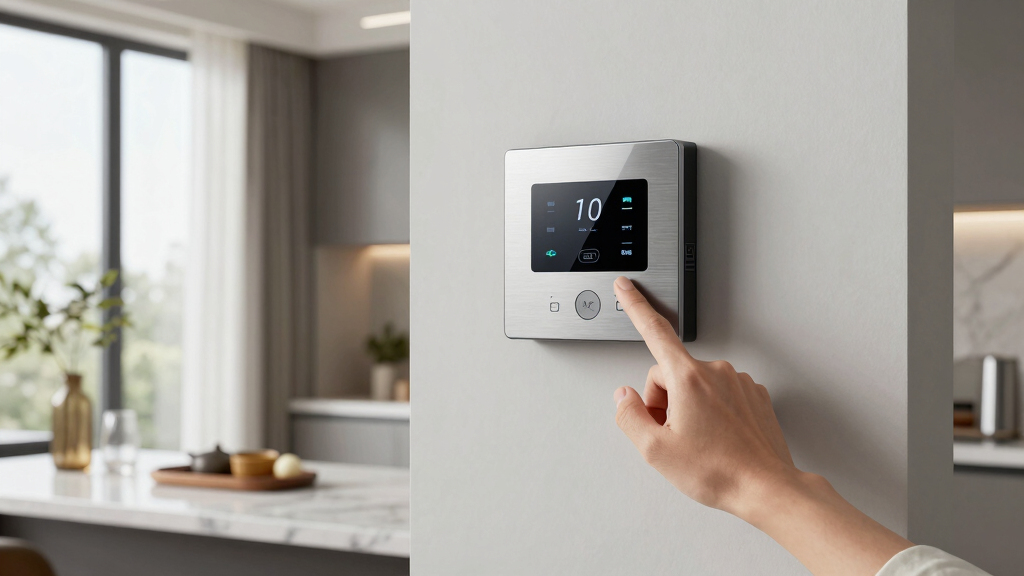
High-end homes demand sophisticated energy monitoring solutions that deliver precise data, seamless integration, and robust features. The Emporia Vue 3 stands out as the best overall choice for its comprehensive monitoring and smart home compatibility. For users prioritizing open API access, the Refoss Smart Home Energy Monitor offers unmatched customization options. Meanwhile, the SIEMENS Inhab Smart Home Energy Monitor excels in circuit-level detail for large properties. These options illustrate the key tradeoffs: advanced features versus ease of use, open access versus proprietary systems. Continue reading to explore the full lineup and find the best fit for your high-end home.
Key Takeaways
- The best premium monitors combine detailed circuit-level data with seamless smart home integration.
- Open API access is a standout feature for those wanting custom dashboards or third-party automation.
- Build quality and certification, like UL or ETL, are vital for ensuring safety and long-term reliability.
- The most feature-rich options tend to be more complex, making ease of use a key consideration.
- Pricing varies significantly; investing in a higher-cost system often delivers better scalability and support.


More Details on Our Top Picks
Emporia Vue 3 Home Energy Monitor – Smart Home Automation Module and Real Time Electricity Usage Monitor, Power Consumption Meter, Solar and Net Metering for UL Certified Safe Energy Monitoring
This Emporia Vue 3 excels as a comprehensive home energy monitor, supporting various systems and offering real-time insights that surpass simpler options like the Meross Energy Monitor. Its UL certification provides peace of mind, and support for up to sixteen sensors allows detailed circuit-level tracking—ideal for those managing complex electrical loads. Compared with the Refoss Monitor, which focuses on local control and privacy, the Vue offers cloud-based data access and automation, though this means slightly less privacy. The installation supports multiple system types, but the need for an additional 200A sensor for some setups is a minor inconvenience. Its app enables automation for peak demand and solar management, making it suitable for high-end homes seeking safety, flexibility, and extensive data. A tradeoff is the higher price and installation complexity relative to basic monitors, but the benefits justify it for premium users.
Pros:- Supports up to 16 circuit sensors for detailed load analysis
- UL-certified safety ensures reliable electrical standards
- Supports advanced automation with solar and demand management
Cons:- Requires additional sensors for three-phase or certain system types, increasing cost
- Installation can be complex for non-experts and may need professional help
Best for: Homeowners with sophisticated electrical systems who prioritize safety certifications and detailed circuit monitoring.
Not ideal for: Owners of small, simple homes who need only basic energy tracking without circuit-level detail or advanced automation.
- Supports:Single phase, split phase, 3-phase systems with additional sensor
- Sensors:Up to 16 circuit sensors + 2 main sensors
- Safety Certification:UL Listed, CE Listed
- Monitoring Range:Real-time, hourly, daily data
- Connectivity:WiFi (2.4 GHz), cloud and app access
- Installation Support:Circuit panel, optional additional sensors
Bottom line: This pick is best for high-end homes that demand safety, extensive monitoring, and automation capabilities despite the higher complexity and cost.
Emporia Vue 3 Home Energy Monitor – Smart Home Automation Module and Real Time Electricity Usage Monitor, Power Consumption Meter, Solar and Net Metering for UL Certified Safe Energy Monitoring
This Emporia Vue 3 model with 16 sensors makes it a top choice for those needing detailed circuit-level insights, comparable to the Meross Monitor but with broader system support and safety certifications. Its inclusion of 16 branch sensors allows comprehensive load tracking, ideal for high-end homes with multiple circuits. Unlike the Refoss, which emphasizes local privacy, this version offers cloud connectivity and automation, though at the expense of some privacy considerations. The unit’s design supports most home systems, but with the necessity to carefully select which circuits to monitor—especially in tight breaker boxes. The app provides detailed historical data and real-time alerts, which are essential for energy optimization. The main tradeoff is the higher price and the need for careful circuit planning, but for large homes, this is a highly capable solution.
Pros:- Supports 16 circuit sensors for granular load management
- UL and CE safety certifications for peace of mind
- Supports integration with smart home platforms and automation
Cons:- Requires careful circuit planning and sensor placement
- Higher cost due to multiple sensors and system support
Best for: Owners of large, complex homes wanting detailed circuit monitoring and automation integration.
Not ideal for: Users with small homes or limited budgets who only need basic energy tracking without circuit detail.
- Sensors:16 branch sensors + 2 main sensors
- Supports:Most home electrical systems including split phase and 3-phase
- Safety Certification:UL, CE
- Data Storage:Up to 5 years of historical data
- Connectivity:WiFi, cloud, web UI
- Monitoring Range:Real-time, historic, alerts
Bottom line: Ideal for large, premium homes that want detailed circuit data and smart automation, accepting the higher investment and setup effort.
Refoss Smart Home Energy Monitor, Native Open API & Web UI (No Cloud Required), Real Time Electricity Usage Monitor, Power Consumption Meter Works with Home Assistant & MQTT, Solar Net Metering, ETL
The Refoss Energy Monitor stands out for its local control and open API, making it the ideal choice for users concerned about privacy and who want direct control, unlike the cloud-reliant Emporia models. Its support for Home Assistant and MQTT enables seamless automation and data integration, similar to the Meross, but with the advantage of no cloud dependency. The device supports multiple circuits with flexible sensor configurations, but the user must plan carefully for sensor placement and circuit load balancing. Its local web UI and open API provide transparency and customization, making it perfect for tech-savvy homeowners. However, this requires some technical knowledge for setup and use, which might be a barrier for less experienced users. For those prioritizing privacy and open-source control, this is an excellent choice, though it sacrifices some plug-and-play convenience.
Pros:- Local control via Web UI, API, and MQTT for privacy and customization
- Supports high accuracy monitoring with flexible circuit configurations
- Supports automation with Home Assistant, maximizing solar and load management
Cons:- Requires technical knowledge for setup and configuration
- No cloud backup or remote access by default, which limits remote convenience
Best for: Tech-savvy homeowners and privacy-focused users who want robust local control and open API support.
Not ideal for: Owners seeking a simple, plug-and-play system without technical setup or customization needs.
- Support:No cloud, local Web UI, API, MQTT
- Sensors:Supports multiple circuits, flexible configuration
- Accuracy:±1% for main, ±2% for branch sensors
- Connectivity:WiFi, open API, local control
- Supported Platforms:Home Assistant, MQTT
- Monitoring Range:Real-time, historical data, alerts
Bottom line: Best suited for DIY enthusiasts and privacy-conscious households willing to handle a more complex setup for full local control.
Meross Smart Energy Consumption Monitor with 18 Circuit Monitoring, Electricity Usage Monitor, Real-Time Power Usage Monitor, Home Assistant Support, Smart Alerts, No Subscriptions, 2-Year Warranty
The Meross Energy Monitor offers a straightforward install with 18 circuits, making it suitable for users who want comprehensive but simplified load monitoring, comparable to the Emporia Vue but with easier setup. Its clamp-on sensors are quick to install, and the app provides detailed real-time data, including power factor, voltage, and current for each circuit. Unlike the Refoss, which is more open-source oriented, Meross emphasizes ease of use and integration with platforms like Home Assistant, without subscriptions or cloud lock-in. The main limitation is the focus on 18 circuits, which might not cover all home loads, and some users may find it less customizable than open APIs. Still, it balances functionality, ease, and privacy, making it a practical choice for high-end homes wanting detailed insights without complex wiring.
Pros:- Supports 18 circuits with quick clamp-on sensors
- Supports Home Assistant with no subscriptions or cloud dependence
- Includes detailed real-time power, voltage, and power factor data
Cons:- Limited to 18 circuits, may not cover all loads
- Less flexible for custom circuit configurations compared to open API solutions
Best for: Homeowners seeking easy-to-install, circuit-level monitoring with good platform support and no subscription fees.
Not ideal for: Owners of very large homes with many circuits or those needing highly customizable or open-source solutions.
- Circuits Supported:18 circuits
- Sensors:Clamp-on CTs, plug-and-play
- Data Accuracy:Within ±2%
- Connectivity:WiFi, Home Assistant support
- Installation:Quick clamp-on, minimal wiring
- Warranty:2 years
Bottom line: Great for users wanting effortless installation and solid platform support in a mid-sized high-end home, with a manageable number of circuits.
SIEMENS Inhab Smart Home Energy Monitor with 16-50Amp Circuit Level Sensors and 2-200Amp Main Sensors for Real Time Electricity Monitoring and Metering
The SIEMENS Inhab monitor offers professional-grade, multi-circuit load measurement that rivals the Emporia Vue but with a focus on industrial standards and flexible load management. Its ability to connect directly to main and branch circuits makes it suitable for high-end installations that require precise, real-time data and advanced features like demand management, solar net metering, and load shedding. While installation may be more complex than consumer-grade options, the device supports a wide range of circuit sizes and types, making it ideal for sophisticated homes with dedicated electrical control systems. Its CE and UL certifications ensure compliance with safety standards. The main tradeoff is the higher price and technical installation, which might require professional help, but it provides unmatched accuracy and control for premium applications.
Pros:- Supports 16-50A circuits and 2 main sensors for detailed load tracking
- CE and UL compliance for safety and quality
- Supports real-time monitoring, demand management, and load shedding
Cons:- Complex installation likely requiring professional electrician
- Higher cost and more advanced setup than typical consumer monitors
Best for: Premium homeowners or professionals needing detailed, enterprise-level energy monitoring and automation.
Not ideal for: DIY homeowners with limited electrical experience or small homes with basic monitoring needs.
- Supports:16 circuits, 2 main sensors, 50A and 200A
- Standards:CE, UL
- Real-time Data:Yes
- Installation:Designed for electrical panel, professional setup recommended
- Monitoring Range:Exact load, demand, and real-time metrics
- Automation Features:Load shedding, demand management
Bottom line: Perfect for high-end homes or professionals demanding precise, multi-circuit load control with rigorous standards, accepting higher complexity and investment.
This option stands out for its flexible installation options, supporting single-phase, split-phase, and three-phase systems without restrictions, making it ideal for high-end homes with complex wiring. Unlike the Emporia Vue 3, which emphasizes safety certification and automation features, this SEM-Meter focuses on privacy and local control, allowing run in LAN without internet access by using your own MQTT server. Its 16 clamp sensors cover multiple circuits, and it supports custom rate templates for detailed cost analysis—perfect for property managers or homeowners seeking granular monitoring. A minor tradeoff is the setup complexity, especially for non-technical users, and the lack of built-in battery backup. Compared to the Refoss, which offers open API but fewer sensors, this model prioritizes privacy and extensive circuit coverage. BestFor: High-end homeowners needing comprehensive, private energy data without reliance on cloud. notIdealFor: Less tech-savvy users who prefer plug-and-play solutions. pros: Supports multiple system types, runs without internet, extensive circuit coverage, customizable cost templates. cons: Setup complexity, no built-in battery backup, requires MQTT knowledge.
Verdict: This pick makes the most sense for high-end homes demanding flexible, private energy monitoring with advanced customization.
Specs: Supports single-phase up to 240VAC, split-phase, three-phase up to 415Y/240VAC, 16 sensors, local LAN operation, MQTT support, 1% accuracy, 4.09 lbs, 3.1 x 1.2 x 4.18 inches.Pros:- Supports multiple system types with no restrictions
- Runs entirely on LAN without needing internet or cloud
- Extensive circuit coverage with 16 clamp sensors
- Highly customizable with cost templates and MQTT control
Cons:- Setup can be complex for non-technical users
- No internal battery backup, relies on external power
- Requires knowledge of MQTT or LAN networking
Best for: High-end homeowners who prioritize privacy, flexibility, and detailed circuit monitoring.
Not ideal for: Users seeking a simple, out-of-the-box setup or those without technical expertise in MQTT or LAN networks.
- Supported systems:Single-phase up to 240VAC, split-phase, three-phase up to 415Y/240VAC
- Number of sensors:16
- Control type:LAN with MQTT
- Accuracy:1%
- Weight:4.09 pounds
- Dimensions:3.1 x 1.2 x 4.18 inches
Bottom line: Ideal for tech-savvy homeowners wanting maximum privacy, extensive circuit control, and flexible installation options.
Emporia Vue 3 Home Energy Monitor – Smart Home Automation Module and Real Time Electricity Usage Monitor, Power Consumption Meter, Solar and Net Metering for UL Certified Safe Energy Monitoring
This model is favored for its UL certification ensuring safety and its seamless integration with smart home platforms like Alexa and the Emporia app, making it suitable for those prioritizing certified reliability. Compared to the Refoss, which offers local storage and open API, the Emporia Vue 3 emphasizes safety compliance and ecosystem compatibility, ideal for high-end homes that value UL certification. Its 16 sensors support a comprehensive view of your circuits, and the app provides real-time data, automation, and detailed energy insights. A key tradeoff is that it requires internet access for full functionality, unlike the Refoss, which supports local data storage. While the SIEMENS Inhab provides robust sensors, Emporia Vue 3 offers easier app control and broad platform support. BestFor: Buyers seeking UL-certified safety and smart automation integration for large homes. notIdealFor: Homes where internet reliability is a concern or users seeking purely local control. pros: UL certified, supports smart home platforms, real-time data, extensive circuit monitoring, solar and net metering support. cons: Requires internet connection, not fully local, higher cost, dependent on app ecosystem.
Verdict: This pick is perfect for safety-conscious, automation-ready homeowners who rely on cloud and app integration.
Specs: UL listed, supports 16 circuits, real-time data, app control, solar/net metering, 24/7 monitoring, 3.5 x 3.5 x 1.1 inches, 4.6 lbs, compatible with Alexa and iOS/Android.Pros:- UL safety certification ensures compliance
- Supports multiple smart home platforms including Alexa
- Real-time energy data in app
- Supports solar and net metering
Cons:- Requires internet connection for full features
- More expensive than local-only solutions
- Dependent on app ecosystem for control
Best for: Homeowners prioritizing UL safety certification and extensive smart home ecosystem compatibility.
Not ideal for: Those who prefer offline operation or have unreliable internet connections.
- Certification:UL Listed
- Supports circuits:16 circuits
- Connectivity:Wi-Fi, Alexa, iOS, Android
- Monitoring type:Real-time
- Compatibility:Solar, Net Metering
- Dimensions:3.5 x 3.5 x 1.1 inches
- Weight:4.6 lbs
Bottom line: Great for safety-focused, automation-ready homes that want certified, cloud-connected energy monitoring.
Refoss Smart Home Energy Monitor Real-Time Electricity Usage Monitor with 16x60A Circuit Sensor, Energy Meter, Local Data Storage with Open API & Web UI, Home Assistant, Solar Metering, ETL Certified
This model makes the list for its emphasis on privacy, offering local data storage and open API support, making it ideal for users who prefer not to rely on cloud services. Unlike the Emporia Vue 3, which emphasizes safety and smart integrations, the Refoss prioritizes local control with Web UI and MQTT support, appealing to high-end homes with a focus on data security. Its 16 sensors enable detailed circuit-level monitoring, and the open API allows advanced customization. The main tradeoff involves setup complexity and the need for some technical know-how, especially for integrating with Home Assistant or MQTT. Compared to the SIEMENS Inhab, which offers extensive sensor options, Refoss provides a more flexible and privacy-preserving solution. BestFor: Tech-savvy homeowners valuing privacy and local data management. notIdealFor: Users seeking simple, plug-and-play solutions or full cloud connectivity. pros: Local data storage, open API & Web UI, supports MQTT, extensive circuit sensors, high privacy. cons: Setup can be complex, requires technical knowledge, no native smart home platform integration, no cloud backup.
Verdict: Perfect for tech-oriented homeowners who want maximum control over their energy data and privacy.Specs: 16 sensors supporting up to 60A, supports MQTT & Open API, local Web UI, 1% accuracy, 4.27 lbs, 4.5 x 3.5 x 1.1 inches, ETL certified, compatible with Home Assistant.Pros:- Supports local data storage and open API
- Supports MQTT for advanced home automation
- Provides detailed circuit-level monitoring
- Ensures strong privacy with no cloud dependence
Cons:- Setup can be complex for non-technical users
- Requires familiarity with MQTT and API integrations
- No native app or cloud services for quick monitoring
Best for: Owners who prioritize local data privacy, customization, and do-it-yourself integration.
Not ideal for: Those who prefer straightforward, app-based solutions or minimal setup effort.
- Sensors supported:16 circuits up to 60A
- Connectivity:MQTT, Web UI, open API
- Monitoring accuracy:1%
- Weight:4.27 pounds
- Dimensions:4.5 x 3.5 x 1.1 inches
- Certification:ETL
Bottom line: Ideal for technically skilled homeowners seeking maximum privacy and custom control over their energy data.
Emporia Energy Monitor with 16 Sensors + 4 Smart Plugs Super Bundle – Whole Home Electricity Usage Tracking & Real-Time Control – Supports Solar Net Metering – Works with iOS, Android, Alexa
This bundle offers a comprehensive solution with the Emporia Vue energy monitor and four Wi-Fi smart plugs, making it ideal for users who want both detailed circuit monitoring and control over individual appliances. Unlike the Refoss, which emphasizes privacy and local control, this package leverages cloud-based monitoring and automation for ease of use and quick setup. The 16 sensors provide a full view of your home’s power consumption, while the smart plugs enable remote control and scheduling. The app supports automation, alerts, and energy tracking, but this reliance on cloud services might be a con for privacy-focused users. Compared to the Emporia Vue 3, which has UL certification, this bundle is more about total control and automation convenience. BestFor: Homeowners seeking straightforward, integrated whole-home monitoring with appliance control. notIdealFor: Those wanting maximum privacy or local-only operation. pros: Complete bundle with energy monitor and plugs, easy setup, supports smart home platforms, real-time data, automation features. cons: Cloud dependence, privacy concerns, higher monthly data reliance, more expensive.
Verdict: Perfect for users wanting an all-in-one solution for detailed home energy management and appliance control with minimal setup effort.Specs: 16 circuits support, 4 Wi-Fi smart plugs, supports solar and net metering, compatible with iOS/Android/Alexa, real-time data, cloud storage, 3.3 x 2.8 x 1.2 inches, 2-year warranty.Pros:- Includes energy monitor and four smart plugs
- Supports automation and remote control via app
- Works with Alexa, iOS, Android
- Supports solar and net metering
Cons:- Cloud dependence limits privacy
- Higher overall cost
- Requires stable internet for full functionality
- Potential monthly data costs
Best for: Homeowners who want an easy, integrated solution for whole-home energy tracking and remote control.
Not ideal for: Privacy-conscious users who prefer local-only solutions or minimal cloud dependency.
- Number of sensors:16
- Smart plugs included:4
- Platform support:iOS, Android, Alexa
- Monitoring type:Real-time
- Compatibility:Solar, Net Metering
- Dimensions:3.3 x 2.8 x 1.2 inches
- Warranty:2 years
Bottom line: Ideal for those seeking a hassle-free, integrated, and controllable home energy management system.
How We Picked
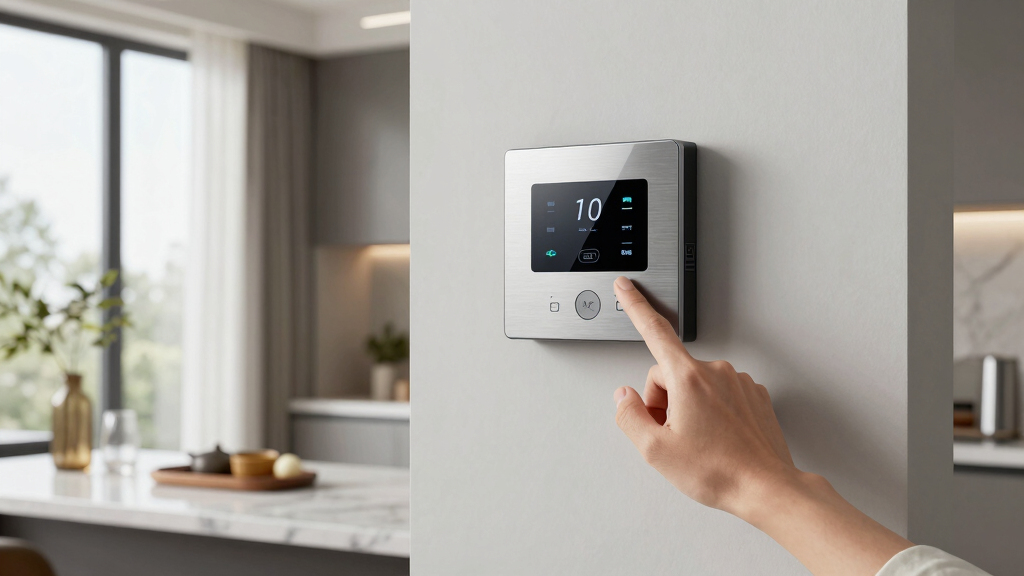
Our evaluation focused on performance, build quality, ease of installation, integration capabilities, and future-proof features. We prioritized models that offer detailed real-time data, compatibility with popular smart home platforms, and robust hardware construction suitable for high-end residences. Products were ranked based on their feature set, user interface, customization options, and value for the investment. We also considered the reputation of the brands and their commitment to safety standards, ensuring these kits are reliable and durable for premium homes. The top picks strike a balance between advanced functionality and user-friendly operation, catering specifically to high-end property owners seeking premium quality.Factors to Consider When Choosing Best Premium Energy Monitoring Kit For High-end Homes
Choosing the best premium energy monitoring kit for a high-end home requires careful consideration of several factors. While features like circuit-level detail and API access are appealing, it’s equally important to evaluate ease of installation, compatibility with existing systems, and ongoing support. High-end homes often demand scalable solutions that can grow with future technology updates. Being aware of common pitfalls, such as overpaying for unnecessary features or selecting incompatible systems, can save time and money. Here are key factors to guide your decision-making process:Performance and Data Granularity
For high-end homes, detailed, real-time data at the circuit level is often a priority. Look for systems that provide granular insights into individual circuits and whole-home consumption. This level of detail supports precise energy management and can help identify inefficiencies or faulty equipment. However, increased data granularity often means more complex setup, so consider your technical comfort level and whether you need such depth. The best models balance detailed insights with straightforward data presentation.
Integration and Compatibility
Smart home integration is vital for seamless automation and control. Check if the system supports popular platforms like Home Assistant, Alexa, or Google Home. Open API access can be especially valuable for customizing dashboards or integrating with bespoke automation setups. Compatibility with existing electrical infrastructure and smart devices ensures a smoother installation process. Remember, a system that integrates well reduces frustration and enhances overall user experience.
Build Quality and Certification
High-end homes require equipment that is not only feature-rich but also reliable and safe. Look for products with certifications like UL or ETL, indicating compliance with safety standards. Solid hardware construction minimizes risks of failure or damage, especially in complex electrical environments. Investing in high-quality materials and reputable brands can prevent costly repairs or replacements down the line, making it a wise choice for luxury residences.
Ease of Installation and Use
While technical sophistication is desirable, ease of installation remains a key factor. Some systems are designed for DIY setup, whereas others may require professional installation. Consider your own skill level and the complexity of your electrical system. User interfaces should be intuitive, with clear dashboards and straightforward configuration options. A system that is overly complex can negate its advanced features, so find a balance that matches your technical comfort and needs.
Cost and Future Scalability
Premium systems often come with a higher price tag, but they also tend to offer better support, scalability, and longevity. Consider how well the system can expand if you add more circuits or integrate new smart devices over time. Budget accordingly, but also think about the total cost of ownership, including support, updates, and potential upgrades. Investing in a modular, scalable solution can provide better long-term value for high-end homes.
Frequently Asked Questions
Can these energy monitors be installed in a luxury home without professional help?
Many premium energy monitors are designed for DIY installation, especially those with plug-and-play features or comprehensive guides. However, high-end homes often have complex electrical systems that benefit from professional installation to ensure safety and optimal performance. If your residence includes sophisticated wiring or custom setups, hiring a licensed electrician can prevent errors and ensure compliance with local codes. Ultimately, choosing a system with clear installation instructions or professional support options increases confidence in a safe, effective setup.
Will these systems work with my existing smart home devices?
Most premium energy monitors support popular smart home ecosystems like Alexa, Google Home, or Apple HomeKit, but compatibility isn’t universal. Check each product’s specifications carefully to confirm support for your existing devices. Open API access can also enable custom integrations if your setup is highly bespoke. Ensuring compatibility before purchase reduces surprises and allows you to leverage your current smart home ecosystem fully.
How often do I need to calibrate or maintain these energy monitors?
High-quality monitors typically require minimal calibration, with many designed to be maintenance-free once installed. Regular software updates may be needed to keep features current and security intact. Physical maintenance is usually limited to occasional cleaning or checking connections, particularly in environments with dust or humidity. Choosing a device with a proven track record of durability minimizes ongoing upkeep, which is especially important for high-end residences where reliability is critical.
Are open API systems worth the extra investment for a luxury home?
Open API systems provide significant flexibility for customization, advanced automation, and integration with third-party tools. For high-end homes with sophisticated automation needs or bespoke dashboards, open API access can be a game-changer. However, they often come at a higher price point and may require more technical expertise to fully leverage. If you value customization and future-proofing, investing in open API devices aligns well with the demands of a premium residence.
Premium kits typically offer circuit-level data, advanced integration options, higher build quality, and scalability features that basic systems lack. They are designed for high-end homes where detailed insights, safety, and customization matter most. Basic models often provide only overall consumption data and limited connectivity, which might suffice for smaller or less complex residences. The choice depends on your need for detailed analytics and how integrated you want your energy management to be.
Conclusion
For high-end homeowners seeking the best overall experience, the Emporia Vue 3 offers comprehensive features, excellent integration, and reliable build quality. If customization and open access are your priorities, the Refoss Smart Home Energy Monitor is ideal, especially for tech-savvy users. The SIEMENS Inhab stands out for large properties requiring detailed circuit monitoring. Budget-conscious luxury owners should consider models like the Meross Smart Energy Consumption Monitor, which balances features with price. Ultimately, your choice should align with your technical comfort, integration needs, and investment in future scalability.