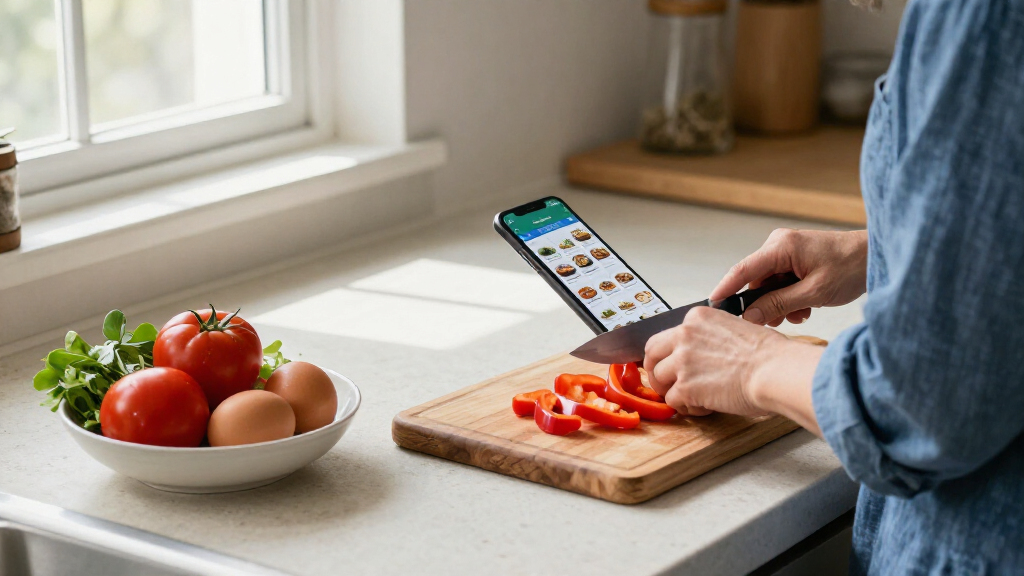
AI meal planning apps can help turn food preferences and available ingredients into recipes and weekly plans, but their tools and focus vary. I rank CookMate AI Recipe & Meal Planner as the best overall choice for shoppers seeking planning and recipe support in one app. Weekly Dish: Plan Your Meals stands out for a straightforward weekly-planning focus, while JEEJIA’s family calendar suits households that want a shared kitchen display more than a dedicated AI planner. The main tradeoffs are how much control you want over meal suggestions, how well an app fits your household routine, and whether you need a planning tool or a separate screen for family coordination. Read on for the full breakdown and guidance on matching each option to your needs.

Get business pricing on tech for your team
- Business-only prices and quantity discounts
- Tax-exempt purchasing
- Multiple users, one account, clear invoices
Key Takeaways
- CookMate AI Recipe & Meal Planner earns the overall lead because its combined recipe and planning focus aligns most closely with the core job of this category.
- Weekly Dish: Plan Your Meals is the clearest fit for buyers who want weekly organization without making AI recipe generation the main attraction.
- JEEJIA’s 10.1-inch touchscreen family calendar is a different kind of pick: it helps make plans visible at home, but it is not a substitute for a dedicated meal-planning app.
- AI Meal Planner & Recipe Scanner and AI Chef Food Recipe Generator foreground different starting points—organizing meals versus generating recipes—so shoppers should prioritize their actual bottleneck.
- FitDish AI Smart Cooking Assistant and ChefGenie AI Recipe App and Meal Planner add cooking-assistant and recipe-planning angles, but buyers should check that those functions match their routine rather than choosing on AI branding alone.
| FitDish AI Smart Cooking Assistant |  | Best for Cooking Guidance | Product type: Smart cooking assistant | AI: AI in product name; specific functions not provided | Meal-planning features: Not specified | VIEW LATEST PRICE | See Our Full Breakdown |
| CookMate AI Recipe & Meal Planner |  | Best for Recipe-and-Plan Focus | Product type: AI recipe and meal planner | Recipe support: Included in product description; details not provided | Meal planning: Included in product description; details not provided | VIEW LATEST PRICE | See Our Full Breakdown |
| Weekly Dish: Plan Your Meals |  | Best for Weekly Planning | Product type: Meal-planning product | Planning focus: Weekly meals | AI features: Not specified | VIEW LATEST PRICE | See Our Full Breakdown |
| JEEJIA 10.1-Inch HD Touchscreen Digital Family Calendar and Photo Frame |  | Best for Shared Family Meal Planning | Brand: JEEJIA | Model: SZRL | Screen size: 10.1 inches | VIEW LATEST PRICE | See Our Full Breakdown |
| AI Meal Planner & Recipe Scanner |  | Best for Recipe Scanning | Product type: AI meal planner and recipe scanner | Meal planning: Included in product title; details not provided | Recipe scanning: Included in product title; supported inputs not specified | VIEW LATEST PRICE | See Our Full Breakdown |
| ChefGenie AI Recipe App and Meal Planner |  | Best for Combining Recipes and Meal Planning | Product type: AI recipe app and meal planner | AI capability: AI-powered | Primary functions: Recipe app and meal planning | VIEW LATEST PRICE | See Our Full Breakdown |
| AI Chef Food Recipe Generator |  | Best for Fast Recipe Inspiration | Product type: AI food recipe generator | Recipe inputs: User preferences and available ingredients | Meal coverage: Breakfast, lunch, dinner, and snacks | VIEW LATEST PRICE | See Our Full Breakdown |
| AI meal planning app | Product type | Platform |
|---|---|---|
| FitDish AI Smart Cooking Assis | Smart cooking assistant | Not specified |
| CookMate AI Recipe & Meal Plan | AI recipe and meal planner | Not specified |
| Weekly Dish: Plan Your Meals | Meal-planning product | Not specified |
| JEEJIA 10.1-Inch HD Touchscree | — | — |
| AI Meal Planner & Recipe Scann | AI meal planner and recipe scanner | Not specified |
| ChefGenie AI Recipe App and Me | AI recipe app and meal planner | — |
| AI Chef Food Recipe Generator | AI food recipe generator | — |
More Details on Our Top Picks
FitDish AI Smart Cooking Assistant
FitDish AI is framed as a cooking assistant, which gives it a different emphasis from Weekly Dish: Plan Your Meals, whose title points more directly to weekly scheduling. That distinction may suit cooks who want help at the recipe stage rather than a calendar-centered organizer. However, the available product information does not explain how its AI works, whether it creates meal plans, or what cooking guidance it provides. I would treat the assistant framing as a possible fit, not proof of specific capabilities. Compared with the JEEJIA family calendar, FitDish also has no stated shared-calendar or household coordination features. It could appeal to someone seeking an AI cooking tool, but the missing details make it harder to judge its usefulness for planning a full week.
Pros:- Positioned specifically as a smart cooking assistant
- AI-focused framing may appeal to cooks seeking digital help with cooking
- Its stated role differs from calendar-first tools such as JEEJIA
Cons:- No details explain its meal-planning or recipe capabilities
- No device, platform, or compatibility information is provided
- The available information does not establish how its AI assists with cooking
Best for: Cooks interested in an AI-branded cooking assistant who are willing to verify its recipe and planning features before relying on it.
Not ideal for: Households that need confirmed weekly scheduling, shared family calendars, or clear details about supported features.
- Product type:Smart cooking assistant
- AI:AI in product name; specific functions not provided
- Meal-planning features:Not specified
- Recipe features:Not specified
- Platform:Not specified
- Compatibility:Not specified
Our verdict“Choose FitDish only if you want a cooking-assistant concept and can confirm its actual features before purchase.”
CookMate AI Recipe & Meal Planner
CookMate names both recipes and meal planning, making its stated scope more directly relevant to this roundup than FitDish AI, which is described only as a cooking assistant. That combination could suit shoppers looking for one AI-branded product to cover meal ideas and planning, rather than a separate calendar display such as the JEEJIA family calendar. The limitation is that no details explain how CookMate generates recipes, builds a plan, or handles dietary needs and grocery lists. I can identify its intended focus from the title, but not the depth of its tools. Buyers who need dependable household scheduling may prefer JEEJIA’s explicitly listed calendar features; those who want recipe and plan functions together should verify CookMate’s capabilities first.
Pros:- Its stated scope includes both recipes and meal planning
- More directly aligned with meal planning than a cooking-assistant-only description
- Could appeal to users seeking recipe ideas alongside planning
Cons:- No details are provided about how plans or recipes are generated
- Dietary preferences and grocery-list support are not specified
- Platform and compatibility information are absent
Best for: Individuals who want an AI-branded product described as combining recipe support with meal planning.
Not ideal for: Families seeking confirmed shared scheduling, chore tracking, or detailed information about dietary filters and grocery-list functions.
- Product type:AI recipe and meal planner
- Recipe support:Included in product description; details not provided
- Meal planning:Included in product description; details not provided
- AI functions:Not specified
- Dietary tools:Not specified
- Platform:Not specified
Our verdict“Pick CookMate if you want recipe and meal-planning functions in one AI-focused product, after confirming the feature set.”
Weekly Dish: Plan Your Meals
Weekly Dish puts meal planning front and center: unlike FitDish AI’s cooking-assistant framing, its title explicitly promises a planning focus. That makes it the clearest match here for someone whose main task is organizing meals across the week. Still, the product details provide no evidence about AI features, recipe suggestions, dietary settings, or grocery-list tools, so its place in an AI meal-planning roundup is less certain than CookMate’s, which is explicitly described as an AI recipe and meal planner. It also has no stated family calendar or chore features like JEEJIA’s touchscreen display. I’d shortlist Weekly Dish for its direct planning orientation, but buyers should check whether it actually uses AI and what a weekly plan includes.
Pros:- Its title directly emphasizes planning meals
- Weekly organization is a clear intended use
- Offers a planning-first alternative to FitDish AI’s assistant framing
Cons:- AI functionality is not described
- No details are provided about recipes, dietary options, or shopping lists
- Platform and compatibility information are missing
Best for: Meal planners who want a product centered on organizing meals by the week and are prepared to check its feature details.
Not ideal for: Shoppers specifically seeking confirmed AI-generated recipes, dietary customization, or a shared family display.
- Product type:Meal-planning product
- Planning focus:Weekly meals
- AI features:Not specified
- Recipe features:Not specified
- Dietary tools:Not specified
- Platform:Not specified
Our verdict“Consider Weekly Dish for a weekly-planning focus, but verify its AI and recipe tools if those are essential.”
JEEJIA 10.1-Inch HD Touchscreen Digital Family Calendar and Photo Frame
JEEJIA is the household coordination pick, not a dedicated AI recipe planner. Its 10.1-inch touchscreen combines a family calendar, meal planner, chore chart, and to-do list, while color coding helps family members see whose schedules and tasks are whose. That makes it more concrete for shared kitchen or household planning than Weekly Dish: Plan Your Meals, whose available details only establish a weekly planning focus. The tradeoff is that JEEJIA’s listed AI feature is photo restoration, not meal generation; buyers seeking AI-created recipes should look instead at a product such as CookMate, while confirming its capabilities. The display also needs power, and its plastic construction is less suited to shoppers wanting a portable, standalone planning app.
Pros:- Combines a meal planner with a family calendar, chore chart, and to-do list
- Color coding helps distinguish family members’ schedules
- Can sit on a desk or mount on a wall
- Includes auto-rotate, night sleep mode, and free online updates for core functions
Cons:- The stated AI feature is photo restoration, not AI meal planning
- Requires a power connection
- Plastic construction may not suit buyers seeking a more substantial frame
Best for: Families who want a shared, visible meal planner alongside schedules, chores, and household to-do lists.
Not ideal for: People seeking AI-generated recipes or a portable, app-only meal planner that does not depend on a powered display.
- Brand:JEEJIA
- Model:SZRL
- Screen size:10.1 inches
- Display:HD touchscreen
- Material:Plastic
- Mounting options:Desk mount or wall mount
- Features:Family calendar, chore chart, to-do list, meal planner, digital photo frame, AI photo restoration, auto-rotate, night sleep mode
- Updates:Free online updates for core functions
Our verdict“Choose JEEJIA when shared family visibility matters more than AI-generated recipes or a portable planning app.”
AI Meal Planner & Recipe Scanner
The title points to two distinct jobs: meal planning and recipe scanning, giving this product a potentially useful angle for people who want to turn existing recipes into organized meals. That makes it conceptually different from Weekly Dish: Plan Your Meals, which signals weekly organization but says nothing about scanning, and from CookMate, which is described as an AI recipe and meal planner. Yet no description confirms what the scanner recognizes, how scanned recipes are stored, or whether the planner builds schedules from them. I would not assume support for printed recipes, dietary filters, or grocery lists without product details. This pick makes sense only for shoppers drawn to the scan-and-plan combination who can verify the feature set; otherwise, CookMate’s stated recipe-and-planning scope is easier to interpret.
Pros:- Product title explicitly combines meal planning and recipe scanning
- The scan-and-plan concept differs from Weekly Dish’s planning-only framing
- May suit cooks who want to organize recipes alongside meals
Cons:- No details explain what the recipe scanner can capture
- AI planning behavior and recipe storage are not specified
- No platform, dietary, or grocery-list information is provided
Best for: Home cooks who want a product described as combining meal planning with recipe scanning and can confirm what the scanner supports.
Not ideal for: Buyers who need documented scanning formats, reliable dietary controls, or clearly specified AI planning functions.
- Product type:AI meal planner and recipe scanner
- Meal planning:Included in product title; details not provided
- Recipe scanning:Included in product title; supported inputs not specified
- AI functions:Not specified
- Recipe storage:Not specified
- Platform:Not specified
Our verdict“Choose this option only if recipe scanning is a priority and you can confirm its scanner and planning capabilities.”
ChefGenie AI Recipe App and Meal Planner
ChefGenie’s main distinction is its combined recipe-app and meal-planner focus, which may suit cooks who want meal ideas and planning in one place rather than a generator centered on quick inspiration. Compared with AI Chef Food Recipe Generator, whose description emphasizes creating recipes from preferences and available ingredients, ChefGenie is positioned more directly around meal planning as well as recipes. That makes it a reasonable candidate for shoppers seeking a planning-oriented tool, though the available product details do not specify how its planning features work or what controls it offers. I would not assume it supports particular diets, shopping lists, or calendars without confirming those details. The sparse information is the main tradeoff: AI Chef provides clearer guidance on its inputs and recipe range, while ChefGenie’s capabilities are harder to judge before purchase.
Pros:- Combines AI recipe app and meal planner positioning in one product
- May appeal to cooks who want planning alongside recipe discovery
- AI-powered framing suggests meal ideas are a central use
- A planning-focused alternative to AI Chef’s recipe-generation emphasis
Cons:- No specific planning tools or workflow details were provided
- Dietary controls, shopping-list support, and other capabilities are unconfirmed
- Limited product information makes comparison and fit harder to establish
Best for: Home cooks looking for one app described as covering both AI recipes and meal planning, and who are comfortable checking feature details before relying on it.
Not ideal for: Shoppers who need confirmed features such as dietary filters, ingredient-based suggestions, shopping lists, or offline access, since those details were not provided.
- Product type:AI recipe app and meal planner
- AI capability:AI-powered
- Primary functions:Recipe app and meal planning
- Platform details:Not provided
- Dietary options:Not provided
- Ingredient-based generation:Not provided
Our verdict“Choose ChefGenie if you want an AI tool presented as both a recipe app and meal planner, but verify its specific planning features before buying.”
AI Chef Food Recipe Generator
AI Chef is the more clearly defined pick for quick, personalized recipe ideas: its description says it can use preferences and available ingredients to generate meals across breakfast, lunch, dinner, and snacks. That makes it a better fit for cooks who need a prompt-driven idea than for households seeking a detailed weekly planning system. Compared with ChefGenie AI Recipe App and Meal Planner, AI Chef provides more detail about how recipe suggestions are generated, while ChefGenie is framed more explicitly around meal planning. AI Chef’s stated range of cuisines and dietary preferences adds flexibility, but it still depends on an internet connection, and suggested quantities may need adjustment. Its recipe-generation focus can help cut down searching and make use of ingredients on hand, but the product details do not confirm shopping-list or calendar tools.
Pros:- Generates personalized recipe ideas from preferences and available ingredients
- Covers breakfast, lunch, dinner, and snacks
- Offers a range of cuisines and dietary preferences
- Can reduce time spent searching and help use ingredients already at home
Cons:- Requires an internet connection for AI processing
- Ingredient quantities may need adjustment
- The available details do not confirm meal-calendar or shopping-list features
Best for: Home cooks who want quick meal inspiration from ingredients they already have and are comfortable reviewing AI-generated quantities.
Not ideal for: Meal planners who need a confirmed weekly calendar, shopping-list integration, or offline recipe generation.
- Product type:AI food recipe generator
- Recipe inputs:User preferences and available ingredients
- Meal coverage:Breakfast, lunch, dinner, and snacks
- Cuisine options:Wide variety; specific cuisines not provided
- Dietary preferences:Supports a range; specific options not provided
- Internet access:Required for AI processing
- Recipe quantity guidance:Generated quantities may need adjustment
Our verdict“Pick AI Chef for fast, ingredient-aware recipe inspiration rather than a fully specified weekly meal-planning workflow.”

How We Picked
I ranked these options by how directly they address the core promise of AI meal planning: helping a person move from preferences or ingredients to practical meals and a usable plan. I also considered the clarity of each product’s stated role, the value of its workflow for routine meal decisions, and whether it serves a distinct buyer need rather than duplicating another pick. The available product information supports comparisons by category and intended function; it does not establish unlisted capabilities, compatibility, or plan terms.
CookMate ranks first because its title combines recipe and meal-planning functions, while Weekly Dish offers a more focused planning role. Recipe-generation and scanning tools rank lower for shoppers whose main goal is a dependable weekly schedule, and the JEEJIA family calendar sits apart because its primary identity is a shared touchscreen display. I treat these distinctions as more useful than assuming every product labeled AI offers the same planning workflow. Buyers should verify current app features, platform support, privacy terms, and any subscription requirements before choosing.
| AI meal planning app | Product type |
|---|---|
| FitDish AI Smart Cooking Assis | Smart cooking assistant |
| CookMate AI Recipe & Meal Plan | AI recipe and meal planner |
| Weekly Dish: Plan Your Meals | Meal-planning product |
| JEEJIA 10.1-Inch HD Touchscree | — |
| AI Meal Planner & Recipe Scann | AI meal planner and recipe scanner |
| ChefGenie AI Recipe App and Me | AI recipe app and meal planner |
| AI Chef Food Recipe Generator | AI food recipe generator |
Factors to Consider When Choosing AI Meal Planning Apps
The right app is the one that removes the part of meal planning you actually dislike. I would start with your current routine, then check whether the product supports it without adding more setup or household coordination work.
Choose Your Starting Point: Calendar, Recipes, or Ingredients
Meal planning can begin with a blank week, a recipe you want to cook, or ingredients already in the kitchen. Those are different problems, and an app built around one may feel awkward for the others. Before choosing, write down the moment when planning usually stalls: deciding what to cook, finding suitable recipes, or assigning meals to days. A recipe generator can help with idea drought but may leave you to organize the results yourself. A weekly planner can give structure without solving what to make. Avoid picking a tool just because its AI sounds broad; look for a clear path from your starting point to a usable plan.
Check How Much Control You Keep Over Suggestions
AI suggestions are only useful when you can steer them toward meals you will actually eat. Check whether the app lets you state food preferences, exclusions, serving needs, and how much repetition you accept; do not assume those controls are present from the product name. The tradeoff is speed versus precision: accepting a fast suggestion may take less effort, while editing a plan can better reflect household habits. If several people share meals, agree on which preferences are non-negotiable before relying on generated menus. A common mistake is treating a generated plan as a finished answer rather than a draft. Favor a workflow that makes revisions easy if your schedule or appetite changes.
Separate Meal Planning From Recipe Discovery
A list of appealing recipes is not automatically a workable weekly plan. A useful plan needs to fit your time, cooking routine, and willingness to reuse ingredients, even if the app starts by generating recipe ideas. Think about whether you want the tool to suggest a sequence of meals or simply help you find something to cook tonight. If recipe discovery is your main need, a generator or scanner may be enough; if you want fewer daily decisions, prioritize scheduling and organization. Check what happens after a recipe is selected, since manual copying between screens can erase the time saved by AI. The more steps you must complete outside the app, the less useful its planning promise may feel.
Decide Whether the Whole Household Needs Access
Solo planners and shared households need different kinds of visibility. One person may be happy to keep a plan on a phone, while a family may benefit from a calendar everyone can see in a common area. A shared display can make plans easier to notice, but it is a separate purchase and workflow from an AI meal-planning app. Before paying for extra hardware, ask whether household members will actually check it and whether it can show the information you need. Also check how changes made by one person reach everyone else; visibility is of little use if the plan quickly becomes out of date. Choose a shared screen for coordination, not as a replacement for meal suggestions or planning functions it may not provide.
Look at the Full Effort, Not Just the AI Feature
Convenience depends on setup, editing, and repeat use—not just the first generated idea. Check how much information you need to enter before the tool can make useful suggestions, and whether you can reuse or adjust plans instead of rebuilding them each week. A highly automated flow may be appealing, but only if its results fit your preferences; a simpler planner can be better when you want direct control. Ask whether the app requires a paid plan for the functions you need, and confirm current terms before committing. Also review privacy information if you plan to store household preferences or food-related details. Choosing by the complete weekly workflow helps avoid an app that impresses at first but adds chores later.
Frequently Asked Questions
Which option should I choose if I want both meal planning and recipe ideas?
CookMate AI Recipe & Meal Planner is the most direct starting point in this lineup because its stated focus combines recipes with meal planning. ChefGenie AI Recipe App and Meal Planner also pairs those themes, so compare the current app workflows rather than relying on their names alone. Check whether each lets you turn a recipe into a scheduled meal and revise that schedule. If you mainly want ideas, a generator may do enough; if you want a week organized, prioritize the planning steps. Confirm feature availability in the app listing before deciding.
Is JEEJIA a meal-planning app or a family calendar?
JEEJIA is presented as a touchscreen digital family calendar and photo frame, so I would treat it as a household display rather than a dedicated AI meal planner. It may suit a home where people need to see shared plans in a common space. It does not replace recipe discovery or AI-generated meal suggestions based on the product description provided here. If you already have a planner, a display may help with visibility; if you need help deciding what to cook, choose a planning or recipe-focused app instead. Check its current software functions before expecting it to handle meal planning.
Should I choose an AI recipe generator or a weekly planner?
Choose based on where your routine breaks down. If you regularly have ingredients but no ideas, AI Chef Food Recipe Generator or a recipe-scanning tool may be a closer fit. If you can find recipes but struggle to assign meals across the week, Weekly Dish: Plan Your Meals is more aligned with that need. Some products combine both roles, but the exact workflow matters more than a broad feature label. Before committing, check whether you can move from generated recipes to a schedule without copying information by hand.
What should I check before sharing an AI meal plan with my household?
Start by confirming that the app supports the way your household shares information, including whether multiple people can access or update a plan. Then check how it handles dietary preferences and whether each person can see changes promptly. A shared display such as JEEJIA may help make a plan visible, but it is not the same as shared editing inside a meal-planning app. Agree on who controls the final schedule so edits do not create conflicting versions. Review privacy terms before entering personal or household details.
Do I need a paid subscription or extra device to use these apps?
Requirements can vary by app and may change, so check the current listing and terms for the specific features you want. The JEEJIA product is a separate touchscreen device, unlike the app-focused options in this roundup. For apps, confirm whether meal scheduling, recipe generation, or scanning is included or tied to a paid tier. Avoid choosing based on a free download alone if the planning function you need may require an upgrade. You can start by listing your must-have tasks, then verify which ones work without additional purchases.
Conclusion
For the broadest match to AI-assisted meal planning, I recommend CookMate AI Recipe & Meal Planner as best overall, with ChefGenie AI Recipe App and Meal Planner as another combined recipe-and-planning option to compare. For a focused weekly routine and a potential best-value direction, start with Weekly Dish, but confirm current pricing and included features before deciding value. Beginners who want a clear planning focus may find Weekly Dish the easiest role to understand, while those who need recipe inspiration first should look at AI Chef Food Recipe Generator or AI Meal Planner & Recipe Scanner. For households that need a visible shared schedule, JEEJIA is the best specific-use pick, not the best substitute for an AI planner. A best premium choice depends on your required features and current plan terms, which I would verify directly rather than infer from product names.