The promise of AI-powered student planners sounds futuristic, but the reality in 2026 is more practical: a small group of app-connected planners that turn handwritten pages into synced, searchable schedules, surrounded by a much larger field of well-made paper planners that pair with the AI apps already on your phone. Comparing all 14 options side by side, the Excello Brands Academic Year Planner with the RocketPlanner app stands out as the best overall pick, since it’s the only one here that genuinely bridges paper and smart planning with app-based scanning and reminders. The SKYDUE 3-hole punch planner makes the most sense for students who live out of a binder, and the compact SUNEE datebook suits anyone who refuses to carry a full-size notebook. The core tradeoff comes down to how much technology you want involved: pay more for real app integration, or spend less on quality paper and let free AI study apps handle the digital work. Keep reading for the full breakdown of all 14 picks, who each one suits, and who should skip it.
Key Takeaways
- Only one planner in this lineup — the Excello Brands planner with RocketPlanner — offers a genuinely app-connected experience; every other pick is analog, so ‘AI-powered’ mostly means pairing paper with the AI apps already on your phone.
- The three SKYDUE planners are near-identical in layout and extras; cover color, tabbed months, and binding style are the only real differences, so there’s no reason to overpay for one over another.
- Size was the biggest dividing line in the ranking: full-size 8.5 x 11 inch planners won on writing space, while compact options like the 5.8 x 8.5 inch model and SUNEE’s 6.5 x 8.3 inch datebook traded room to write for grab-and-go carry.
- Date coverage varies more than you’d expect — most planners run July 2026 through June 2027, but the Excello Brands pick spans 15 months starting May 2026, which matters if your school year begins early or you plan through summer.
- Stickers, tabs, pockets, and study reference pages showed up in nearly every planner, so they stopped being differentiators; paper weight, binding quality, and app integration ended up deciding the top of the ranking.


| AI-powered student planner | Binding | Size | Extras | Coverage |
|---|---|---|---|---|
| Excello Brands Academic Year P | — | — | — | — |
| Student Planner 2026-2027 | Twin-wire | 8.5 x 11 inches | Stickers, tabs, goal tracking | — |
| Student Planner 2026-2027 Midd | — | 8.5 x 11 inches | Goal-setting and routine-building spaces | July 2026 – June 2027 |
| Aesthetic 2026-2027 Checkered | Spiral | 8.5 x 5.8 inches | Note pages, study tips, resource pages | 2026-2027 academic year |
| Student Planner 2026-2027 | Twin-wire, lays flat | 11 x 8.3 inches | Stickers, holiday overview, notes, goals | July 2026 – June 2027 |
| Student Planner 2026-2027 | — | 6.5" x 8.3" | — | July 2026 – June 2027 |
| SKYDUE Student Planner 2026-20 | Spiral bound | — | Study reference pages, storage pocket, stickers | 2026–2027 academic year |
| Student Planner 2026-2027 | Spiral | 8.5" x 11" | Goal-setting and learning support pages | July 2026 – June 2027 |
| SKYDUE Student Planner 2026-20 | Spiral bound | — | Study reference pages, pocket, stickers | 2026–2027 academic year |
| Global Datebooks 2026-2027 Stu | Spiral | 8.5 x 11 inches | Study resource pages | August 2026 – June 2027 |
| Student Planner 2026-2027 | Spiral | 5.8" x 8.5" | — | July 2026 – June 2027 |
| Student Planner 2026-2027 | Twin-wire | 9 x 11 inches | — | — |
| Student Planner 2026-2027 | Twin-wire, lays flat | 9 x 11 inches | Stickers, tabs, notes and goals pages | July 2026 – June 2027 |
| SKYDUE Student Planner 2026-20 | Spiral bound | — | Storage pocket and stickers | — |
More Details on Our Top Picks
Excello Brands Academic Year Planner (May 2026 – June 2027), Powered by RocketPlanner App
Of the five planners here, the Excello Brands Academic Year Planner is the only one that genuinely earns the “AI-powered” label. Its RocketPlanner app integration scans handwritten pages and syncs events with Google, Outlook, and Apple calendars, so a deadline written on paper can still trigger a phone reminder — something the Student Planner 2026-2027 (B0DSW2K6N3) simply cannot do. The 15-month span also outlasts every rival’s coverage, and the 100gsm paper handles gel pens without bleed-through. The tradeoffs are real: the smart features demand a smartphone and some setup patience, handwriting recognition won’t read every scrawl cleanly, and you’ll pay more than for a plain paper option. For students who split their lives between a notebook and a phone calendar, though, nothing else in this roundup comes close.
Pros:- Only option in the roundup with genuine AI handwriting recognition
- Syncs paper plans to Google, Outlook, and Apple calendars
- 15-month coverage outlasts every 11-12 month rival
- 100gsm paper resists ink bleed and ghosting
Cons:- Digital features require a smartphone and app setup
- Costs more than plain paper planners in the lineup
- Handwriting recognition can misread messy writing
Best for: Students who live in both paper and digital calendars and want handwritten plans to sync automatically to their phone
Not ideal for: Screen-light households or students without a smartphone — the headline features vanish without the app
- Duration:15 months (May 2026 – June 2027)
- Page size:8.5 x 11 inches
- Paper weight:100gsm
- App integration:RocketPlanner companion app
- AI feature:AI-assisted handwriting recognition and scan-to-digital
- Calendar sync:Google, Outlook, and Apple calendars
- Requirement:Smartphone with the RocketPlanner app
Our verdict“The only pick here that truly delivers AI-powered planning — worth the premium if you’ll use the app, pointless if you won’t.”
Student Planner 2026-2027, 8.5” x 11”, Academic Planner with Stickers, Tabs, and Goal Tracking
The Student Planner 2026-2027 (B0DSW2K6N3) makes no pretense of smart features — there’s no digital integration at all, which is the honest tradeoff next to the Excello Brands planner and its RocketPlanner app. What it does instead is build habits on paper: dedicated goal-tracking pages, tabbed months, and stickers give students a visible progress record without an app mediating it. The full 8.5 x 11 format means weekly spreads hold assignment detail that the smaller Aesthetic Checkered planner can’t match, though that size makes it a desk-and-backpack item rather than a carry-everywhere companion. I’d frame it this way: for a student whose phone is more distraction than tool, this is a deliberate analog choice. Anyone expecting AI nudges or calendar sync should pick the Excello instead; everyone else gets a sticker-and-tab system that works precisely because it stays simple.
Pros:- Dedicated goal-tracking pages turn progress into a visible record
- Twin-wire binding and acid-free paper hold up to a full year of daily use
- Stickers and tabs make sections quick to find
- Full-size weekly spreads fit detailed assignment lists
Cons:- No app, AI, or calendar sync of any kind
- Too large for students who want to travel light
- Covers a single academic year and can’t be reused
Best for: Students who respond to visible, on-paper goal tracking and want a full-size analog system free of phone distractions
Not ideal for: Anyone whose memory runs on phone reminders — there is no app, sync, or digital backup here
- Size:8.5 x 11 inches
- Academic coverage:August 2026 – June 2027
- Page layouts:Monthly and weekly
- Binding:Twin-wire
- Paper:White, acid-free
- Extras:Stickers, tabs, goal tracking
- Digital/AI features:None — paper only
Our verdict“Buy it for disciplined, distraction-free goal tracking on paper; skip it if phone reminders are how you actually remember things.”
Student Planner 2026-2027 Middle School & High School Matrix, 8.5″ x 11″
Where most planners in this roundup assume a student already knows how to plan, the Middle School & High School Matrix teaches the skill. Its subject-based daily layouts slot homework under each class period, which is exactly the scaffolding a sixth grader needs — the open weekly pages of the Student Planner 2026-2027 (B0DSW2K6N3) demand more self-direction than many younger students have. 144 full-color pages keep sections visually distinct, and the July start date catches summer assignments that August-start planners miss. The catch: like everything else here except the Excello Brands planner, it’s purely analog, so nothing pings a phone. And the structure that rescues beginners can feel rigid to a self-organized junior who’d rather have blank space. This pick makes the most sense as a first serious planner, not a forever one.
Pros:- Subject-based daily layout teaches planning skills to beginners
- July start date catches summer reading and early assignments
- 144 full-color pages keep classes visually separated
- Built-in spaces for goal setting and routine building
Cons:- Purely analog — no AI or digital backup for written plans
- Detailed structure can feel rigid to self-directed students
- Full-size format is bulky in smaller backpacks
Best for: Grades 6-9 students or first-time planner users who need subject-by-subject structure to build the habit
Not ideal for: Self-directed upperclassmen who prefer open, minimal layouts and already have a planning system that works
- Size:8.5 x 11 inches
- Coverage:July 2026 – June 2027
- Page count:144 full-color pages
- Layout:Vertical weekly with subject-based daily pages
- Audience:Grades 6-12
- Extras:Goal-setting and routine-building spaces
- Digital/AI features:None
Our verdict“The right first planner for a middle schooler who needs structure; older, self-organized students will outgrow it fast.”
Aesthetic 2026-2027 Checkered Student Planner for Middle & High School
The Aesthetic Checkered Student Planner is the one I’d hand to a student who has abandoned every planner before. At 8.5 x 5.8 inches, it’s the most portable option in this batch — it disappears into a tote bag the way the 11 x 8.3-inch Student Planner (B0CQSBXRK2) never will, and a planner that gets carried gets used. The checkered cover and sticker sheet aren’t frivolous, either; for a certain middle or high schooler, liking the object is half the battle of opening it daily. Study tips and note pages add substance beyond the looks. Small pages do mean cramped weekly spreads — long assignment lists will spill into the notes section, and anyone tracking an AP-course workload should look at the roomier Matrix planner instead. There’s no app or AI angle here; it’s paper, sized and styled to actually come along.
Pros:- Most portable size in the roundup — fits in small bags
- Checkered design and stickers encourage daily use
- Study tips and note pages add substance beyond looks
- Spiral binding folds back flat for one-handed writing
Cons:- Small weekly spreads cramp heavy assignment loads
- Aimed only at middle and high school students
- No digital or AI features of any kind
Best for: Style-conscious middle and high schoolers who have quit bulkier planners and will only carry something small
Not ideal for: Students juggling heavy AP or dual-enrollment workloads — the compact weekly spreads run out of room fast
- Size:8.5 x 5.8 inches
- Coverage:2026-2027 academic year
- Binding:Spiral
- Layouts:Monthly and weekly spreads
- Extras:Note pages, study tips, resource pages
- Includes:Sticker sheet
- Digital/AI features:None
Our verdict“A planner a reluctant student will actually carry and open — as long as their workload fits on small pages.”
Student Planner 2026-2027, 11 x 8.3 inches, Weekly & Monthly Academic Planner with Stickers and Twin-Wire Binding
The Student Planner 2026-2027 (B0CQSBXRK2) shares a lot of DNA with the B0DSW2K6N3 option — same big-page format, same stickers, same twin-wire binding — but it leans harder on morale. Motivational quotes run through the weekly pages alongside goals and notes sections, which suits students who need encouragement baked into the routine rather than a bare grid. The lay-flat twin-wire binding genuinely matters at 11 x 8.3 inches; a spine that stays open on a desk gets written in more often. Compared with the Excello Brands planner, this is the anti-tech choice: no app, no scanning, no sync, and a lower price as the reward. The downside is sameness — its feature set overlaps heavily with the other full-size paper planners here, so the quotes have to be the draw. If they don’t move you, the Matrix offers more structure for the footprint.
Pros:- Motivational quotes and goals sections keep encouragement on the page
- Lay-flat twin-wire binding works well at full desk size
- Holiday overview helps with semester-level planning
- Stickers included for customization
Cons:- Feature set overlaps with near-identical full-size rivals
- No tech integration of any kind
- Limited to the 2026-2027 academic year
Best for: Students who stay consistent when encouragement is built into the routine and want a big, lay-flat desk planner
Not ideal for: Minimalists who find daily quotes cheesy — nearly identical features exist in plainer full-size rivals
- Size:11 x 8.3 inches
- Coverage:July 2026 – June 2027
- Binding:Twin-wire, lays flat
- Layouts:Monthly and weekly pages
- Extras:Stickers, holiday overview, notes, goals
- Motivation:Built-in quotes throughout
- Digital/AI features:None
Our verdict“Pick this over its near-identical rivals only if daily motivational quotes genuinely help you stay on track.”
Student Planner 2026-2027, SUNEE Middle or High School Datebook, 6.5″ x 8.3″
The SUNEE datebook is the one I’d hand a student whose backpack is already overflowing. At 6.5 by 8.3 inches, it slips into a binder pocket or jacket where the full-size SKYDUE and Global Datebooks models simply won’t fit, and that portability is the whole point: a planner only works if it’s actually there when homework gets assigned. The colorful tabs, bookmark, and stickers make weekly pages fast to scan, which suits middle schoolers still building the planning habit. The tradeoff is space — daily entries stay brief, so heavy note-takers outgrow it quickly. There’s also no app or AI integration; unlike the Excello Brands planner with its RocketPlanner app, everything here lives on paper. I read that as a feature for easily distracted students, and a limitation for everyone else.
Pros:- Compact 6.5″ x 8.3″ size fits in binder pockets and small bags
- Colorful tabs and bookmark make the current week quick to find
- Stickers and back pockets add organization at no extra cost
- Durable enough to survive daily middle-school use
Cons:- Too small for detailed note-taking or long assignment descriptions
- No app or AI features — everything stays on paper
- Styling skews young, so college students will likely find it juvenile
Best for: Middle schoolers and younger high school students who need a lightweight planner they’ll actually carry every day
Not ideal for: Students who write detailed daily notes or want AI-driven reminders — the pages are small and there’s no digital component
- Size:6.5″ x 8.3″
- Coverage:July 2026 – June 2027
- Layout:Monthly and weekly pages
- Accessories:Planning stickers, bookmark, colorful tabs
- Storage:Back pockets
- Audience:Middle and high school students
- Digital/AI Integration:None
Our verdict“Buy the SUNEE if portability matters more than writing space — it’s the planner most likely to actually be in the bag when it counts.”
SKYDUE Student Planner 2026-2027 with 3-Hole Punch, Spiral Bound, Monthly & Weekly Layouts, Study Reference Pages, Pocket & Stickers Included
What sets this SKYDUE planner apart is the 3-hole punch: it rides inside the binder a student already carries, so handouts, the planner, and class notes stay in one place instead of three. Compared with the smaller SUNEE datebook, you get full-size weekly pages plus study reference pages covering core subjects — handy when a formula sheet would otherwise live in a textbook left at school. It’s functionally identical to the blue SKYDUE (B0GXF1W6H7) also in this roundup, so I’d choose between the two on color and price alone. The downside is bulk: spiral binding plus tabbed months makes it thicker than minimalist planners, and like every paper pick here except the app-connected Excello Brands model, there’s no AI scheduling to fall back on.
Pros:- 3-hole punch keeps it inside the binder students already carry
- Study reference pages put key subject material within reach
- Tabbed months make flipping to the right week fast
- Storage pocket and stickers included in the box
Cons:- Bulkier than minimalist planners once clipped into a binder
- Covers only the 2026-2027 academic year, then it’s done
- No digital or AI integration for reminders
Best for: Students who keep everything in one binder and want their planner clipped in alongside class handouts
Not ideal for: Minimalists with slim bags — the spiral binding, tabs, and binder bulk add up fast
- Coverage:2026–2027 academic year
- Binding:Spiral bound
- Layout:Monthly and weekly
- Binder Compatibility:3-hole punch
- Navigation:Tabbed months
- Extras:Study reference pages, storage pocket, stickers
- Digital/AI Integration:None
Our verdict“Pick this SKYDUE if your student’s organizational system already lives in a binder.”
Student Planner 2026-2027, 8.5″ x 11″ Academic Planner, July 2026 – June 2027
If a planner is going to live at the bottom of a backpack next to a leaky water bottle, this is the one I’d pick. The water-resistant cover and sturdy spiral binding are built for daily abuse, and the full 8.5 x 11 pages give students genuinely roomy writing space — enough for multi-step assignments that would never fit in the compact SUNEE. Goal-setting and learning-support pages push it past a bare calendar, though it stops short of the subject reference sheets in the SKYDUE models. The size cuts both ways: it dominates a small desk and adds real weight to a bag. And there’s no digital companion app, so students wanting AI-driven reminders should look at the Excello Brands RocketPlanner option instead.
Pros:- Full 8.5″ x 11″ pages give real room for multi-step assignments
- Water-resistant cover and sturdy spiral hold up to daily wear
- Goal-setting and learning-support pages go beyond a plain calendar
Cons:- Large and heavy — awkward for small lockers or crowded bags
- No app companion, so no AI reminders or syncing
- Single academic year; not reusable after June 2027
Best for: Students with heavy course loads who write out multi-step assignments and need a planner that survives backpack abuse
Not ideal for: Smaller students or those with long walks between classes — at 8.5″ x 11″ it’s heavy, with no app for checking schedules on the go
- Size:8.5″ x 11″
- Coverage:July 2026 – June 2027
- Binding:Spiral
- Cover:Water-resistant
- Layout:Monthly overviews plus spacious weekly pages
- Extras:Goal-setting and learning support pages
- Digital/AI Integration:None
Our verdict“The right choice for heavy schedulers who need big pages and a cover that shrugs off daily wear.”
SKYDUE Student Planner 2026-2027 with 3-Hole Punch, Monthly & Weekly Layouts, Study Reference Pages, Pocket & Stickers, Blue
Here’s my honest take: this blue SKYDUE is the same planner as its sibling (B0GXF4H79J) in a different colorway — same 3-hole punch, same tabbed months, same pocket and stickers. So the decision isn’t which SKYDUE is better; it’s whether this format fits at all. I’d argue the subject reference pages are the real draw, putting quick-review material for multiple classes inside the planner itself, something neither the SUNEE datebook nor the big 8.5 x 11 water-resistant model matches. That makes it a strong pick for students who study in short bursts between classes. The tradeoffs: it’s bulky for its page count, the single academic year means buying again next fall, and there’s no app layer — the Excello Brands planner covers that if AI features matter to you.
Pros:- Built-in study reference pages for quick review between classes
- 3-hole punch and spiral binding work with any standard binder
- Tabbed months, pocket, and stickers cover the full organization kit
Cons:- Functionally identical to its SKYDUE sibling — differentiation comes down to color
- Bulky for its page count
- Paper-only, with no AI or app layer
Best for: Students who study in short bursts between classes and want quick-reference subject sheets built into their planner
Not ideal for: Buyers who already picked the other SKYDUE colorway — they’re the same planner, so there’s no reason to own both
- Coverage:2026–2027 academic year
- Color:Blue
- Binding:Spiral bound
- Layout:Monthly and weekly
- Navigation:Tabbed months
- Binder Compatibility:3-hole punch
- Extras:Study reference pages, pocket, stickers
- Digital/AI Integration:None
Our verdict“Choose the blue SKYDUE for its built-in study sheets — just don’t buy it alongside its identical sibling.”
Global Datebooks 2026-2027 Student Planner, 8.5 x 11 inches, Dated Weekly & Monthly Academic Organizer with Ruler, Stickers, and Study Resources
The Global Datebooks planner earns its spot for students who plan in detail. Its matrix-style weekly layouts spread classes across a full 8.5 x 11 spread, so a week of assignments reads at a glance rather than as a cramped list — a clear step up from the compact SUNEE for anyone juggling six or seven courses. The included ruler, bookmarks, and study resource pages round out a school-ready kit, closer in spirit to the SKYDUE models but with more elbow room. Two cautions: coverage starts in August rather than July, so summer-school students lose a month versus the other planners here, and the large format is awkward in small lockers or crowded bags. As with the other paper picks in this roundup, there’s no AI layer — pair it with a phone reminder app if that’s a need.
Pros:- Matrix weekly layout shows a full week of assignments at a glance
- Ruler, bookmarks, stickers, and study resources all included
- Roomy 8.5 x 11 spreads suit students with six-plus classes
Cons:- Starts in August 2026 — summer-school students lose a month of coverage
- Too large for compact bags and small lockers
- No digital companion or AI features
Best for: High schoolers juggling six or more classes who plan their week visually and want accessories like a ruler in the box
Not ideal for: Summer-school students — coverage starts in August 2026, a month later than July-start rivals
- Size:8.5 x 11 inches
- Coverage:August 2026 – June 2027
- Format:Dated weekly matrix and monthly layouts
- Binding:Spiral
- Accessories:Ruler, bookmark, stickers
- Extras:Study resource pages
- Audience:Middle and high school students
- Digital/AI Integration:None
Our verdict“Best for detail-oriented high schoolers who plan visually and don’t need July coverage.”
Student Planner 2026-2027, 5.8″ x 8.5″ Academic Planner, July 2026 – June 2027
Nothing about this planner is AI-powered — and that is the point I keep coming back to. Compared with the Excello Brands planner and its RocketPlanner app, this compact 5.8 x 8.5 inch option trades smart scheduling for zero friction: no logins, no notifications, no battery. Where the larger 9 x 11 planners in this roundup dominate a desk, this one disappears into a jacket pocket, which matters for students moving between classes all day. The study skills and test prep pages give it more academic coaching than the SKYDUE planner’s raw reference sheets, though both aim at the same outcome. The tradeoff is real: the smaller page means cramped weekly spreads for anyone with a heavy course load, and there is no digital backup if the book gets lost. For a first planner, that simplicity is the selling point.
Pros:- Small enough to carry everywhere at 5.8 x 8.5 inches
- Study skills, goal setting, and test prep pages built in
- Water-resistant cover holds up inside a backpack
- Spiral binding opens flat for quick writing between classes
Cons:- Cramped weekly spreads when the course load gets heavy
- No digital features or app connection of any kind
- Plain design may not motivate style-conscious students
Best for: Middle and high schoolers who want a grab-and-go planner that fits in a jacket pocket and has study support baked in
Not ideal for: Students with packed schedules who need room for detailed daily plans — and anyone expecting app sync or AI scheduling, since neither exists here
- Size:5.8″ x 8.5″
- Coverage:July 2026 – June 2027
- Layouts:Monthly and weekly
- Extra Pages:Study skills, goal setting, test prep
- Cover:Water-resistant
- Binding:Spiral
- Digital / AI Features:None
Our verdict“The right pick for a student who wants a pocketable, screen-free planner with study help built in and can live without any app or AI features.”
Student Planner 2026-2027, July 2026 – June 2027, 9 x 11 inches, Weekly and Monthly Organizer with Holidays, Tabs, Pocket, and Academic Calendar
Where the compact 5.8 x 8.5 inch planner in this roundup wins on portability, this 9 x 11 inch organizer wins on sheer desk presence — full-width weekly spreads leave room for real assignment lists, holidays come pre-marked, and the tabbed months, inner pocket, and stickers handle the loose papers an app would normally absorb. Judged against the AI-powered promise of this roundup, it sits at the opposite end from the Excello Brands planner with its RocketPlanner app: there is no smart rescheduling or sync here, just a system that works without a screen. Compared with the near-identical 9 x 11 twin-wire model from the same lineup, this one adds a storage pocket and contacts pages but uses standard paper rather than thick stock. Size is the honest tradeoff — it will not fit smaller bags, so it lives at home more than it travels.
Pros:- Wide 9 x 11 weekly spreads fit full assignment lists
- Tabs, inner pocket, and stickers all included
- Holidays pre-marked across the 2026-2027 year
- Contacts pages keep study-group details in one place
Cons:- Too large for small bags — more desk fixture than travel companion
- No app sync, reminders, or AI scheduling
- Locked to the 2026-2027 school year
Best for: Students who plan at a desk or carry a large backpack and want tabs, a pocket, and stickers to corral loose handouts
Not ideal for: Commuters with small bags — at 9 x 11 inches it is a desk planner first, and it offers no digital companion of any kind
- Size:9 x 11 inches
- Academic Year:July 2026 – June 2027
- Layouts:Weekly and monthly
- Binding:Twin-wire
- Included Extras:Stickers, tabs, inner pocket, contacts pages
- Holidays:Pre-marked for 2026-2027
- Digital / AI Features:None
Our verdict“Buy this for a student who plans at a desk and wants maximum writing space plus pockets, tabs, and stickers to manage paper clutter.”
Student Planner 2026-2027, 9 x 11 inches, Weekly and Monthly Academic Planner with Stickers and Twin-Wire Binding
If a student actually enjoys handwriting, this is the 9 x 11 planner I would steer them toward. The thick paper stock matters more than it sounds: gel pens and highlighters that bleed through standard planner pages — including the other 9 x 11 twin-wire model in this roundup — stay put here, and the twin-wire binding lets the book lie completely flat across full two-page spreads. The soft-touch cover and rounded corners survive a school year better than bare cardboard. Through the AI lens, though, this is the purest paper play of the group: no companion app, no reminders, none of the RocketPlanner-style automation the Excello Brands planner offers. Like its 9 x 11 sibling, it is too big for small bags, so portability is the price of that generous writing space.
Pros:- Thick paper resists bleed-through from gel pens and highlighters
- Twin-wire binding lies flat across two-page spreads
- Soft-touch cover and rounded corners stand up to daily wear
- Stickers and tabs included for fast navigation
Cons:- 9 x 11 size will not fit smaller bags
- Zero digital or AI capability — strictly paper
- Design may not appeal to every student’s taste
Best for: Committed handwriters who use gel pens and highlighters and want thick paper plus a lay-flat binding
Not ideal for: Minimalists and automation-minded students — the 9 x 11 footprint is too big for small bags and there is no app backup
- Size:9 x 11 inches
- Coverage:July 2026 – June 2027
- Layouts:Weekly and monthly spreads
- Paper:Thick stock
- Cover:Soft-touch with rounded corners
- Binding:Twin-wire, lays flat
- Extras:Stickers, tabs, notes and goals pages
- Digital / AI Features:None
Our verdict“The best choice for dedicated handwriters who value paper quality and lay-flat pages over portability or digital tools.”
SKYDUE Student Planner 2026-2027 with 3-Hole Punch, Spiral Bound, Tabbed Months, Study Reference Pages, Pocket & Stickers Included, Black
The SKYDUE’s 3-hole punch is the feature that earns its spot: instead of floating loose in a backpack, it snaps into the same binder as a student’s class notes, which the spiral-bound compact planner in this roundup cannot do. Its built-in reference pages — math, physics, chemistry, biology, geography, and English — put quick formulas and facts beside the weekly schedule, a more practical kind of help than the sticker sheets most 9 x 11 options lean on. Set against the AI-powered angle of this roundup, those pages are the paper stand-in for an app’s instant answers, but there is still no sync, no reminders, and no RocketPlanner-style automation like the Excello Brands model. It is also bulkier than minimal planners, and the black cover shows wear. For disorganized binder kids, that trade is worth it.
Pros:- 3-hole punch snaps directly into a standard binder
- Reference pages cover math, physics, chemistry, biology, geography, and English
- Tabbed months make pages quick to find
- Pocket and stickers add storage and personalization
Cons:- Bulkier than students who like minimal planners will want
- Single academic year — not reusable
- Black cover shows scuffs, and the feature set feels basic for advanced planner users
Best for: Binder-organized students who want quick-reference study sheets for math and science sitting next to their weekly schedule
Not ideal for: Students who prefer slim, minimal planners — the reference pages and pocket add bulk, and the dated pages make it single-year only
- Academic Year:2026-2027
- Binding:Spiral bound
- Layouts:Monthly and weekly
- Month Navigation:Tabbed months
- Study Reference Pages:Math, Physics, Geography, Chemistry, Biology, English
- Binder Compatibility:3-hole punched
- Extras:Storage pocket and stickers
- Digital / AI Features:None
Our verdict“Ideal for binder-centric students who want study references beside their schedule and do not need smart features.”
How We Picked
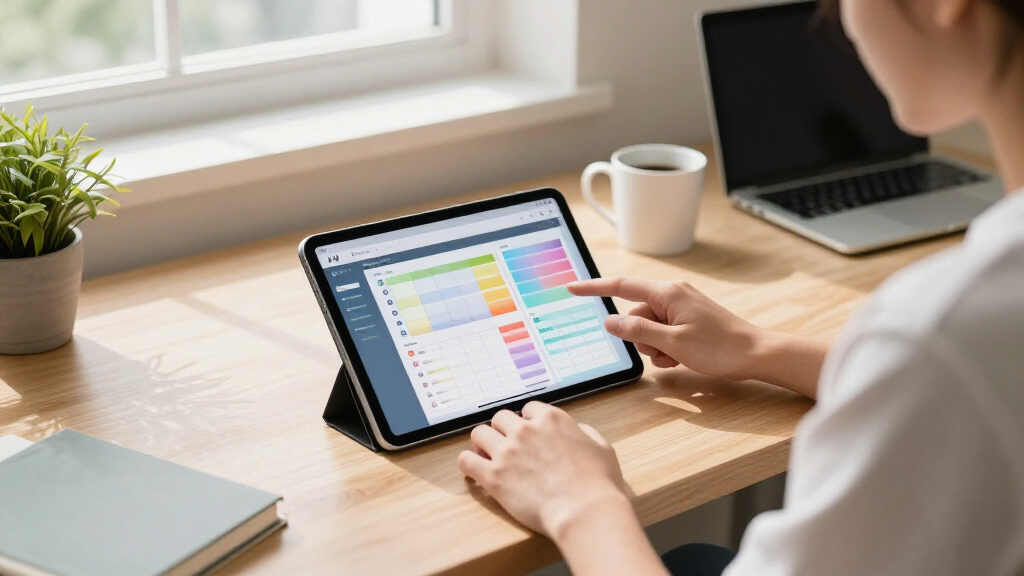
I started from the promise in the title: a planner bought for the ‘AI-powered’ label has to make a student’s schedule smarter, not just prettier. That meant app integration carried the most weight — a planner with a genuine companion app, like the RocketPlanner-connected Excello Brands option, scored ahead of purely analog models. For the analog majority, I judged how well each one supports a hybrid workflow: clean weekly spreads you can photograph into an AI study app, goal-tracking pages, and reference sections that cut down how often you reach for your phone.
Beyond smart features, I ranked on four buyer-focused criteria: layout usability (does the weekly spread fit a real class schedule?), build quality (binding style, paper weight, whether the cover survives a backpack), size and portability (full-size versus compact), and value (what you actually get per dollar across the 2026-2027 school year). Date range, extras like stickers and tabs, and school-level fit — middle school, high school, or college — acted as tiebreakers. Products climbed the ranking when they did one job clearly better than a similar alternative, and dropped when a cheaper twin delivered the same experience.
| AI-powered student planner | Binding |
|---|---|
| Excello Brands Academic Year P | — |
| Student Planner 2026-2027 | Twin-wire |
| Student Planner 2026-2027 Midd | — |
| Aesthetic 2026-2027 Checkered | Spiral |
| Student Planner 2026-2027 | Twin-wire, lays flat |
| Student Planner 2026-2027 | — |
| SKYDUE Student Planner 2026-20 | Spiral bound |
| Student Planner 2026-2027 | Spiral |
| SKYDUE Student Planner 2026-20 | Spiral bound |
| Global Datebooks 2026-2027 Stu | Spiral |
| Student Planner 2026-2027 | Spiral |
| Student Planner 2026-2027 | Twin-wire |
| Student Planner 2026-2027 | Twin-wire, lays flat |
| SKYDUE Student Planner 2026-20 | Spiral bound |
Factors to Consider When Choosing AI-powered Student Planners
The reviews above tell you what each planner does. This section covers the decisions that apply no matter which model catches your eye — the stuff that separates a planner you use until June from one abandoned in October.
Know What AI-Powered Actually Gets You
In this category, AI lives in companion apps, not in the paper. The most advanced option here, the Excello Brands planner, uses the RocketPlanner app to scan handwritten pages and sync deadlines digitally — and that’s as close to built-in intelligence as any planner in the lineup gets. Everything else is a traditional paper planner, which means the ‘AI’ part of your workflow comes from apps you already have: photographing a weekly spread into a study assistant, or asking a chatbot to turn a syllabus into a reading schedule. The common mistake is paying a premium while expecting smart features inside an ordinary planner. Decide upfront which camp you’re in. If you want handwriting with digital backup, an app-connected model earns its extra cost. If you just need structure, a well-laid-out paper planner plus free AI tools covers the same ground for less money.
Check the Date Range Before Anything Else
Academic planners are not interchangeable on dates, and buying the wrong range is the easiest way to waste money. Most planners here run July 2026 through June 2027, which fits a standard school year. The Excello Brands model starts earlier, in May 2026, and stretches across 15 months — better for year-round planners, summer school, or programs that begin before fall. If you buy in August or September, a July start means part of the book is already obsolete, so look for listings that confirm the current academic year rather than leftover stock. Also check whether months are tabbed, since tabs save real time when you’re flipping to a due date mid-class. A planner’s dates are fixed the day it’s printed, and no app update will extend them.
Choose Size Based on How You Carry, Not How You Wish You Planned
The size split in this lineup is starker than it looks. Full-size 8.5 x 11 inch planners give you room for detailed daily blocks, long to-do lists, and pasted-in handouts — and they slide into a standard binder beside class notes. Compact options, like the 5.8 x 8.5 inch model and SUNEE’s 6.5 x 8.3 inch datebook, disappear into a small bag but squeeze each day into a few lines. Buyers often pick compact for portability and then abandon it because their handwriting doesn’t fit. Be honest about your schedule density: six classes plus sports and a job needs full-size pages. Weigh the bag reality too — a full-size planner, binder, and textbooks add up fast. Middle and high schoolers who already haul a binder usually get more from full-size, while college students moving between a dorm and a few lectures often prefer compact.
Binding and Paper Decide Whether It Lasts Until June
A student planner takes daily abuse for ten months, so construction matters more than cover design. Twin-wire and spiral bindings let the book lie flat, which sounds minor until you’re writing in a cramped lecture hall; cheaper glued spines tend to crack by winter. If you keep everything in one binder, the 3-hole punched SKYDUE models remove the risk of losing the planner entirely. Paper weight is the quiet spec that changes daily use: the Excello Brands planner’s 100gsm paper resists bleed-through from gel pens and highlighters, while thin, unlisted stock ghosts badly and makes both sides of a page hard to read. Stickers and pockets are nice, but they’re often the first features to get ignored — a sturdy cover and decent paper get used every single day. When two planners look identical online, binding and paper weight are usually what the price gap is paying for.
Spend More Only on Features You’ll Use Weekly
The price spread in this category is narrow — most of these planners sit in budget territory — so the question isn’t whether you can afford the expensive one, but whether the upgrade earns its keep. Paying more makes sense for three things: real app integration, heavier paper, and a binding that survives the year. Paying more for a trendier cover or an extra sticker sheet does not. A useful rule: list the three planner features you touched daily last semester, and buy toward those. If you never opened last year’s goal-tracking pages, skip models that lead with goal tracking. Students who want AI help with planning often get the best return from a cheap, sturdy paper planner plus a free AI app — the combination costs less than premium smart notebooks and covers nearly the same workflow. Save the premium spend for the one feature you’d genuinely miss.
Frequently Asked Questions
Do any of these student planners actually have AI built in?
Not in the way most people imagine. No paper planner in this lineup contains AI on its own — the intelligence comes from connected apps. The closest option is the Excello Brands planner with the RocketPlanner app, which scans your handwritten pages and syncs tasks and deadlines to your phone, giving you a genuine paper-to-digital workflow. Every other planner here is fully analog, which means your AI support comes from separate tools: snapping a photo of your weekly spread for a study app, or having an AI assistant break a syllabus into weekly goals. That hybrid setup works well and costs nothing extra, but it does require a few minutes of manual syncing. If seamless digital backup matters to you, the app-connected pick is the only one that delivers it out of the box.
Is a paper planner still worth it if I already use an AI calendar or to-do app?
For most students, yes — and the two work better together than either does alone. Writing assignments by hand forces a quick daily review of what’s due, and research on note-taking links handwriting with better retention of what you wrote. AI apps handle reminders and rescheduling far better than paper, but they also make it easy to snooze a task without ever thinking about it. The practical split many students land on: paper for the daily plan sitting open on the desk, digital for alarms and shared deadlines. If you’ve abandoned paper planners before because rewriting moved tasks felt tedious, keep the long-range schedule digital and use paper only for the current week. Skip paper entirely only if your school already runs everything through a digital system you actually check.
What size student planner is best for middle and high school?
For most middle and high schoolers, full-size 8.5 x 11 inch is the safer buy. That age group typically tracks six or more classes, homework per subject, plus activities — too much to squeeze into a compact page. Full-size planners also match the binders students already carry, and the 3-hole punched SKYDUE models go a step further by clipping directly inside one. Compact planners like the SUNEE 6.5 x 8.3 inch datebook suit students with lighter schedules or small handwriting, and they’re easier to carry between classes without a locker stop. The mistake to avoid is buying compact for a student with a packed schedule; cramped pages are the top reason planners get abandoned by October. When in doubt, go bigger — unused space never stopped anyone from planning.
How much should I spend on a student planner for 2026-2027?
Almost everything in this lineup sits in the roughly $10 to $25 range, and that’s genuinely all most students need to spend. At the budget end you get dated weekly and monthly pages, stickers, and tabs — the core of a working planner. Moving up mainly buys you heavier paper, sturdier binding, or, in the case of the Excello Brands model, a companion app that digitizes your pages. Spending beyond that range only makes sense for dedicated smart notebooks, which are a different product category entirely. The bigger cost risk isn’t the price tag — it’s buying a planner whose layout doesn’t fit your schedule and replacing it mid-year. Put your money toward fit first, then build quality, and treat decorative extras as a bonus rather than a reason to pay more.
The three SKYDUE planners look the same — which one should I pick?
They nearly are the same, and that’s worth saying plainly. All three SKYDUE models share the 3-hole punch, monthly and weekly layouts, study reference pages, a pocket, and stickers. The differences come down to cosmetics and small usability tweaks: cover color, whether months are tabbed, and spiral versus standard binding. The tabbed version is the one I’d point most students toward, since flipping straight to the current month saves time daily; the spiral-bound variant lies flatter for writing in tight spaces. Pick based on those two details and your color preference, and don’t burn time comparing feature lists that are worded differently but describe identical contents. If one is priced higher at checkout, you’re paying for those minor differences — not a better planner.
Conclusion
After lining up all 14 planners, the choice narrows quickly once you know your buyer type. If you want the closest thing to a genuinely AI-powered planner, the Excello Brands Academic Year Planner is the best overall pick — its RocketPlanner app connection, 15-month coverage, and 100gsm paper justify the higher price for students who want paper with digital backup. For the best value, the 8.5 x 11 inch academic planner with stickers, tabs, and goal tracking covers everything a school year demands at a budget price. Beginners and younger students should start with the Middle School and High School Matrix planner, whose structured layout teaches the planning habit instead of assuming it. Students who live out of a binder get the most from the tabbed SKYDUE 3-hole punch model, while anyone with a light schedule and a small bag should grab the compact SUNEE datebook or the 5.8 x 8.5 inch option. And if a cover you love is what keeps a planner in your hand all year, the checkered design earns its spot. Whichever route you take, buy for layout and build first — the AI side can always be added from your phone.