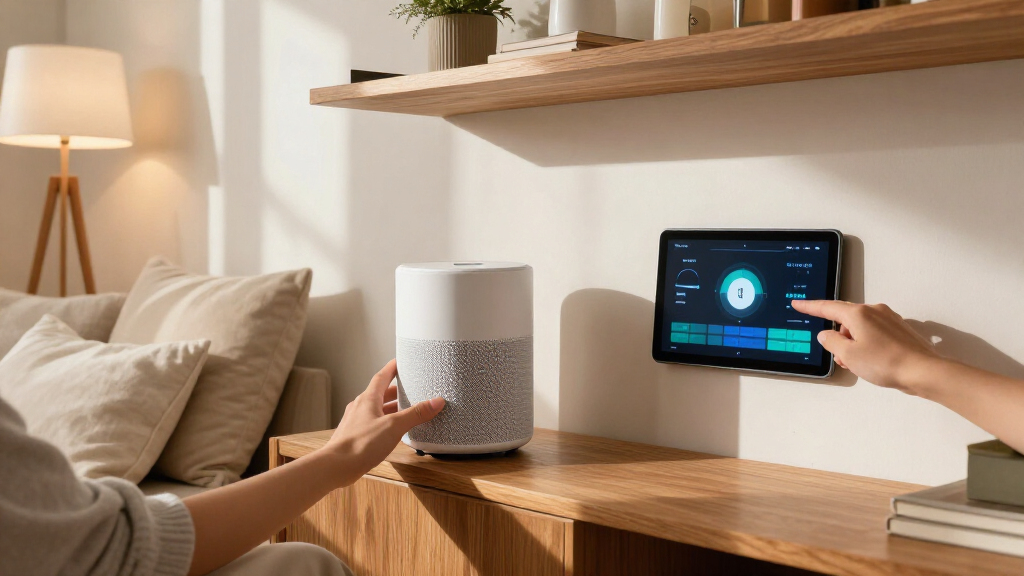
AI-powered smart home devices can help you control connected gear, get answers, and keep an eye on your home, but each option handles those jobs differently. I’d make the Amazon Echo Hub my best overall pick for a home centered on device control, while the Home Assistant Green stands out for people who want more control over their setup and the Ring Battery Doorbell 2K for visitors and entry monitoring. The main tradeoffs are how much setup you’ll manage, which ecosystem you’ll rely on, and whether you need a general-purpose assistant or a dedicated security device. Some products add a screen or speaker; others focus on connecting devices or monitoring one area. Read on for the full comparison and help matching each pick to your needs.

Get business pricing on tech for your team
- Business-only prices and quantity discounts
- Tax-exempt purchasing
- Multiple users, one account, clear invoices
Key Takeaways
- The Echo Hub is the most control-focused all-rounder: its dedicated panel makes more sense for managing a connected home than choosing a speaker or display built mainly for entertainment.
- Home Assistant Green favors flexibility over simplicity: it suits buyers who want to shape their smart home setup, while the Echo Hub is a more approachable fit for people already using Alexa.
- Smart displays and smart speakers fill different roles: the Echo Show 11 and Nest Hub offer a visual interface, while the two Echo Dot models are compact voice-first options.
- Security choices depend on where you need coverage: the Ring and Orbitell doorbells focus on the entrance, while the Noahlink and next-generation 4K camera are indoor options.
- Some picks solve a narrow, practical problem: the SwitchBot AI Art Frame combines a display and photo frame, while the Azpen companion adds a wireless charging role alongside its speaker functions.
| Google Nest Hub 7″ Smart Display with Google Assistant (1st Gen) – Chalk (Bulk Packaging) |  | Best for Google Home Beginners | Display: 7-inch touchscreen | Assistant: Google Assistant | Manufacturer: Google | VIEW LATEST PRICE | See Our Full Breakdown |
| Azpen D115AI 5-in-1 AI Home Companion Speaker and Wireless Charger |  | Best for AI Conversation and Charging | Model: D115AI | AI features: ChatGPT-powered conversation, contextual memory, family learning and wellness | Audio: Stereo; dual 5W Bluetooth 5.2 speakers | VIEW LATEST PRICE | See Our Full Breakdown |
| Amazon Echo Hub Smart Home Control Panel (8-inch, Newest Model) |  | Best Dedicated Smart Home Controller | Display: 8-inch touchscreen, 1280 x 800 resolution | Audio: Pair of top-ported full-range speakers with stereo playback | Connectivity: Dual-band Wi-Fi, Bluetooth, Zigbee, Thread, Matter, and Sidewalk | VIEW LATEST PRICE | See Our Full Breakdown |
| Noahlink 2K Indoor Clock Camera with Temperature and Humidity Display |  | Best for AI-Assisted Room Monitoring | Resolution: 2K, 3 MP (1440p) | Night vision: Color | Wi-Fi: 2.4 GHz and 5 GHz | VIEW LATEST PRICE | See Our Full Breakdown |
| SwitchBot AI Smart Home Hub with OpenClaw Support and 16GB MicroSD Card |  | Best for Local Camera Event Storage | Product type: Smart home hub | Included storage: 16GB microSD card | Expandable storage: Up to 1TB microSD card or 16TB external hard drive | VIEW LATEST PRICE | See Our Full Breakdown |
| Amazon Echo Dot (5th Gen), Charcoal |  | Best Compact Voice-Controlled Starter | Generation: 5th Gen (2022 release) | Dimensions: 3.9 × 3.9 × 3.5 in | Weight: 10.7 oz | VIEW LATEST PRICE | See Our Full Breakdown |
| Ring Battery Doorbell 2K (2nd Gen), Matte Mocha |  | Best for High-Detail Alexa Door Monitoring | Video resolution: Retinal 2K | Field of view: 140° horizontal, 140° vertical | Zoom: Up to 6× enhanced zoom | VIEW LATEST PRICE | See Our Full Breakdown |
| Orbitell M52 1080p Wireless Video Doorbell Camera |  | Best for AI Motion Filtering | Model: M52 | Resolution: 1080p | Connectivity: 2.4 GHz Wi-Fi | VIEW LATEST PRICE | See Our Full Breakdown |
| SwitchBot AI Art Frame 13.3-inch Wireless E-Ink Digital Photo Frame |  | Best for AI-Generated Home Art | Screen: 13.3-inch E-Ink | Resolution: 1200 × 1600 | Aspect ratio: 4:3 | VIEW LATEST PRICE | See Our Full Breakdown |
| Amazon Echo Show 11 Smart Display, Graphite |  | Best Premium AI Smart Home Command Center | Display: 10.95-inch Full HD touchscreen, 1920 × 1200 | Dimensions: 10 × 5 × 7.2 in | Weight: 45.92 oz | VIEW LATEST PRICE | See Our Full Breakdown |
| Home Assistant Green Smart Home Hub |  | Best for Local Control | Operating system: Home Assistant OS | Processor: Quad-core | Memory: 4 GB LPDDR4X | VIEW LATEST PRICE | See Our Full Breakdown |
| Tapo H500 Smart Home Hub | 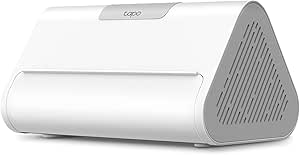 | Best for Tapo Security Setups | Camera compatibility: Up to 16 Tapo cameras | Sensor compatibility: Up to 64 Tapo Sub-G sensors | Built-in storage: 16 GB | VIEW LATEST PRICE | See Our Full Breakdown |
| Amazon Echo Dot (5th Gen) Smart Speaker, Deep Sea Blue |  | Best for Beginners | Generation: 5th Gen | Speaker: 1.6-inch full-range driver; mono | Wi-Fi: Dual-band 802.11a/b/g/n/ac, 2.4 and 5 GHz | VIEW LATEST PRICE | See Our Full Breakdown |
| Next-Generation Smart 4K Indoor Security Camera with Dual-Band Wi-Fi |  | Best for High-Detail Indoor Monitoring | Resolution: 4K Ultra HD (3840 pixels) | Sensor: 8 MP CMOS | Connectivity: Dual-band Wi-Fi, 2.4 GHz and 5 GHz | VIEW LATEST PRICE | See Our Full Breakdown |
| AI-powered smart home device | Dimensions | Connectivity |
|---|---|---|
| Google Nest Hub 7" Smart Displ | 7 x 2.65 x 4.65 inches | — |
| Azpen D115AI 5-in-1 AI Home Co | 5 x 5 x 5 inches | Bluetooth and Wi-Fi |
| Amazon Echo Hub Smart Home Con | — | Dual-band Wi-Fi, Bluetooth, Zigbee, Thread, Matter, and Sidewalk |
| Noahlink 2K Indoor Clock Camer | — | — |
| SwitchBot AI Smart Home Hub wi | 7.8 x 5.79 x 2.2 inches | Dual-band Wi-Fi |
| Amazon Echo Dot | 3.9 × 3.9 × 3.5 in | — |
| Ring Battery Doorbell 2K | 2.11 × 5.78 × 1.41 in | Wi-Fi 4, 2.4 GHz single band |
| Orbitell M52 1080p Wireless Vi | 1.77 × 1.34 × 5.4 in | 2.4 GHz Wi-Fi |
| SwitchBot AI Art Frame 13.3-in | — | Wi-Fi and Bluetooth |
| Amazon Echo Show 11 Smart Disp | 10 × 5 × 7.2 in | — |
| Home Assistant Green Smart Hom | 4.41 × 4.41 × 1.26 in | Ethernet and USB |
| Tapo H500 Smart Home Hub | — | Wi-Fi and Ethernet (RJ45) |
| Amazon Echo Dot | 3.9 × 3.9 × 3.5 in | — |
| Next-Generation Smart 4K Indoo | — | Dual-band Wi-Fi, 2.4 GHz and 5 GHz |
More Details on Our Top Picks
Google Nest Hub 7″ Smart Display with Google Assistant (1st Gen) – Chalk (Bulk Packaging)
The Google Nest Hub is a compact way to bring voice and touch control to a Google Assistant home. Its 7-inch screen makes routines, reminders, photos, and compatible device controls easier to see than on a speaker such as the Amazon Echo Dot. That visual interface suits a kitchen counter or nightstand, while its small footprint asks for less space than an 8-inch control panel like the Amazon Echo Hub.
Its role is everyday access rather than advanced smart home orchestration: it has no listed camera, so video calls are out, and the first-generation model may need language setup if its Korean spec version is supplied. I’d choose it for simple, visible Google Assistant controls, but skip it if a camera, newer hub features, or a dedicated multi-protocol dashboard matters more.
Pros:- Voice and touchscreen controls provide two ways to manage compatible devices
- Compact 7-inch display fits small counters and nightstands
- Shows photos and supports music and video streaming
- Connects with a wide range of Google Assistant-compatible smart home devices
Cons:- No built-in camera for video calls
- Korean spec version may require extra language setup for English users
Best for: Google Assistant users who want a small touchscreen for household controls, reminders, and media in a kitchen or bedroom
Not ideal for: People who need video calling or a wall-mounted control panel with broad hub protocols
- Display:7-inch touchscreen
- Assistant:Google Assistant
- Manufacturer:Google
- Model:H1A
- Color:Chalk
- Dimensions:7 x 2.65 x 4.65 inches
- Weight:1.8 pounds
- Included component:Cable
Our verdict“Choose the Nest Hub for compact, visual Google Assistant control; pick the Echo Hub if you need a dedicated multi-protocol control panel.”
Azpen D115AI 5-in-1 AI Home Companion Speaker and Wireless Charger
The Azpen D115AI stands apart from control-focused picks such as the Amazon Echo Hub: its pitch centers on ChatGPT-powered conversation, contextual memory, and family learning and wellness features. That makes it a fit for households seeking an interactive companion, with stereo Bluetooth speakers, hands-free calling, and a charging pad sharing the same small footprint.
The 15W Qi charger with tri-coil alignment is a practical addition for compatible phones, and the product data says it can charge up to three devices at once. In exchange, this is not a smart home control panel with a listed Matter bridge or broad device dashboard. It is also not waterproof, and the listed frequency response gives only a 20 kHz figure, leaving audio range unclear. Compared with the Nest Hub, it puts more emphasis on conversation and charging than on a screen for visual controls.
Pros:- Supports multi-turn AI conversations with contextual memory recall
- Combines family learning and wellness features with hands-free calling
- Dual 5W speakers support stereo Bluetooth audio
- 15W Qi charging and support for charging up to three devices add utility
Cons:- Not waterproof
- Listed frequency response provides no lower bound
- Product data does not specify a touchscreen or broad smart home device hub
Best for: Families who want an AI conversation device, hands-free calling, and wireless charging together on a desk or bedside table
Not ideal for: Buyers who need a visual smart home dashboard, water resistance, or clearly specified audio frequency range
- Model:D115AI
- AI features:ChatGPT-powered conversation, contextual memory, family learning and wellness
- Audio:Stereo; dual 5W Bluetooth 5.2 speakers
- Wireless charging:15W Qi with tri-coil alignment
- Connectivity:Bluetooth and Wi-Fi
- Microphone:Built-in, long-range
- Dimensions:5 x 5 x 5 inches
- Waterproof:No
- Warranty:12 months
Our verdict“Pick the Azpen for conversational AI and charging in one tabletop device, while choosing the Nest Hub for screen-based smart home controls.”
Amazon Echo Hub Smart Home Control Panel (8-inch, Newest Model)
The Amazon Echo Hub earns its place as the lineup’s dedicated control center. Its customizable 8-inch dashboard can put devices, cameras, and routines within quick reach, while built-in Zigbee, Thread, and Matter support gives it a broader hub role than the screen-focused Google Nest Hub. That combination suits a home with several device types and routines to manage from one fixed location.
Installation can be wall-mounted or tabletop, though the supplied wall mount does not remove the need to plan cable routing; in-wall pass-throughs and PoE adapters are sold separately. It is designed to stay put, unlike the compact Nest Hub, and some Ring camera summaries and voice search features require separate subscriptions. The physical mic-off button gives direct privacy control. I’d rank it above simpler displays for homes that prioritize device control, but not for anyone seeking a portable or subscription-free camera experience.
Pros:- Customizable dashboard arranges and resizes device and routine controls
- Built-in Wi-Fi, Bluetooth, Zigbee, Thread, and Matter support
- Can be wall-mounted or used with a tabletop stand
- Physical mic-off button provides direct microphone privacy control
Cons:- Ring camera summaries and voice search features require separate Alexa+ and Ring subscriptions
- In-wall cable pass-throughs and PoE adapters are sold separately
- Fixed installation limits mobility compared with compact displays
Best for: Alexa households with multiple smart home protocols that want a fixed, customizable dashboard for devices, cameras, and routines
Not ideal for: People who want a portable display or camera summaries and voice search without separate subscriptions
- Display:8-inch touchscreen, 1280 x 800 resolution
- Audio:Pair of top-ported full-range speakers with stereo playback
- Connectivity:Dual-band Wi-Fi, Bluetooth, Zigbee, Thread, Matter, and Sidewalk
- Power:12.5W adapter included; supports USB-C PD and PoE
- Sensors:PIR proximity sensor and ambient light sensor
- Materials:27% recycled materials
- Privacy control:Physical mic-off button
- Included items:Power adapter, 6 ft cord, wall mount, anchors, screws, mounting template, quick start guide
Our verdict“Choose the Echo Hub when broad protocol support and a permanent smart home dashboard matter more than portability or subscription-free camera features.”
Noahlink 2K Indoor Clock Camera with Temperature and Humidity Display
The Noahlink 2K Indoor Clock Camera makes the most sense for buyers who want monitoring in an everyday bedside or tabletop object. It pairs 2K video and AI detection for people, vehicles, and pets with a clock and temperature and humidity readouts. Compared with the Amazon Echo Hub, which organizes a wider smart home dashboard, this is a more focused camera with useful room information built into its display.
Color night vision and two-way audio support checking on a room and speaking through the device. Its tradeoffs are tied to monitoring: the camera needs corded power, local microSD storage requires a separately supplied card, and cloud storage requires a subscription. Alexa compatibility is listed, but broader smart home hub functions are not. I’d pick it for a room where a visible clock and remote camera feed belong together; skip it if you want a central controller or a camera-free display.
Pros:- Combines 2K camera monitoring with time, temperature, and humidity display
- AI detection identifies people, vehicles, and pets
- Color night vision supports low-light viewing
- Two-way audio and Alexa compatibility add remote interaction
Cons:- Corded electric power limits placement
- MicroSD card is not included
- Cloud storage requires a subscription
Best for: Households that want an indoor camera with pet, person, or vehicle alerts alongside a visible clock and room readings
Not ideal for: People seeking a portable or camera-free smart display, or buyers who want included local storage
- Resolution:2K, 3 MP (1440p)
- Night vision:Color
- Wi-Fi:2.4 GHz and 5 GHz
- Detection:AI detection of people, vehicles, and pets
- Audio:Two-way audio
- Display:Time, temperature (°F), and humidity
- Storage:microSD card (not included) or cloud storage (subscription required)
- Voice assistant:Amazon Alexa
- Power and dimensions:Corded electric; 8.27 x 5.55 x 3.46 inches
Our verdict“Choose the Noahlink when room monitoring and at-a-glance environmental readings belong in the same tabletop device.”
SwitchBot AI Smart Home Hub with OpenClaw Support and 16GB MicroSD Card
The SwitchBot AI Smart Home Hub is the most storage-oriented choice here. It can keep camera event recordings locally on the included 16GB microSD card, with expansion up to a 1TB card or 16TB external drive. That makes it a different kind of AI home device from the Noahlink 2K Indoor Clock Camera, which combines a camera and display but offers local storage only when you supply a card.
With Home Assistant pre-installed, a Matter bridge, and OpenClaw chat-based control, the SwitchBot hub targets owners who want to connect compatible devices and cameras in a more configurable setup. It supports up to eight compatible cameras, but compatibility is limited to supported SwitchBot and RTSP cameras and devices. AI features require an AI+ subscription and compatible cameras, and there is no IR control for TVs or air conditioners. I’d choose it for local event storage and expandable capacity, not as a simple plug-in camera dashboard.
Pros:- Includes a 16GB microSD card for local camera event storage
- Supports up to eight compatible cameras
- Comes with Home Assistant pre-installed and a Matter bridge
- Storage can expand to a 1TB microSD card or 16TB external hard drive
Cons:- AI features require an AI+ subscription and compatible cameras
- Camera support is limited to compatible SwitchBot and RTSP models
- No IR control for TVs or air conditioners
Best for: Smart home owners using compatible SwitchBot or RTSP cameras who want expandable local event storage and Home Assistant
Not ideal for: Buyers who want AI features without a subscription, broad camera compatibility, or IR control for TVs and air conditioners
- Product type:Smart home hub
- Included storage:16GB microSD card
- Expandable storage:Up to 1TB microSD card or 16TB external hard drive
- Camera capacity:Up to 8 compatible cameras
- Connectivity:Dual-band Wi-Fi
- Smart home features:OpenClaw support, Home Assistant pre-installed, Matter bridge
- Dimensions:7.8 x 5.79 x 2.2 inches
- Weight:1.17 pounds
- Model:W8002100
Our verdict“Pick the SwitchBot hub if compatible cameras, local recordings, and expandable storage are your priorities; choose the Echo Hub for a built-in touchscreen dashboard.”
Amazon Echo Dot (5th Gen), Charcoal
The Echo Dot is the easiest fit here for someone who wants Alexa in a bedroom or office without giving up much space. Its motion and temperature sensors can trigger routines, so a simple movement or a change in room temperature can help automate compatible devices. That makes it more useful for everyday home control than a speaker that only responds to commands. Compared with the screen-equipped Echo Show 11, the Dot takes up less room and costs less to equip multiple rooms with voice access, but it cannot show camera feeds or visual information. Its mono speaker suits spoken answers and casual listening better than room-filling audio. The built-in eero extender is a bonus for existing eero households, though its compatibility and speed limits make it no substitute for a dedicated mesh node.
Pros:- Motion and temperature sensors can trigger smart home routines.
- Compact size suits bedside tables and desks.
- Supports Matter and Bluetooth Low Energy Mesh alongside Wi-Fi smart home devices.
- Can add limited Wi-Fi coverage to a compatible eero network.
Cons:- Mono audio and a single 1.6-inch driver limit music performance compared with the Echo Show 11.
- eero Built-in requires a compatible eero router and has speed and device limits.
- Some Alexa skills and services may require subscriptions or other fees.
Best for: Alexa users who want a compact bedroom or office speaker that can trigger simple routines from motion or temperature.
Not ideal for: Buyers who need a touchscreen, built-in Zigbee or Thread hub, or fuller audio for a main listening room.
- Generation:5th Gen (2022 release)
- Dimensions:3.9 × 3.9 × 3.5 in
- Weight:10.7 oz
- Speaker:1.6-inch full-range driver; mono
- Wi-Fi:Dual-band 2.4 and 5 GHz, 802.11a/b/g/n/ac
- Smart home compatibility:Wi-Fi, Bluetooth Low Energy Mesh, Matter
- Sensors:Motion and indoor temperature
- Color:Charcoal
Our verdict“Choose the Echo Dot for compact Alexa access and basic sensor-triggered routines; pick the Echo Show 11 if you need a display and broader built-in hub support.”
Ring Battery Doorbell 2K (2nd Gen), Matte Mocha
For an Alexa household that needs to see more of the front entrance, the Ring Battery Doorbell 2K pairs a broad field of view with high-resolution video and enhanced zoom. That extra detail can help distinguish what is happening near the door, while two-way talk lets you answer visitors remotely. Its rechargeable battery avoids wiring work, and Alexa integration lets compatible devices provide hands-free alerts and video viewing. Compared with the Orbitell 1080p Wireless Video Doorbell, Ring specifies 2K video and 6× zoom; Orbitell, by contrast, explicitly lists AI filtering for people, vehicles, and animals. Ring’s advanced AI alerts, cloud storage, and Familiar Faces require a paid Ring Protect subscription, so the headline smart features may add an ongoing cost. Its 2.4 GHz-only Wi-Fi also narrows network compatibility.
Pros:- Retinal 2K video and up to 6× enhanced zoom provide detailed views.
- 140° horizontal and vertical field of view covers a broad area.
- Rechargeable battery supports wireless installation.
- Integrates with Alexa devices for alerts and video viewing.
Cons:- AI alerts, cloud storage, and Familiar Faces require a paid Ring Protect subscription.
- Supports 2.4 GHz Wi-Fi only.
- USB-C charging cable is not included.
Best for: Alexa users who want a battery-powered doorbell with detailed video, zoom, and remote two-way conversations.
Not ideal for: Households with only 5 GHz Wi-Fi or buyers who want AI alerts and cloud recording without a Ring Protect subscription.
- Video resolution:Retinal 2K
- Field of view:140° horizontal, 140° vertical
- Zoom:Up to 6× enhanced zoom
- Audio:Two-way talk
- Power:Rechargeable lithium-ion battery
- Connectivity:Wi-Fi 4, 2.4 GHz single band
- Dimensions:2.11 × 5.78 × 1.41 in
- Operating temperature:-4°F to 120°F (-20°C to 48.5°C)
- Warranty:One-year limited warranty
Our verdict“Pick Ring for detailed, zoomable entryway video in an Alexa home if you have 2.4 GHz Wi-Fi and accept subscription costs for advanced features.”
Orbitell M52 1080p Wireless Video Doorbell Camera
The Orbitell M52 is the clearest match for shoppers who prioritize AI-assisted motion filtering over maximum image detail. Its detection identifies people and filters vehicles and animals, which can reduce interruptions from activity that does not need a response. Infrared night vision, two-way audio, and an IP65 weather-resistance rating round out its practical door-monitoring features. Compared with the Ring Battery Doorbell 2K, Orbitell describes its AI filtering directly, while Ring offers higher-resolution 2K video and 6× zoom. Orbitell’s 1080p resolution is the tradeoff for that more explicit detection focus. Its pre-capture recording depends on a cloud subscription, and the 2.4 GHz-only connection may rule it out for homes running only 5 GHz Wi-Fi. The supplied details do not specify battery capacity or field-of-view angle, so those are harder to compare.
Pros:- AI detection identifies people and filters vehicles and animals.
- Infrared LEDs provide night vision.
- Two-way audio supports remote conversations.
- IP65 weather resistance is intended for outdoor exposure.
Cons:- 1080p resolution offers less detail than the Ring Battery Doorbell 2K.
- Pre-capture recording requires a cloud subscription.
- Supports 2.4 GHz Wi-Fi only.
Best for: Homeowners who want a wireless doorbell that filters people from vehicle and animal motion, including at night.
Not ideal for: Buyers who need 2K detail, a specified zoom range, or a doorbell that connects to a 5 GHz-only network.
- Model:M52
- Resolution:1080p
- Connectivity:2.4 GHz Wi-Fi
- Motion detection:AI identifies people and filters vehicles and animals
- Audio:Two-way audio
- Night vision:Infrared LEDs
- Storage:AES-128 encrypted cloud storage
- Weather resistance:IP65
- Dimensions:1.77 × 1.34 × 5.4 in
Our verdict“Choose Orbitell if filtering people from other motion matters more than 2K video detail or subscription-free pre-capture.”
SwitchBot AI Art Frame 13.3-inch Wireless E-Ink Digital Photo Frame
The SwitchBot AI Art Frame gives AI a decorative role: it can display generated artwork and schedule image updates through the SwitchBot app, with Alexa compatibility for voice control. Its 13.3-inch E-Ink screen has a paper-like, glare-free appearance and uses little power between updates, supporting flexible placement without a cord. This is a different kind of smart home device from the Echo Show 11: the Show is built for calls, controls, and live information, while SwitchBot is meant to make changing artwork easy. That focus comes with limits. The display’s muted color and coarse pixel structure suit viewing from a distance, not close inspection, and only 10 images fit in local storage. AI art requires a subscription, so the feature most aligned with its name is not included as a free ongoing service.
Pros:- E-Ink display provides a glare-free, paper-like view without blue light emission.
- Battery can last up to two years at one refresh per week.
- Images remain visible when the battery is depleted.
- App, remote, and voice controls support scheduled updates.
Cons:- AI-generated art requires a subscription service.
- Coarse pixel structure and muted colors make it less suited to close viewing than an LCD display.
- Local storage holds up to 10 images.
Best for: Decor-minded buyers who want wire-free, scheduled artwork changes and are comfortable viewing a muted E-Ink display from a distance.
Not ideal for: Shoppers who want vivid photo colors, a large local library, or AI-generated art without a subscription.
- Screen:13.3-inch E-Ink
- Resolution:1200 × 1600
- Aspect ratio:4:3
- Battery:2000 mAh
- Battery life:Up to 2 years at 1 refresh per week
- Connectivity:Wi-Fi and Bluetooth
- Compatible devices:Alexa and smartphone
- Local storage:Up to 10 images
- Frame material:Black aluminum alloy
Our verdict“Choose the SwitchBot frame for scheduled AI art and cord-free placement, provided you are comfortable with E-Ink’s muted look and subscription requirement.”
Amazon Echo Show 11 Smart Display, Graphite
The Echo Show 11 earns the premium role because it combines a large screen, a camera, presence sensing, and a substantial smart home hub in one device. Its Zigbee, Matter, and Thread support gives it broader built-in device connectivity than the Echo Dot, while the AZ3 Pro processor with an AI accelerator and camera-based Omnisense technology underpin its sensing and Alexa features. That makes the Show a better fit when you want a visible control point for a connected home, plus video calls and entertainment. Compared with the SwitchBot AI Art Frame, it is far more interactive and capable, but it needs a powered countertop spot and is not a quiet, cord-free display. The listed data does not specify individual AI functions, so I would judge it by its concrete hub and sensor capabilities rather than assume every task runs locally.
Pros:- Built-in hub supports Zigbee, Matter, and Thread.
- Presence, temperature, ambient light, and camera-based Omnisense sensors support contextual home features.
- 13 MP camera includes auto framing and 3.3× zoom for video calls.
- Full HD touchscreen and spatial audio combine controls with entertainment.
Cons:- Its 45.92 oz weight and 10-inch width require a substantial, powered surface.
- Camera and microphone presence may not suit privacy-sensitive rooms, despite disable controls.
- The supplied product data does not detail which AI features are available or how they operate.
Best for: Alexa households building around Zigbee, Matter, or Thread devices that also want a central screen for calls and home controls.
Not ideal for: Buyers seeking a compact bedside speaker, a wire-free display, or a device that does not place a camera in the room.
- Display:10.95-inch Full HD touchscreen, 1920 × 1200
- Dimensions:10 × 5 × 7.2 in
- Weight:45.92 oz
- Camera:13 MP with auto framing and 3.3× zoom
- Audio:One 2.8-inch woofer and two full-range drivers; spatial audio
- Wi-Fi:Wi-Fi 6E (802.11ax)
- Smart home hub:Zigbee, Matter, and Thread Border Router
- Processor:AZ3 Pro with AI Accelerator
- Sensors:Ambient temperature, ambient light, presence detection, and camera-based Omnisense
Our verdict“Choose the Echo Show 11 as a central Alexa display and multi-protocol hub if you have room for it and want its camera and sensors in your home.”
Home Assistant Green Smart Home Hub
Home Assistant Green is the strongest fit here for buyers who want an automation hub with home data stored locally. Home Assistant OS comes preinstalled, and its USB ports let owners add compatible Z-Wave, Zigbee, or Thread devices as their setup grows. That flexibility sets it apart from the Tapo H500, which is centered on Tapo cameras and sensors, and the Echo Dot (5th Gen), which offers voice control and a simpler smart-home entry point.
The tradeoff is a more hands-on setup: Green needs Ethernet to get started, and wireless connectivity is limited to Bluetooth compatibility; Wi-Fi is not listed. I would choose it for local-first automations and expansion, but skip it if you want a wireless hub or a turnkey voice assistant.
Pros:- Home Assistant OS is preinstalled.
- Stores home data locally on the hub.
- Fanless design runs silently and uses only a few watts.
- Two USB ports support compatible Z-Wave, Zigbee, and Thread expansion.
Cons:- Requires an Ethernet connection to get started.
- Wi-Fi is not listed, and wireless connectivity is limited to Bluetooth compatibility.
Best for: Smart-home owners who want local data storage and plan to expand with compatible Z-Wave, Zigbee, or Thread devices.
Not ideal for: Buyers who need a Wi-Fi hub, wireless first-time setup, or a voice assistant built into the device.
- Operating system:Home Assistant OS
- Processor:Quad-core
- Memory:4 GB LPDDR4X
- Storage:32 GB
- Connectivity:Ethernet and USB
- USB ports:2
- Dimensions:4.41 × 4.41 × 1.26 in
Our verdict“Choose Home Assistant Green if local control and expandable automations matter more to you than built-in Wi-Fi or voice assistance.”
Tapo H500 Smart Home Hub
Tapo H500 earns its place for households building around Tapo cameras and sensors: it supports up to 16 cameras and 64 Sub-G sensors, with local storage that can expand using a 2.5-inch SATA drive. That makes it a more focused security center than Home Assistant Green, whose appeal is broader local automation and device expansion. Facial recognition, an alarm, and HDMI viewing give the H500 several ways to manage and check a security setup.
Its limits matter when choosing a hub. Continuous recording covers up to four cameras at once, facial recognition is unavailable in Illinois and Texas, and Thread-based Matter devices need a separate Thread hub. I would pick it for a Tapo-heavy home that values local recording; buyers seeking broader automation flexibility should look at Home Assistant Green instead.
Pros:- Connects up to 16 Tapo cameras and 64 Tapo Sub-G sensors.
- Expandable SATA storage supports local recording without a monthly subscription fee.
- HDMI output enables viewing on a connected TV.
- Includes facial recognition, WPA3 encryption, and offline mode.
Cons:- Continuous recording is limited to four cameras simultaneously.
- Facial recognition is unavailable in Illinois and Texas.
- Thread-based Matter integration requires a separate Thread hub.
Best for: Tapo owners who want one hub for multiple cameras and sensors, expandable local recording, and TV viewing over HDMI.
Not ideal for: Households relying on Thread-based Matter devices without a separate Thread hub, or those needing continuous recording on more than four cameras at once.
- Camera compatibility:Up to 16 Tapo cameras
- Sensor compatibility:Up to 64 Tapo Sub-G sensors
- Built-in storage:16 GB
- Expandable storage:2.5-inch SATA HDD or SSD, up to 16 TB
- Connectivity:Wi-Fi and Ethernet (RJ45)
- Video output:HDMI
- Smart home integration:Google Assistant, Amazon Alexa, and Matter-compatible
Our verdict“Pick the Tapo H500 if your security setup centers on Tapo cameras and sensors and you want expandable local storage.”
Amazon Echo Dot (5th Gen) Smart Speaker, Deep Sea Blue
The Echo Dot (5th Gen) is the easiest entry point in this group for buyers who want voice control alongside a few smart-home routines. Its motion and temperature sensors can trigger compatible routines, so the speaker can do more than respond to commands. Compared with the Home Assistant Green, it asks less of buyers who want a simple Alexa-led setup; compared with the Tapo H500, it is a room speaker rather than a camera and sensor hub.
The tradeoff is less emphasis on local control and security storage than either dedicated hub. Its mono 1.6-inch speaker suits everyday listening, not buyers seeking fuller multi-speaker sound from one device. The eero Wi-Fi extension also depends on a compatible eero router and account setup. I would choose the Dot for convenient voice-led routines, not as the foundation for a complex, local-first system.
Pros:- Built-in motion and temperature sensors can support smart-home routines.
- Works with compatible Wi-Fi, Bluetooth Low Energy Mesh, and Matter devices.
- Microphone-off button provides a direct privacy control.
- Can extend compatible eero Wi-Fi coverage and pair with supported Echo devices or Fire TV.
Cons:- eero Built-in requires a compatible eero router, account linking, and the eero app.
- Mono playback from one 1.6-inch driver is limited for buyers prioritizing fuller room-filling audio.
- Some skills and services may require subscriptions or additional fees.
Best for: Alexa beginners who want a compact room speaker with basic smart-home routines and built-in motion and temperature sensors.
Not ideal for: Buyers seeking a dedicated security hub, local-first automation, or richer stereo sound from a single speaker.
- Generation:5th Gen
- Speaker:1.6-inch full-range driver; mono
- Wi-Fi:Dual-band 802.11a/b/g/n/ac, 2.4 and 5 GHz
- Smart home compatibility:Wi-Fi, Bluetooth Low Energy Mesh, and Matter
- Dimensions:3.9 × 3.9 × 3.5 in
- Weight:10.7 oz
- eero Built-in coverage:Up to 1,000 sq. ft. with a compatible eero router
Our verdict“Choose the Echo Dot if you want an approachable Alexa speaker that can also trigger simple sensor-based routines.”
Next-Generation Smart 4K Indoor Security Camera with Dual-Band Wi-Fi
This 4K indoor camera is the camera-first pick in the lineup, with an 8 MP sensor and a 160-degree viewing angle for monitoring a broad indoor area in detailed live view. Its AI motion detection can send alerts when activity is detected, while dual-band Wi-Fi gives it both 2.4 and 5 GHz connection options. Unlike the Tapo H500, which organizes multiple cameras and sensors, this model is a single-camera choice with flexible placement and battery or USB power.
That flexibility comes with limits: microSD storage is not included, and continuous 24/7 use requires USB power. Its 6x zoom is digital rather than optical, so enlarging a distant detail will not add captured image detail. I would choose it for sharp indoor coverage in a chosen spot, but skip it for outdoor monitoring or a complete multi-camera security system.
Pros:- 4K video and an 8 MP sensor capture detailed indoor footage.
- 160-degree viewing angle covers a broad area.
- Battery or USB power supports portable placement or continuous operation.
- AI motion detection can send activity alerts.
Cons:- MicroSD card for local recording is not included.
- 6x zoom is digital, so it cannot add optical detail.
- Indoor-only design is unsuitable for exposed outdoor use.
Best for: Buyers who want a high-resolution indoor camera with flexible placement, dual-band Wi-Fi, and local microSD recording.
Not ideal for: People needing outdoor weather protection, optical zoom, or a ready-to-use local recording setup without buying a microSD card.
- Resolution:4K Ultra HD (3840 pixels)
- Sensor:8 MP CMOS
- Connectivity:Dual-band Wi-Fi, 2.4 GHz and 5 GHz
- Viewing angle:160 degrees
- Zoom:6x digital
- Storage:MicroSD up to 512 GB; card not included
- Power:Built-in rechargeable battery or USB power
- Mounting:Magnetic, wall, ceiling, or tabletop
Our verdict“Choose this camera for detailed indoor monitoring and flexible placement if you are comfortable supplying a microSD card for local recording.”
How We Picked
I compared these 14 products by the job they do in an AI-powered home: controlling connected devices, answering voice requests, showing useful information, or monitoring a space. I gave more weight to clear everyday usefulness, the fit between the device and its intended role, and how much flexibility a buyer gets from its interface and connected-home features. For security products, placement and the specific monitoring use case mattered; for displays and speakers, I considered whether the screen or audio adds value beyond voice control.
The ranking reflects how broadly each product can serve a household and how clearly its strengths match a buyer need. That puts the Echo Hub near the top as a dedicated control point, with Home Assistant Green appealing to people who prioritize flexibility and Echo Show 11 serving buyers who want a larger visual interface. More specialized devices rank for their distinct roles rather than trying to outperform general-purpose hubs. I also weighed tradeoffs such as ecosystem dependence, setup demands, and narrower functionality, so a focused security device or charging speaker is a better match for some homes than a more versatile controller.
Factors to Consider When Choosing AI-powered Smart Home Devices
Before choosing a device, decide which daily task you want it to improve. A smart home can include a hub, voice assistant, screen, and cameras, but adding more hardware does not automatically make it easier to run. I’d start with the control system and the room or routine where a device will earn its place.
Start With the Job You Want Done
Write down the one task that currently causes the most friction: controlling lights, checking who is at the door, viewing a camera feed, or getting quick answers while cooking. A dedicated hub suits device management, while a doorbell or indoor camera is a more direct answer to a monitoring need. Buyers often start with the most feature-rich device and only later discover it does not solve their main problem. If several tasks matter, pick a central device that can handle everyday control and add specialized hardware only where it adds clear coverage or convenience. This keeps your setup easier to understand and reduces overlap between devices.
Check Your Ecosystem Before Buying
Smart home gear depends on compatible services and devices, so check what you already own before choosing a new hub or assistant. A household that uses Alexa regularly may find an Echo device familiar, while buyers who want to configure a more flexible system may prefer a different kind of hub. Do not assume that an “AI” label means a device will work with every brand or platform. Look for compatibility with your existing lights, locks, sensors, and routines, then check whether key functions depend on an account or subscription. A little research here can prevent a second controller from fragmenting your setup.
Choose a Screen Only If You’ll Use It
A screen can make controls and camera views easier to see at a glance, but it takes up counter or wall space and adds another interface to maintain. A voice-first speaker may fit better in a bedroom or office where you mainly want timers, music, and spoken commands. Before paying for a display, think about where it will sit and whether household members will use its visual controls. Larger displays can suit shared spaces where more than one person needs access to information. For a private room or a simple voice routine, a compact speaker may be the tidier choice.
Match Security Hardware to the Location
Doorbells and indoor cameras solve different coverage problems, so choose based on where you need to see or hear what is happening. A doorbell belongs at the entrance and can support visitor checks, while an indoor camera watches a room from inside the home. Consider power access, Wi-Fi coverage, camera placement, and the views you want before selecting a model. A wide product feature list cannot make up for a blocked angle or a weak connection where the device must sit. Also review how video is stored and accessed so the ongoing service model fits your expectations.
Balance Flexibility Against Setup Effort
More configurable systems can give you greater control, but they may ask you to spend more time setting up devices, routines, and integrations. A simple voice assistant or display may be easier to start using, though it can tie more of your experience to one ecosystem. Decide how much troubleshooting and customization you are comfortable handling before choosing a central hub. Buyers who enjoy adjusting automations may value a flexible platform; people who want quick voice commands may prefer a simpler entry point. Plan for the household that will actually use the system, not just the person who installs it.
Look Beyond the First Device
A single smart device can be useful on its own, but its long-term value depends on how well it fits the rest of your home. Consider whether you might add sensors, cameras, more speakers, or routines later, and whether the device you choose can support that direction. A dedicated photo frame or wireless charging speaker can earn a spot through a specific convenience, but it may not be the best foundation for a larger system. Avoid buying overlapping hubs or assistants until you understand which one will serve as your main control point. A small, coherent setup is often easier to use than a collection of disconnected features.
Frequently Asked Questions
Should I choose a smart home hub or a voice assistant first?
Start with the device you expect to use most often. If you mainly want spoken commands, timers, and simple routines, a smart speaker or display may be the easiest first step. If you already have several connected devices and want a central place to manage them, a hub may make more sense. Check compatibility with your existing products before buying, since a hub that cannot work with your gear adds little value. You can add the other type later if a clear need emerges.
Can I mix devices from Amazon, Google, and other brands?
Sometimes, but compatibility varies by product and by the functions you want to use. A device may connect to a platform for basic control while some features or automations remain tied to its own app or service. Check the manufacturer’s compatibility information for each device you plan to connect, especially for routines and security features. If you already rely on one assistant, starting there can reduce setup friction. A flexible hub may appeal if you are willing to spend more time checking integrations and configuring your home.
Is a smart display worth choosing over a speaker?
A display is more useful when you expect to check camera views, see controls, or glance at information without asking for it aloud. A speaker is usually a better fit when voice commands and audio are the main jobs and you want a smaller device. Think about room placement: a shared kitchen or entry area may benefit from a visible interface, while a nightstand may not need one. A screen adds another surface to manage, so buy one for a routine you will actually use. If you are unsure, prioritize the function you use most rather than assuming more features will be more convenient.
What should I check before buying a video doorbell or indoor camera?
First, confirm where the camera will go and whether the Wi-Fi signal and power arrangement will support that placement. Then check the camera’s viewing angle, how you receive alerts, and whether video access or storage depends on a subscription. A doorbell is designed to cover visitors at the entrance; an indoor model is better suited to monitoring a room. Review privacy controls and how easily you can disable recording when appropriate. Those details affect everyday usefulness as much as resolution or other headline features.
Should I buy one central system or several single-purpose devices?
A central hub or assistant can make everyday control feel more consistent, while specialized devices can do a better job in a focused role such as door monitoring or wireless charging. A single-purpose device is a good addition when it fills a real gap, but several separate apps and control systems can make a home harder to manage. Choose a main control point first, then add dedicated devices that work with it. If your needs are limited to one room or one security concern, a focused device may be enough. The right mix depends on whether you value a simpler setup or separate tools for distinct tasks.
Conclusion
I’d choose the Amazon Echo Hub as the best overall for buyers who want a dedicated place to manage a connected home, and Home Assistant Green as the best pick for flexibility if they are comfortable shaping their own setup. For an accessible voice-first starting point, the Amazon Echo Dot makes a straightforward beginner option; buyers who want a visual interface can look to the Nest Hub or Echo Show 11. The best value depends on the job: a compact Echo Dot may cover everyday voice needs, while a focused device such as the Orbitell doorbell may suit a narrower security requirement. For premium presentation and a larger screen, I’d shortlist the Echo Show 11; for specific needs, choose Ring for the front door, a dedicated indoor camera for room monitoring, or the SwitchBot AI Art Frame for a display that also serves as decor. Match the device to your main task, then check ecosystem fit before adding it to your home.