
AI customer support chatbots can reduce repetitive work, but this roundup compares books and practical guides about building and using them—not ready-to-install chatbot software. My best overall pick is The AI Revolution in Customer Service and Support for its broad deployment focus; Effective Conversational AI stands out for conversation design, while AI Chatbots For Dummies offers an accessible starting point. The main tradeoff is between accessible, general guidance and more specialized material on implementation, automation, or failure handling. I also weigh whether a resource suits a small business, a builder, or a team planning a support operation. Read on for the full breakdown and help matching a resource to your next step.

Get business pricing on tech for your team
- Business-only prices and quantity discounts
- Tax-exempt purchasing
- Multiple users, one account, clear invoices
Key Takeaways
- The AI Revolution in Customer Service and Support leads as the broadest deployment-oriented resource, while several other picks focus on narrower tasks rather than a complete support strategy.
- Effective Conversational AI centers on chatbot interactions, making it a more targeted choice than guides about agency operations or general automation.
- AI Chatbots For Dummies is the clearest beginner-oriented title; technical build guides are better suited to readers ready to work with tools, RAG, or MCP.
- Small-business titles dominate the list, but their scopes differ: some address customer service directly, while others cover automation or support without hiring.
- Failure handling and human handoffs get dedicated attention in When AI Customer Support Gets It Wrong, a useful counterweight to guides focused mainly on deployment or automation.
| The AI Revolution in Customer Service and Support: A Practical Guide to Impactful AI Deployment |  | Best for Service Leaders Planning AI Deployment | Format: Book | Subject: AI deployment in customer service and support | Focus: Using AI to improve customer service | VIEW LATEST PRICE | See Our Full Breakdown |
| AI-Powered Customer Support, Voice Agents, and Workflow Automation Agency |  | Best for Support-Automation Agency Builders | Format: Book | Series: Agency Business Series | Series number: 7 | VIEW LATEST PRICE | See Our Full Breakdown |
| Effective Conversational AI: Chatbots That Work |  | Best for Chatbot Effectiveness Fundamentals | Title-stated subject: Conversational AI | Title-stated application: Chatbots | Product description: Not provided | VIEW LATEST PRICE | See Our Full Breakdown |
| AI Agents for Customer Support: A Practical Build Guide with RAG, Tools, and Guardrails |  | Best for Technical Chatbot Builders | Format: Guide | Primary focus: Building AI agents for customer support | Topic: Retrieval-augmented generation (RAG) | VIEW LATEST PRICE | See Our Full Breakdown |
| When AI Customer Support Gets It Wrong: Wrong Answers, Failed Handoffs, and the Cost of Unresolved Problems |  | Best for Support-Risk and Failure Planning | Title-stated subject: AI customer-support failures | Failure area: Incorrect answers | Failure area: Unsuccessful handoffs | VIEW LATEST PRICE | See Our Full Breakdown |
| Customer Support Automation Agency: How to Start, Scale, and Automate with AI |  | Best for Agency Builders | Format: Not specified | Subject: AI-powered customer-support automation | Coverage: Chatbots, CRM systems, and workflows | VIEW LATEST PRICE | See Our Full Breakdown |
| AI-Powered Customer Service and Support for Small Business Owners |  | Best for Small-Business Support Routines | Format: Book | Series: AI Productivity for Small Business Owners | Series number: 7 | VIEW LATEST PRICE | See Our Full Breakdown |
| AI Chatbots For Dummies |  | Best General Chatbot Introduction | Format: Book | Series: For Dummies | Topic: AI chatbots | VIEW LATEST PRICE | See Our Full Breakdown |
| No-Code AI Automation for Small Business |  | Best for No-Code Support Automation | Format: Not specified | Audience: Small businesses | Primary approach: No-code AI automation | VIEW LATEST PRICE | See Our Full Breakdown |
| AI Customer Service for Small Business |  | Best for Customer Experience and Retention | Format: Book | Audience: Small businesses | Topic: AI customer service | VIEW LATEST PRICE | See Our Full Breakdown |
| Build AI Chatbots with MCP: A Beginner’s Guide to the Model Context Protocol | 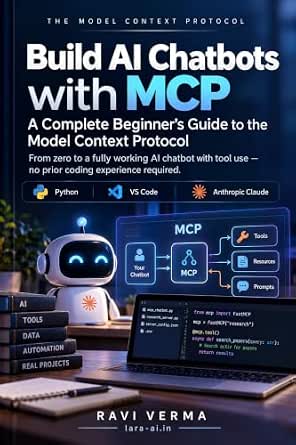 | Best for Beginners Exploring MCP | Topic: AI chatbots | Protocol: Model Context Protocol (MCP) | Audience: Beginners | VIEW LATEST PRICE | See Our Full Breakdown |
| The AI-Powered Customer Support Playbook: 110 AI Prompts to Improve Response Quality, Resolve Complaints, and Boost Customer Retention |  | Best for Support Prompt Libraries | Number of prompts: 110 | Series: AI Prompts Professional Series | Primary use: AI prompts for customer support | VIEW LATEST PRICE | See Our Full Breakdown |
| AI Customer Support Without Hiring Staff: Build Smarter Support Systems with AI and ChatGPT |  | Best for Lean Teams Automating Support | Format: Book | Series: AI Solopreneur OS | Book number: 7 | VIEW LATEST PRICE | See Our Full Breakdown |
| AI customer support chatbot | Format | Topic | ASIN |
|---|---|---|---|
| The AI Revolution in Customer | Book | — | 0138286507 |
| AI-Powered Customer Support | Book | — | — |
| Effective Conversational AI: C | Not provided | — | B0F4RPHNX6 |
| AI Agents for Customer Support | Guide | Retrieval-augmented generation (RAG) | B0GWVR6QYX |
| When AI Customer Support Gets | — | — | B0GXGSW7FT |
| Customer Support Automation Ag | Not specified | — | — |
| AI-Powered Customer Service an | Book | AI-powered customer service and support | — |
| AI Chatbots For Dummies | Book | AI chatbots | — |
| No-Code AI Automation for Smal | Not specified | — | — |
| AI Customer Service for Small | Book | AI customer service | — |
| Build AI Chatbots with MCP: A | — | AI chatbots | B0HLMNW9SR |
| The AI-Powered Customer Suppor | — | — | B0H49Q8JB3 |
| AI Customer Support Without Hi | Book | — | B0H97X7ZWF |
More Details on Our Top Picks
The AI Revolution in Customer Service and Support: A Practical Guide to Impactful AI Deployment
This guide focuses on deployment choices rather than describing a specific chatbot product, making it a fit for service leaders deciding how AI should support customer conversations. Its customer-service emphasis gives it a broader operational lens than AI Agents for Customer Support: A Practical Build Guide with RAG, Tools, and Guardrails, which is framed around implementation details such as retrieval, tools, and failure handling. That breadth may help teams shape their approach before selecting or building a system. The tradeoff is that the supplied description does not identify specific architectures, exercises, or chatbot features, so readers seeking hands-on build instructions may prefer the more technical guide. It is a practical starting point for deployment planning, not a substitute for validating a chatbot against a real support workflow.
Pros:- Centers on deploying AI in customer service and support
- Frames AI around serving customers, not only automating tasks
- Offers a broader planning perspective than a narrowly technical build guide
Cons:- Available details do not specify particular chatbot designs or implementation exercises
- May not provide the technical depth of AI Agents for Customer Support: A Practical Build Guide with RAG, Tools, and Guardrails
Best for: Customer support directors and operations leads planning an AI deployment across an existing service team
Not ideal for: Developers who need concrete RAG examples, reference architecture, or prompt and guardrail instructions
- Format:Book
- Subject:AI deployment in customer service and support
- Focus:Using AI to improve customer service
- Product type:Practical guide
- Chatbot scope:Customer support AI
- ASIN:0138286507
Our verdict“Choose this book if you need a customer-service-led starting point for AI deployment, rather than a technical chatbot build manual.”
AI-Powered Customer Support, Voice Agents, and Workflow Automation Agency
This book treats AI support as an agency service, not just a chatbot deployment inside one company. Its mix of customer support, voice agents, workflow automation, operations, and client attraction suits readers who want to package these capabilities for businesses. That makes it distinct from The AI Revolution in Customer Service and Support: A Practical Guide to Impactful AI Deployment, which is more directly about applying AI to customer service rather than building an agency around it. The broader service menu may help an aspiring agency owner think beyond text chat, but it also means this is not the clearest pick for someone who only wants to improve an in-house chatbot. The provided information does not name specific platforms or technical build methods, so readers seeking implementation steps should look to a dedicated agent-building guide.
Pros:- Covers customer support alongside voice-agent services
- Connects chatbot offerings with workflow and business-operations automation
- Includes client attraction as part of the agency focus
- Offers a commercial perspective absent from deployment-focused guides
Cons:- The agency and client-acquisition focus may be less useful to in-house support teams
- The supplied description does not identify specific platforms or technical implementation methods
Best for: Entrepreneurs creating a service agency that sells customer-support chatbots, voice agents, and workflow automation
Not ideal for: In-house support managers seeking a focused guide to chatbot deployment rather than agency operations and client acquisition
- Format:Book
- Series:Agency Business Series
- Series number:7
- Primary focus:AI-powered customer-support agency
- Additional service area:Voice agents
- Additional service area:Workflow and business-operations automation
- Business topic:Client attraction
Our verdict“Pick this if your goal is to sell AI support and automation services to clients, not simply to build a chatbot for your own team.”
Effective Conversational AI: Chatbots That Work
The title puts working chatbot conversations at the center, making this the most directly chatbot-oriented pick among the five. That focus could suit readers who want to think about conversational effectiveness rather than agency building, as covered by AI-Powered Customer Support, Voice Agents, and Workflow Automation Agency, or the detailed build topics named in AI Agents for Customer Support: A Practical Build Guide with RAG, Tools, and Guardrails. The limitation is the sparse product information: no description, format, or topic list is provided, so I cannot verify how much of the book applies specifically to customer-support chatbots or whether it offers practical methods. Its title signals relevance, but buyers who need confirmed implementation guidance should favor a listing with clearly stated topics.
Pros:- Directly addresses conversational AI and chatbots in its title
- Keeps the focus on chatbot effectiveness rather than agency operations
- Could serve as a starting point for readers exploring chatbot design
Cons:- No product description was supplied to confirm its subject coverage
- No format or technical topics are identified in the available product data
- Its fit for customer-support use cases is less verifiable than the explicitly support-focused guides
Best for: Readers seeking a chatbot-centered introduction to conversational AI who are comfortable checking the book’s scope before buying
Not ideal for: Support engineers who need confirmed coverage of RAG, tools, guardrails, or customer-service workflows
- Title-stated subject:Conversational AI
- Title-stated application:Chatbots
- Product description:Not provided
- Format:Not provided
- Topic details:Not provided
- ASIN:B0F4RPHNX6
Our verdict“Consider this for a chatbot-first perspective, but choose a guide with stated technical topics if you need dependable support-specific implementation detail.”
AI Agents for Customer Support: A Practical Build Guide with RAG, Tools, and Guardrails
This is the clearest technical build pick in the group: its stated topics include RAG, tools, guardrails, reference architecture, prompts, and failure handling. Those subjects matter when a support chatbot must retrieve company information, take actions, and avoid responses that exceed its remit. Compared with The AI Revolution in Customer Service and Support: A Practical Guide to Impactful AI Deployment, this guide appears more useful to practitioners implementing an agent than leaders shaping an adoption plan. Its explicit attention to failure handling also makes it more build-oriented than When AI Customer Support Gets It Wrong, which centers on support failures and their consequences. The tradeoff is a narrower technical audience: managers seeking a broad service strategy may not need this level of implementation detail, and the supplied data does not specify a programming language or platform.
Pros:- Names RAG and tools, central building blocks for information retrieval and agent actions
- Includes guardrails and failure handling relevant to support interactions
- Lists reference architecture and prompts as practical implementation topics
- Focuses specifically on customer-support agents
Cons:- Technical scope may exceed the needs of nontechnical team leads
- The supplied details do not identify supported platforms, languages, or code examples
Best for: Support engineers and technical product teams building a customer-service agent that must retrieve information and use tools safely
Not ideal for: Nontechnical support leaders seeking a broad AI adoption strategy or a ready-to-install chatbot product
- Format:Guide
- Primary focus:Building AI agents for customer support
- Topic:Retrieval-augmented generation (RAG)
- Topic:Tools
- Topic:Guardrails
- Topic:Reference architecture and prompts
- Topic:Failure handling
- ASIN:B0GWVR6QYX
Our verdict“Choose this guide if you are building a support agent and need stated coverage of retrieval, tool use, guardrails, and failure handling.”
When AI Customer Support Gets It Wrong: Wrong Answers, Failed Handoffs, and the Cost of Unresolved Problems
This pick puts failure modes at the center: incorrect answers, failed handoffs, and customer problems that remain unresolved. That angle is useful to teams planning how an AI chatbot should behave when it lacks a reliable answer or needs to pass a conversation to a person. It complements AI Agents for Customer Support: A Practical Build Guide with RAG, Tools, and Guardrails, whose stated coverage includes guardrails and failure handling, but this title frames the issue around the customer and business consequences. The limitation is that the available description does not say whether it includes remediation steps, measurement methods, or technical examples. Buyers looking for a build manual may get more concrete implementation topics from the agent guide; this one makes the most sense as a risk-focused companion for teams reviewing escalation and resolution policies.
Pros:- Focuses on wrong chatbot answers and failed human handoffs
- Centers the consequences of unresolved customer problems
- Offers a risk-oriented complement to technical chatbot build guides
Cons:- The supplied description does not confirm practical remediation methods
- No technical topics or implementation examples are specified
- May be less useful as a standalone guide for building a chatbot
Best for: Support operations leaders auditing chatbot escalation paths and planning responses to wrong or unresolved answers
Not ideal for: Developers looking for stated RAG, tool-use, prompt, or reference-architecture instructions
- Title-stated subject:AI customer-support failures
- Failure area:Incorrect answers
- Failure area:Unsuccessful handoffs
- Failure area:Unresolved customer problems
- Product description focus:Consequences of support problems that remain unresolved
- ASIN:B0GXGSW7FT
Our verdict“Choose this as a failure-focused resource if your team needs to scrutinize answer quality and handoffs, rather than learn chatbot construction.”
Customer Support Automation Agency: How to Start, Scale, and Automate with AI
This guide is aimed at readers who want to sell AI customer-support automation as a service, rather than simply improve an in-house help desk. Its stated coverage of chatbots, CRM systems, and support workflows connects the bot to the surrounding processes an agency may need to automate. Compared with AI-Powered Customer Service and Support for Small Business Owners, which targets business owners handling their own service operations, this book points toward client acquisition and agency growth. That focus is useful for aspiring service providers, but the supplied description gives no named platforms, implementation examples, or chapter details to judge how hands-on the advice is. Buyers seeking step-by-step chatbot setup guidance may find AI Agents for Customer Support: A Practical Build Guide with RAG, Tools, and Guardrails a closer fit. This pick trades technical specificity for an agency-oriented business angle.
Pros:- Covers chatbots alongside CRM systems, connecting conversational support with customer records.
- Focuses on automating customer-support workflows, not only chatbot conversations.
- Addresses starting and scaling an agency, a distinct business angle for service providers.
Cons:- The supplied description names no specific platforms, tools, or implementation methods.
- No contents or examples are provided to show how deeply it explains chatbot setup.
- Its high-ticket client focus may be less relevant to teams improving their own support operation.
Best for: Entrepreneurs planning to build an agency that implements AI chatbots and support automation for client businesses.
Not ideal for: Support managers seeking detailed instructions for deploying a particular chatbot, CRM integration, or technical architecture.
- Format:Not specified
- Subject:AI-powered customer-support automation
- Coverage:Chatbots, CRM systems, and workflows
- Business focus:Starting and scaling an agency
- Client focus:Attracting high-ticket clients
- Specific tools named:None in supplied description
Our verdict“Choose this guide if your goal is to build an AI customer-support automation agency, not to follow a detailed technical chatbot build manual.”
AI-Powered Customer Service and Support for Small Business Owners
This book puts the small-business owner’s daily service workload at the center, with stated coverage of returns, customer support, and follow-ups. That makes its angle more operational than Customer Support Automation Agency: How to Start, Scale, and Automate with AI, which is framed around building an agency and attracting clients. The focus on affordable AI tools may appeal to owners who need practical ways to handle recurring questions without building a specialized support team. Still, the supplied description does not identify tools, chatbot features, or example workflows, so readers cannot tell how directly it guides bot selection or setup. Compared with No-Code AI Automation for Small Business, this title explicitly includes returns and follow-ups, while the latter emphasizes no-code workflows. The choice hinges on which part of the support workload needs attention.
Pros:- Targets small-business customer-service needs rather than enterprise support operations.
- Includes returns and follow-ups, extending its focus beyond answering incoming questions.
- Positions affordable AI tools as relevant to owners with limited support resources.
- Belongs to the AI Productivity for Small Business Owners series.
Cons:- The supplied description does not name tools or explain particular techniques.
- No details are given about chatbot deployment, integrations, or example conversations.
- Its broad service focus may provide less agency-building guidance than the agency-focused title.
Best for: Owners of small online shops or service businesses who want AI ideas for handling customer questions, returns, and follow-up messages.
Not ideal for: Readers who need named chatbot recommendations, setup steps, or technical guidance for connecting a bot to business systems.
- Format:Book
- Series:AI Productivity for Small Business Owners
- Series number:7
- Audience:Small business owners
- Topic:AI-powered customer service and support
- Named tools:Not specified in supplied description
Our verdict“Pick this book for small-business support routines that include returns and follow-ups, but look elsewhere for specific chatbot setup instructions.”
AI Chatbots For Dummies
The title signals a broad introduction to AI chatbots, making this the least narrowly business-focused option in the group. That breadth may suit readers who want an entry point before choosing a customer-support platform, but the supplied information does not confirm coverage of support workflows, business use cases, or chatbot implementation. By contrast, AI-Powered Customer Service and Support for Small Business Owners explicitly centers customer service, returns, and follow-ups, while this book’s description offers no comparable detail. Its For Dummies series identity gives readers a clear indication of its general-audience positioning, not proof of specific contents. I would treat it as a possible starting point for chatbot concepts, rather than a guaranteed guide to launching a customer-facing support bot. Buyers who need practical small-business workflows should favor a more targeted title.
Pros:- The title is directly about AI chatbots, aligning with readers beginning to explore the technology.
- The For Dummies series indicates a general-audience guide format.
- Its broad topic may be useful before choosing a more specialized customer-support resource.
Cons:- The supplied description gives no contents, examples, or chatbot topics beyond the title.
- Customer-support use cases and business workflows are not confirmed in the available data.
- No specific tools, setup steps, or technical coverage are provided.
Best for: Readers new to chatbot concepts who want a general-audience introduction before narrowing their search to customer-support tools.
Not ideal for: Small-business support teams seeking confirmed guidance on customer-service workflows, integrations, or chatbot deployment.
- Format:Book
- Series:For Dummies
- Topic:AI chatbots
- Audience:General readers
- Customer-support coverage:Not specified in supplied description
- Named tools:Not specified in supplied description
Our verdict“Choose this as a general chatbot introduction only if broad orientation matters more than confirmed customer-support instructions.”
No-Code AI Automation for Small Business
This title is the clearest fit for small businesses that want to speed up support without relying on technical staff. Its emphasis on no-code workflows suggests a practical route for linking AI tools to repeatable tasks, rather than treating the chatbot as a standalone answer box. That makes it more workflow-oriented than AI Chatbots For Dummies, whose supplied description does not confirm business or implementation coverage. It also differs from AI-Powered Customer Service and Support for Small Business Owners, which explicitly calls out returns and follow-ups but does not specify a no-code approach. The limitation is that the product description names no platforms, examples, or workflow steps, so the degree of hands-on guidance is unknown. It suits buyers drawn to accessible automation, not readers expecting a verified technical playbook.
Pros:- Explicitly focuses on no-code automation, which suits teams without dedicated developers.
- Connects AI tools and automated workflows with faster customer support.
- Targets small businesses rather than large-scale enterprise service operations.
Cons:- The supplied description names no specific tools or platforms.
- No concrete chatbot workflow or implementation example is provided.
- The scope of support tasks and integrations covered is unclear.
Best for: Small-business owners or operations leads who want to automate support tasks with no-code tools and have limited technical resources.
Not ideal for: Technical teams needing detailed integration architecture, named software recommendations, or advanced chatbot customization guidance.
- Format:Not specified
- Audience:Small businesses
- Primary approach:No-code AI automation
- Support focus:Faster customer support
- Technical skill requirement:Designed for readers without technical skills
- Named tools:Not specified in supplied description
Our verdict“Choose this if accessible no-code automation is your priority, while recognizing that the supplied details do not confirm specific tools or build steps.”
AI Customer Service for Small Business
This guide is positioned around more than response speed: its stated scope includes support automation, customer experience, loyalty, and business growth. That makes it a broader service-strategy pick than No-Code AI Automation for Small Business, which foregrounds accessible workflows and faster support. Compared with AI-Powered Customer Service and Support for Small Business Owners, this title appears to give customer retention and growth more prominence, while the other specifically calls out returns and follow-ups. The tradeoff is uncertainty: the supplied description names no AI tools, chatbot features, or detailed contents, so readers cannot confirm whether it offers practical implementation steps or higher-level advice. It may suit owners thinking about how automated support affects the customer relationship, but buyers focused on building a chatbot should seek a title with clearer technical detail.
Pros:- Covers faster customer responses and support automation.
- Connects customer service to customer experience and loyalty.
- Includes business growth as part of its stated scope.
- Targets small-business customer-service needs.
Cons:- The supplied description does not identify specific AI tools or chatbot platforms.
- No detailed contents or implementation examples are available.
- Its broad focus may offer less specific workflow guidance than the no-code automation title.
Best for: Small-business owners who want to connect AI-assisted service with customer experience, loyalty, and business growth.
Not ideal for: Readers who need named chatbot products, detailed configuration instructions, or specific integration guidance.
- Format:Book
- Audience:Small businesses
- Topic:AI customer service
- Response focus:Faster customer responses
- Automation focus:Customer-support automation
- Additional coverage:Customer experience, loyalty, and business growth
- Named tools:Not specified in supplied description
Our verdict“Choose this for a small-business view of AI support that includes loyalty and growth, not for confirmed chatbot setup instructions.”
Build AI Chatbots with MCP: A Beginner’s Guide to the Model Context Protocol
This guide is the most protocol-focused choice in this group, aimed at beginners who want to build chatbots using the Model Context Protocol (MCP). That makes it a different starting point from The AI-Powered Customer Support Playbook, which centers on ready-to-use support prompts rather than chatbot construction. For a support team exploring how an AI assistant might connect with tools or information sources, an MCP-focused guide may help frame the technical work. The limitation is that the supplied details do not describe its examples, depth, or coverage of customer-support workflows, so I can’t treat it as a complete implementation manual. Choose it to learn about MCP and chatbot building; skip it if you need proven support procedures, prompt templates, or a clearly documented hands-on curriculum.
Pros:- Focuses specifically on building AI chatbots
- Introduces the Model Context Protocol
- Is aimed at beginner readers
Cons:- The available description does not explain its examples, technical depth, or chapter coverage
- Customer-support workflows and business-specific guidance are not confirmed
- The provided data does not specify format or delivery method
Best for: Beginners who want an introduction to building AI chatbots around the Model Context Protocol and are comfortable verifying whether the book covers their intended support use case.
Not ideal for: Support managers seeking ready-to-use complaint-handling prompts or a detailed, explicitly documented customer-service automation plan.
- Topic:AI chatbots
- Protocol:Model Context Protocol (MCP)
- Audience:Beginners
- Subject:Building AI chatbots
- Product type:Guide
- ASIN:B0HLMNW9SR
Our verdict“Pick this guide if learning MCP is your first step toward building a chatbot; choose the prompt playbook instead if your immediate need is support-ready response guidance.”
The AI-Powered Customer Support Playbook: 110 AI Prompts to Improve Response Quality, Resolve Complaints, and Boost Customer Retention
Its clearest advantage is a defined set of 110 customer-support prompts, aimed at response quality, complaint resolution, and retention. That makes it more immediately practical for teams shaping AI-assisted replies than Build AI Chatbots with MCP, which focuses on chatbot-building concepts rather than a stated prompt collection. It also has a narrower promise than AI Customer Support Without Hiring Staff: this title foregrounds prompts, not a full staffing or automation system. The prompt count gives buyers a concrete sense of scope, but the supplied details do not say how prompts are organized, which tools they support, or whether they are written for human agents, chatbots, or both. It fits teams seeking a prompt resource, but not buyers expecting a documented chatbot platform or implementation course.
Pros:- Includes 110 prompts focused on customer support
- Targets response quality and complaint resolution
- Addresses customer retention as well as individual replies
- Has a specific, easy-to-understand scope compared with broader support-system guides
Cons:- The provided details do not identify the intended AI tools or prompt compatibility
- Organization, examples, and guidance for adapting prompts are not described
- The format and delivery method are unspecified
Best for: Customer-support leads and small teams looking for a prompt collection to shape AI-assisted replies, complaint responses, and retention conversations.
Not ideal for: Buyers who need a technical chatbot-building tutorial, confirmed tool integrations, or a complete automation plan with implementation details.
- Number of prompts:110
- Series:AI Prompts Professional Series
- Primary use:AI prompts for customer support
- Stated focus:Improving response quality
- Stated focus:Resolving complaints
- Stated focus:Supporting customer retention
- ASIN:B0H49Q8JB3
Our verdict“Choose this playbook if you want a defined collection of AI prompts for support conversations, rather than a guide to building the chatbot itself.”
AI Customer Support Without Hiring Staff: Build Smarter Support Systems with AI and ChatGPT
This title takes the broadest operations-focused angle of the three: using AI and ChatGPT to automate customer conversations and build support systems without adding staff. That makes it a closer fit for a lean business trying to handle more incoming questions than The AI-Powered Customer Support Playbook, whose stated scope is a library of prompts. Compared with Build AI Chatbots with MCP, it emphasizes service delivery and staffing goals rather than a specific protocol. The promise is relevant to small teams, but the supplied description does not detail setup steps, safeguards, integrations, or the kinds of conversations that can be automated. It is a broad systems guide, not a confirmed technical manual; buyers should not assume it explains how to build a reliable chatbot end to end without checking its contents.
Pros:- Connects AI and ChatGPT with customer-conversation automation
- Focuses on building support systems rather than prompts alone
- Addresses faster service without adding staff
- Clearly targets resource-constrained operators
Cons:- The available description does not explain the system-building steps or examples
- Integration, escalation, and reliability guidance are not confirmed
- The contents beyond the stated focus are unspecified
Best for: Solo operators and small support teams seeking guidance on using AI and ChatGPT to automate customer conversations and serve customers faster without hiring.
Not ideal for: Technical builders who need confirmed MCP or integration instructions, or support leaders who require detailed evidence about escalation, accuracy, and workflow coverage.
- Format:Book
- Series:AI Solopreneur OS
- Book number:7
- Tools named:AI and ChatGPT
- Primary topic:Customer support automation
- Stated goal:Faster customer service without hiring additional staff
- ASIN:B0H97X7ZWF
Our verdict“Choose this book if your main goal is to explore AI-led support for a lean team, but look elsewhere for confirmed technical build details or a prompt-by-prompt resource.”

How We Picked
I compared these 13 titles as learning and planning resources, not as chatbot platforms. The ranking favors relevance to customer support, practical usefulness for choosing or shaping an AI service workflow, clarity about the intended reader, and specificity of the subject. I also looked at how directly each title addresses chatbot conversations, implementation, small-business constraints, and the risks of unresolved customer problems.
The order reflects breadth and fit for the category, not a claim that every title offers the same kind of value. Broad customer-service deployment guidance ranks ahead of resources that focus on one component; specialized titles remain useful when a reader has that particular need. Since the list includes books and agency-oriented material rather than software products, it does not compare live chatbot performance, integrations, support plans, or platform pricing.
| AI customer support chatbot | Format |
|---|---|
| The AI Revolution in Customer | Book |
| AI-Powered Customer Support | Book |
| Effective Conversational AI: C | Not provided |
| AI Agents for Customer Support | Guide |
| When AI Customer Support Gets | — |
| Customer Support Automation Ag | Not specified |
| AI-Powered Customer Service an | Book |
| AI Chatbots For Dummies | Book |
| No-Code AI Automation for Smal | Not specified |
| AI Customer Service for Small | Book |
| Build AI Chatbots with MCP: A | — |
| The AI-Powered Customer Suppor | — |
| AI Customer Support Without Hi | Book |
Factors to Consider When Choosing AI Customer Support Chatbots
Use this guide to choose a resource that matches the decision you actually need to make. A chatbot book can help with planning or skills, but it cannot substitute for evaluating software against your support queue and systems.
Decide Whether You Need a Guide or a Working Chatbot
Start by separating learning material from software. The titles in this roundup can inform strategy, conversation design, or implementation, but they are not chatbot services you can connect to a help desk. If you need to deploy soon, use a guide to form requirements, then assess actual platforms with your own questions and workflows. A common mistake is buying educational material while expecting it to provide a ready-made automation system. Choose a book for the skill or plan it teaches, and choose software separately for the job it must perform.
Match the Technical Depth to Your Role
A support manager, small-business owner, and developer need different levels of detail. Beginner titles can help establish vocabulary and use cases, while material on RAG, tools, and MCP speaks to people building or connecting systems. Going too technical too early can leave a nontechnical team with concepts but no operating plan; staying too general can frustrate a builder who needs implementation guidance. Check the title’s focus against the work you will personally do. If several people will share the project, pair an accessible overview with a technical resource rather than expecting one book to serve every role.
Plan for Escalation Before Automating Replies
A chatbot is only useful when customers can reach a person for cases it cannot resolve. Before choosing a learning path, map the questions that need human judgment, the information an agent needs at handoff, and what happens outside staffed hours. Failed handoffs and wrong answers can create more work than they remove, even when routine responses are fast. Avoid judging a system only by how many conversations it can answer automatically. Prioritize guidance that helps you define boundaries, escalation triggers, and ownership for unresolved cases.
Check What Your Knowledge Sources Can Support
AI answers depend on the quality and accessibility of the material behind them. Review whether your help articles, policies, and product details are current, consistent, and organized enough to serve as reliable sources. A common mistake is treating chatbot setup as a prompt-writing task when the underlying documentation is incomplete. Knowledge readiness may determine whether a broad strategy guide or a technical build resource is the more useful next step. If policies change often, plan who will update source material and how incorrect answers will be reported and corrected.
Compare Small-Business Advice by Scope
Small-business titles can sound interchangeable while addressing different needs: customer-service operations, general automation, or reducing reliance on new staff. Identify the outcome you want before choosing among them. Support-specific guidance is a closer fit if your main problem is handling customer requests; broader automation advice may help when support is one of several repetitive processes. Do not assume that a guide aimed at small businesses covers privacy, integrations, or ongoing maintenance in the depth your operation needs. Use its scope as a starting point, then list the unanswered questions you must resolve before launch.
Budget for Ongoing Ownership, Not Just Setup
Launching a chatbot is the beginning of an operating responsibility, not the finish line. Someone must review failures, update answers as products and policies change, and decide when automation should be revised or paused. Maintenance and accountability are easy to overlook when a resource emphasizes building or automation. Paying for more technical depth makes sense when your team will build and maintain a custom system; it may not help if you lack an owner for routine upkeep. Before committing, assign responsibility for quality checks and define how you will know whether customer outcomes are improving.
Frequently Asked Questions
Are these 13 picks chatbot software I can install?
No. The listed items are books, guides, and agency-oriented resources, not installable chatbot platforms. They can help you understand deployment, conversation design, automation, or implementation, but they do not provide a live service channel. If you need a chatbot for customers now, compare software separately and check its integrations, data handling, escalation options, and support for your help desk. Treat these titles as preparation for making that software decision.
Which resource should I start with if I have never worked with chatbots?
AI Chatbots For Dummies is the most directly beginner-framed title in this group. It is a sensible place to build basic familiarity before moving to more specialized material. If your immediate interest is specifically customer conversations, Effective Conversational AI offers a narrower focus on chatbot interactions. Choose based on whether you first need broad orientation or want to think about how conversations should work.
Should I choose a technical build guide before selecting chatbot software?
Usually, first define the support problem and the software requirements, then use a technical guide if your team plans to build or customize a system. A title covering RAG, tools, or MCP may be valuable for a developer, but that depth can be unnecessary for a team selecting a hosted product. Decide who will own the build, integrations, and ongoing updates before investing in implementation learning. If you have no technical owner, begin with strategy and workflow questions instead.
How can a small business tell whether AI support automation is a good fit?
Start by identifying repeated, well-documented questions that do not require judgment or account-specific investigation. Then check whether your answers are current and whether customers can reach a person when the chatbot falls short. If most requests are unusual, sensitive, or dependent on complex context, automation may shift work rather than remove it. Small-business resources in this roundup vary between support-specific advice and wider automation, so match the scope to your actual workload.
What should I prioritize if incorrect answers could harm customer relationships?
Give more weight to clear answer boundaries, escalation paths, and ways to spot and correct failures than to automation breadth alone. When AI Customer Support Gets It Wrong is the title in this roundup most explicitly centered on wrong answers and failed handoffs. Pair that perspective with a plan for human review and a reliable source of approved information. Do not expand automation until your team can handle exceptions and learn from errors.
Conclusion
For the best overall starting point, choose The AI Revolution in Customer Service and Support for broad deployment guidance. The best value in practical focus is Effective Conversational AI if your main need is better chatbot interactions rather than a wider automation plan. For the best premium-depth path, readers building systems should look to AI Agents for Customer Support for its technical focus on RAG, tools, and guardrails; this is a depth recommendation, not a claim about price. Beginners are better served by AI Chatbots For Dummies, while small-business owners should choose among the business-focused titles according to whether they need customer-service guidance or broader automation. For specific concerns, select When AI Customer Support Gets It Wrong to examine failure and escalation, or the MCP guide when protocol-based chatbot building is the goal. Since none of these picks is software, use the resource that answers your next question, then evaluate a live platform separately.