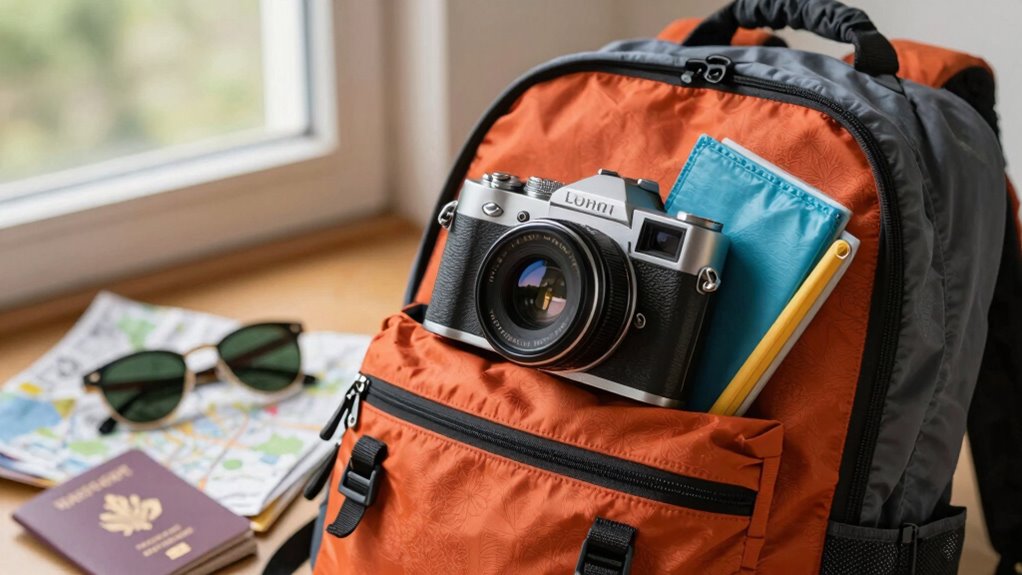
Choosing the right travel camera with versatile lenses, strong battery life, and compact design can totally change your packing strategy. By balancing these factors, you’ll avoid overloading with unnecessary gear while still capturing stunning moments. Opt for a camera that fits your travel style, offers weather resistance, and provides enough flexibility for landscapes and close-ups. If you want tips on making smart gear choices that keep your pack light but ready, keep exploring to find out more.
Key Takeaways
- Choosing a versatile, all-in-one camera reduces the need for multiple lenses, streamlining packing and minimizing weight.
- Prioritizing long battery life and portable charging options ensures sustained shooting without bulky accessories.
- Selecting compact mirrorless or point-and-shoot cameras enhances portability and simplifies gear management.
- Opting for weather-resistant lenses and durable gear prepares you for diverse environments, reducing extra protective equipment.
- Balancing gear flexibility with simplicity aligns your camera setup with travel style, optimizing packing efficiency.
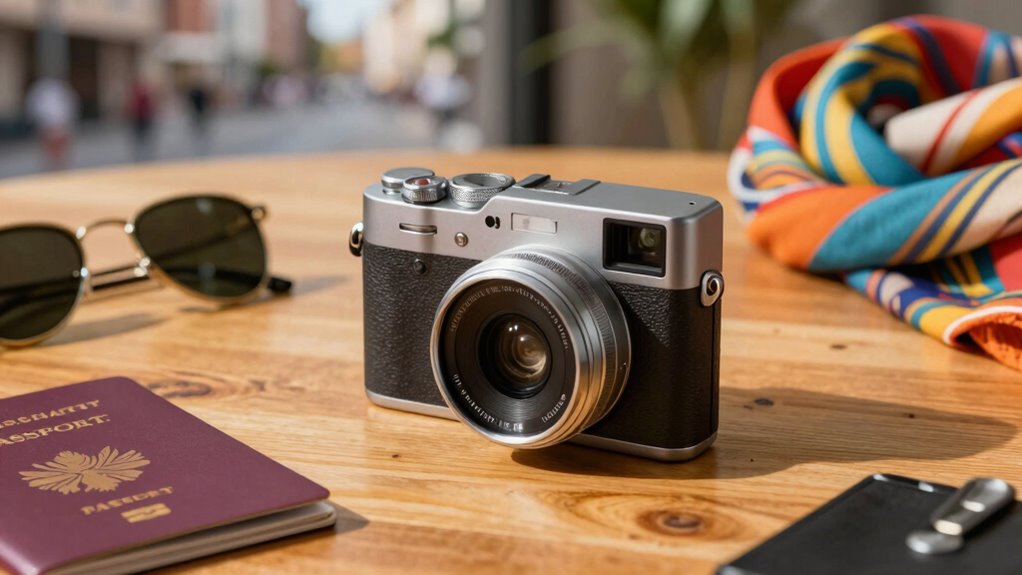
Choosing the right travel camera can considerably enhance your ability to capture and relive your adventures, but with so many options available, making a decision can feel overwhelming. One of the first considerations is lens selection. You want a lens that’s versatile enough to handle a variety of scenes — from sweeping landscapes to close-up details. A zoom lens with a wide aperture often offers the flexibility you need, reducing the need to carry multiple lenses and keeping your pack lighter. If you prefer a more compact setup, a camera with a fixed lens designed for all-around shooting can be a smart choice. Think about the types of photos you most enjoy: if you love wide vistas, a wide-angle lens might be your best bet. For capturing distant objects, a telephoto lens could come in handy. The right lens selection guarantees you’re prepared for different environments without overloading your bag. Additionally, understanding lens versatility can help you select equipment that adapts to various shooting conditions on the go. It’s also beneficial to consider camera durability, especially if your travels take you into rugged or remote areas. Being aware of the weather resistance features of your camera can also ensure it withstands unpredictable conditions during your adventures.
Battery life is another critical factor that can make or break your trip. A camera with poor battery life means you’ll constantly be searching for charging options or carrying extra batteries — both of which add bulk and hassle. Look for a camera known for longer battery endurance; some models can last an entire day of shooting without needing a recharge. If your adventures involve remote areas or long excursions, consider carrying a portable power bank or extra batteries. This way, you won’t miss out on capturing those spontaneous moments just because your gear runs out of juice. Being strategic with your battery management by turning off unused functions and lowering screen brightness can also stretch your camera’s power.
Balancing lens selection and battery life influences your overall packing strategy. If you opt for a compact mirrorless or point-and-shoot camera with a fixed lens, you might gain in portability and battery longevity. Conversely, selecting interchangeable lenses for a DSLR or mirrorless camera offers greater creative control but could also mean carrying extra batteries and lenses. Think about what’s most important for your journey: flexibility and image quality or simplicity and lightness. Making informed choices on these fronts allows you to pack smarter, reducing unnecessary gear while ensuring you’re ready to capture every memory vividly. Ultimately, your decision on the right camera should align with your travel style, so you can focus on experiencing your trip without constantly worrying about your gear.
compact travel mirrorless camera with weather resistance
As an affiliate, we earn on qualifying purchases.
As an affiliate, we earn on qualifying purchases.
Frequently Asked Questions
How Do I Choose Between Mirrorless and DSLR Cameras?
You should choose between mirrorless and DSLR cameras based on lens versatility and battery life. If you want a compact, lightweight camera with a wide range of lenses, go for a mirrorless. However, if you prioritize longer battery life and faster autofocus, a DSLR might suit you better. Consider your travel style—if portability matters most, mirrorless is ideal; for extended shoots, a DSLR offers advantages.
What Is the Best Travel Camera for Low-Light Conditions?
For low-light conditions, you want a camera with a large sensor and versatile lens options. A full-frame mirrorless camera is ideal because its bigger sensor captures more light, resulting in sharper images in dim settings. Look for models with fast, wide apertures and excellent high ISO performance. With the right lens versatility, you can adapt to different low-light scenarios, ensuring your travel photos stay clear and vibrant even in challenging lighting.
How Important Is Weight When Selecting a Travel Camera?
Weight matters when choosing a travel camera because it impacts your comfort during long excursions. You want a camera with lenses that offer versatility for different shots without adding too much bulk. Also, consider battery life; a lightweight camera with long-lasting power means fewer stops for charging. Balancing weight with features like lens versatility and battery life helps you stay agile and ready to capture every moment without feeling weighed down.
Should I Prioritize Image Quality or Portability?
You should prioritize portability over image quality if you’re constantly on the move, but don’t compromise on camera durability or battery life. A compact camera with good durability and long-lasting battery guarantees you capture moments without worrying about size or power. While high image quality is tempting, a lightweight, sturdy camera with extended battery life keeps your travel experience seamless, letting you focus on exploring rather than tech concerns.
What Accessories Are Essential for Travel Photography?
You should pack essential accessories like extra batteries, memory cards, and a sturdy tripod. For drone photography, bring your drone and controller for stunning aerial shots. If you plan to shoot underwater, don’t forget your underwater gear, such as waterproof housing or a dive case. These accessories enhance your travel photography experience, allowing you to capture diverse scenes and angles, ensuring you don’t miss any memorable moments.
Conclusion
Choosing the right travel camera isn’t just about gear—it’s about capturing the soul of your journey, like a painter’s brush on canvas. Think of it as your loyal companion, ready to preserve moments like whispers from the past, echoing through time. When you select wisely, every shot becomes a story, every memory a masterpiece. So pack with purpose, and let your camera be the key to revealing a world of endless adventures.