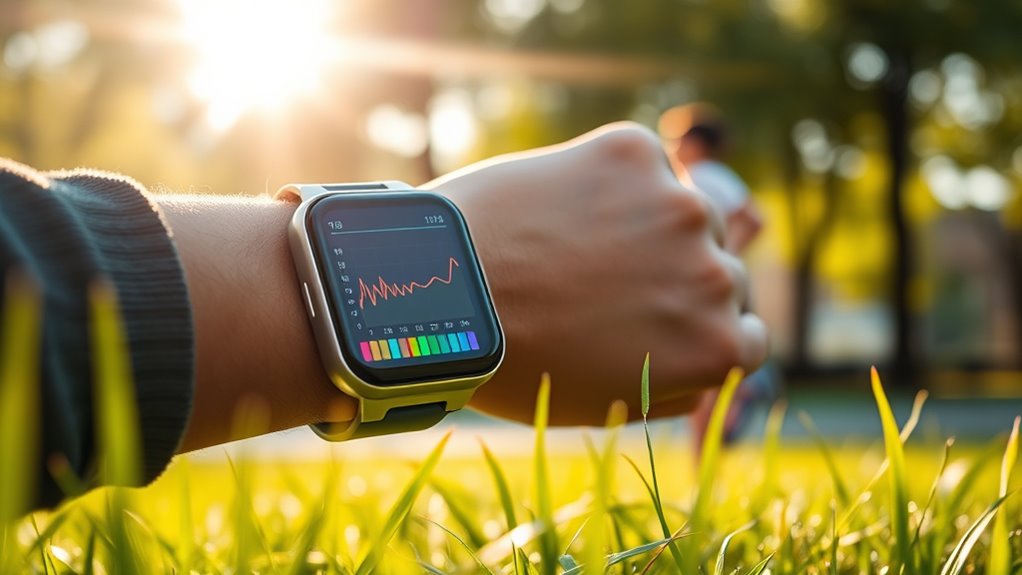

Wearable health monitors let you track important health metrics in real time, giving you control over your wellness journey. You can monitor your heart rate, sleep quality, and physical activity, offering valuable insights for informed decision-making. With features like goal setting and achievement tracking, you stay engaged and motivated. Plus, understanding your health data helps you make necessary lifestyle changes. If you’re curious about how to maximize these benefits, there’s more to discover!
Key Takeaways
- Wearable health monitors track vital metrics like heart rate and sleep patterns, providing real-time insights into individual wellness.
- Instant feedback from these devices fosters engagement, encouraging users to maintain fitness routines and achieve health goals.
- Data visualization features help users understand performance trends, aiding in informed decision-making regarding lifestyle adjustments.
- Regular monitoring of health statistics allows users to identify trends and make necessary lifestyle modifications for improved well-being.
- Prioritizing data privacy ensures users can confidently leverage the health insights provided by wearable devices without compromising personal information.
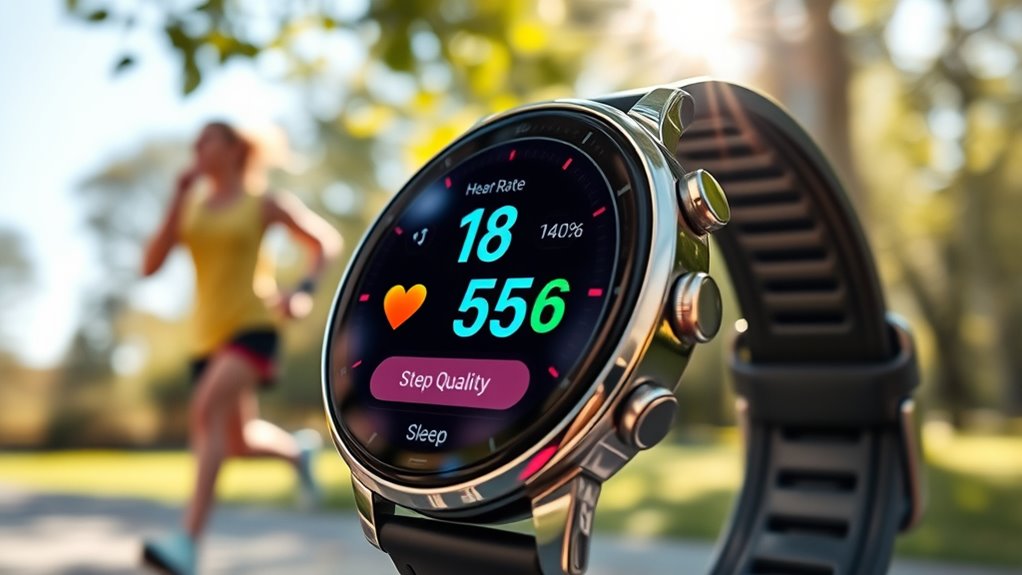
As you embrace a healthier lifestyle, wearable health monitors can be your best ally. These devices track various aspects of your health, from heart rate to sleep patterns, allowing you to make informed decisions about your well-being. By wearing a health monitor, you can gain real-time insights into how your body responds to different activities, helping you stay motivated and engaged in your fitness journey.
Wearable health monitors are essential for tracking your wellness and making informed decisions to enhance your fitness journey.
One of the most appealing features of wearable health monitors is their ability to enhance user engagement. With instant feedback on your physical activity, you’re more likely to stay committed to your goals. Whether you’re walking, running, or participating in a fitness class, these devices provide immediate data that can push you to perform better. You can set targets, monitor your progress, and celebrate your achievements, creating a sense of accomplishment that keeps you coming back for more.
However, as you take advantage of the benefits these monitors offer, it’s vital to consider data privacy. These devices collect sensitive health information, and you need to make sure that your data is secure. Many wearable health monitors come equipped with privacy settings, allowing you to control who can access your information. Familiarizing yourself with these settings is essential to protect your personal data. Make sure you read the privacy policies of the apps and devices you choose; understanding how your information is used can empower you to make safer, more informed choices.
As you track your wellness, think about how you can leverage the data these monitors provide. Regularly reviewing your stats can help you identify trends in your health, such as sleep quality or physical activity levels. This knowledge can guide you in making lifestyle adjustments, whether that means increasing your workout intensity or improving your sleep hygiene. The more you engage with the data, the more it can enhance your overall health journey.
Incorporating wearable health monitors into your daily routine can transform the way you view your wellness. They’re not just gadgets; they’re powerful tools that can drive your engagement and keep you accountable. By prioritizing both user engagement and data privacy, you can enjoy the benefits these devices offer while safeguarding your personal information. Additionally, understanding how trends in health data can impact your daily habits is crucial for long-term success. So, strap on that monitor and start tracking—your healthier lifestyle awaits!

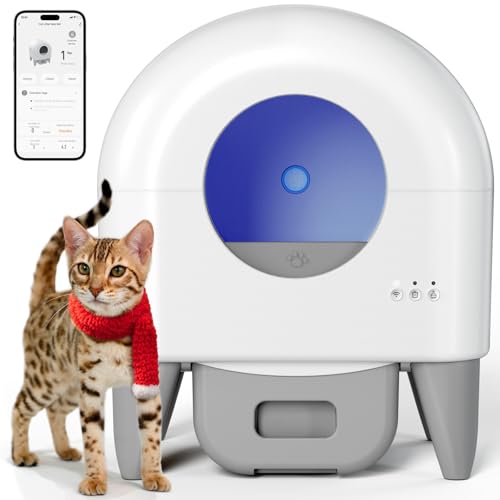
Mintakawa Automatic Cat Litter Box Self Cleaning - APP Control and Weight Monitoring - Ultra-Quiet, Suitable for Medium Cats and Kittens, Safe Anti-Pinch Litter Box (Assembly Required) - White
😸Ideal for small to medium cats: Designed to accommodate kittens and medium-sized cats, this litter box is suitable...
As an affiliate, we earn on qualifying purchases.
Frequently Asked Questions
How Do Wearable Health Monitors Connect to Smartphones?
Wearable health monitors connect to smartphones via Bluetooth technology, ensuring device compatibility. Once paired, your monitor can sync data in real-time, allowing you to track your health metrics easily. You’ll receive notifications and updates directly on your phone, keeping everything in one place. This seamless data synchronization helps you stay informed about your wellness, making it easier to adjust your lifestyle based on the insights your monitor provides.
Can I Use Multiple Wearables Simultaneously?
Absolutely, you can use multiple wearables simultaneously! Think of your health data as a symphony, where each device plays its own note. However, you might face some data synchronization challenges, as not all devices integrate seamlessly. To get the most out of multiple device integration, make sure they’re compatible with the same app or platform. This way, you’ll enjoy a harmonious understanding of your wellness and track your progress effectively.
Are There Privacy Concerns With Health Data Collected?
Yes, there are privacy concerns with health data collected from wearables. You need to take into account data security and user consent when using these devices. Make sure that the companies you engage with have robust security measures in place to protect your information. Always read the privacy policies to understand how your data is used and shared. Being proactive about your privacy can help you enjoy the benefits of wearables while minimizing potential risks.
How Accurate Are the Readings From These Devices?
The accuracy of readings from wearable health monitors can vary, with studies showing that some devices achieve up to 95% accuracy in heart rate measurement. However, accuracy validation is essential, as not all models maintain this level of performance. You should always check data reliability, especially if you’re using these readings to make health decisions. Understanding how your specific device performs helps guarantee you’re getting the most precise information possible.
What Is the Battery Life of Typical Wearable Monitors?
The battery life of typical wearable monitors varies, but you can expect around 5 to 14 days, depending on usage and features. Manufacturers focus on power optimization to extend battery longevity, so turning off unnecessary features can help. If you’re using GPS or heart rate monitoring continuously, the battery will drain faster. Keep an eye on your device’s settings to make the most out of its battery life and guarantee it lasts through your activities.

Self Cleaning Litter Box,Open Top Automatic Litter Box with App Control for Multiple Cats, Safety Sensors Protection, Odor Control Includes 2 roll Liners,Large Waste Bin, Cream White
Open-Top Comfort: Spacious Access for Happy Cats, Boasting a generous 16.5”×16.5” entrance—far roomier than cramped closed designs—this open-top...
As an affiliate, we earn on qualifying purchases.
Conclusion
As you strap on your wearable health monitor, you might just notice a coincidence: every time you check your heart rate, your mood lifts. It’s amazing how tracking your wellness in real time can boost not just your health but your happiness too. With each step counted and each heartbeat measured, you’re not just monitoring data; you’re embracing a healthier lifestyle. So, keep wearing that device, and watch how it transforms your everyday well-being!
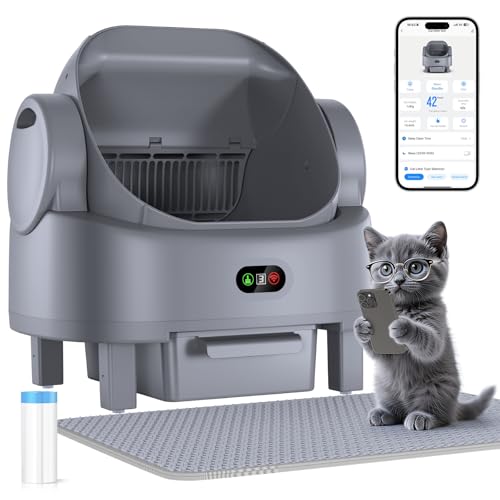
Fumoi Automatic Cat Litter Box Self Cleaning Litter Box Large Capacity for Multiple Cats, App Control with Safety Sensors, Removable Washable Liner,2 Rolls Garbage Bags,Grey
Advanced Safety Protection: Infrared motion sensors pause cleaning immediately upon detecting your cat’s presence; enhanced safety design prioritizes...
As an affiliate, we earn on qualifying purchases.
LUODIER Self Cleaning Cat Litter Box, Open-Top Large Automatic Litter Box for Multiple Cats with Safety Sensors, Includes Liner Bags and Litter Mat Light Grey
𝐎𝐩𝐞𝐧 𝐃𝐞𝐬𝐢𝐠𝐧 — 𝐄𝐚𝐬𝐲 𝐈𝐧, 𝐄𝐚𝐬𝐲 𝐎𝐮𝐭: Unlike enclosed barrel-style boxes, this open-design self cleaning litter box gives...
As an affiliate, we earn on qualifying purchases.