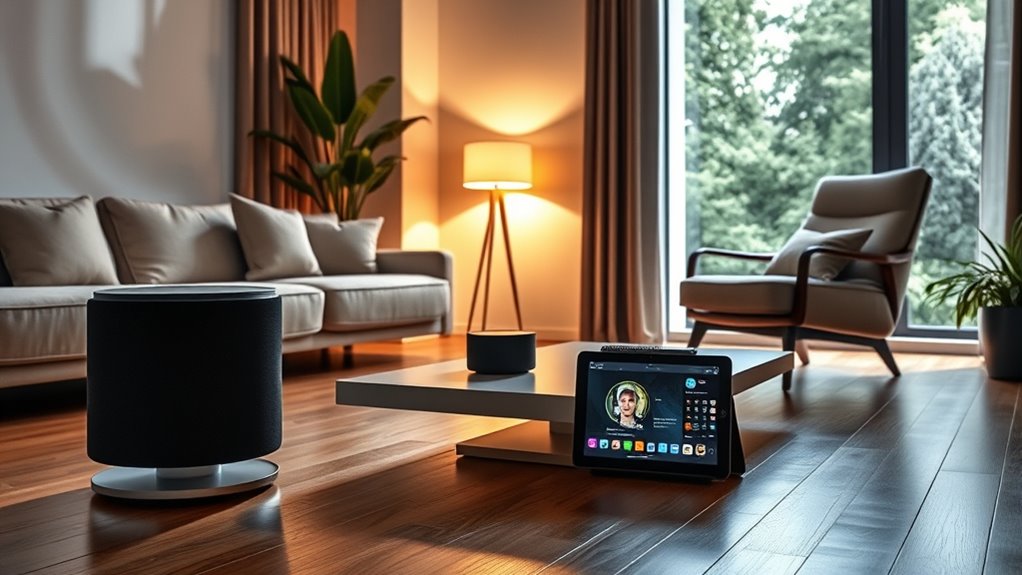

Voice-activated technology, like smart speakers and AI assistants, transforms how you control your devices. With just your voice, you can command tasks, making life more convenient and accessible. However, be mindful of privacy concerns, as these devices are always listening and collecting data. As technology advances, expect even smarter, hands-free interactions that can manage your entire home. Keep exploring to discover the exciting possibilities that voice-activated tech brings to your daily life.
Key Takeaways
- Voice-activated technology enables hands-free control of smart devices through commands, enhancing user convenience and accessibility.
- Smart speakers and AI assistants are the primary tools for interacting with voice-activated systems in homes.
- Continuous advancements in voice systems aim for intuitive smart home control, including functions like lighting and temperature adjustments.
- Privacy concerns arise from constant listening and data collection, necessitating user awareness of data practices and settings for protection.
- Ethical considerations and data security are crucial as technology evolves, requiring transparency and monitoring from both users and manufacturers.

Have you ever wondered how voice-activated technology has transformed the way we interact with our devices? It’s amazing how simply speaking commands can make your life easier, whether you’re asking your smart speaker to play music or instructing your AI assistant to set reminders. This shift from manual controls to voice commands has redefined convenience and accessibility for users everywhere. But while you enjoy the benefits, it’s vital to contemplate the implications, especially around privacy concerns.
As you embrace this technology, you might find yourself pondering how much personal information you’re sharing. Voice-activated devices, like smart speakers and virtual assistants, are always listening for their wake words. This means they’re constantly collecting data to provide better services, and sometimes, that data could be vulnerable. You’ve probably heard stories about accidental recordings or data breaches, and these incidents can make anyone wary. It’s essential to stay informed about how your devices process and store data. You might even want to explore settings that limit data collection or control what gets shared.
As you embrace voice-activated technology, consider the personal information you may be sharing and how it’s being used.
Looking ahead, the future innovations in voice-activated technology promise to enhance your experience even further. Developers are continuously working on making these systems smarter and more intuitive. Imagine being able to control your entire smart home just by your voice. You could adjust your thermostat, dim the lights, or even unlock your front door, all without lifting a finger. The possibilities seem endless, and it’s exciting to think about how these advancements will integrate with power delivery and machine learning to understand you better.
However, as these capabilities grow, so do the challenges. Balancing innovation with privacy is a pressing issue. You’ll want to enjoy the convenience of voice-activated technology without sacrificing your personal security. As you engage with these devices, keep an eye on how companies address privacy concerns. Are they transparent about their data usage? Are they taking steps to guarantee your information remains secure?
smart speaker with privacy controls
As an affiliate, we earn on qualifying purchases.
As an affiliate, we earn on qualifying purchases.
Frequently Asked Questions
How Does Voice-Activated Technology Recognize Different Accents and Dialects?
Voice-activated technology recognizes different accents and dialects through accent adaptation and dialect recognition algorithms. These systems analyze speech patterns, pitch, and pronunciation variations to understand your unique way of speaking. Machine learning plays a pivotal role, as it trains the technology on diverse voice samples from various regions. This allows the technology to improve its accuracy over time, ensuring it can respond correctly, no matter how you express yourself.
Can Voice-Activated Devices Be Used Offline?
Sure, you can use voice-activated devices offline—if you enjoy talking to yourself without any feedback! The offline functionality is usually limited, but hey, it’s a great way to practice your monologues. Some devices do boast noise cancellation, so you can shout your shopping list into the void without disturbing anyone. Just don’t expect them to respond unless they’re connected to the internet. So, good luck with your one-sided conversations!
What Are the Privacy Concerns With Voice-Activated Technology?
You should be aware of several privacy concerns with voice-activated technology. These devices often collect data about your conversations and interactions, raising issues about data privacy. Without proper user consent, your information might be shared with third parties or used for targeted advertising. It’s essential to check the privacy settings and understand how your data is handled, ensuring you’re comfortable with the level of privacy protection these devices provide.
How Does Voice-Activated Technology Improve Accessibility for Disabled Users?
Voice-activated technology critically enhances accessibility for disabled users, doesn’t it? By enabling assistive communication, you can easily interact with devices without needing physical input, which is essential for those with mobility challenges. This technology streamlines everyday tasks, allowing users to control their environment, access information, and communicate more effectively. With voice commands, you can navigate your home or workspace effortlessly, making daily life more manageable and independent for individuals with disabilities.
What Future Advancements Are Expected in Voice-Activated Technology?
Future advancements in voice-activated technology are exciting! You can expect improvements in voice synthesis, making voices sound even more natural and personalized. Emotion detection will also enhance interactions, allowing devices to recognize your feelings and respond appropriately. Imagine your assistant adjusting its tone based on your mood or providing comfort when you’re down. These innovations will create a more intuitive and engaging experience, making technology feel more human and accessible.
AI voice assistant for home
As an affiliate, we earn on qualifying purchases.
As an affiliate, we earn on qualifying purchases.
Conclusion
Voice-activated technology has quickly become a part of our daily lives, much like a trusted friend who’s always there to lend a hand. As smart speakers and AI assistants continue to evolve, they’re making tasks easier and more intuitive than ever. Embracing this technology opens up new possibilities, allowing you to control your environment and access information with just your voice. So, let your voice be heard and experience the convenience that awaits you!
smart home voice control devices
As an affiliate, we earn on qualifying purchases.
As an affiliate, we earn on qualifying purchases.
voice-activated home automation system
As an affiliate, we earn on qualifying purchases.
As an affiliate, we earn on qualifying purchases.