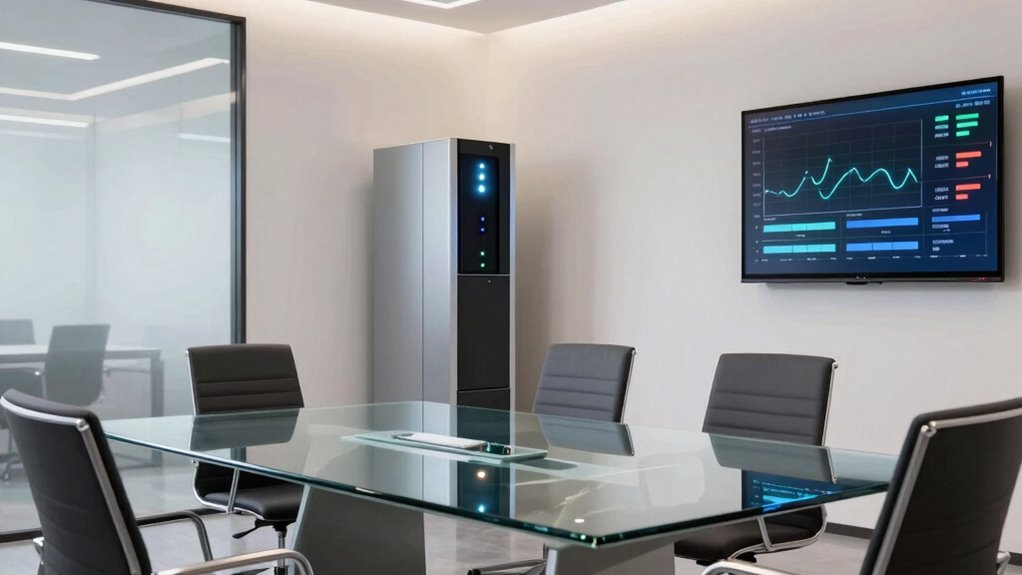

To guarantee your high-end workspace stays operational during outages, you need to ask how reliable your backup power system is. Do you have sufficient redundancy with UPS and generators that activate instantly? Are your emergency plans and tests up to date? Understanding your system’s capacity and exploring sustainable solutions can help you protect assets, maintain productivity, and uphold your reputation. Keep these questions in mind—there’s more to discover about staying resilient and future-proof.

Get business pricing on tech for your team
- Business-only prices and quantity discounts
- Tax-exempt purchasing
- Multiple users, one account, clear invoices
Key Takeaways
- What backup power solutions are in place to ensure uninterrupted critical operations during outages?
- How quickly can the backup power system activate and support essential functions?
- Is the backup power capacity sufficient to handle all high-priority equipment and data needs?
- Are backup systems regularly tested and staff trained to ensure seamless transitions?
- Does the backup power strategy align with sustainable practices and future scalability?
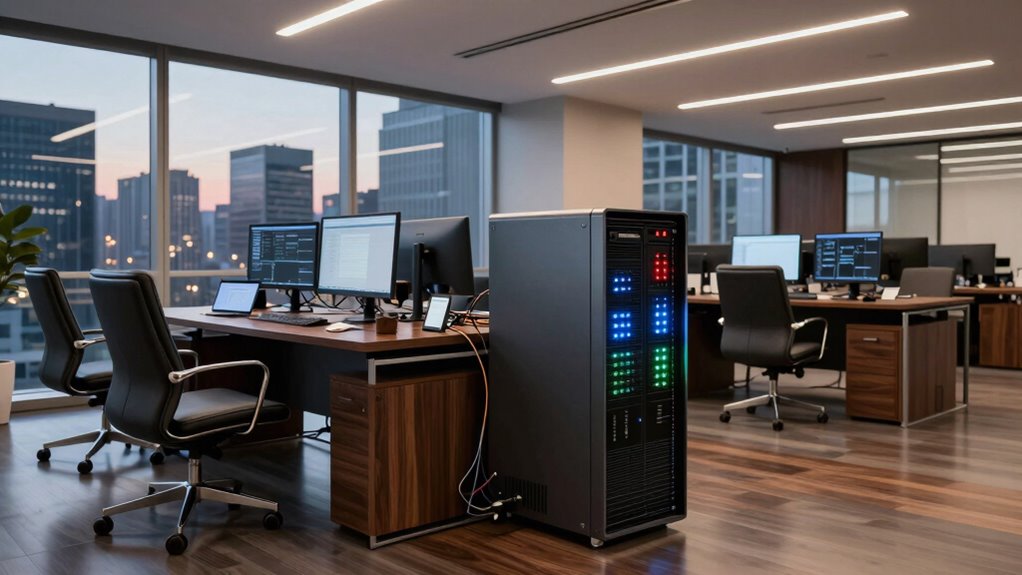
Having reliable backup power is essential for maintaining productivity and avoiding disruptions in your workspace. In high-end environments where every second counts, guaranteeing your operations continue smoothly during outages isn’t just about convenience—it’s about safeguarding your reputation and bottom line. This makes understanding technology reviews and product comparisons crucial when selecting the right backup solutions. Backup power redundancy is the backbone of a resilient workspace. It involves implementing systems that provide alternative sources of power when the main supply fails. By integrating backup power solutions like uninterruptible power supplies (UPS) and generators, you create a safety net that kicks in instantly when the grid falters. This isn’t just about avoiding downtime; it’s about ensuring your workspace maintains operations seamlessly, whether you’re running sensitive equipment, hosting client meetings, or managing critical data. The goal is to eliminate any single point of failure, so your workspace remains operational no matter what.
Reliable backup power safeguards your reputation and operations during outages—are you truly prepared for unexpected power failures?
Emergency preparedness extends beyond just installing backup power systems. It requires an all-encompassing plan that integrates these systems into your daily operations. You should regularly test your backup power setups, train staff on emergency procedures, and ensure your equipment can switch over without hiccups. When power fails, every second counts, and a well-practiced plan ensures you’re not scrambling to respond. It also involves understanding the capacity of your backup systems—can they support your entire workspace or only essential functions? Knowing this helps you prioritize and avoid surprises during a crisis. Having a clear understanding of power system capacity can help you make smarter decisions about what needs to be supported during outages. Additionally, staying informed about reliable backup power technology can help you choose solutions that are both efficient and future-proof. Incorporating sustainable energy practices into your backup power strategy can also contribute to environmental goals while maintaining operational resilience. Staying updated on biodiversity and conservation practices may seem unrelated, but sustainable energy solutions and eco-friendly backup options are increasingly relevant in environmentally conscious high-end workspaces.
Investing in reliable backup power isn’t just a technical decision; it’s a strategic move. It sends a clear message to clients, partners, and employees that your workspace is prepared for the unexpected. It’s about minimizing risk and maximizing uptime, especially in industries where data integrity and operational continuity are non-negotiable. Furthermore, the costs associated with downtime—lost revenue, damaged reputation, or compromised data—far outweigh the investment in robust backup solutions. By proactively addressing emergency preparedness and power redundancy, you turn a potential vulnerability into a strength.
In the end, the backup power question every high-end workspace should answer is simple but indispensable: Are you truly prepared for a power outage? The right answer involves a layered approach—combining technology, planning, and regular testing—to ensure your workspace remains resilient, productive, and secure, no matter what.
uninterruptible power supply UPS for office
As an affiliate, we earn on qualifying purchases.
As an affiliate, we earn on qualifying purchases.
Frequently Asked Questions
How Often Should Backup Power Systems Be Tested?
You should test your backup power systems at least twice a year to guarantee battery maintenance is up-to-date and power redundancy is reliable. Regular testing helps identify potential issues early, preventing outages during emergencies. Make sure to follow manufacturer guidelines for testing frequency, and document each test. Consistent checks keep your backup systems dependable, safeguarding your workspace and data when it matters most.
What Is the Average Lifespan of Backup Power Solutions?
Think of backup power solutions like fine wine—they get better with age, but eventually, even they need replacing. On average, these systems last about 3 to 5 years, depending on battery durability and usage. Regular maintenance extends their life, ensuring power redundancy when you need it most. Keep an eye on performance and plan for upgrades to avoid unexpected outages and maintain seamless operations.
Are There Specific Backup Power Options for Different Industries?
Yes, different industries often require industry-specific solutions for backup power. For example, healthcare facilities need reliable uninterruptible power supplies (UPS) and generators to ensure patient safety, while data centers prioritize power source diversity to prevent data loss. You should evaluate your industry’s unique needs and choose solutions that provide the necessary resilience and flexibility, guaranteeing continuous operation during outages. Tailoring backup power options helps protect your business continuity effectively.
What Is the Initial Cost Versus Long-Term Savings of Backup Power?
The initial cost of backup power might seem high, but a thorough cost analysis shows long-term savings through improved energy efficiency and reduced downtime. You’ll avoid costly disruptions, protect critical data, and maintain productivity. Investing in reliable backup power systems often pays off over time, especially as energy-efficient options lower ongoing operating costs. Overall, considering both upfront expenses and long-term benefits helps you make smarter, financially sound decisions.
How Do Backup Power Systems Impact Data Security and Integrity?
They say, “A chain is only as strong as its weakest link.” Backup power systems profoundly enhance your data security and integrity during power failures by providing seamless power continuity. This prevents sudden shutdowns that could corrupt or lose critical data. With reliable backup power, you’re safeguarding your data protection efforts, ensuring sensitive information remains intact and secure, even when unexpected outages occur.
Conclusion
Don’t wait until a power outage disrupts your work and costs you time or money. Investing in backup power might seem like an extra expense now, but it’s a small price for peace of mind and uninterrupted productivity. Imagine confidently handling critical tasks, even when the lights go out—without panic or delay. Prioritize backup power today, so you’re always prepared to keep your workspace running smoothly, no matter what surprises come your way.
Columbus Day / Indigenous Peoples' Day Picks
long weekend sales
As an affiliate, we earn on qualifying purchases.