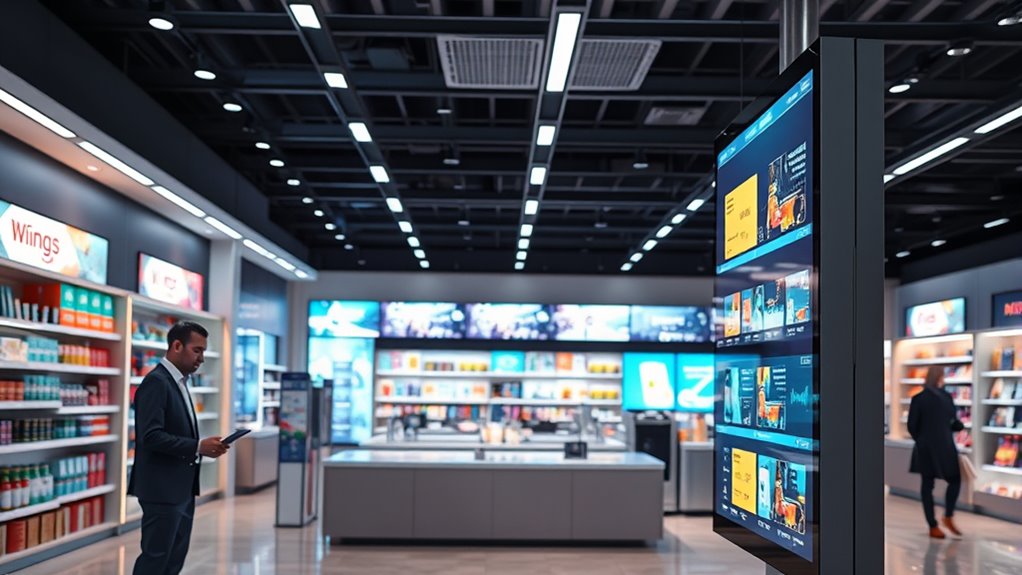

AI is transforming retail by replacing many human clerks with advanced automation and smart technology. Self-checkout lanes, mobile payments, and computer vision enable checkout-free shopping, while predictive analytics optimize inventory. Jobs like cashiers and stock clerks are at risk, especially in urban areas and wealthy regions. As AI takes over routine tasks, you’ll see stores becoming more efficient. Keep exploring to discover how this shift affects the future of retail and your role within it.
Listen free for 30 days with Audible
Thousands of audiobooks and originals — cancel anytime.
As an affiliate, we earn on qualifying purchases.
Key Takeaways
- AI replaces human clerks with automation, self-checkout, and smart tech, significantly reducing cashier jobs in retail.
- Retailers leverage AI-driven predictive analytics to optimize inventory, demand forecasting, and customer personalization.
- Workforce roles shift from traditional cashier and stock clerks to tech-focused positions like logistics and data analysis.
- Regional adoption varies, with North America leading and Asia-Pacific rapidly expanding AI integration in retail.
- Future retail relies on reskilling workers to adapt to digital management, ensuring competitiveness amid job displacement concerns.
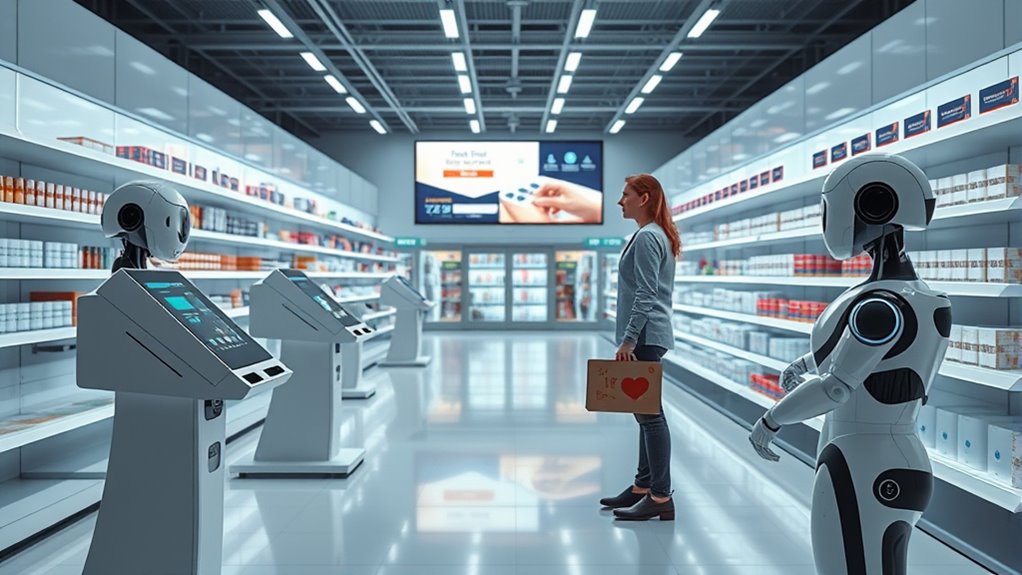
Artificial intelligence is rapidly transforming the retail industry by replacing human clerks with automation and smart technologies. You may have already noticed how many stores now feature self-checkout lanes or mobile payment options, reducing the need for traditional cashiers. Globally, the retail market for AI is expected to explode from $11.61 billion in 2024 to over $40 billion by 2030, reflecting a significant shift toward automated solutions. Many retail giants like Walmart, Amazon, and Target are already reporting 10 to 30 percent cost reductions thanks to AI-driven automation, which streamlines operations and cuts labor expenses. Consumers are also enthusiastic for this change: 71% want generative AI integrated into their shopping experiences, seeking more personalized, efficient service.
AI is revolutionizing retail with automation, reducing costs, and enhancing personalized shopping experiences worldwide.
The impact on retail jobs is profound. Positions like cashiers are increasingly replaced by cashier-less stores, self-checkout systems, and mobile payment apps. In London alone, up to 26,000 cashier jobs could disappear due to AI automation. Stock clerks are being replaced by shelf-scanning robots and real-time inventory management systems that automate restocking and tracking. Data entry clerks see their roles diminish as automated systems handle product details, pricing, and inventory updates more accurately and faster. Basic customer service reps are being replaced by chatbots and voice assistants that efficiently handle routine inquiries, complaints, and support requests. Warehouse pickers and packers are also feeling the pressure, with robotic systems now streamlining logistics and fulfillment processes. High refresh rates enhance the responsiveness of these automated systems, making them more effective in customer interactions.
Technologies like computer vision enable checkout-free shopping by monitoring shelves and identifying products without human intervention. Predictive analytics help optimize inventory levels and forecast demand, reducing overstock and stockouts. Dynamic pricing algorithms can adjust prices in real-time based on market trends, boosting sales and competitiveness. Personalized recommendations, driven by AI, enhance the customer experience by suggesting products tailored to individual preferences, increasing the likelihood of purchases. Automated chatbots are available around the clock, providing support and resolving issues instantly, making shopping more accessible and convenient. AI-powered systems are also increasingly used for fraud detection and security in retail environments. Regionally, North America leads in AI adoption, holding 39% of the retail market share, with Asia-Pacific experiencing the fastest growth. In cities like Baltimore, AI primarily impacts cashiers, stock clerks, and data entry roles. Wealthier economies face higher job displacement risks, with up to 60% of jobs in advanced countries potentially affected, compared to 26% in lower-income nations. Urban areas with advanced digital infrastructure adopt AI faster, transforming retail workflows rapidly.
As AI continues to reshape retail, millions of jobs could disappear by 2025, and hundreds of millions more by 2030. Workers will need to reskill and adapt to new roles in logistics, supply chain management, or tech. Embracing digital literacy becomes essential to remain competitive. While AI offers numerous benefits—such as improved customer service, reduced wait times, and optimized inventory—it also raises concerns about privacy, bias, and workforce displacement. As you witness this shift, it’s clear that AI is not just supplementing retail but fundamentally redefining how stores operate and how you shop.
self-checkout systems for retail stores
As an affiliate, we earn on qualifying purchases.
As an affiliate, we earn on qualifying purchases.
Frequently Asked Questions
How Do Customers Feel About AI Replacing Human Staff?
You might feel uneasy about AI replacing human staff, and many share that concern—57% globally worry about job loss. While some customers appreciate AI for quick, personalized service, others prefer human interaction for trust and emotional connection. Your comfort depends on transparency and understanding how AI benefits your shopping experience. If AI enhances efficiency without sacrificing human touch, you’re more likely to accept its growing role in retail.
What Skills Will Retail Workers Need in Ai-Driven Stores?
Are you ready to adapt? In AI-driven stores, you’ll need technical skills like operating automated checkout systems, managing AI inventory tools, and understanding data analytics. Customer experience skills, such as personalizing service with AI insights and working alongside virtual assistants, become crucial. Plus, strong problem-solving, emotional intelligence, and collaboration are essential. By embracing continuous learning and ethical tech use, you’ll stay relevant and thrive in this evolving retail landscape.
How Secure Is Customer Data With AI Management?
Customer data security with AI management varies based on how well retailers implement safeguards. If you prioritize transparency, strong encryption, and real-time threat detection, your customers’ data stays protected. However, lapses in data security or poor data quality can lead to breaches, eroding trust. To guarantee data remains secure, you must stay vigilant, update security protocols regularly, and maintain high data integrity standards, building confidence in your AI-driven systems.
Will AI Reduce or Increase Retail Employment Opportunities?
AI is transforming retail employment like a double-edged sword—cutting away routine jobs but carving out new, higher-skilled roles. You’ll find opportunities in managing AI systems, data analysis, and customer experience. While some positions fade, your adaptability can turn this technological tide into a wave of fresh possibilities. Embrace upskilling, and you’ll ride the crest of innovation, making you more valuable in an evolving retail landscape.
How Do AI Systems Handle Complex Customer Service Issues?
AI systems handle complex customer service issues by using advanced natural language processing and machine learning to interpret multi-layered conversations. They can escalate problems when needed, allowing human agents to focus on nuanced or sensitive cases. You’ll find they improve issue routing and provide real-time, personalized responses, boosting efficiency. However, you still need human oversight for empathy and critical judgment, especially in highly specialized situations.
Conclusion
As AI takes the reins, you stand at the crossroads of tradition and innovation. The human clerk, once the guiding light of retail, now symbolizes the soul of personal touch and connection. Yet, as digital managers rise, they embody the dawn of a new era—where technology becomes your compass. Embrace this shift, for in this evolving landscape, you hold the power to shape a future where human warmth and AI efficiency unite in harmony.
NFL season / tailgating Picks
team gear
As an affiliate, we earn on qualifying purchases.