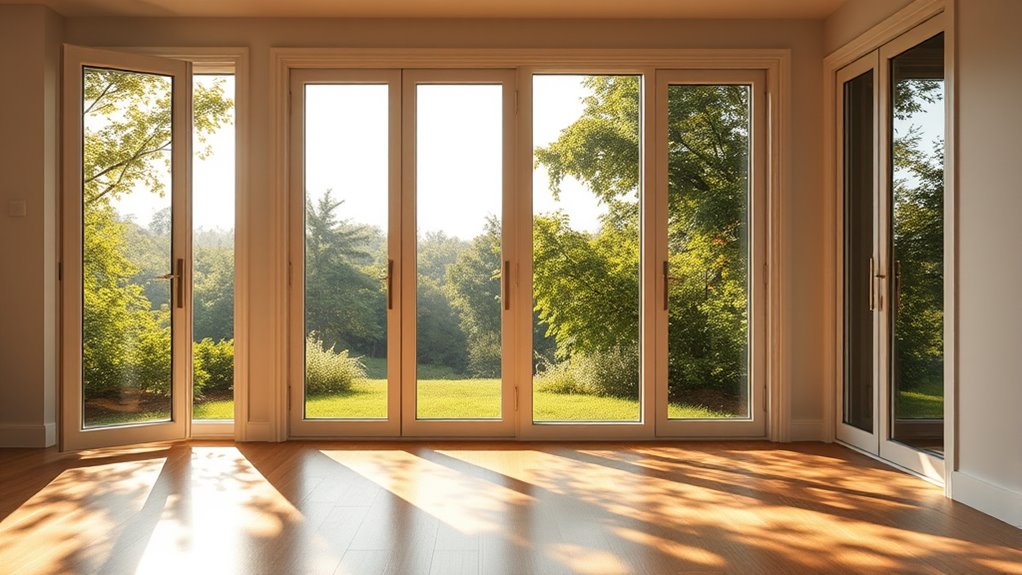

Casement windows are a fantastic choice for boosting passive ventilation and energy efficiency in your home. They open wide from the side, directing fresh air into your living space while minimizing air leaks. This tight seal helps maintain comfortable indoor temperatures, reducing your energy bills. In warmer climates, they enhance natural airflow, lowering your reliance on air conditioning. If you want to see how they can truly transform your space, there’s more to explore.
Key Takeaways
- Casement windows maximize natural airflow, promoting passive ventilation and reducing reliance on mechanical systems for indoor air quality.
- Their tight seal minimizes air leaks, enhancing energy efficiency by maintaining consistent indoor temperatures.
- Opened casement windows capture breezes, naturally lowering indoor temperatures and reducing the need for air conditioning.
- These windows come in various styles, combining aesthetic appeal with functional benefits that enhance overall home design.
- Incorporating casement windows in renovations supports sustainable practices by improving air quality and reducing energy consumption.
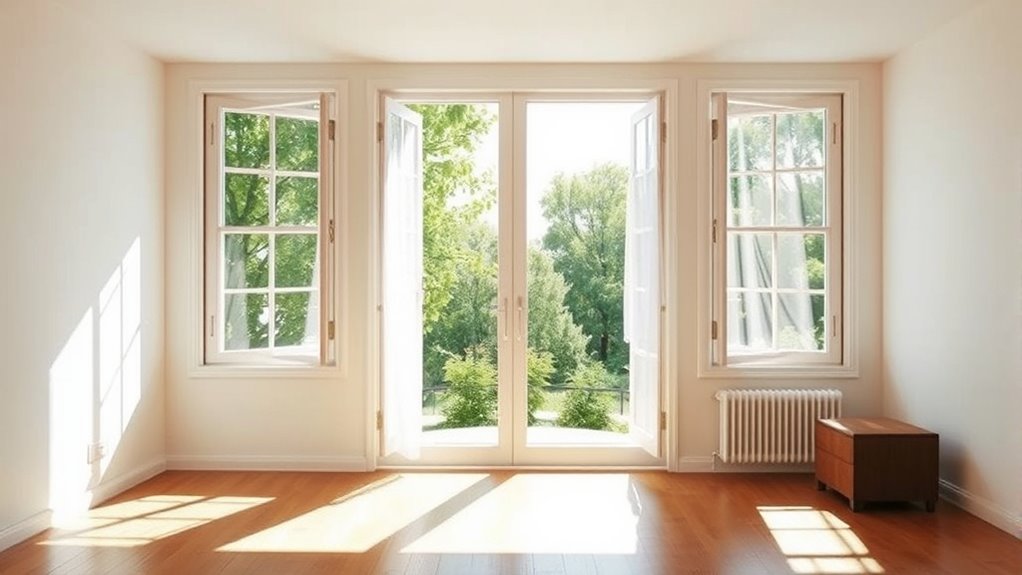
When you think about enhancing your home’s air quality, casement windows might not be the first option that comes to mind. However, these windows can considerably improve natural airflow in your living spaces. Unlike traditional double-hung windows that slide up and down, casement windows swing open from the side, allowing for better ventilation. When fully opened, they capture and direct breezes into your home, offering a revitalizing alternative to stale indoor air.
One of the main benefits of casement windows is their ability to create a draft. By strategically positioning them, you can encourage cross-ventilation, which is essential for maintaining good air quality. This natural airflow can help reduce reliance on mechanical ventilation systems, ultimately leading to energy savings. In addition, the design of casement windows provides a tighter seal when closed. Proper window sealing is vital for energy efficiency, as it prevents air leaks that can contribute to higher energy bills. A well-sealed window minimizes the amount of conditioned air escaping and keeps your home comfortable year-round.
Moreover, casement windows can be particularly effective in warmer climates where you want to maximize ventilation. On breezy days, simply crank them open to invite fresh air in, creating a pleasant atmosphere. This approach not only improves indoor air quality but also reduces the need for air conditioning, allowing you to save on energy costs. The natural airflow generated by these windows can effectively lower indoor temperatures while providing the fresh air you need to feel comfortable.
In addition to their practical benefits, casement windows can enhance the aesthetic appeal of your home. They come in various styles and materials, matching your home’s architecture while offering unobstructed views of the outdoors. When you combine function with beauty, you’ve got a win-win situation.
If you’re considering a home renovation, think about incorporating casement windows into your design. They’re not just a stylish choice; they also promote better air quality and energy efficiency. By enhancing your home’s ventilation with these windows, you’ll create a healthier living environment and reduce your carbon footprint. So, the next time you contemplate ways to improve your home, don’t overlook the potential that casement windows bring to passive ventilation and air quality enhancement. Embrace the change and enjoy a fresher, more sustainable home.

Andersen Hardware Pack, Classic E-Z Casement Window – White – 1361536
As an affiliate, we earn on qualifying purchases.
As an affiliate, we earn on qualifying purchases.
Frequently Asked Questions
What Materials Are Casement Windows Typically Made From?
Casement windows are typically made from various window frame materials like wood, vinyl, and aluminum. Each offers different benefits, such as durability or aesthetic appeal. For the glass options, you can choose single, double, or even triple glazing, which enhances insulation and energy efficiency. By selecting the right combination of frame materials and glass, you can create a window that not only looks good but also performs well in your home.
Do Casement Windows Require Special Maintenance?
Yes, casement windows require some special maintenance to make sure they function properly. Did you know that homes with secure windows can deter up to 60% of burglars? To enhance window security, regularly check the locks and hinges for wear. For cleaning tips, use a gentle cleaner on the glass and wipe down the frames to prevent buildup. With proper care, your casement windows will stay efficient and secure for years!
What Is the Cost Difference Between Casement and Sliding Windows?
The cost difference between casement and sliding windows often comes down to window pricing and installation costs. Typically, casement windows are more expensive due to their design and hardware requirements. You might find that installation costs for casement windows are also higher because they need more precise fitting. In contrast, sliding windows can be more budget-friendly, both in terms of materials and installation, making them a popular choice for many homeowners.
Can Casement Windows Be Installed in Any Home Design?
Absolutely, you can fit casement windows into various home designs. Think of them as the charming accents that bring light and fresh air into your space. During window installation, consider your home’s architecture and the style you want. They’re especially compatible with traditional, modern, or even eclectic designs. Just guarantee that the window’s size and opening mechanism align with your aesthetic vision, and you’ll create a seamless blend between form and function.
How Do I Choose the Right Size for Casement Windows?
To choose the right size for casement windows, measure the rough opening where you’ll install them. Make sure to account for window insulation and any safety features you want, like tempered glass or secure locking mechanisms. It’s vital to verify the window fits snugly to maintain energy efficiency and prevent drafts. If you’re unsure, consult a professional to help you find the perfect size that meets your home’s requirements and enhances your space.

Vinyl Basement Hopper Window, 32" x 18" Bathroom Window with Double Pane Insulated Glass and Fiberglass Screen, White PVC Frame, Energy Efficient Replacement Window for Basement, Bathroom (White)
Vinyl Basement Hopper Window: Double-pane insulated glass helps reduce heat loss and improve energy efficiency. Designed to maintain…
As an affiliate, we earn on qualifying purchases.
As an affiliate, we earn on qualifying purchases.
Conclusion
Incorporating casement windows into your home not only boosts energy efficiency but also takes advantage of passive ventilation to keep things fresh. By letting the breeze flow through your space, you’re creating a comfortable environment without breaking the bank on energy costs. It’s a win-win situation! So, if you want to stay cool and save some cash, consider upgrading to casement windows. You’ll be making a smart choice that pays off in more ways than one.

Prime-Line H 3683 1-7/8 In. Diecast and Steel Antique Brass Casement Window Sash Lock (Single Pack)
For use with older style butt-hinged casement windows
As an affiliate, we earn on qualifying purchases.
As an affiliate, we earn on qualifying purchases.

Fully Assembled, Custom Extruded Casement Screen (CA4) – Flanged Window Screen Replacement for Casement Windows – Wide Frame, Sleek Fit, Uncompromising Seal
Custom Casement Window Screens: Custom window screen sizes to ensure a perfect fit – handmade in the USA…
As an affiliate, we earn on qualifying purchases.
As an affiliate, we earn on qualifying purchases.