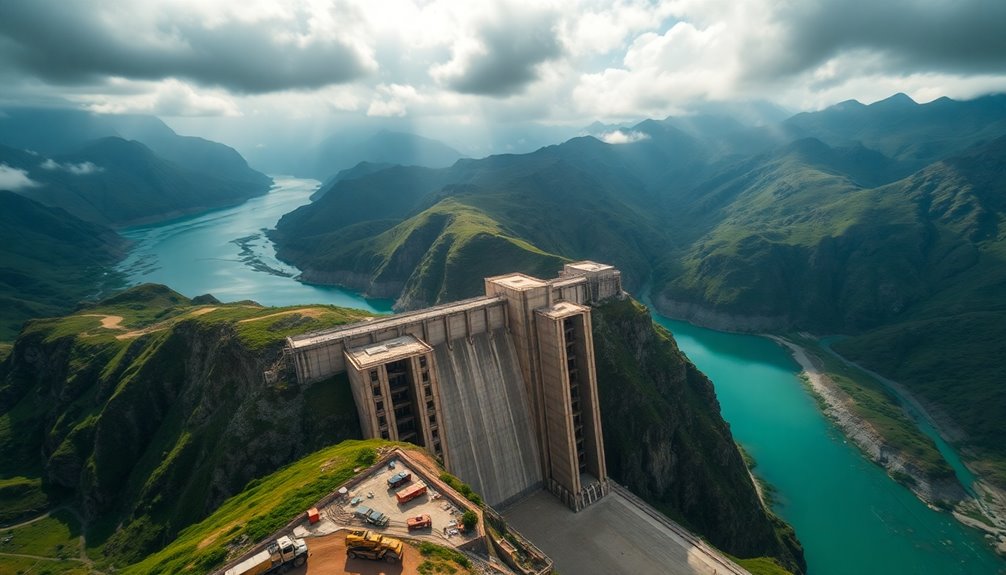

The rapid expansion of hydropower in the Hindu Kush Himalaya, with its 500 gigawatts of potential, can lead to increased greenhouse gas emissions. While it's essential for meeting energy demands, climate change impacts like glacial retreat and erratic precipitation can threaten hydropower's viability. Additionally, large dam projects may pose sustainability risks. Addressing these challenges through climate-resilient planning and regional collaboration is crucial. Discover how these factors influence the region's future energy landscape and sustainability efforts.

Get business pricing on tech for your team
- Business-only prices and quantity discounts
- Tax-exempt purchasing
- Multiple users, one account, clear invoices
Key Takeaways
- Hydropower expansion in the HKH could lead to increased greenhouse gas emissions due to the construction and maintenance of large infrastructure projects.
- Glacial retreat and changing precipitation patterns may disrupt hydropower generation, potentially increasing reliance on fossil fuels.
- Large dams associated with hydropower can create methane emissions from submerged organic materials, contributing to greenhouse gas effects.
- Climate change impacts, such as extreme weather, may force energy systems to adapt, resulting in increased emissions from backup power sources.
- Sustainable planning and small-scale projects can mitigate emissions while balancing energy needs and environmental integrity in the HKH region.

As climate change poses increasing threats to the delicate ecosystems of the Hindu Kush Himalaya (HKH), the region's vast hydropower potential becomes more crucial than ever. You mightn't realize it, but HKH is often called the "Water Tower of Asia," supporting ten major river systems and hosting the largest ice reserves outside the polar regions. This unique geography provides water services to around 240 million people in the HKH and 1.65 billion downstream, highlighting the region's vital role in sustaining livelihoods and economies.
With an estimated hydropower potential of about 500 gigawatts, countries in the upper Indus basin are planning significant expansions in hydropower generation. They're aiming for a four-fold increase over the coming decades, which could help alleviate energy deficits, especially since 72% of the energy in this region currently comes from non-renewable sources. Additionally, this expansion could provide a pathway to harnessing renewable energy sources that are currently untapped to meet urban energy demands.
Countries in the upper Indus basin seek to quadruple hydropower generation, addressing energy deficits while moving away from non-renewable sources.
However, you should also consider the impacts of climate change on this ambitious agenda. Glacial retreat and erratic precipitation patterns are already altering river flows, threatening hydropower production and essential water-dependent sectors.
It's important to recognize that while expanding hydropower can generate significant economic benefits, you need to implement climate-resilient planning to mitigate potential risks. Water flow in rivers is expected to peak by 2050 before declining sharply, which poses serious challenges to food security and the viability of hydropower projects.
Moreover, climate change exacerbates hazards like floods and glacial lake outburst floods, putting energy infrastructure at risk.
Balancing sustainability with energy justice is crucial. Long-term strategies should prioritize equitable access to electricity, especially for rural communities. Small-scale hydropower projects might offer more sustainable and equitable solutions compared to large dams.
As you navigate the complexities of hydropower expansion in the HKH, remember that regional collaboration is essential to address transboundary climate risks effectively and develop resilient infrastructure.
small-scale hydropower generator
As an affiliate, we earn on qualifying purchases.
As an affiliate, we earn on qualifying purchases.
Frequently Asked Questions
How Does Hydropower Impact Local Biodiversity in the Region?
Hydropower significantly impacts local biodiversity by altering river ecosystems.
You'll notice that dam construction disrupts natural river flows, affecting aquatic life and habitats. As large-scale projects develop, deforestation and soil erosion threaten various species.
Local communities also face displacement, losing livelihoods tied to these ecosystems. Additionally, the changes in water levels can diminish resources for fishing and agriculture, compromising essential services and overall ecological balance in the region.
What Are the Socioeconomic Effects of Hydropower Projects on Local Communities?
Hydropower projects significantly impact local communities, creating jobs and boosting economic stability.
You'll notice increased monetary compensation and infrastructure improvements, like better roads and electricity access, enhancing daily life. These projects also support livelihoods through irrigation resources.
However, they can disrupt ecosystems and lead to social conflicts, especially if resettlement occurs.
Balancing these socioeconomic benefits with environmental concerns is essential for sustainable development in your community.
How Does Climate Change Affect Hydropower Efficiency in the Himalayas?
Climate change significantly affects hydropower efficiency in the Himalayas. As temperatures rise, you'll notice increased glacial melt, altering river flow patterns and streamflow variability.
You might find energy generation surges during certain seasons but drops drastically in pre-monsoon periods. This unpredictability complicates reservoir management, making it harder to maintain consistent energy output.
Adapting to these changes is crucial for ensuring reliable hydropower in the face of an evolving climate landscape.
Are There Alternative Renewable Energy Sources Considered for the Region?
They say, "Don't put all your eggs in one basket," and this rings true for renewable energy in the Hindu Kush Himalaya.
While hydropower leads the charge, you'll find promising alternatives like decentralized solar solutions, which can boost agricultural productivity.
Wind power, though less prominent, has potential.
Additionally, geothermal energy and bioenergy from waste are emerging options.
What Measures Are in Place to Mitigate Greenhouse Gas Emissions From Hydropower?
To mitigate greenhouse gas emissions from hydropower, several measures are in place. You can adjust operating levels to reduce reservoir emissions and install aerating devices to cut methane output.
Additionally, capturing methane for energy use is a promising strategy. Regular asset refurbishments allow for the implementation of new emission-reducing technologies.
It's essential for agencies to accurately account for these emissions to inform effective climate policies and ensure sustainable hydropower practices.
Conclusion
In conclusion, the rush for hydropower in the Hindu-Kush Himalaya could lead to unintended consequences, like increased greenhouse gas emissions. While harnessing renewable energy sounds ideal, we must remember that "you can't have your cake and eat it too." Balancing energy needs with environmental protection is crucial. If we don't tread carefully, we might end up compromising the very ecosystems we aim to preserve. Let's prioritize sustainable practices to ensure a greener future for the region.
Halloween Picks
halloween
As an affiliate, we earn on qualifying purchases.