To keep pet hair tangle-free in a two-story home, establish a consistent cleaning routine that targets all zones. regularly groom your pets, especially brushing and bathing, to minimize shedding. Use tools like electrostatic mops and vacuums with rubber squeegees on carpets and floors. don’t forget to change HVAC filters and utilize HEPA air purifiers for better air quality. Keep this process manageable, and you’ll discover more effective strategies as you go along.
Key Takeaways
- Regularly groom pets and brush their fur to reduce shedding and prevent hair from spreading throughout the home.
- Use targeted vacuuming, dust mopping, and rubber squeegees on carpets and floors to effectively remove pet hair.
- Maintain a consistent cleaning schedule across all home levels, focusing on high-traffic and pet-favorite areas.
- Improve air quality with HEPA air purifiers and replace HVAC filters frequently to trap airborne pet allergens.
- Deep clean rugs and upholstery periodically to prevent embedded pet hair and keep indoor spaces fresh.
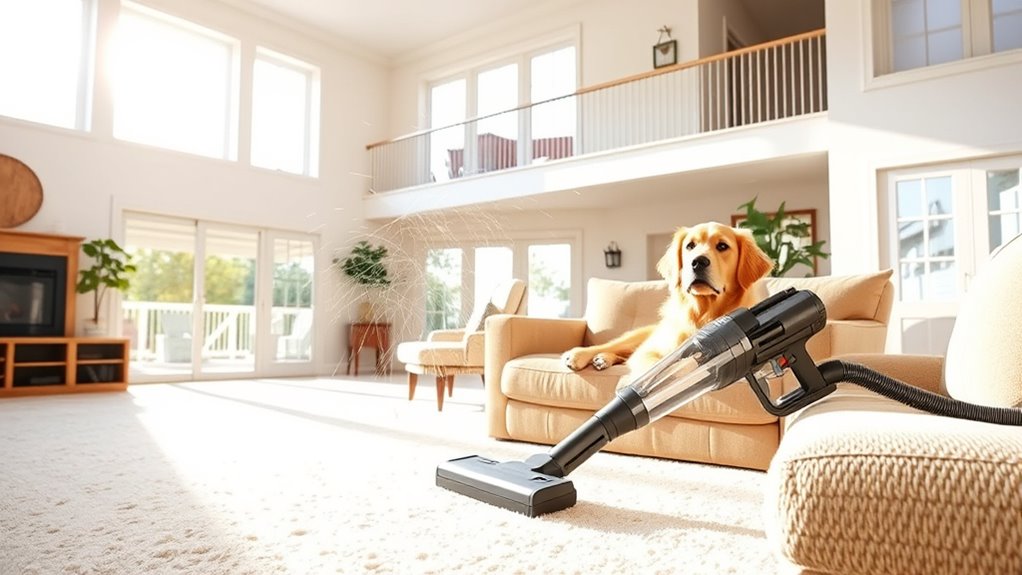
Living in a two-story home with pets means constantly battling pet hair that finds its way onto every surface and floor. To keep your space clean and allergen-free, you need a consistent, effective routine. Start by dusting all flat surfaces—coffee tables, shelves, counters—every other day. This simple step captures pet hair that might not be visible but can settle quickly. It prevents buildup and keeps surfaces looking tidy. For hard floors, mopping twice a week in high-traffic areas and every 10 days elsewhere is essential. Mopping helps remove pet hair that vacuums often miss, especially on tile or wood floors. Using electrostatic dust mops like Swiffer two to three times weekly, or even daily in busy zones, traps pet hair better than vacuuming alone, reducing airborne particles and allergens. Regular floor maintenance minimizes pet hair accumulation and improves cleanliness. When it comes to rugs and carpets, vacuuming alone can sometimes send pet hair airborne, making the problem worse. Instead, use a rubber squeegee to rake out deep pet hair buildup from carpets and rugs on a monthly basis or as needed. Combining dust mopping on hard floors with targeted vacuuming maximizes pet hair removal, especially in high-traffic areas or pet-favorite spots. Regular deep cleaning of rugs with specialized tools helps prevent dinginess caused by embedded pet hair, ensuring your carpets stay fresh and clean. Grooming your pets regularly is your best preventative measure. Brushing and washing dogs twice a week can reduce shedding and allergen levels temporarily. Cats, however, benefit less from frequent baths, so focusing on grooming and brushing remains essential. Adapt grooming tools and schedules to your pet’s type and season, collecting loose hair before it has a chance to disperse. Maintaining pet hygiene not only keeps your home cleaner but also improves indoor air quality and minimizes allergens attached to fur. Since pet hair easily migrates between floors, pay special attention to stairways and landings. These are common traversal points that gather pet hair and allergens. Less frequent cleaning on secondary floors allows hidden hair and dust to accumulate, so zone your routine to address each level regularly. HVAC systems can distribute pet allergen particles throughout your home, so replace filters frequently to prevent circulation. Establishing a zoning cleaning schedule helps manage pet hair more effectively across all levels of your home. While removing pets entirely is the most effective way to reduce allergens long-term, it’s often impractical. Regular cleaning routines, pet grooming, and air purification can greatly cut down allergens and pet hair. Consider using HEPA filters and air purifiers to complement your cleaning efforts, especially in bedrooms or allergy-prone areas. Regular use of air purifiers can significantly enhance your efforts by capturing harmful pollutants and allergens. Ensuring good ventilation can also help reduce airborne pet allergens. Combining these strategies creates a tangle-less, manageable routine, making your two-story home more comfortable and cleaner for both you and your pets.

ILIFE A30 Pro Robot Vacuum and Mop, Self Emptying Station for 60 Days, 5000Pa Suction, LiDAR Navigation, No-Go Zones, 2.4G WiFi/App/Alexa/Remote Control, Clean Hard Floors to Medium-Pile Carpet, 110V
Precision LiDAR Navigation: The A30 Pro self emptying robot vacuum cleaner utilizes advanced LDS laser technology and the...
As an affiliate, we earn on qualifying purchases.
Frequently Asked Questions
How Can I Prevent Pet Hair From Traveling Between Floors?
To prevent pet hair from traveling between floors, you should start by regularly grooming your pets to minimize shedding. Use pet-specific tools and bathe them periodically. Vacuum and damp mop floors twice a week, especially in high-traffic areas like stairs. Cover furniture with washable slipcovers, and wash bedding often. Use HEPA air purifiers and seal gaps around doors and floors to reduce airborne hair transfer and keep your home cleaner.
What Are the Best Tools for Removing Pet Hair From Stairs?
Did you know that stairs can trap up to 30% more pet hair than flat surfaces? For effective removal, use manual brushes like the TMF Stair & Furniture Pet Hair Remover, which instantly lifts hair from upholstery and carpeted stairs. Rubber or silicone tools attract hair via static, and ergonomic handles make scrubbing easier. For tight corners, compact handheld tools or extendable handles help reach upper risers without strain.
How Often Should I Clean Vents and Air Filters for Pet Hair?
You should clean your vents and replace air filters every 1 to 2 months if you have pets. During heavy shedding seasons, check filters more often, around every 20-30 days, to prevent buildup. Regular maintenance keeps your HVAC system running efficiently, improves indoor air quality, and reduces pet hair and dander. Incorporate vacuuming and grooming routines to lessen pet hair on filters and vents, ensuring a cleaner, healthier home.
Are There Specific Fabrics That Trap Less Pet Hair?
You should choose fabrics like microfiber, tightly woven cotton, leather, or satin to trap less pet hair. These materials have smooth surfaces or dense weaves that prevent hair from sticking or embedding. Avoid loose-weave fabrics, fleece, or textured textiles like velvet and chenille, which trap hair easily. Regular cleaning and vacuuming help maintain these fabrics’ pet hair resistance, making your home tidier and easier to manage.
Can Certain Grooming Routines Reduce Pet Hair Spread in Multi-Story Homes?
Think of your home as a grand stage where pet hair is the unwanted actor. You can reduce its performance by sticking to a solid grooming routine. Regular brushing and bathing with specialized shampoos act like a sweep of the broom, catching loose hair before it scatters. Maintaining consistent grooming prevents matting and minimizes shedding, keeping your multi-story home cleaner and more inviting without the chaos of floating fur.

Tikom Robot Vacuum and Mop, 6000Pa Robotic Vacuum Cleaner with Self-Emptying Base, 90 Days Capacity, LiDAR Navigation, Home Mapping, Ideal for Pet Hair, Hard Floors, Carpet (L8000 Plus)
90-Day Hands-Free Cleaning: The 3L self-emptying dustbag holds weeks of debris, eliminating the need for frequent emptying. Enjoy...
As an affiliate, we earn on qualifying purchases.
Conclusion
Keeping pet hair under control in a two-story home might feel like trying to tame a whirlwind, but with a consistent routine, you’ll find it becomes just another part of your daily rhythm. Think of it like watering a garden—you may get a few weeds here and there, but with regular care, your home stays vibrant and welcoming. So, stay patient and persistent, and soon, pet hair won’t be the storm it once was.
Amazon Product B0B89C8H4Q
As an affiliate, we earn on qualifying purchases.

Shark Matrix Plus 2-in-1 Robot Vacuum & Sonic Mop, Home Mapping, HEPA Bagless Self Empty Base with 30-Day Capacity, CleanEdge, for Pet Hair, WiFi, UR2650WS (Renewed)
INCREDIBLE SUCTION AND SONIC MOPPING: First, it’s an ultra-powerful whole home vacuum on carpets and floors that empties...
As an affiliate, we earn on qualifying purchases.