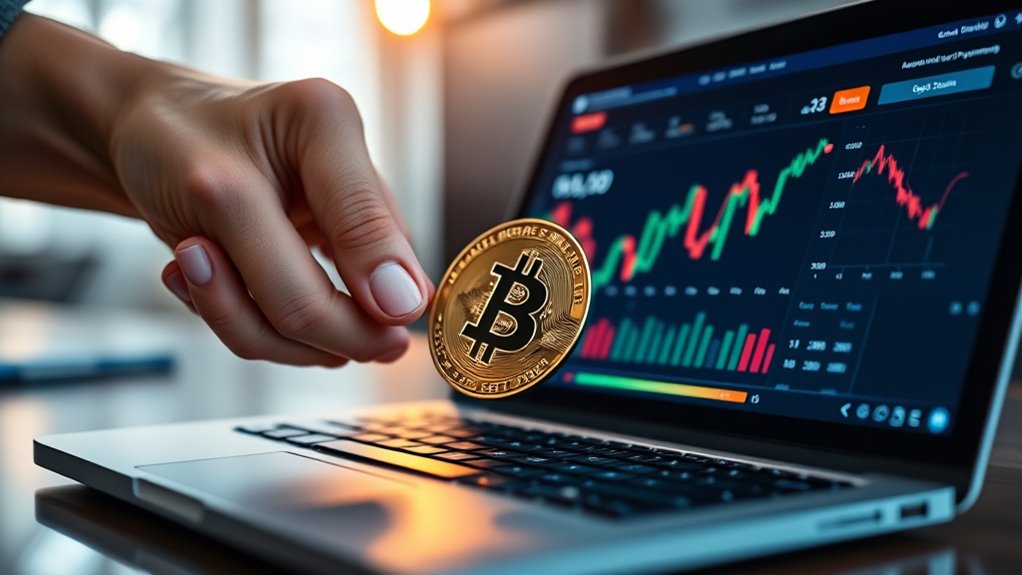

Much like steering a ship through unpredictable waters, executing high-value crypto payments requires careful planning to avoid slippage. If you don’t set the right parameters, market swings can cost you more than expected. Understanding how to minimize these risks can help guarantee you get the best rate possible. But what strategies can you use to keep your trades steady and secure? Keep this in mind as you explore ways to optimize your transactions.

Get tech for your team delivered free — and shop member deals
- Fast, free delivery on millions of items
- Access to Prime Big Deal Days deals on October 6–7
- Prime Video, Amazon Music and more included
Key Takeaways
- Use limit orders to specify maximum or minimum acceptable prices, preventing unexpected slippage during high-value transactions.
- Execute trades during high liquidity periods, such as overlapping global trading sessions, to ensure tighter spreads and better rates.
- Break large payments into smaller chunks and use automated tools to reduce market impact and improve overall rate execution.
- Set appropriate slippage tolerance levels on your platform to balance successful execution with favorable prices.
- Monitor market conditions and liquidity insights to select optimal times for high-value crypto payments, minimizing price swings.
Have you ever experienced unexpected losses due to price changes during a crypto trade? If so, you’re not alone. This common issue is called slippage, and it happens when your trade executes at a different price than you anticipated because of market fluctuations. Even small discrepancies can lead to considerable financial losses, especially when dealing with high-value payments. Slippage tends to be more common in volatile or low-liquidity markets, where order books are thin and prices can shift rapidly. To protect your profits and execute trades as planned, managing slippage effectively is essential.
One of the most reliable methods to avoid slippage is using limit orders. Unlike market orders, which execute immediately at the best available price, limit orders specify the exact price at which you want your trade to happen. They only fill when the market reaches your set price or better, shielding you from sudden price swings. However, this approach has its trade-offs: if the market never hits your limit, your order remains unfilled. This requires you to carefully choose your limit prices and be patient, especially in fast-moving markets. Experienced traders favor limit orders because they offer control over trade execution prices and reduce unexpected costs compared to market orders.
Using limit orders helps control trade prices and reduces unexpected costs during volatile crypto markets.
Timing your trades during periods of high liquidity also helps minimize slippage. During peak hours—when global trading sessions overlap, such as U.S., Europe, and Asia—markets tend to have more buyers and sellers. This increased activity results in tighter bid-ask spreads, meaning less room for prices to shift dramatically. Trading during these times reduces the chance of large orders moving the market and experiencing unfavorable price changes. Conversely, avoiding late-night or weekend trading, when activity drops, can help prevent exposure to erratic price swings and unpredictable slippage.
Breaking large orders into smaller chunks is another effective strategy. Large trades can substantially impact a thin market, pushing prices away from your target. By executing smaller portions gradually, you prevent moving the market and reduce the overall impact on the asset’s price. This approach also helps average out price variations, keeping your costs predictable. Automated tools or trading bots can assist in slicing orders efficiently, ensuring you stick to your strategic plan without manually managing each step.
Adjusting your slippage tolerance settings on trading platforms is vital. Many decentralized exchanges and platforms allow you to set a maximum slippage percentage—often between 0.1% and 1%. Setting this threshold balances the risk of transaction failure against the possibility of excessive slippage. Too tight, and your trades may fail to execute; too loose, and you might accept unfavorable prices. Testing and calibrating these settings based on the asset’s volatility and current market conditions can greatly improve trade reliability and help you avoid unintentional losses. Additionally, understanding the market conditions that influence slippage allows you to time your trades more effectively, further minimizing potential impacts. Incorporating market liquidity insights into your strategy can also help you determine optimal trading windows, as higher liquidity generally reduces slippage and improves execution quality. Combining these strategies ensures you get the best possible rate on your high-value crypto payments while minimizing the risks associated with market fluctuations.
As an affiliate, we earn on qualifying purchases.
Conclusion
By carefully timing your trades during high liquidity periods and utilizing limit orders, you can effectively avoid slippage and secure the best rates. Breaking large transactions into smaller parts with automation helps minimize market impact, while adjusting slippage settings balances success and price. Remember, even in the digital age, patience and strategic planning remain timeless virtues—truly, a modern trader’s key to steering through the ever-shifting crypto seas.
Halloween Picks
halloween
As an affiliate, we earn on qualifying purchases.