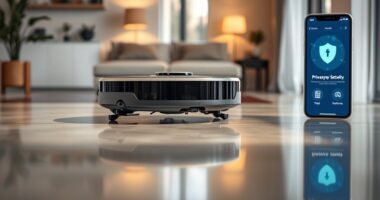
LiDAR tower innovations dramatically enhance the navigation of robotic cleaners by enabling advanced 3D mapping and improving spatial awareness. With real-time updates, your robot can navigate more accurately, avoid obstacles, and adapt its cleaning path dynamically. This tech not only boosts cleaning efficiency but also guarantees your device operates smoothly in complex environments. By mastering environment understanding, these robotic cleaners reduce user management while maximizing autonomous operation. Discover how these advancements are reshaping cleaning solutions today.
Key Takeaways
- LiDAR towers provide advanced 3D mapping, enhancing robots’ spatial understanding and navigation in complex environments.
- Continuous updates from LiDAR improve sensor calibration, preventing missed spots and ensuring smooth navigation.
- Data fusion from LiDAR and other sensors allows for detailed surroundings representation, aiding in collision avoidance.
- Robots utilize learned patterns for efficient cleaning, adapting paths based on real-time environment analysis.
- Integration of LiDAR technology in smart homes drives innovations, improving robotic cleaning capabilities and user satisfaction.

As technology advances, LiDAR towers are revolutionizing how we gather and analyze spatial data. For those using robotic cleaners, these innovations are making a significant impact on navigation and efficiency. With precise 3D mapping capabilities, LiDAR towers empower these devices to understand their environment better than ever. It’s not just about cleaning; it’s about optimizing the entire process, making your cleaning routine more effective.
LiDAR towers are transforming robotic cleaners, enhancing navigation and efficiency through advanced 3D mapping capabilities.
When you set your robo cleaner into action, you might not realize how much sensor calibration plays a vital role in its performance. The LiDAR towers provide continuous updates and adjustments to the sensor’s accuracy, ensuring that the robot navigates around obstacles smoothly. Without proper sensor calibration, your cleaner could miss spots or, worse, get stuck. Thanks to real-time adjustments from LiDAR technology, you can trust that your device is operating at peak efficiency.
Data fusion is another game-changer in how these robots operate. By combining data from multiple sensors, including LiDAR, your robo cleaner can create a thorough representation of its surroundings. This means it can detect furniture, walls, and even pets, allowing it to avoid collisions and navigate tighter spaces effectively. You’ll notice that your cleaner can adapt its path on the fly, enhancing its overall performance. With such advanced data processing, those frustrating cleaning sessions are becoming a thing of the past.
Imagine the convenience of a robot that not only cleans your floors but does so intelligently. As it learns from its environment, the cleaner uses data fusion techniques to improve its cleaning patterns. It can identify high-traffic areas that need more attention or recognize when it’s time to recharge based on the layout of your home. This level of intelligence reduces the time you spend managing the robot and allows you to focus on more important tasks. Moreover, understanding industry trends in robotic cleaning technology can further enhance your investment in smart home devices.
LiDAR robotic vacuum cleaner
As an affiliate, we earn on qualifying purchases.
As an affiliate, we earn on qualifying purchases.
Frequently Asked Questions
How Do Lidar Towers Compare to Traditional Navigation Methods?
LiDAR towers outperform traditional navigation methods by offering superior sensor accuracy and advanced obstacle detection. While traditional systems rely on basic sensors or cameras, LiDAR towers use laser technology to create detailed 3D maps, allowing for precise navigation in complex environments. You’ll notice improved efficiency and safety in devices utilizing LiDAR, as they can identify and respond to obstacles in real-time, minimizing the risk of collisions and enhancing overall performance.
Are Lidar-Equipped Robo Cleaners More Expensive Than Standard Models?
Yes, lidar-equipped robo cleaners are generally more expensive than standard models. When you look at the cost comparison, the enhanced features like precise navigation and obstacle avoidance justify the higher price. You’ll find that these advancements can lead to more efficient cleaning and less wear and tear over time. While the initial investment is greater, the long-term benefits might make it worth your while, especially if you value convenience and effectiveness.
Can Lidar Technology Be Retrofitted to Existing Robo Cleaners?
Yes, you can retrofit LiDAR technology to existing robo cleaners, but it’s not as simple as adding sprinkles to a cupcake. You’ll face retrofit challenges like compatibility and technical integration, which can make your head spin. Plus, cost implications can climb higher than a kite on a windy day, as you might need specialized parts and expertise. Weigh your options carefully before diving into this tech upgrade adventure!
How Does Lidar Impact Battery Life in Robo Cleaners?
LiDAR technology can impact your robo cleaner’s battery life by affecting power consumption. While it enhances navigation, it may also lead to increased battery usage due to the constant scanning and data processing. However, advancements in LiDAR systems often focus on improving battery efficiency, allowing your device to maintain longer operation times. By optimizing these elements, you can enjoy effective cleaning without compromising battery performance.
What Maintenance Is Required for Lidar Systems in Robo Cleaners?
Imagine your robo cleaner as a knight on a quest, and the LiDAR system as its trusty sword. To keep this sword sharp, you need to perform regular maintenance. You’ll want to check the sensor calibration to guarantee it’s accurate and ready for battle. Also, don’t forget dust removal; a clean sensor means better navigation. With these simple tasks, your robo cleaner can continue its adventures, conquering dirt and grime with ease!
robotic cleaner with 3D mapping
As an affiliate, we earn on qualifying purchases.
As an affiliate, we earn on qualifying purchases.
Conclusion
In the domain of robotic cleaners, LiDAR tower innovations are game-changers, transforming how these devices navigate our homes. Imagine a world where every corner is effortlessly reached, leaving no dust bunny behind. These advancements not only enhance efficiency but also promise a smarter, more connected cleaning experience. As technology continues to evolve, you can look forward to a future where your robot isn’t just a helper but a true partner in maintaining a spotless environment.
smart home robotic vacuum with obstacle avoidance
As an affiliate, we earn on qualifying purchases.
As an affiliate, we earn on qualifying purchases.
advanced navigation robotic floor cleaner
As an affiliate, we earn on qualifying purchases.
As an affiliate, we earn on qualifying purchases.