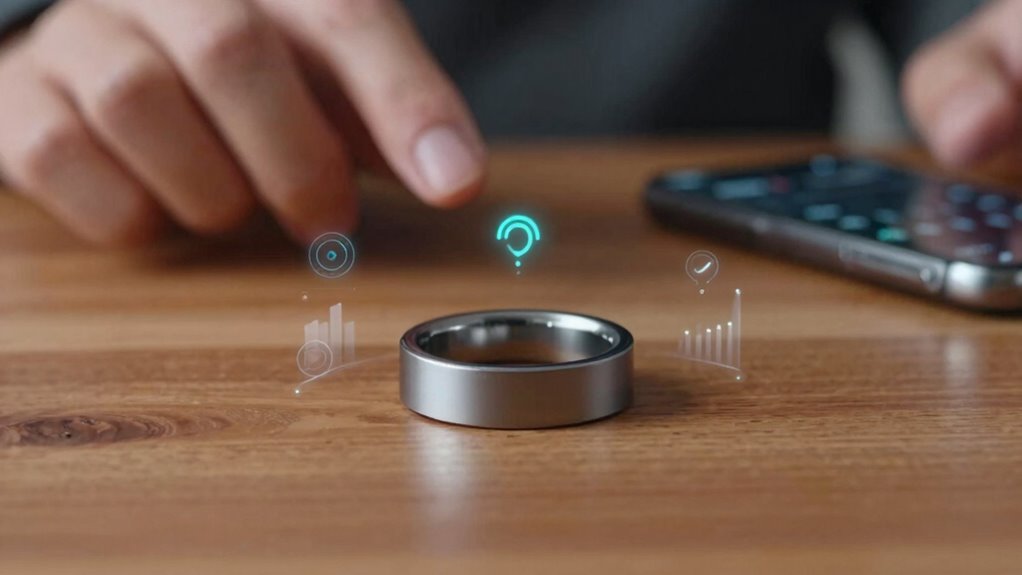

Smart rings track your heart rate and sleep patterns reliably thanks to embedded sensors. They also detect your activity levels and movement, providing real-time health insights. However, calorie burns and activity intensity are based on estimates, as algorithms interpret motion data, which can sometimes be off due to unusual movements. While they offer a convenient overview of your health, they’re not yet as precise as lab devices. Keep going to discover how these devices are evolving to improve accuracy.
Key Takeaways
- Smart rings reliably track basic health metrics like heart rate, sleep duration, and activity levels through embedded sensors.
- Step counts are generally accurate, but calorie estimates and activity intensity are based on algorithms and can vary.
- Advanced sensor technology may improve measurement accuracy over time, reducing estimation errors.
- Features like notifications and detailed health insights may trade off battery life and are less precise.
- Current smart rings provide useful overviews but are not suitable substitutes for professional medical devices.
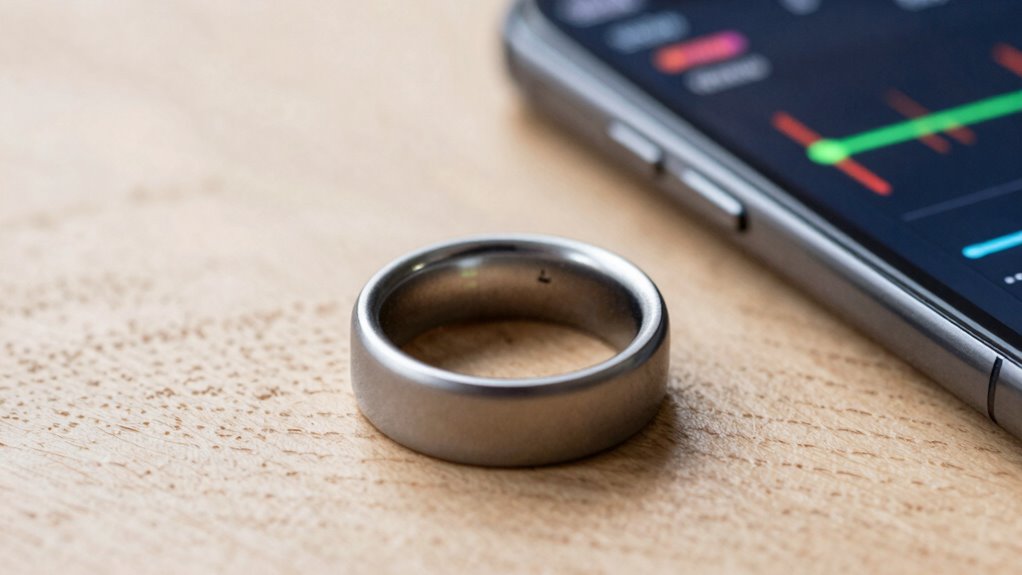
Smart rings have emerged as a sleek, unobtrusive way to track your health, fitness, and even everyday activities. These tiny devices fit comfortably on your finger, making them a stylish accessory that also offers valuable data. As fashion trends lean toward minimalist, tech-infused accessories, smart rings blend seamlessly into daily outfits, so you hardly notice you’re wearing a piece of wearable tech. The popularity of these rings isn’t just about aesthetics; it’s also about convenience and discreet monitoring. But understanding what they track well—and where they only provide estimates—can help you decide if they’re right for you.
Most smart rings excel at tracking basic health metrics, such as heart rate, sleep patterns, and activity levels. They use sensors embedded within the ring to detect changes in your finger’s temperature, motion, or pulse, providing real-time insights. For many, this means you can monitor your heart health or sleep quality without pulling out a bulky device or wearing a wristband. However, their accuracy varies depending on the metric. For example, step counting tends to be fairly reliable because the ring detects motion, but more complex metrics like calorie burn or activity intensity may only be estimated. These estimates are derived from algorithms that interpret your movement data, which can sometimes be skewed by unusual motions or non-standard activities.
Most smart rings effectively track heart rate, sleep, and activity, but calorie estimates can vary in accuracy.
When it comes to battery life, smart rings have an advantage over larger wearables. Because they are smaller and contain fewer components, many models can last several days or even a week on a single charge. This longevity aligns with the trend toward minimal maintenance, making them ideal for those who dislike frequent charging. However, this also means some features may be limited to conserve battery, such as real-time notifications or continuous heart rate monitoring. If you want more detailed health insights or constant updates, you might need to compromise on battery life or upgrade to a higher-end model. Additionally, the sensor technology used in smart rings is continually improving, which could enhance their accuracy over time. As these sensors become more sophisticated, the accuracy of data they provide is likely to improve, offering users more reliable information.
While smart rings do a good job at providing an overview of your health and activity, they still only estimate some metrics rather than offering lab-grade precision. For instance, they can give you a good sense of your sleep duration or general activity level, but they can’t replace medical-grade devices for diagnosing conditions. They’re best used as a supplement to other health tools, not a substitute for professional advice. As technology advances, expect these rings to become even more accurate and feature-rich, but for now, they’re most valuable as discreet, stylish trackers that give you a quick snapshot of your daily habits.
As an affiliate, we earn on qualifying purchases.
Frequently Asked Questions
How Accurate Are Smart Rings Compared to Dedicated Fitness Devices?
Smart rings are generally accurate for tracking basic health metrics like heart rate and sleep, but they still only estimate some data. You’ll find they excel in fashion aesthetics, offering a sleek, discreet look, while battery longevity varies between models. Compared to dedicated fitness devices, smart rings may lack precision in detailed metrics but are convenient and stylish for everyday health monitoring, making them a good choice for casual users.
Can Smart Rings Track Sleep Stages Reliably?
Smart rings can track sleep stages, but their reliability varies. They generally provide a good overview of your sleep pattern and can indicate sleep quality, but they still only estimate certain stages rather than precisely measure them. You might see trends over time, but don’t expect perfect accuracy. For detailed insights into your sleep stages, dedicated sleep tracking devices or polysomnography remain more reliable options.
Do Smart Rings Work Well for Measuring Heart Rate During Exercise?
During your workout, a smart ring can effectively measure your heart rate, especially if it’s designed with advanced sensors. For example, a fitness enthusiast used their smart ring during a run and noticed consistent readings compared to a chest strap monitor. While smart rings are trendy and slim, their battery life may limit continuous use. Overall, they work well during exercise, but keep in mind they’re still evolving alongside fashion trends.
Are Smart Rings Suitable for Tracking Hydration Levels?
Smart rings aren’t highly reliable for hydration monitoring yet. They mainly estimate hydration levels through sweat analysis, which can be inconsistent due to factors like sweat rate and skin contact. While some rings claim to track hydration, they often only provide rough estimates. If you need precise hydration data, consider more specialized tools, but for general insights, smart rings can offer a helpful, though limited, overview.
How Do Smart Rings Handle Data Privacy and Security?
Smart rings handle data privacy and security by employing data encryption, which protects your information from unauthorized access. They also require your explicit user consent before collecting or sharing any data, ensuring you’re in control. Manufacturers often have privacy policies detailing how your data is stored and used. Always review these policies, and enable security features like two-factor authentication when available, to further safeguard your sensitive health and activity data.
Conclusion
Now that you know which smart rings provide accurate tracking and which ones rely on estimates, you can make a smarter choice for your health goals. Don’t you want a device that truly understands your body rather than just guessing? With the right smart ring, you’ll get more reliable insights, helping you stay motivated and informed. So, are you ready to wear a ring that genuinely keeps pace with your active lifestyle?