📊 Full opportunity report: Build vs Buy a Prebuilt AI Workstation on ThorstenMeyerAI.com — validation score, market gap, and execution plan.

Get tech for your team delivered free — and shop member deals
- Fast, free delivery on millions of items
- Access to Prime Big Deal Days deals on October 6–7
- Prime Video, Amazon Music and more included
TL;DR
In 2026, prebuilt AI workstations often match or beat DIY prices due to supply chain issues and bulk buying. They offer faster deployment and validated reliability, but building provides maximum control. A hybrid approach may suit many users.
In 2026, the landscape for acquiring AI workstations has shifted, with prebuilt systems often matching or surpassing the cost of DIY builds due to supply chain disruptions and bulk purchasing. This change impacts decision-making for organizations and individuals seeking high-performance AI hardware, emphasizing speed, reliability, and total ownership costs.
Prebuilt AI workstations now come fully assembled, tested, and optimized, including high-end GPUs, cooling systems, pre-installed software, and warranties. For a detailed overview, see the original analysis. Vendors like Lambda and Puget offer systems with validated thermals and support, reducing setup time and operational risks. These systems typically arrive within 1–2 weeks, enabling rapid deployment for projects that demand quick turnaround.
Conversely, building your own system involves sourcing individual components, assembling, tuning BIOS settings, and troubleshooting. While it offers the highest level of customization and control, it can take weeks or even months, especially given ongoing component shortages and price volatility. The total cost of ownership for DIY builds includes not just hardware, but also engineering time, ongoing maintenance, and potential delays.
Recent market conditions have driven up component prices, making DIY builds more expensive than before. Meanwhile, prebuilt systems benefit from bulk purchasing and validation processes, often making them cost-competitive or even cheaper than DIY options in 2026. Support and warranty packages further add to the value proposition of prebuilt solutions, minimizing operational risk.
Build vs buy
an AI workstation.
The real question behind this whole series: do you pull the five heat-and-noise levers yourself, or buy a prebuilt where the vendor pulled them for you? And in 2026, the old “building is cheaper” rule has broken. Match your situation in Part 3.
Why the 2026 Shift Changes AI Hardware Choices
This shift affects how organizations and individuals plan their AI infrastructure investments. The reduced deployment time and increased reliability of prebuilt systems mean faster project initiation and lower operational risks, which are critical in competitive markets. For teams lacking deep technical expertise, prebuilt solutions reduce the complexity and potential for costly errors. However, those requiring granular control over hardware and security may still prefer building their own systems, despite higher upfront time and cost investments.
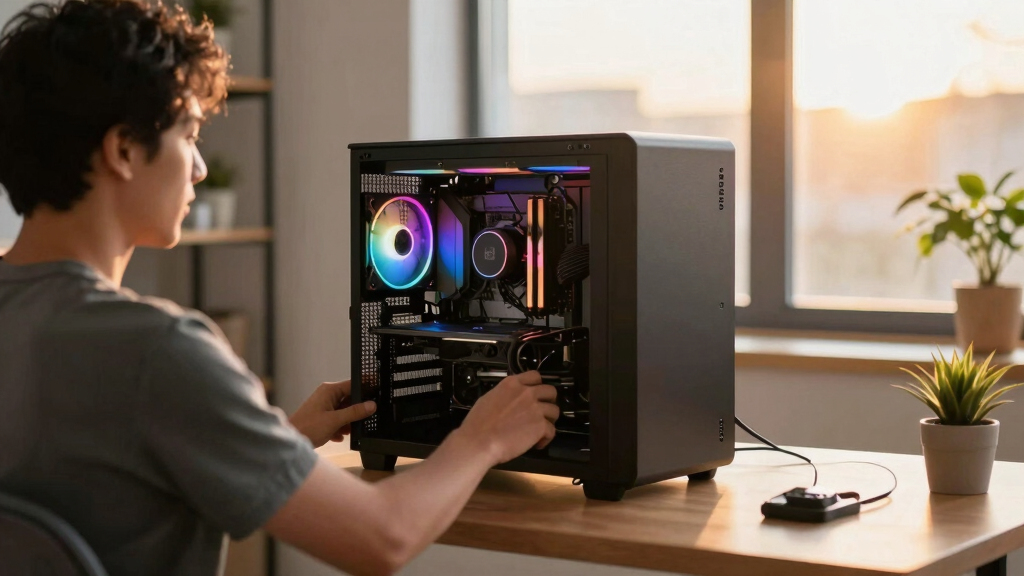
prebuilt AI workstation with high-end GPU
As an affiliate, we earn on qualifying purchases.
As an affiliate, we earn on qualifying purchases.
Market Dynamics and Supply Chain Effects in 2026
The global chip shortages and supply chain disruptions that began in 2020 have persisted into 2026, driving up component prices and causing delays in sourcing parts for DIY builds. This has led many to consider build vs buy a prebuilt AI workstation as a more reliable option. This has led to a reevaluation of the traditional build versus buy paradigm. Vendors now offer prebuilt systems with validated hardware configurations, benefiting from bulk purchasing and extensive testing, which mitigates risks associated with component incompatibility and thermal issues.
Historically, building your own AI workstation was considered more cost-effective, but recent market conditions have narrowed or reversed this advantage. The increased cost and lead times for individual components make prebuilt systems more attractive for many users seeking quick deployment and reliable performance.
"Our prebuilt AI systems undergo rigorous testing and thermal validation, ensuring consistent performance and reducing operational risks for users."
— A representative from Lambda
Unresolved Questions About Long-Term Cost and Flexibility
It remains unclear how ongoing component shortages and price fluctuations will evolve beyond 2026. The long-term cost advantages of prebuilt systems versus DIY builds depend on future market stability, software compatibility, and hardware upgrade paths. Additionally, the extent to which hybrid models will dominate remains uncertain, as some users may prefer customized solutions despite higher complexity.
Future Developments in AI Workstation Market
Expect vendors to continue refining prebuilt systems with newer hardware, improved thermal management, and integrated support services. For more insights, see the Build vs Buy a Prebuilt AI Workstation guide. Meanwhile, the DIY market may adapt with alternative sourcing strategies or modular designs to mitigate current supply chain issues. Industry analysts anticipate that hybrid approaches combining prebuilt reliability with custom upgrades will grow in popularity, offering flexible solutions tailored to evolving AI workloads.
Key Questions
Is it cheaper to build or buy an AI workstation in 2026?
Due to supply chain disruptions and bulk purchasing, prebuilt systems often match or beat the cost of DIY builds in 2026, especially when considering total ownership costs.
How long does it take to deploy a prebuilt AI workstation?
Most prebuilt systems can be delivered and ready to use within 1–2 weeks, significantly faster than DIY builds, which may take several weeks to months.
What are the main advantages of building my own AI workstation?
Building offers maximum control over hardware, software, and security configurations, allowing for tailored upgrades and specific performance tuning.
Are prebuilt AI workstations reliable?
Yes, vendors perform extensive validation, testing, and thermal management, providing warranties and support that enhance reliability and reduce operational risks.
Will hybrid solutions become more popular?
Industry trends indicate increasing interest in hybrid models that combine prebuilt reliability with customizable components, balancing control and convenience.
Source: ThorstenMeyerAI.com
Halloween Picks
halloween
As an affiliate, we earn on qualifying purchases.