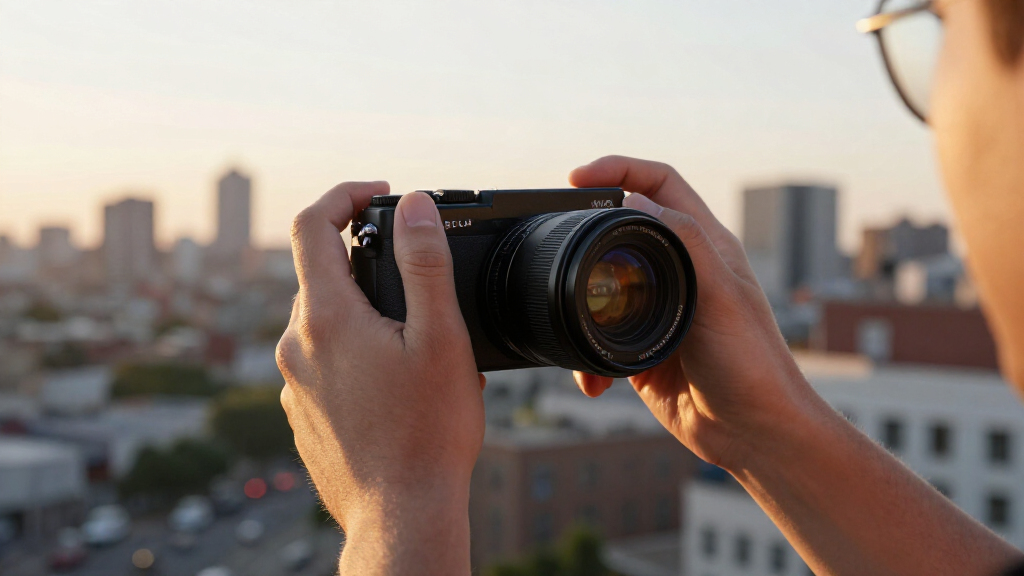

🔍 Read the full analysis: A 2027 Roundup Of 9 Mirrorless Cameras For Every Creator on ThorstenMeyerAI.com

Get business pricing on tech for your team
- Business-only prices and quantity discounts
- Tax-exempt purchasing
- Multiple users, one account, clear invoices
TL;DR
ThorstenMeyerAI.com’s 2027 roundup compares nine mirrorless cameras for different creator needs, naming the Sony FX30 its top hybrid-video pick, the Nikon Zf its stills choice and the Canon EOS RP an accessible full-frame option. The article describes a selection guide, not a new product launch or independently verified test; prices, availability and some performance claims are not provided.
ThorstenMeyerAI.com’s 2027 roundup compares nine mirrorless cameras for creators, recommending the Sony FX30 for hybrid video work, the Nikon Zf for still photography and retro-style controls, and the Canon EOS RP as an accessible full-frame option. The guide’s central point is that sensor size, video features, handling and lens costs involve tradeoffs, rather than one camera being right for every creator.
The article says it assessed the nine models by sensor format, autofocus, video capability and lens ecosystems, while also considering battery life, heat management, ergonomics and the usefulness of included lenses. Its ranking favors versatility for people who shoot both stills and video. The source does not provide a test dataset, detailed model-by-model scores or a price comparison, but you can explore mirrorless cameras across price points for another comparison.
The other six cameras in the roundup are the Panasonic S5IIX, Nikon Z50 II, Canon EOS R50, Canon EOS R100, Nikon Z 30 and Sony FX30, alongside the Nikon Zf and Canon EOS RP. The source characterizes the S5IIX and EOS RP as full-frame choices, and the Z50 II and EOS R50 as APS-C options. It says the EOS R100 and Z 30 lack electronic viewfinders, so users compose on their LCD screens.
For the FX30, the roundup emphasizes video-focused features and thermal management, while warning that a video-first body may make compromises for still photography. It describes the Nikon Zf’s tactile controls as appealing to stills-focused users, though they may be less convenient for fast action. These are the source’s evaluations; it supplies no direct benchmark results or independently documented test conditions. For more options aimed at video work, see this guide to mirrorless cameras for video creators.
The 9 picks
- 1
 Panasonic LUMIX S5IIX Full-Frame Mirrorless Camera with 20-60mm and 50mm L-Mo…View on Amazon →
- 2
 Sony FX30 Cinema Line Camera Bundle with Memory Card and BagView on Amazon →
- 3
 Nikon Zf Mirrorless Camera, Silver and Mauve PinkView on Amazon →
- 4
 Nikon Z50 II Mirrorless Camera Two-Lens KitView on Amazon →
- 5
 Canon EOS RP Mirrorless Camera with RF 24-105mm F4-7.1 IS STM LensView on Amazon →
- 6
 Sony Alpha a6400 Mirrorless Camera with 16–50mm Lens, BlackView on Amazon →
- 7
 Canon EOS R50 Mirrorless Camera with RF-S 18-45mm f/4.5-6.3 IS STM LensView on Amazon →
- 8
 Nikon Z 30 Mirrorless Camera with 16–50mm Zoom LensView on Amazon →
- 9
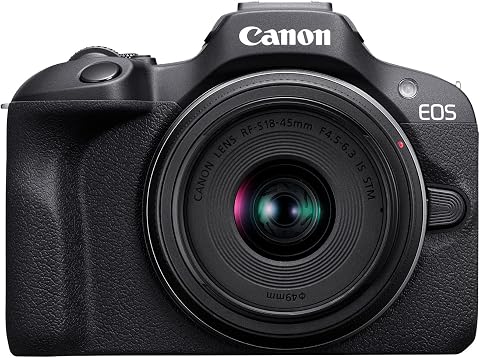 Canon EOS R100 Mirrorless Camera with RF-S 18-45mm f/4.5-6.3 IS STM LensView on Amazon →
How the Picks Fit Creator Workflows
The list matters as a buying guide because a camera body affects more than image quality: it shapes how creators record, carry gear and build a lens collection. The source frames full-frame models as stronger options for low-light work, but says their lenses tend to add weight and cost. APS-C models are presented as more portable, with a crop factor that can help wildlife and sports shooters get more reach from a telephoto lens.
Video creators may weigh recording formats and heat behavior more heavily than stills photographers, while a person who shoots both needs a body that handles each task adequately. Entry-level models without viewfinders can also affect how users compose in bright conditions. These distinctions make the roundup useful as a way to narrow choices, but buyers still need to check current prices, lens availability and hands-on performance before deciding.
Products Worth Considering

Sonos Era 100 Wireless Smart Speaker with Alexa, Black

LG UltraGear 32-inch QHD Curved Gaming Monitor, 180Hz, 1ms, AMD FreeSync

Samsung 27-Inch Odyssey OLED G6 QHD Gaming Monitor (G61SH)
As an affiliate, we earn on qualifying purchases.
The Tradeoffs Behind the Nine Picks
The source organizes its recommendations around full-frame versus APS-C, video versus stills, and portability versus physical controls. It says full-frame sensors can collect more light and support shallower depth of field, while APS-C bodies are generally smaller and can be attractive for telephoto work. Those are broad format considerations, not guarantees that every full-frame camera will outperform every APS-C model in a particular situation.
It also highlights lens-mount investment as a long-term factor, naming Canon RF, Nikon Z and Sony E mounts and noting that third-party lenses can affect overall system cost. The article says autofocus, eye tracking and heat handling should be judged against a creator’s actual subjects and recording conditions. Its 2027 framing does not, by itself, confirm that each camera is newly released or newly tested that year.
“The Sony FX30 stands out as the best overall choice for hybrid creators who demand cinema-grade video without sacrificing compactness.”
— ThorstenMeyerAI.com roundup
Pricing and Test Evidence Missing
The source material does not state the roundup’s publication date, current prices or regional availability, and it gives no detailed scores, sample images or testing procedures. Its recommendations therefore cannot be treated as a current price ranking or a reproducible head-to-head test based on the information provided.
It is also unclear whether all nine models were physically tested, how autofocus or heat performance was measured, and which kit lenses were included in the cost assessment. Camera firmware, lens selection and recording conditions can change real-world results. The article’s evaluative labels, including “best overall” and “most accessible,” remain attributed recommendations rather than verified market-wide findings.
Check Models Before Buying
Readers considering one of the picks should compare current body and kit-lens prices, confirm lens availability for their chosen mount and check the recording limits relevant to their work. They should also review whether a camera has a viewfinder, the autofocus modes they need and suitable heat handling for their intended recording conditions.
The source does not announce a follow-up test, new camera releases or a scheduled update. The next useful step for buyers is to verify current specifications and availability with manufacturers or retailers and, where possible, try the camera with the lenses and workflow they plan to use.
Key Questions
Which camera does the roundup recommend for hybrid creators?
The source names the Sony FX30 as its leading choice for creators who combine video and stills, particularly those prioritizing video. That is the roundup’s recommendation, not a result supported by published comparative test scores in the provided material.
Does the guide say creators need a full-frame camera?
No. It presents full-frame as a possible advantage for low-light shooting and shallow depth of field, while describing APS-C cameras as lighter and useful when extra telephoto reach matters. The right format depends on the creator’s subjects, conditions, budget and tolerance for carrying larger lenses.
Which models are listed among the nine picks?
The roundup names the Sony FX30, Nikon Zf, Canon EOS RP, Panasonic S5IIX, Nikon Z50 II, Canon EOS R50, Canon EOS R100 and Nikon Z 30, plus one additional contender that is not identified in the supplied source material. The provided text says there are nine picks but names only eight distinct models.
Are the EOS R100 and Nikon Z 30 equipped with viewfinders?
The source says both lack electronic viewfinders, meaning users compose using their LCD screens. Buyers should verify the specific model’s current specifications and decide whether screen-based framing suits their shooting conditions.
Are the recommendations based on disclosed camera tests?
The source describes criteria such as autofocus, video, lens availability and heat management, but the supplied material includes no test scores, protocols or detailed results. Its rankings should be read as editorial recommendations, with the evidence and current pricing left unspecified.
Source: ThorstenMeyerAI.com