
Imagine a world where you can design and finance your own high-end jewelry using cryptocurrencies, all made possible through 3D printing technology. This approach streamlines the creation process, reduces costs, and offers unprecedented customization options. But how sustainable, secure, and accessible will this new frontier of luxury accessories truly become? Exploring these innovations may change the way you think about craftsmanship and investment in the future of jewelry.
Key Takeaways
- Cryptocurrency investments can fund the development of bespoke 3D-printed haute jewelry collections.
- Blockchain technology ensures transparent, secure transactions for custom jewelry purchases and funding.
- Crypto-based crowdfunding enables artisans and brands to finance innovative 3D-printed jewelry projects.
- Digital currencies facilitate global access to luxury jewelry markets, increasing customization options.
- Combining crypto funding with 3D printing enhances sustainability and reduces costs in luxury jewelry production.
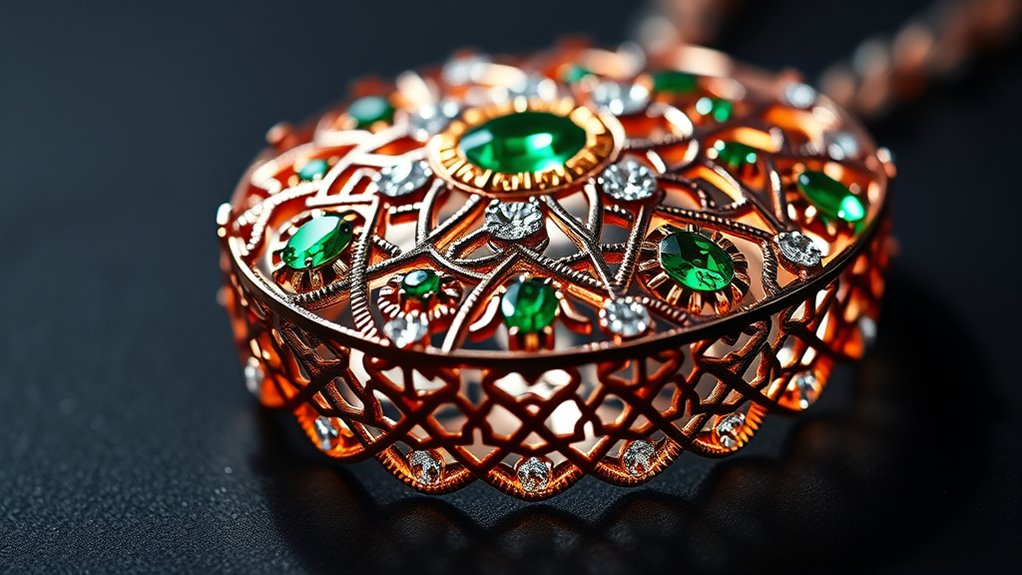
Have you ever wondered how cutting-edge technology is transforming the world of luxury jewelry? 3D-printed haute jewelry is revolutionizing the industry by enabling intricate designs, faster production, and greater customization. The market for this innovative craft is expanding rapidly, with estimates valuing it at around USD 5 billion in 2023, and projections suggest it could reach nearly USD 31 billion by 2033. Different sources report slightly varied numbers, but all agree on strong growth, driven by a compound annual growth rate of around 20%. This surge reflects the increasing adoption of 3D printing in high-end jewelry, as brands seek new ways to stand out and meet customer demands.
Advancements in 3D printing materials are a key driver of this growth. They allow for the creation of complex, delicate designs that once seemed impossible with traditional methods. Rapid prototyping shortens lead times, enabling designers to iterate quickly and bring ideas to life faster. An expanding palette of materials gives jewelers more options to craft unique pieces, from precious metals to innovative composites. The finishing process involves careful post-processing, including cleaning and polishing, to achieve the luxurious look expected in haute jewelry. As printing technologies become more precise and efficient, the production of elaborate jewelry pieces becomes increasingly accessible and scalable. Recent innovations in multi-material printing have also enabled the combination of different textures and finishes within a single piece, elevating design possibilities even further. Moreover, these technological improvements are making cost-effective production a reality for a broader range of creators and brands.
Advances in 3D printing materials enable intricate, customizable haute jewelry with faster production and superior finishes.
A major factor fueling this industry’s expansion is the rising demand for personalized, one-of-a-kind jewelry. Consumers today crave bespoke pieces that reflect their individual style, and 3D printing supports this by making customization simple and affordable. Small-scale designers and independent artisans benefit from rapid production capabilities, allowing them to compete with established brands. This flexibility enables on-demand modifications, ensuring every piece can be tailored to customer specifications. The ability to create unique designs on a smaller scale helps brands differentiate themselves in a crowded luxury market.
Sustainability also plays a significant role. 3D printing produces less waste compared to traditional methods, aligning with environmentally conscious consumer values. Precise material use reduces excess, and evolving energy-efficient processes diminish the environmental footprint. This approach supports ethical sourcing, transparency, and eco-friendly narratives, which resonate with today’s luxury buyers. Additionally, lower production costs thanks to digital manufacturing make high-end jewelry more accessible, opening doors for smaller players and independent creators. Their entry into the market is facilitated by faster production cycles and reduced overhead, boosting overall market accessibility.
Despite these advantages, challenges remain. The high initial investment and technical expertise required can hinder widespread adoption. Yet, as technology advances and costs decrease, more brands are expected to embrace 3D-printed haute jewelry, especially when coupled with innovative funding methods like cryptocurrencies. This fusion of digital assets and cutting-edge design is opening new avenues for luxury jewelry, making bespoke pieces more attainable and desirable than ever before.
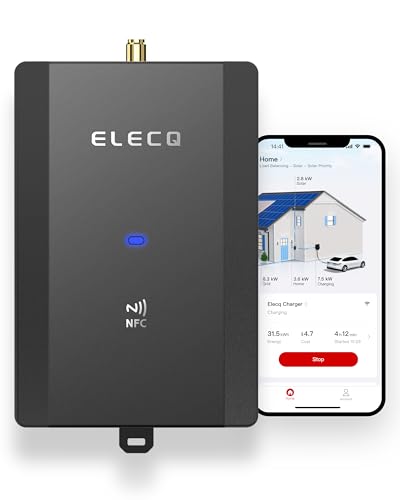
ELECQ Power Monitor, Smart Energy Management for Home EV Charging, Active Load Management & Solar Charging Mode to Save on Costly Electrical Upgrades, Wi-Sun Connectivity (Compatible EVSE)
【Active Load Management】 Household distribution panels often have limited capacity, and running multiple appliances while using your EV...
As an affiliate, we earn on qualifying purchases.
Conclusion
As you explore this innovative world, remember that over 70% of luxury buyers now seek personalized, ethically sourced pieces. With 3D printing and crypto funding, you can access bespoke jewelry that’s both sustainable and secure, all while cutting costs and supporting transparency. This revolution isn’t just transforming luxury—it’s making high-end, custom designs more accessible than ever. Embrace the future of jewelry, where technology and craftsmanship unite to create truly unique treasures just for you.

SIEMENS Inhab Smart Home Energy Monitor with 16-50Amp Circuit Level Sensors and 2-200Amp Main Sensors for Real Time Electricity Monitoring and Metering
ENERGY MONITOR WITH MOBILE APP (USA and Canada ONLY) – Track current and historical home energy usage 24/7...
As an affiliate, we earn on qualifying purchases.

Emporia Vue 3 Home Energy Monitor - Smart Home Automation Module and Real Time Electricity Usage Monitor, Power Consumption Meter, Solar and Net Metering for UL Certified Safe Energy Monitoring
SAFETY YOU CAN TRUST WITH UL CERTIFICATION: With Emporia Energy, your home energy monitoring is safe, reliable, and...
As an affiliate, we earn on qualifying purchases.
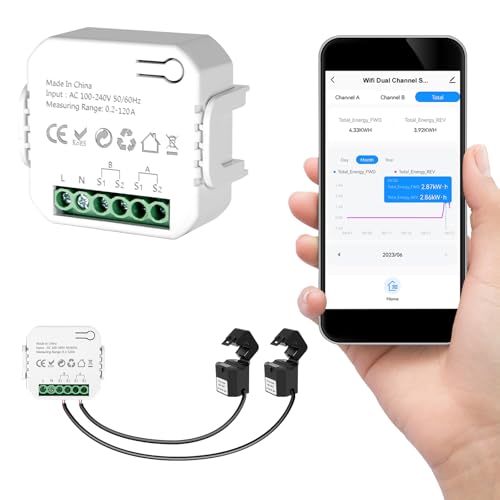
Smart Home Energy Monitor 2×120A, Dual-Channel Real-Time Electricity Usage Monitoring for Household Power, WiFi Energy Meter with App Control, Compatible with Tuya/Smart Life
【Dual-Channel Energy Monitoring】 This smart home energy monitor features two independent high-capacity sensing channels, allowing you to track...
As an affiliate, we earn on qualifying purchases.