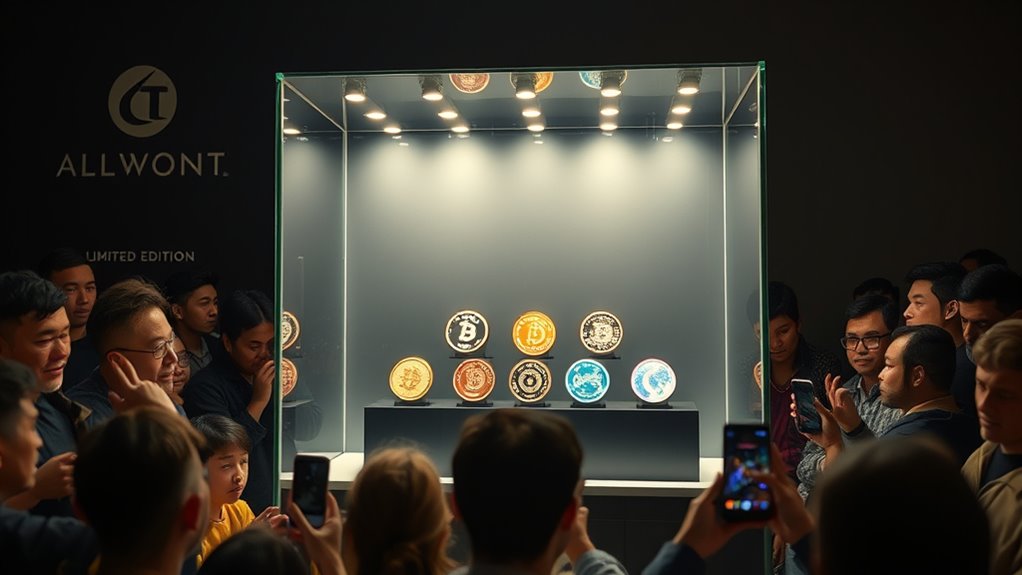

When you introduce limited-edition token drops, you can create a sense of scarcity that boosts excitement and perceived value. But the challenge is doing so without alienating your community or making them feel excluded. Striking this balance requires thoughtful strategies that foster loyalty while harnessing the power of exclusivity. How you approach this could markedly impact your project’s long-term success—and what you do next might surprise you.
Key Takeaways
- Implement transparent rules and communication to build trust and prevent perceptions of unfairness.
- Balance scarcity with community engagement to avoid feelings of exclusion or alienation.
- Use diverse drop models (retro, raffle, exclusive) to appeal to different user segments.
- Leverage hype responsibly through teasers and storytelling without creating false scarcity.
- Monitor community feedback and adjust strategies to maintain authenticity and long-term loyalty.
Limited-edition token drops are strategic releases of tokens or NFTs designed to create scarcity and drive demand. These drops are carefully crafted to offer limited quantities or exclusive access, making them highly appealing to collectors, investors, and fans alike. There are various types of limited drops, each serving different purposes. Retro drops, for example, reward loyal users retrospectively, often without prior notice, by giving them tokens based on their past engagement. Forkdrops automatically distribute tokens to holders when a blockchain forks, creating a natural form of scarcity tied to network events. Some drops are exclusive, targeting early adopters or high-volume users to reward their commitment and involvement. Raffle-based drops, on the other hand, randomly allocate tokens among eligible participants, encouraging ongoing activity and fostering loyalty. Understanding the psychology behind scarcity is essential to leveraging its power effectively. When tokens are scarce, they evoke a “Fear of Missing Out” (FOMO) — a strong motivator that heightens demand and engagement. Limited availability creates a perception of exclusivity, elevating the perceived value of the tokens and making them more desirable as collectibles. This sense of scarcity also fosters a community among owners, who share the experience of possessing rare assets. From a business perspective, scarcity allows projects to command higher margins because consumers associate limited supply with higher value. Unlike discounts or traditional promotions, limited-edition drops tap into core human instincts for exclusivity and rarity**, making them a potent marketing tool. Many successful projects have used limited drops to generate buzz. For instance, Uniswap’s distribution of 400 UNI tokens to early users was highly publicized and set a standard for airdrops. Blur rewarded early traders with exclusive tokens based on their activity, while LooksRare employed raffle-based airdrops targeting users with significant trading histories on competitors. Blockchain projects like Arbitrum and Aptos launched retroactive drops to reward early adopters, reinforcing user loyalty. Digital art platforms, exemplified by artists like Beeple, release limited edition NFTs that emphasize scarcity, further elevating their collectible value. Additionally, regulatory considerations have become increasingly important as governments scrutinize token distributions, which influences how projects design their scarcity strategies. Marketing these drops involves creating anticipation and excitement through teaser campaigns, pre-orders, and set quantities. These strategies generate hype and encourage ongoing user activity, which helps sustain interest long after the initial release. Limited drops also foster loyalty by rewarding dedicated users and early supporters. To maximize reach, projects often leverage social media and community channels, amplifying excitement and engagement. Different distribution models—such as retroactive, hold, exclusive, raffle, and network fork drops—offer flexibility to tailor scarcity to specific goals. However, risks exist. Over-speculation can lead users to chase drops solely for profit, potentially alienating genuine community members. Rumors and hype can also cause erratic behavior that distracts from long-term project goals. To succeed, projects need to balance scarcity with transparency, ensuring that limited-edition drops reinforce community trust rather than undermine it. When managed thoughtfully, scarcity creates a powerful incentive for participation** while maintaining loyalty and authenticity.

FEZIBO Standing Desk, 48 × 24 Inches Electric Height Adjustable, Sit and Stand Up, Computer Office Desk with Splice Board, White Frame/Maple TOP
One-Touch Height Adjustment: FEZIBO Electric Standing Desk adjusts from 28.3" to 46.5", and features customizable memory presets for...
As an affiliate, we earn on qualifying purchases.
Conclusion
So, next time you think about flooding the market with tokens, remember—the real magic lies in making fans crave what’s rare, not just rare for the sake of scarcity. Ironically, by carefully crafting exclusive drops, you actually build a stronger community rather than dividing it. After all, the key isn’t just about scarcity—it’s about making your fans feel special without pushing them away. Who knew that less really could be more?

Agilestic Electric Standing Desk, 48 x 24 Inches Height Adjustable Desk, Sit Stand up for Work Office Home, Ergonomic Rising Computer Table with Memory Preset, Rustic Brown
【Electric Lifting System】Agilestic standing desk has an advanced motor that can support height adjustment between 28.3''-45.7'' with low...
As an affiliate, we earn on qualifying purchases.

Veken 55 Inch Large Electric Standing Desk,Sit to Stand Up, Heights Adjustable, Work Home Office Computer Table for Study, Walking Pad, Writing, and Games, Wooden Desktop Desks, White
Elevate Your Workspace: Enjoy effortless height adjustment from 28.3" to 46.5" to seamlessly transition between sitting and standing...
As an affiliate, we earn on qualifying purchases.

Square D HEPD80 Universal Whole House Surge Protection Device, 1-Phase, 3-Wire for 120/240V, 80kA
WHOLE HOME SURGE SUPPRESSOR: The Square D Whole Home Electronics Protective Device is a compact surge suppressor designed...
As an affiliate, we earn on qualifying purchases.