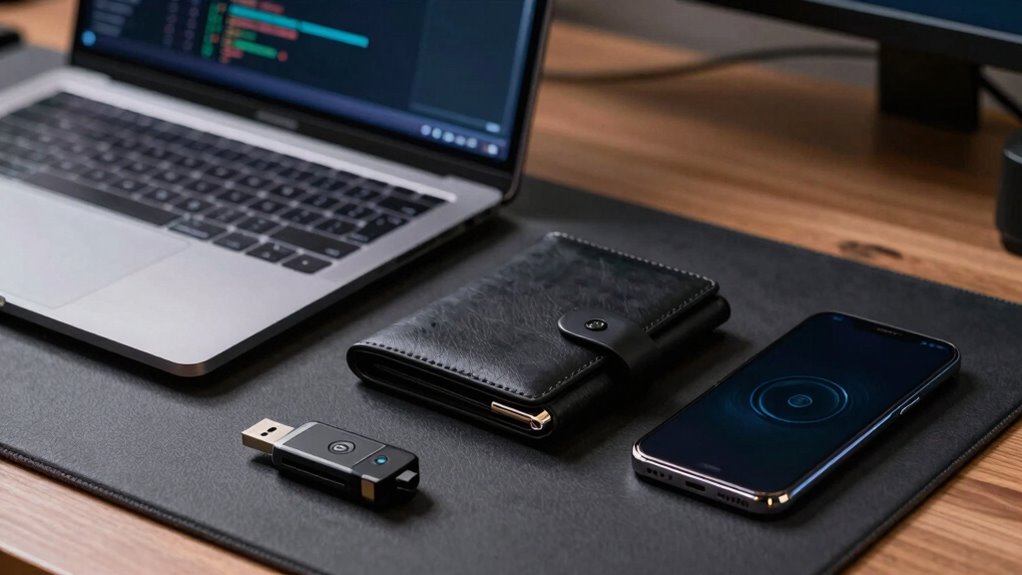

Many crypto enthusiasts overlook simple but essential safety rules, like verifying website URLs, avoiding public Wi-Fi, and securing private keys offline. You often forget to back up seed phrases and let security vulnerabilities go unchecked. Using hardware wallets, strong passwords, and two-factor authentication can protect your funds. Staying aware of phishing scams and updating software regularly are also critical. Keep these overlooked tips in mind, and you’ll strengthen your crypto security—if you stick with it, more tips await you.

Get business pricing on tech for your team
- Business-only prices and quantity discounts
- Tax-exempt purchasing
- Multiple users, one account, clear invoices
Key Takeaways
- Regularly verify the authenticity of websites, emails, and social media profiles before interacting or sharing sensitive info.
- Keep private keys, seed phrases, and backup copies offline in secure, multiple locations.
- Use hardware wallets and enable multi-factor authentication for all crypto accounts.
- Avoid managing assets on public Wi-Fi; use VPNs for secure remote access.
- Stay informed about emerging security vulnerabilities and update wallet software promptly.

In the fast-paced world of cryptocurrency, staying safe online is more important than ever. While many enthusiasts focus on market trends and investment strategies, overlooking vital digital safety rules can expose you to unnecessary risks. One of the most common pitfalls is falling victim to cryptocurrency scams. These scams often come in the form of phishing emails, fake websites, or misleading social media profiles that impersonate trusted sources. If you’re not vigilant, you might click on malicious links or share sensitive information, giving scammers access to your funds and personal data. It’s easy to get caught up in the excitement of crypto trading, but always remember to verify the authenticity of sources before interacting with them. Never click on links from unknown or suspicious emails, and double-check URLs to avoid fake websites designed to steal your login credentials. Additionally, understanding security vulnerabilities and how to protect against them can help you stay one step ahead of hackers.
Another overlooked aspect is practicing secure wallet practices. Your digital wallet is the gateway to your cryptocurrency holdings, so protecting it should be a top priority. Many enthusiasts underestimate the importance of using hardware wallets or secure software wallets rather than leaving funds on exchanges, which are prime targets for hackers. Always enable two-factor authentication and use strong, unique passwords for your wallets and related accounts. Avoid storing private keys or seed phrases online—write them down and keep them in a safe, offline location. Regularly updating your wallet software ensures you have the latest security patches, reducing vulnerabilities that hackers might exploit. Remember, if you lose your seed phrase or private key, you lose access to your funds forever. So, treat these credentials with the same care you’d give to valuable physical valuables. Additionally, consider implementing cold storage methods to further secure your assets from online threats. Furthermore, keeping your software up to date is critical, as outdated programs are a common entry point for cyberattacks. Incorporating multi-signature wallets can also add an extra layer of security by requiring multiple approvals for transactions. Moreover, educating yourself about common cybersecurity best practices can significantly enhance your overall safety measures.
Additionally, many crypto users neglect to diversify their storage solutions or overlook backup practices. If your device becomes compromised or you fall victim to malware, having secure backups can save your assets. Keep multiple copies of your seed phrases in different secure locations, such as a safe deposit box or a secure physical safe. Be cautious about public Wi-Fi networks; avoid managing your crypto assets over unsecured internet connections, which can be intercepted by malicious actors. Using a virtual private network (VPN) adds an extra layer of security when accessing your wallets remotely. Regularly testing your backup procedures ensures you can recover your assets efficiently in case of an emergency.
As an affiliate, we earn on qualifying purchases.
Frequently Asked Questions
How Often Should I Update My Security Practices for Crypto Safety?
You should update your security practices regularly, ideally every few months, to stay ahead of evolving threats. Conduct a risk assessment to identify new vulnerabilities and adjust your defenses accordingly. Stay vigilant with phishing prevention by updating your awareness and security tools. Frequent updates guarantee you’re protected against the latest scams and vulnerabilities, minimizing risks. Regularly reviewing and refining your crypto security measures keeps your assets safe in a constantly changing digital landscape.
What Are the Signs of a Compromised Crypto Wallet?
Like a wolf in sheep’s clothing, signs of a compromised crypto wallet include unexpected transaction alerts, unfamiliar activity, or failed access attempts. You might also notice crypto phishing attempts or that your wallet encryption has been bypassed. Stay vigilant—regularly check your wallet’s activity, enable multi-factor authentication, and keep your security practices updated. If something seems off, act quickly to secure your assets and prevent further damage.
Is Multi-Signature Authentication Necessary for Small Investments?
Multi-signature authentication isn’t strictly necessary for small investments, but it’s a smart safety measure. It adds an extra layer of security by requiring multiple approvals before any transaction. If you’re handling small investments, using multi-signature wallets reduces the risk of theft or accidental loss. It’s a simple step that can save you from significant trouble later, especially if your assets grow or if you want added peace of mind.
How Can I Recover Lost or Stolen Crypto Assets Securely?
If your crypto assets are lost or stolen, act quickly by verifying suspicious activity and reporting it to your exchange. Use wallet recovery options carefully, ensuring you’re on official sites to avoid crypto phishing scams. Securely store your private keys and recovery phrases offline. Never share sensitive info. These steps help protect your assets and recover them safely, minimizing the risk of further theft or loss.
Are There Specific Devices Recommended for Secure Crypto Transactions?
You should use hardware wallets for secure crypto transactions, as they store your assets offline, reducing hacking risks. Look for devices that incorporate biometric authentication, like fingerprint or facial recognition, for added security. These features help guarantee only you can access your wallet, providing peace of mind during transactions. Always choose reputable brands and keep your hardware wallet firmware updated to maintain peak security.
Conclusion
Remember, just like locking your front door keeps your home safe, following overlooked digital safety rules protects your crypto investments. I once knew someone whose minor oversight led to losing thousands because they didn’t enable two-factor authentication. Don’t let a small mistake be your downfall. Stay vigilant, stay secure—your crypto future depends on it. The small habits you build today are the vaults that guard your digital wealth tomorrow.
Fall Picks
fall essentials
As an affiliate, we earn on qualifying purchases.