
📊 Full opportunity report: Loan covenant calendar for bootstrapped companies on IdeaNavigator AI — validation score, market gap, and execution plan.

Get business pricing on tech for your team
- Business-only prices and quantity discounts
- Tax-exempt purchasing
- Multiple users, one account, clear invoices
TL;DR
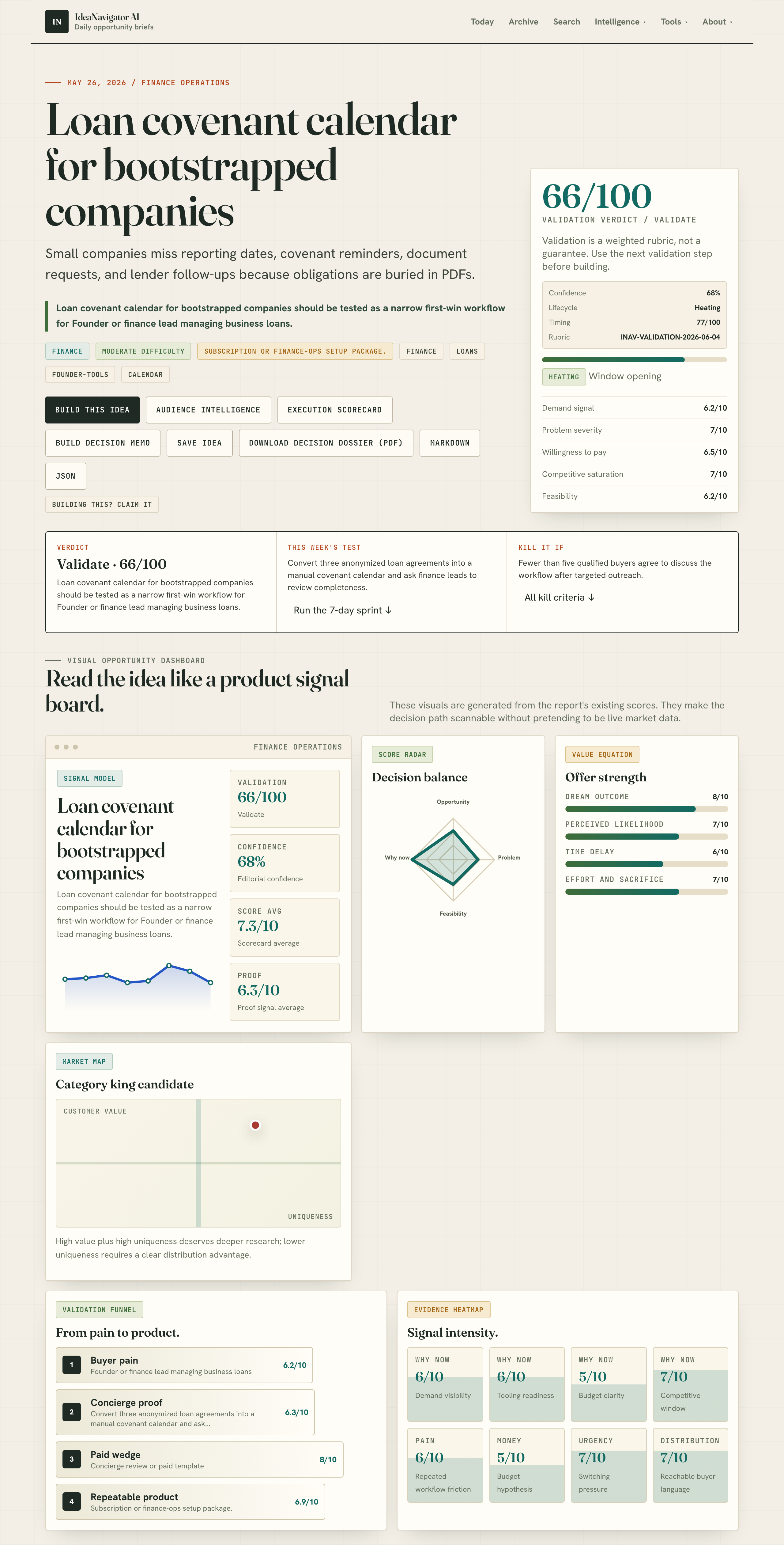
A prototype for a loan covenant calendar is being developed to assist small, bootstrapped companies in tracking loan obligations. The tool aims to improve operational compliance and reduce missed reporting deadlines, addressing a key challenge in finance management.
A new loan covenant calendar prototype is being tested as a workflow tool for founders and finance leads managing business loans in small, bootstrapped companies. The initiative aims to address common challenges such as missed reporting dates and inadequate follow-up, which are increasingly critical as financing scrutiny intensifies.
The proposed tool extracts key loan obligations, including due dates, responsible owners, required evidence files, and communication history with lenders. It is designed to convert complex PDF loan documents into an accessible, organized calendar, helping finance teams stay on top of covenant compliance.
This development responds to the rising need for operational discipline among small companies facing increased lender oversight. Currently, many small firms struggle with tracking covenant requirements because obligations are buried in lengthy PDFs, leading to missed deadlines and potential loan breaches.
The initial validation involves converting three anonymized loan agreements into a manual covenant calendar and assessing whether finance leads find the process complete and usable. The MVP aims to serve as a test bed for refining the workflow before broader deployment.
Why a Covenant Calendar Matters for Small Business Borrowers
This tool could significantly improve compliance management for small, bootstrapped companies, reducing the risk of covenant breaches that can lead to penalties or loan default. It also offers a scalable way for founders and finance teams to automate routine follow-up tasks, freeing resources for strategic activities.
As lenders increase scrutiny on small borrowers—especially those with limited formal finance infrastructure—operational tools like this calendar could become essential for maintaining good borrower-lender relationships and ensuring ongoing access to financing.
As an affiliate, we earn on qualifying purchases.
Growing Need for Operational Discipline in Small Business Lending
Small companies often rely on informal processes to manage loan obligations, which can lead to missed deadlines and compliance issues. The complexity of loan agreements, often embedded in PDFs, makes manual tracking cumbersome and error-prone.
Recent trends show that lenders are tightening oversight on small borrowers, increasing the importance of proactive covenant management. Existing solutions are typically designed for larger firms with dedicated finance teams, leaving a gap for simple, effective tools tailored to bootstrapped companies.
IdeaNavigator AI reports that the proposed covenant calendar is in the early testing phase, with plans to validate its effectiveness through conversion of anonymized loan agreements and user feedback from finance leads.
“Converting loan obligations into a clear calendar can help small companies stay compliant and avoid costly breaches.”
— an anonymous researcher
Uncertain Aspects of the Covenant Calendar Prototype
It is not yet clear how well the manual conversion process will scale or whether finance leads will adopt the tool at scale. The effectiveness of the MVP in real-world scenarios remains to be validated through user testing and feedback.
Further, the impact on actual covenant breach rates or loan performance has not been established, as the tool is still in early development stages.
Next Steps in Developing and Validating the Covenant Calendar
Next, the team plans to refine the prototype based on initial user feedback, automate parts of the conversion process, and expand testing with additional anonymized loan agreements. A broader pilot with real small business clients could follow to assess practical benefits and integration challenges.
Further validation will focus on measuring improvements in compliance tracking and reduction in missed obligations, paving the way for commercial rollout.
Key Questions
How will this tool help small companies manage loan obligations?
The calendar will extract and organize key covenant details from loan documents, providing reminders and tracking evidence submissions to prevent missed deadlines and breaches.
Is this tool ready for use by small businesses?
The tool is currently in the testing phase, with validation ongoing through conversion of anonymized agreements. It is not yet available for general use.
Will this replace existing loan management processes?
It aims to complement existing processes by automating routine follow-ups and providing a centralized view of obligations, not replace comprehensive financial management systems.
What are the main challenges in developing this covenant calendar?
Key challenges include automating the extraction of obligations from complex PDFs and ensuring the tool is user-friendly for small business teams with limited finance resources.
When could small companies expect to see this tool available?
If validation proves successful, a broader rollout could occur within the next 12 to 18 months, depending on development progress and user feedback.
Source: IdeaNavigator AI
Fall Picks
fall essentials
As an affiliate, we earn on qualifying purchases.