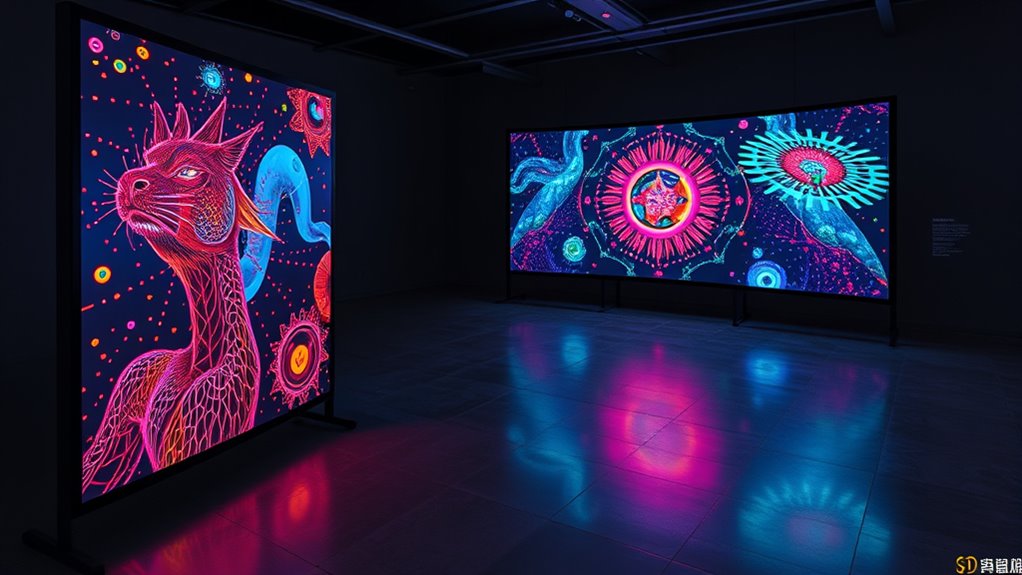

Successful crypto art projects like Picasso’s tokenized masterpiece, Damien Hirst’s physical-digital NFTs, and Beeple’s record-breaking $69M sale prove how blockchain enhances provenance and ownership. Community-driven collections such as CryptoPunks and Bored Ape Yacht Club showcase digital scarcity and social engagement. These projects demonstrate new market dynamics, increased authenticity, and broader accessibility. If you keep exploring, you’ll uncover even more insights into how these innovative efforts are shaping the art world.
Key Takeaways
- Beeple’s “Everydays” sold for nearly $70M at Christie’s, showcasing the potential for high-value digital art sales.
- CryptoPunks and Bored Ape Yacht Club established rarity and community-driven models, boosting project credibility.
- Damien Hirst’s hybrid physical-digital NFTs demonstrated innovative scarcity and physical-art integration.
- Art tokenization platforms like SygnEx and Artfi lowered entry barriers, enabling fractional ownership and broader investor access.
- High-profile sales and social narratives have increased visibility, demand, and resale value in the crypto art market.
Amazon Product B088FH47ZS
As an affiliate, we earn on qualifying purchases.
Picasso’s Fillette Au Beret Tokenization

Have you ever wondered how traditional art ownership can be transformed through blockchain technology? In 2021, Sygnum Bank and Artemundi launched the first regulated bank-led tokenization of a Picasso artwork—*Fillette au béret* from 1964, valued at CHF 4 million.
This process used Art Security Tokens (ASTs) to represent fractional ownership, fully recognized under Swiss law. By integrating blockchain, ownership rights became transparent and tradable on Sygnum’s platform, SygnEx.
The project lowered entry barriers, attracting over 60 investors, and offered a new way to diversify assets. After roughly 20 months, the tokens sold, delivering about a 20% gross return.
This initiative validated blockchain’s potential to democratize high-value art investment, providing liquidity and legal clarity while eliminating traditional intermediaries. Recognizing the regulatory environment was crucial for the project’s success, ensuring legal compliance and investor protection.

ZealSound Podcast Microphone for PC, Noise Cancellation USB Mic with Gain, Volume Adjustment & Mute Button, Monitoring & Echo, for YouTube, TikTok, Podcasting, Streaming, iPhone, iPad, Android, Mac
Studio-Quality Sound for Clear Podcast Recording – The K66 USB podcast microphone delivers studio-quality, broadcast-level audio using a...
As an affiliate, we earn on qualifying purchases.
Damien Hirst’s Everyday Objects NFTs

Damien Hirst’s Everyday Objects NFTs represent a groundbreaking experiment in blending physical art with blockchain technology. You, as a collector, could choose between owning a physical piece or an NFT, with the other destroyed—creating intense scarcity.
Hirst’s project challenged traditional notions of value by exploring art as currency and raising questions about permanence in the digital age. The physical works, authenticated with holograms and microdots, were burned after a year’s decision window, leaving 4,851 NFTs on the Palm blockchain—99% more energy-efficient than older systems.
About half of the collectors opted for NFTs, which included Hirst’s own holdings. This digital-physical hybrid not only sparked debate but also set a precedent for conceptual art’s future, demonstrating blockchain’s potential to validate and record art’s evolving nature.
Amazon Product B0DG9X4WHW
As an affiliate, we earn on qualifying purchases.
Beeple’s Everydays $69M Christie’s Sale

Did you know that a digital collage by Beeple sold for nearly $70 million at Christie’s, marking a historic milestone in the art world? Created over several years, “Everydays” is a collage of 5,000 digital images, completed in February 2021 as a JPEG.
The online auction concluded on March 11, 2021, with the artwork fetching $60.25 million, rising to $69.3 million with fees, paid in Ether. This sale set records for the highest NFT price, highest online auction, and drew 33 bidders.
Purchased by Vignesh Sundaresan, it’s displayed in a digital museum accessible via web browser. The sale boosted digital art’s legitimacy and sparked global media attention, showcasing the power of NFTs to transform the art market.
Amazon Product B09MT2JQ53
As an affiliate, we earn on qualifying purchases.
Aurum Law’s Fractional Ownership Platform

Aurum Law’s Fractional Ownership Platform revolutionizes art investment by leveraging blockchain technology to enable the purchase of digital shares in artworks. You can buy tokens representing fractional ownership, making art investments more accessible and liquid.
Transform art investment with blockchain-based fractional shares for increased accessibility and liquidity.
The platform introduces a legal innovation with a governance model that manages assets with multiple anonymous owners through formalized trusts. Its cross-jurisdictional design ensures compliance with diverse legal frameworks, avoiding VASP and CIS regulations across territories.
By combining blockchain transparency with privacy, owners remain anonymous while maintaining auditability. The system also features smart contracts that automate governance and profit sharing.
This approach democratizes the art market, creating liquidity and flexible exit options, all while establishing a regulatory precedent for future real-world asset tokenization. Wall organization techniques can further enhance the platform’s visual clarity and user interface.
CryptoPunks Ethereum NFT Series

Launched on June 23, 2017, CryptoPunks by Larva Labs revolutionized the NFT space by creating a collection of 10,000 unique, on-chain digital characters that have become cultural icons.
Each Punk is one-of-a-kind, featuring diverse attributes like 3D glasses, cowboy hats, and alien features.
Minted on Ethereum, the entire collection is stored on-chain as a single image, emphasizing artificial rarity.
You can buy, sell, or bid on Punks through a dedicated blockchain marketplace, with real-time updates via Discord.
CryptoPunks gained recognition by auction houses like Christie’s and Sotheby’s, and are now part of major art museums.
Their influence extends beyond art, inspiring countless projects and setting a standard for collection size, rarity, and digital provenance in the NFT world.
Bored Ape Yacht Club Ecosystem

The Bored Ape Yacht Club (BAYC) has quickly become a prominent force in the NFT space by offering a collection of 10,000 unique, cartoon-style apes that serve as digital status symbols.
As a holder, you gain access to an exclusive community through a private Discord, where networking and collaborations thrive.
BAYC expands its ecosystem with mutants (MAYC) and canine companions (BAKC), adding value and variety.
The project’s layered membership system offers different levels of engagement, while ApeCoin and the DAO enable community-driven governance.
Members enjoy exclusive experiences, including creative outlets like “The Bathroom.”
Active trading and strategic partnerships keep BAYC relevant, positioning it as a pioneering example of community-centric, innovative crypto art projects in Web3.
Additionally, BAYC’s success demonstrates how resources and tools can be leveraged to build a thriving digital community and ecosystem.
Impact of Digital Authentication on Art Provenance

Digital authentication has revolutionized art provenance by providing a secure, transparent way to verify the history and legitimacy of artworks. Blockchain-based immutable ledgers record creation, ownership transfers, and exhibition history permanently, preventing tampering. Eye patches are an example of skincare products that utilize beneficial ingredients like collagen and hyaluronic acid to improve skin appearance. Advanced digital imaging and spectral analysis detect microscopic alterations, ensuring authenticity. Machine learning algorithms cross-reference global databases to flag anomalies in provenance data. Smart contracts automate royalty payments and ownership transfers, reducing errors. Decentralized storage safeguards provenance information from centralized breaches. AI-powered pattern recognition identifies forgeries, while blockchain timestamping exposes fabricated timelines. Cross-institutional data sharing enables collaborative forgery detection. Chemical analysis verifies material age against claimed dates. These innovations boost buyer confidence, enhance market liquidity, and reduce counterfeit circulation, transforming how the art world maintains trust and integrity in provenance records.
Blockchain’s Role in Democratizing Art Ownership

Blockchain technology is reshaping how art ownership is shared and accessed, breaking down traditional barriers that kept high-value works out of reach for most people. Tokenization allows you to buy fractional shares of artworks, making high-end pieces affordable and accessible.
Smart contracts automate royalties, ensuring artists earn from secondary sales without intermediaries. Decentralized storage preserves digital art integrity with tamper-proof records, while tokenized blue-chip art enables you to invest in top-tier works through platforms like Artfi, often with minimum investments as low as $100.
These innovations create more liquid markets and eliminate geographic barriers, allowing you to buy, sell, and own art across borders. Blockchain’s transparency guarantees authentic provenance and ownership records, empowering you with trust and verifiable rights in the art world.
Lessons From High-Profile Crypto Art Transactions

High-profile crypto art transactions offer valuable lessons about what drives value and demand in the NFT market. You’ll notice that artistic style and context profoundly influence valuation, like XCOPY’s dystopian themes or Beeple’s political commentary in *Crossroad*.
Established platforms such as Nifty Gateway and Christie’s play an essential role in legitimizing sales and attracting collectors. Transactions are mainly in Ethereum, with prices often reported in USD, highlighting the importance of both crypto and fiat valuation.
The vibrant resale market, exemplified by *Crossroad* reselling for $6.6 million, shows how secondary sales boost value. Additionally, these sales reflect cultural significance, capturing social narratives and shaping pop culture, which further fuels demand and elevates the profile of crypto art.
The role of authenticity and provenance in establishing trust and increasing value is also a crucial factor in the success of high-profile projects.
Frequently Asked Questions
How Do Fractionalized Art Tokens Impact Long-Term Art Value?
Fractionalized art tokens can boost long-term value by broadening ownership and increasing market liquidity. You’ll see more investors participating, which could drive demand and price appreciation.
Additionally, transparent provenance and secure ownership records build confidence, encouraging sustained investment. However, heightened retail participation might also introduce volatility.
What Legal Considerations Exist for Cross-Jurisdictional NFT Ownership?
When wondering about cross-jurisdictional NFT ownership, you’ll want to watch out for legal labyrinths, like differing definitions, dispute dilemmas, and jurisdiction jumps.
You must manage matters like intellectual property rights, smart contract specifics, and compliance concerns. Clarify contractual terms, consider local laws, and stay vigilant for varying regulations around taxes, privacy, and enforcement—because maneuvering these nuances keeps your NFT ownership legitimate and hassle-free across borders.
How Does Blockchain Ensure Authenticity and Provenance of Digital Art?
You see, blockchain guarantees authenticity and provenance by recording every detail of your digital art securely and transparently. When you mint an NFT, it creates an unchangeable digital certificate linked directly to your artwork.
This ledger tracks ownership history, proving its origin and preventing counterfeits. Smart contracts automate transfers, ensuring your rights are protected.
What Are the Risks of Investing in High-Profile Crypto Art Projects?
Did you know up to 80% of NFTs on some platforms are reported stolen or copied? Investing in high-profile crypto art projects carries risks like market volatility, with prices driven by hype rather than value.
You also face fraud, copyright issues, and security threats like hacking or smart contract bugs. Plus, environmental concerns and regulatory crackdowns could impact your investment, making careful research essential before diving in.
How Do Utility Features Enhance NFT Community Engagement?
Utility features boost your NFT community engagement by offering tangible benefits like event access, exclusive rewards, and VIP perks, making members feel valued and connected.
When you participate in community-governed initiatives or staking programs, you help shape the project’s future, fostering loyalty.
These utilities create a vibrant environment where members actively contribute, strengthening bonds and encouraging ongoing interaction, ultimately growing the community and increasing the project’s overall value.
Conclusion
As you explore these inspiring crypto art projects, you’ll see how blockchain gently opens doors to new possibilities, making art more accessible and secure. These success stories subtly remind us that innovation can quietly transform the way we appreciate and own art, blending tradition with technology. Embrace the evolving landscape, and you might find yourself pleasantly surprised by how these digital ventures subtly redefine creative boundaries and ownership. The future of art is just a click away.