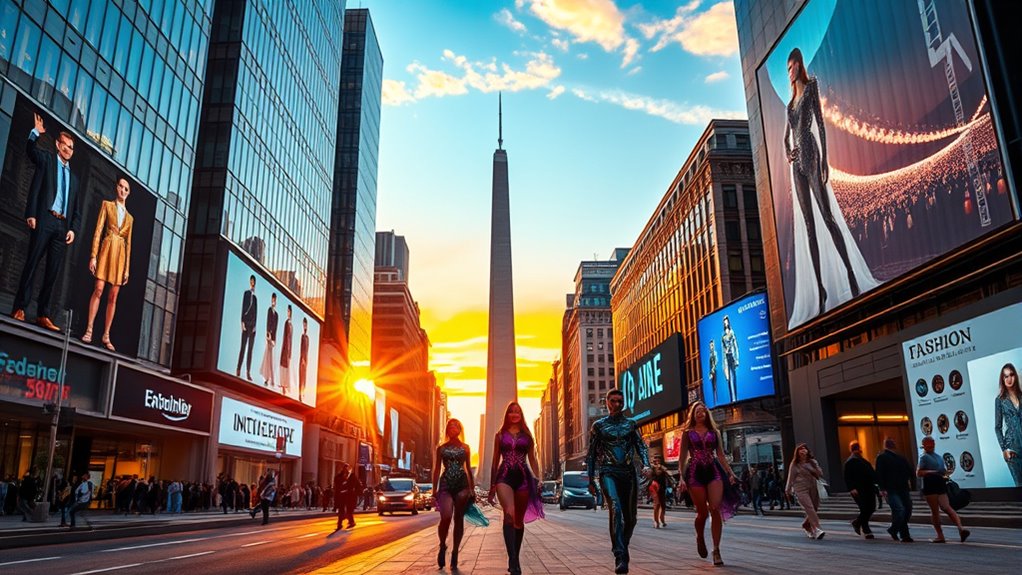

Paris leads the pack when it comes to state-backed fashion, thanks to France’s strong support for fashion weeks, heritage programs, and industry talent. However, other cities like Milan, Beijing, and Delhi are also making big moves through government incentives, infrastructure investments, and focus on sustainability. If you want to see how these major fashion hubs are shaping the industry’s future, there’s plenty more to explore below.
Key Takeaways
- France’s government strongly supports Paris’s luxury fashion industry through heritage preservation, fashion weeks, and design talent development.
- China is investing heavily in textile infrastructure and design innovation, aiming to transition from manufacturing to high-end fashion.
- Italy’s policies promote sustainability, craftsmanship, and support for SMEs, maintaining Milan’s status as a luxury fashion hub.
- India focuses on expanding local textile industries, traditional crafts, and exports to develop emerging fashion centers.
- European cities prioritize sustainability and innovation, leveraging government support to sustain their global fashion influence.
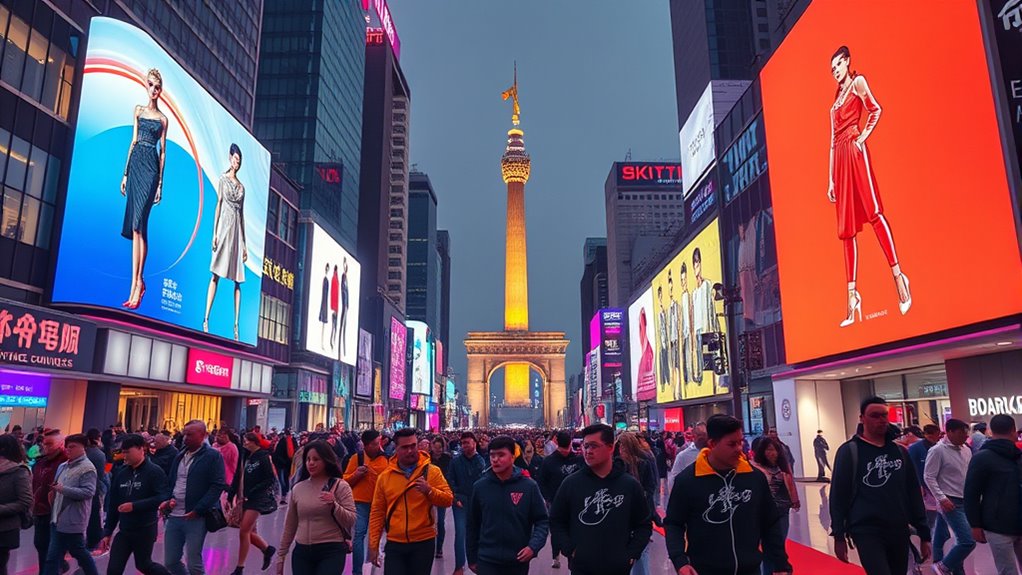
Have you ever wondered how governments influence the fashion industry? It’s a fascinating dynamic that shapes not just what you see on runways or store shelves, but also the entire economic landscape of apparel production and innovation. Governments worldwide recognize fashion’s significance, supporting their local industries through policies, investments, and strategic initiatives. These efforts aim to boost domestic textile sectors, reduce reliance on imports, and position their cities as global fashion hubs.
Take Paris, for example. Though not always in the headlines for state-backed initiatives, France’s government plays a crucial role in maintaining its reputation as a luxury fashion capital. Through support for fashion weeks, grants for design schools, and heritage preservation programs, France ensures its brands stay at the forefront of global fashion. The government’s involvement helps sustain the country’s reputation for craftsmanship and innovation, reinforcing its influence on the industry worldwide.
Meanwhile, in Italy, government support focuses heavily on safeguarding its rich textile tradition. Italy’s policies encourage local manufacturing, with subsidies and tax incentives aimed at nurturing small and medium-sized enterprises. The Italian government also promotes sustainability initiatives, aligning with global trends and positioning Italian cities like Milan as leaders in eco-conscious fashion. This strategic backing helps Italian brands compete globally, especially in the luxury and heritage segments.
In Asia, China’s government takes a more active role in shaping its fashion industry. Recognizing the sector’s economic potential, China invests heavily in textile infrastructure, design innovation, and talent development. State-backed fashion weeks and trade events serve as platforms for Chinese designers to showcase their work internationally. Despite economic headwinds, China’s government continues to support and modernize its fashion manufacturing hubs, aiming to transition from low-cost production to high-end design and branding. This strategic focus on upgrading infrastructure and talent aims to elevate China’s position from manufacturing hub to global fashion innovator.
India exemplifies a different approach, with government initiatives focused on expanding local textile industries and promoting sustainable fashion. With a rapidly growing middle class, India’s government encourages domestic consumption while also aiming to boost exports. State-backed programs bolster local craftsmanship, from traditional crafts to modern sustainable practices, positioning Indian cities like Mumbai and Delhi as emerging fashion centers.
European cities like London, Berlin, and Paris benefit from government support that enhances their status as fashion capitals. This includes investments in design education, infrastructure, and fashion trade events. European policies also emphasize sustainability and innovation, aligning with global environmental goals and helping cities maintain competitive edges in the industry.
Ultimately, the city leading the pack depends on how you define influence. Still, government backing remains crucial in shaping their industries’ growth, sustainability, and global stature. Whether through infrastructure investments, trade support, or cultural preservation, these policies ensure cities stay at the forefront of the ever-evolving fashion world.

Hermés Philosophy (Luxury Philosophy)
As an affiliate, we earn on qualifying purchases.
As an affiliate, we earn on qualifying purchases.
Frequently Asked Questions
How Do Governments Support Fashion Innovation Financially?
Governments support fashion innovation financially by providing substantial funding, grants, and subsidies to help brands and suppliers develop sustainable technologies. They also offer risk-sharing mechanisms like loan guarantees and blended finance strategies to attract private investment. Additionally, governments fund research and infrastructure projects, such as renewable energy initiatives, and create policies that encourage nearshoring and transparency, all aimed at driving sustainable growth and technological advancements in the fashion industry.
Which City Has the Most Sustainable Fashion Initiatives?
Copenhagen is like a lighthouse guiding sustainable fashion forward, leading with numerous initiatives. You’ll find the Copenhagen Fashion Summit, climate-positive fashion week, and strict regulations that push industry standards. Government support fuels eco-friendly brands and city-wide campaigns promoting recycling and minimalism. If you’re interested in systemic change and innovation, Copenhagen’s exhaustive efforts make it the most sustainable fashion city, setting global benchmarks for environmentally conscious industry practices.
How Do State-Backed Brands Influence Global Fashion Trends?
State-backed brands influence global fashion trends by shaping consumer preferences and market dynamics. You see them promote innovation, sustainability, and digital transformation, which set new standards worldwide. Their support for local manufacturing and eco-friendly practices encourages brands everywhere to adapt, making trends more sustainable and tech-driven. As a result, you notice a shift toward ethical fashion, increased digital shopping, and a focus on cultural identity, driven by these influential state-backed initiatives.
Are There Any Ethical Concerns With State Involvement in Fashion?
You should be aware that state involvement in fashion raises ethical concerns, such as poor labor practices, unsafe working conditions, and low wages in supply chains. It can also contribute to environmental harm through increased pollution and waste. Governments may prioritize economic growth over human rights and sustainability, making it harder for consumers like you to trust that fashion products are ethically made. Transparency and regulation are often lacking, compounding these issues.
What Are Future Trends in State-Backed Fashion Initiatives?
Future fashion forecasts favor focused, flexible, and forward-thinking state-backed initiatives. You’ll see more strategic collaborations between governments and brands to boost sustainable supply chains and support circular economy concepts. Innovative investments in infrastructure, tech, and talent will drive domestic manufacturing and market resilience. You’re likely to witness increased policy prioritization of inclusivity, environmental efficiency, and digital integration, fostering fashion futures that favor fairness, flexibility, and forward momentum.

Made in Italy and the Luxury Market: Heritage, Sustainability and Innovation (Routledge Studies in Luxury Management)
As an affiliate, we earn on qualifying purchases.
As an affiliate, we earn on qualifying purchases.
Conclusion
So, as you see, the city leading the charge in state-backed fashion is truly rewriting the rules of style and innovation. With its bold vision and unwavering support, it’s transforming the industry faster than you can blink. This isn’t just progress; it’s a fashion revolution that’s destined to shake the entire world. If you’re excited now, just wait—this city’s influence will soon be unstoppable, shaping trends for generations to come.

Textile Artist: Layered Cloth, The: The Art of Fabric Manipulation
As an affiliate, we earn on qualifying purchases.
As an affiliate, we earn on qualifying purchases.
traditional Indian crafts kits
As an affiliate, we earn on qualifying purchases.
As an affiliate, we earn on qualifying purchases.