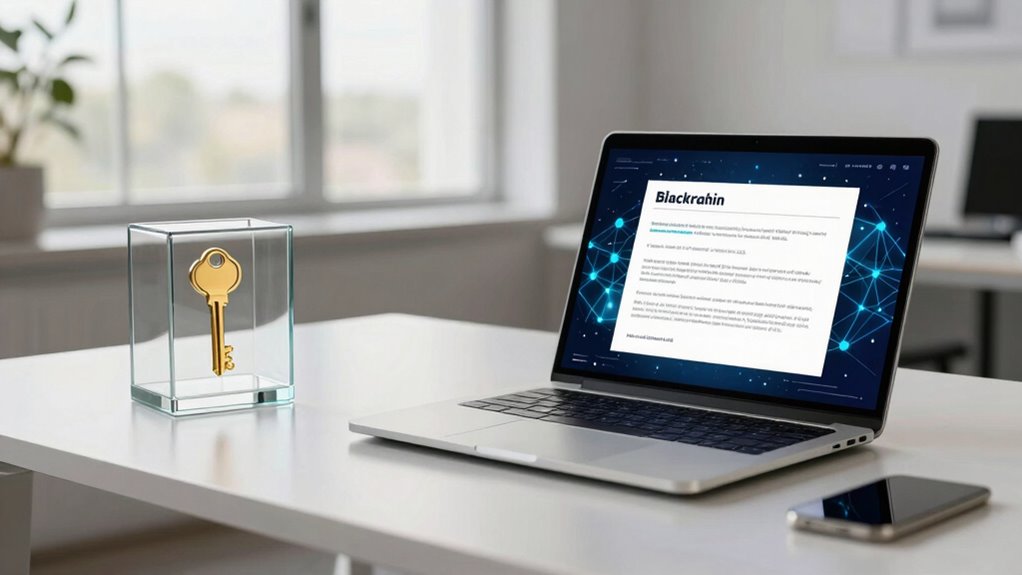
Smart contracts simplify high-value ownership records by providing a secure, transparent way to verify and transfer assets automatically. They eliminate paperwork, reduce errors, and speed up transactions with instant updates once conditions are met. Built on blockchain, they guarantee records are tamper-proof and accessible worldwide, lowering fraud risk and legal delays. If you want to understand how these digital agreements can revolutionize asset management, there’s much more to discover below.

Get tech for your team delivered free — and shop member deals
- Fast, free delivery on millions of items
- Access to Prime Big Deal Days deals on October 6–7
- Prime Video, Amazon Music and more included
Key Takeaways
- Automate ownership transfers instantly once conditions are met, reducing delays and manual processing.
- Provide tamper-proof, transparent records stored securely on blockchain, minimizing fraud and disputes.
- Embed legal and regulatory requirements directly into smart contract code for seamless compliance.
- Enable real-time updates and global accessibility, speeding up high-value transactions.
- Enhance security and interoperability by linking digital identities to assets and integrating with existing systems.

High-value ownership records, such as luxury assets, real estate, or valuable collectibles, often involve complex documentation and lengthy verification processes. Managing these records can be a challenging task, requiring multiple layers of paperwork, notarizations, and third-party verifications. These traditional methods are not only time-consuming but also prone to errors, fraud, and disputes. This is where smart contracts come into play, offering a transformative way to handle high-value ownership with greater efficiency and security.
Smart contracts are self-executing agreements coded onto blockchain networks. They automatically enforce the terms of a deal once predefined conditions are met, removing the need for intermediaries. When applied to ownership records, smart contracts facilitate digital authentication, ensuring that ownership details are tamper-proof and easily verifiable. Instead of sifting through physical documents or relying on centralized registries, you can access a transparent, immutable record stored securely on the blockchain. This streamlines the verification process, allowing you to confirm ownership swiftly and with confidence, markedly reducing the risk of forgery or discrepancies.
Smart contracts automatically enforce ownership terms, providing tamper-proof, verifiable records on a secure blockchain for faster, more reliable transactions.
Moreover, smart contracts help guarantee legal compliance in high-value transactions. They are designed to incorporate regulatory requirements directly into their code, meaning that as laws evolve, the contract can be updated or programmed to adhere to new standards. This proactive approach minimizes legal risks and ensures that ownership transfers or asset exchanges meet all necessary legal criteria. For example, when transferring real estate or luxury assets, smart contracts can automatically verify that all necessary documentation is in place, taxes are paid, and relevant authorities are notified, reducing delays caused by manual checks. Additionally, blockchain-based records provide an extra layer of security and transparency, making it easier to detect and prevent fraudulent activity. Incorporating digital identities into smart contracts can further enhance the accuracy of ownership verification by linking assets directly to verified owners. As blockchain technology continues to develop, it can also support interoperability with existing legal and financial systems, further streamlining high-value transactions. These interconnected systems facilitate seamless data sharing across platforms, reducing redundancies and increasing overall efficiency. Furthermore, these systems can help reduce the reliance on paperwork and manual processes, leading to faster and more streamlined transactions.
Another advantage is that smart contracts enable real-time updates and seamless transfer of ownership. Once the conditions are fulfilled, the transfer occurs instantaneously without waiting for third-party approval. This immediacy benefits high-value asset owners by speeding up transactions, reducing costs, and lowering the chances of disputes. Additionally, because the records are stored on a blockchain, they are accessible from anywhere in the world, providing global transparency and trust in the ownership status.
In essence, smart contracts simplify high-value ownership records by merging digital authentication with legal compliance, creating a more secure, efficient, and transparent system. You no longer need to worry about cumbersome paperwork or outdated registries—your assets are secured on an incorruptible ledger that enforces the rules automatically, ensuring peace of mind and smoother transactions.
As an affiliate, we earn on qualifying purchases.
Frequently Asked Questions
How Secure Are Smart Contracts Against Hacking Attempts?
Smart contracts are generally secure, but they’re not completely immune to hacking attempts. You need to be aware of potential security vulnerabilities, such as coding errors or exploitable flaws in the contract’s design. To enhance hacking prevention, make certain thorough audits and testing before deployment. Regular updates and monitoring also help safeguard against emerging threats. While smart contracts offer strong security, staying vigilant is key to maintaining their integrity against hacking attempts.
Can Smart Contracts Be Customized for Different Types of Assets?
Yes, smart contracts are highly customizable for different types of assets. Their asset versatility allows you to tailor the contract’s terms, conditions, and transfer rules to match specific asset characteristics. With various customization options, you can create smart contracts suited for real estate, art, luxury items, or financial instruments. This flexibility guarantees your asset management is precise, efficient, and adaptable to unique asset requirements.
What Legal Recognition Do Smart Contracts Currently Have?
You should know that smart contracts’ legal recognition varies by jurisdiction, with many regions still developing legal frameworks. While some countries have started accepting them under existing laws, regulatory acceptance is often limited, making their legal status uncertain. This means you might face challenges enforcing smart contracts legally, especially across borders. Staying informed about your local regulations is essential, as legal recognition continues to evolve alongside technological advancements.
How Do Smart Contracts Handle Ownership Disputes?
Smart contracts handle ownership disputes by automating ownership verification through transparent, tamper-proof records stored on the blockchain. When a dispute arises, the contract’s predefined rules trigger, providing clear evidence of ownership and transaction history. This automated dispute resolution process reduces the need for manual intervention, making ownership verification faster and more reliable, ultimately minimizing conflicts and ensuring that high-value assets are securely and accurately managed.
What Are the Costs Associated With Implementing Smart Contracts?
You might wonder about the costs of implementing smart contracts. Initially, you’ll face cost estimation challenges, as expenses vary based on complexity and platform choice. Implementation challenges include technical expertise, integrating with existing systems, and security measures. While upfront costs can seem high, the long-term savings and efficiency gains often outweigh them. Still, understanding these factors helps you prepare for a smoother shift and successful deployment of smart contracts.
Conclusion
Embracing smart contracts can truly streamline high-value ownership records, making transactions smoother and more transparent. By cutting through the red tape, you’ll find it easier to manage and verify assets without the usual hassle. It’s clear that jumping on this bandwagon can save you time, money, and headaches. So, don’t wait too long—getting ahead of the curve means you won’t be left holding the bag when things change. It’s a win-win situation waiting to happen.
Halloween Picks
halloween
As an affiliate, we earn on qualifying purchases.