📊 Full opportunity report: What It Takes To Track Basketball Stats From Video on IdeaNavigator AI — validation score, market gap, and execution plan.

Get business pricing on tech for your team
- Business-only prices and quantity discounts
- Tax-exempt purchasing
- Multiple users, one account, clear invoices
TL;DR
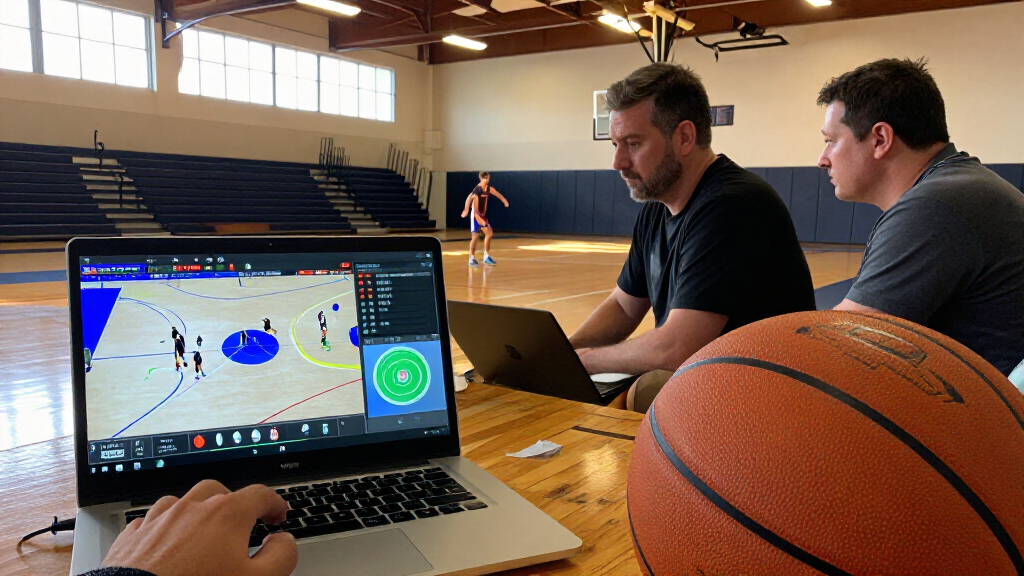
IdeaNavigator AI has outlined a proposed product that would turn phone-recorded youth and recreational basketball games into player-specific highlights, stat lines and season profiles. The concept is a business opportunity, not a reported product launch; its accuracy, demand and subscription potential remain untested.
IdeaNavigator AI has proposed a narrow product test for an app that would convert ordinary phone footage of youth and recreational basketball into player highlights, game statistics and a shareable season profile. The proposal targets families without access to a costly team video program, but it describes an opportunity to test, not an existing service or proven technology.
The suggested first customer is a parent or player who wants highlights and performance information without paying for a program at the level of Hudl. The problem identified is that games are often filmed on phones, while manually finding and cutting a particular player’s plays can take hours. The proposal argues that this labor can prevent footage from being turned into recruiting clips or useful development records.
The proposed minimum product would let a user upload a game video and identify a player. It would then attempt to produce a highlight reel with score overlays, generate a per-game stat line and maintain a profile that can be shared across a season. The listed events include shots, rebounds and steals. The concept does not specify how users would correct missed or misattributed events, or which statistics the first version would reliably support.
For revenue, IdeaNavigator AI suggests a family subscription for a season, alongside a charge for exporting individual reels. Its proposed validation plan is to process 100 games recorded by parents, measure satisfaction with highlight accuracy and test whether families buy season subscriptions at AAU tournaments. No completed test, conversion figure or customer feedback is provided.
The Cost of Turning Footage Into Stats
The proposal addresses a practical gap between having video and being able to use it. For families and players, automatic clipping and a consistent stat record could reduce the time spent reviewing full games and make footage easier to share. Coaches and players might also find a per-game record useful for reviewing performance, provided the events are labeled accurately.
The underlying business question is whether families will pay for a tool that saves editing time and presents player-specific information. A season subscription and separate export fees could make the product more accessible than a broader team platform, but the proposal provides no pricing, cost estimates or evidence of willingness to pay. The suggested tournament test is intended to address that demand question directly.
Accuracy is central to the value. A reel that misses a player’s best plays, or a stat line that credits the wrong player, could undermine trust rather than save time. Testing satisfaction alongside processing 100 games would offer an initial measure of product performance, but that sample alone would not establish reliability across different gyms, camera angles, lighting conditions or levels of play.
As an affiliate, we earn on qualifying purchases.
From Parent Videos to Player Profiles
The concept is framed around youth and amateur basketball, especially games recorded by parents on phones. It is narrower than a proposal to replace team-wide video and analytics systems: the initial buyer is an individual family seeking a reel and a record for one player, rather than a school or club managing an entire roster.
IdeaNavigator AI points to on-device vision models as a reason the workflow may now be feasible, saying such systems can track players and detect events in ordinary phone footage. That is a rationale in the proposal, not a demonstrated result. No model, benchmark, technical evaluation or comparison with multi-camera systems is named. The proposal also does not say whether processing would happen on a phone or on remote servers.
The recommended first test is deliberately practical: gather 100 parent-recorded games, evaluate whether families are satisfied with the resulting highlights and test subscription conversion at AAU tournaments. That approach would assess both sides of the idea—whether the software can produce useful outputs and whether the intended customers value them enough to pay.
Accuracy, Pricing and Adoption Remain Open
No product launch, operating app or completed pilot is reported. The proposal does not provide evidence that a system can identify a selected player throughout a full game or correctly detect shots, rebounds and steals from the range of phone videos families submit. Camera movement, obstructed views, crowded play and inconsistent recording quality could affect results, but no performance data is supplied.
Other open questions include how the app would distinguish players wearing similar uniforms, verify score overlays, handle footage containing multiple games, or let a family review and fix errors. The proposal gives no subscription price, export fee, privacy policy, data-retention plan or details on consent for videos that may include minors. It also does not report whether families, coaches or players have been interviewed or have agreed to pay.
A 100-Game Test Would Be Next
The next step in the proposal is to process 100 games recorded by parents and measure satisfaction with the accuracy of the generated highlights. The plan also calls for testing season-subscription conversion at AAU tournaments. Those tests could show whether the workflow is useful to families and whether interest translates into payment.
Until results are available, the app’s technical performance and commercial prospects remain unverified. Any further assessment would need to report how accuracy is measured, how often users correct clips or statistics, what footage conditions are supported and what families are charged.
Source: IdeaNavigator AI
Key Questions
Has an app for this basketball workflow launched?
No launch is reported. IdeaNavigator AI outlines a product concept and proposed test, not an available app.
What would the proposed app produce?
It would aim to create a player-specific highlight reel with score overlays, a game stat line and a shareable season profile from uploaded footage.
How would the idea be tested?
The proposal calls for processing 100 parent-recorded games, measuring satisfaction with highlight accuracy and testing season-subscription purchases at AAU tournaments.
Are the app’s statistics known to be accurate?
No accuracy results are provided. The proposal names shots, rebounds and steals as detectable events, but reports no benchmark or completed evaluation.
How might the service make money?
IdeaNavigator AI suggests a family subscription for each season plus a fee to export individual reels. It does not provide prices or evidence of customer conversion.
Source: IdeaNavigator AI
Columbus Day / Indigenous Peoples' Day Picks
long weekend sales
As an affiliate, we earn on qualifying purchases.