
A 2K video doorbell with local storage can capture useful detail without making cloud recording the center of your setup. My best overall pick is the Tapo D225, which gives buyers wired-or-battery flexibility; the Reolink WiFi wired doorbell is a strong fit for a steady powered installation, while the Aosu 2K with AosuBase suits shoppers who prefer recordings handled by a dedicated base. The main tradeoffs are power source, how recordings are stored and accessed, and whether you need features such as a wide view or a second camera. Local storage does not mean every model works the same way, so check the storage hardware and recording options before choosing. Read on for the full breakdown of all 11 picks and how they compare.

Get business pricing on tech for your team
- Business-only prices and quantity discounts
- Tax-exempt purchasing
- Multiple users, one account, clear invoices
Key Takeaways
- The Tapo D225 is the most flexible match for mixed installations: it supports wired or battery power, while wired-only Reolink models make more sense when a stable existing doorbell connection is available.
- Local storage takes different forms across this lineup: some options rely on a base or chime, while others use a different recording setup, so confirm what storage hardware is included or required.
- Reolink offers the widest range of power and connection choices here: its WiFi wired, PoE, and second-generation battery models address distinct installations rather than one interchangeable use case.
- The eufy E340 stands apart for its dual-camera design: it is the specialized pick for shoppers prioritizing multiple views, not the simplest route to a conventional single-camera setup.
- Resolution alone does not settle the choice: field of view, power access, WiFi band support, and recording access can matter more day to day than the shared 2K label.
| Tapo 2K Wireless Smart Video Doorbell, D205, 160° Ultra-Wide View | 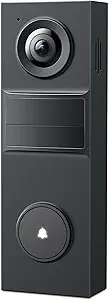 | Best for Long Battery Life | Resolution: 2K | Field of view: 160° | Battery capacity: 5200mAh | VIEW ON AMAZON | See Our Full Breakdown |
| BOIFUN Video Doorbell Camera Wireless – No Subscription Required, 2K HD | 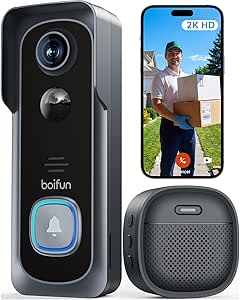 | Best for Subscription-Free Local Recording | Resolution: 2K HD | Field of view: 166° | Aperture: f/2.5 | VIEW ON AMAZON | See Our Full Breakdown |
| Reolink Video Doorbell WiFi 2K Wired Camera |  | Best for Wired, Dual-Band Setups | Resolution: 2K Super HD | Viewing angle: 180° | Aspect ratio: 4:3 | VIEW ON AMAZON | See Our Full Breakdown |
| Tapo 2K+ Wired or Battery-Powered Smart Video Doorbell with Chime, D225 |  | Best for Flexible Installation | Video resolution: 2K+ HD | Field of view: 180° | Power options: Wired 8–24V or 10,000mAh battery | VIEW ON AMAZON | See Our Full Breakdown |
| Aosu 2K Wireless Doorbell Camera with AosuBase, Battery Powered, 2.4G WiFi | 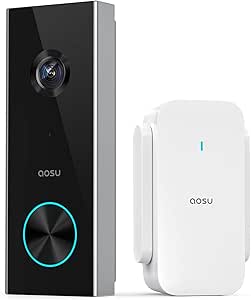 | Best for Base-Assisted Connectivity | Resolution: 5 MP; described as 2K | Viewing angle: 166° | Field of view: 360° (as listed; relationship to viewing angle is not specified) | VIEW ON AMAZON | See Our Full Breakdown |
| Tapo D210 2K Wireless Smart Video Doorbell with Chime, 160° Ultra‑Wide View |  | Best for Wide Coverage on Battery | Resolution: 2K (3840×2160) | Field of view: 160° diagonal | Power: Rechargeable 6400mAh battery | VIEW ON AMAZON | See Our Full Breakdown |
| REOLINK Battery Video Doorbell (2nd Gen) with Chime Plus – 2K 4MP, 150°×150° Head-to-Toe View, Wireless & Wired Power, Dual-Band Wi‑Fi, No Monthly Fee for Local Storage, Live View with Two-Way Talk |  | Best for Flexible Power and Local Recording | Resolution: 2K (4MP) | Field of view: 150°×150° head-to-toe | Power options: Battery or wired | VIEW ON AMAZON | See Our Full Breakdown |
| Reolink Video Doorbell PoE 2K Wired Outdoor Security Camera with Chime V2 | 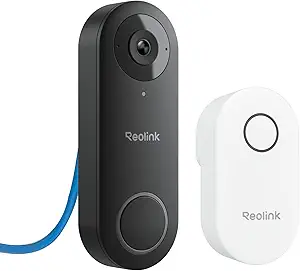 | Best for Expandable Wired Storage | Resolution: 2K (3840×2160) | Aspect ratio: 4:3 | Field of view: 135° horizontal × 100° vertical × 180° diagonal | VIEW ON AMAZON | See Our Full Breakdown |
| eufy Security Video Doorbell E340, Dual Cameras, 2K FHD |  | Best for Package Monitoring | Cameras: Dual cameras | Video resolution: 2K FHD; effective resolution listed as 1440 pixels | Viewing angle: 160° | VIEW ON AMAZON | See Our Full Breakdown |
| Reolink Battery Video Doorbell (2nd Gen) 2K 4MP Wireless Outdoor Camera |  | Best for Long Battery Life | Resolution: 2K (2048×2048) | Field of view: 150°×150°×180° | Battery life: Up to 10 months | VIEW ON AMAZON | See Our Full Breakdown |
| Google Nest Doorbell (Wired, 3rd Gen) – Hazel |  | Best for Google Home Households | Video quality: 2000 HDR | Field of view: 166° | Night vision: Yes | VIEW ON AMAZON | See Our Full Breakdown |
| 2k video doorbell with local storage | Field of view | Resolution | Wi-Fi | Local storage |
|---|---|---|---|---|
| Tapo 2K Wireless Smart Video D | 160° | 2K | 2.4GHz only | microSD up to 512GB; card sold separately |
| BOIFUN Video Doorbell Camera W | 166° | 2K HD | 2.4GHz only | microSD up to 128GB; card not included |
| Reolink Video Doorbell WiFi 2K | — | 2K Super HD | 2.4GHz and 5GHz | — |
| Tapo 2K+ Wired or Battery-Powe | 180° | — | 2.4GHz only | microSD up to 512GB; card not included |
| Aosu 2K Wireless Doorbell Came | 360° (as listed; relationship to viewing angle is not specified) | 5 MP; described as 2K | — | — |
| Tapo D210 2K Wireless Smart Vi | 160° diagonal | 2K (3840×2160) | 2.4GHz | MicroSD up to 512GB; card not included |
| REOLINK Battery Video Doorbell | 150°×150° head-to-toe | 2K (4MP) | Dual-band | — |
| Reolink Video Doorbell PoE 2K | 135° horizontal × 100° vertical × 180° diagonal | 2K (3840×2160) | — | MicroSD up to 512GB, optional Reolink NVR HDD, or FTP/NAS |
| eufy Security Video Doorbell E | — | — | — | 128GB |
| Reolink Battery Video Doorbell | 150°×150°×180° | 2K (2048×2048) | Dual-band 2.4GHz and 5GHz | MicroSD up to 512GB |
| Google Nest Doorbell | 166° | — | — | — |
More Details on Our Top Picks
Tapo 2K Wireless Smart Video Doorbell, D205, 160° Ultra-Wide View
The Tapo D205 pairs 2K video with a 160° view and a battery rated for up to 180 days, making it a sensible pick for buyers who want to limit recharging. Its microSD support up to 512GB offers more local-storage capacity than the BOIFUN’s 128GB limit, though the card is sold separately. AI detection and customizable activity zones can help cut down on alerts from areas that do not matter to you. The tradeoff is network flexibility: this model only supports 2.4GHz Wi-Fi, while the wired Reolink Video Doorbell WiFi supports both 2.4GHz and 5GHz. The D205 also lacks an included chime, so factor in how you will hear alerts indoors. It suits households prioritizing battery life and expandable local storage over dual-band Wi-Fi or a ready-to-use chime.
Pros:- 2K resolution and 160° field of view
- Battery life rated up to 180 days
- Supports microSD cards up to 512GB
- Customizable activity zones and Alexa and Google Assistant compatibility
Cons:- Limited to 2.4GHz Wi-Fi
- microSD card and cloud storage are separate purchases
- No chime is included
Best for: Buyers who want a battery-powered 2K doorbell with long stated battery life and room for a large microSD card.
Not ideal for: Households using only 5GHz Wi-Fi or buyers who want an included chime and storage card.
- Resolution:2K
- Field of view:160°
- Battery capacity:5200mAh
- Stated battery life:Up to 180 days
- Night vision:Infrared
- Wi-Fi:2.4GHz only
- Local storage:microSD up to 512GB; card sold separately
- Weather resistance:IP54
- Chime:Not included
Our verdict“Choose the Tapo D205 if long battery life and high-capacity microSD support matter more than dual-band Wi-Fi or an included chime.”
BOIFUN Video Doorbell Camera Wireless – No Subscription Required, 2K HD
The BOIFUN 2K wireless doorbell is the clearest fit here for buyers who want core features without a cloud plan: alerts, two-way audio, and local recording to a microSD card are available without a subscription. Its 166° view and HDR night vision with 940nm infrared give it a wider stated angle than the Tapo D205, while invisible infrared avoids a conspicuous glow at night. Local capacity tops out at 128GB, though, far below the D205’s 512GB support, and the card is not included. Battery life is rated up to 60 days under specified use, so it may need attention sooner than the D205. The battery is non-removable, which means charging cannot be handled by swapping in a spare. Choose it for a straightforward no-subscription setup, not maximum storage headroom or the longest stated battery life.
Pros:- Core features and local recording do not require a subscription
- 166° field of view with 2K video
- HDR night vision uses invisible 940nm infrared
- Includes human detection and a built-in anti-tamper alarm
Cons:- microSD card is required for video retention and is not included
- Local storage support is limited to 128GB
- Non-removable battery is rated for up to 60 days under stated use
Best for: Renters or homeowners seeking 2K video, local microSD recording, and core doorbell features without a subscription.
Not ideal for: Buyers who want a replaceable battery, more than 128GB of local storage, or 5GHz Wi-Fi support.
- Resolution:2K HD
- Field of view:166°
- Aperture:f/2.5
- Wi-Fi:2.4GHz only
- Night vision:HDR with 940nm infrared, up to 10m
- Stated battery life:Up to 60 days at 30 motions per day and 10-second clips
- Local storage:microSD up to 128GB; card not included
- Warranty:2 years
Our verdict“Pick BOIFUN if subscription-free local recording is your priority and its 128GB card limit and fixed battery suit your setup.”
Reolink Video Doorbell WiFi 2K Wired Camera
For buyers with doorbell wiring in place, the Reolink Video Doorbell WiFi avoids battery recharging and brings a 180° view in a 4:3 frame, a useful combination for seeing more of the approach to a doorway. Its 2.4GHz and 5GHz Wi-Fi support gives it an advantage over the Tapo D205 and BOIFUN, both limited to 2.4GHz. The included Chime V2 also means an indoor alert is part of the package, unlike the D205. The main compromise is installation: this model needs 12–24VAC or 24V DC power, so it is not the easy-fit choice for a renter or a home without compatible wiring. The provided product details do not specify a local-storage method or capacity, so I would verify recording compatibility before buying it specifically for local storage. It ranks here for its wired, wide-view setup, not as the most clearly documented local-recording option.
Pros:- 2K Super HD video with a 180° viewing angle
- 4:3 aspect ratio captures a tall view of the entry
- Supports both 2.4GHz and 5GHz Wi-Fi
- Chime V2 is included
Cons:- Requires 12–24VAC or 24V DC power rather than battery operation
- Installation may require electrical work or professional help
- Provided specifications do not identify a local-storage method or capacity
Best for: Homeowners with compatible doorbell wiring who want a wide 2K view, dual-band Wi-Fi, and an included chime.
Not ideal for: Renters, homes without compatible wiring, or buyers who need confirmed microSD capacity in the product specifications.
- Resolution:2K Super HD
- Viewing angle:180°
- Aspect ratio:4:3
- Wi-Fi:2.4GHz and 5GHz
- Power:12–24VAC or 24V DC
- Weather protection:Waterproof design
- Included chime:Chime V2
Our verdict“Choose this Reolink if you have compatible wiring and value a 180° view and dual-band Wi-Fi, but confirm local-recording support before purchase.”
Tapo 2K+ Wired or Battery-Powered Smart Video Doorbell with Chime, D225
The Tapo D225 is the most adaptable installation option in this group: use 8–24V wiring or its 10,000mAh battery, rated for up to eight months. That flexibility is especially useful when you want to start on battery power and later move to a wired setup. Its 2K+ video, 180° view, and full-color night vision with spotlight make it better equipped for low-light color detail than the D205’s infrared night vision. Local recording is supported through microSD cards up to 512GB, but you supply the card; cloud storage requires a subscription. Compared with BOIFUN, the D225 offers much greater stated card capacity and an included chime, but it is limited to 2.4GHz Wi-Fi and needs a connection for full functionality. Pick it for installation choice and broader detection, not dual-band networking.
Pros:- Can run on 8–24V wiring or a 10,000mAh battery
- 2K+ video and 180° field of view
- Full-color night vision with an adjustable spotlight
- Supports microSD cards up to 512GB and includes a chime
Cons:- Limited to 2.4GHz Wi-Fi
- microSD card is not included
- Cloud storage requires a subscription
Best for: Homeowners who want the choice of wired or battery power, expandable microSD recording, and an included chime.
Not ideal for: Buyers whose network is 5GHz-only or who want local storage ready to use without purchasing a microSD card.
- Video resolution:2K+ HD
- Field of view:180°
- Power options:Wired 8–24V or 10,000mAh battery
- Stated battery life:Up to 8 months
- Night vision:Full color with spotlight
- Local storage:microSD up to 512GB; card not included
- Wi-Fi:2.4GHz only
- Chime:Included
Our verdict“Choose the Tapo D225 if flexible power options and high-capacity local storage matter more than 5GHz Wi-Fi.”
Aosu 2K Wireless Doorbell Camera with AosuBase, Battery Powered, 2.4G WiFi
The Aosu 2K Wireless Doorbell Camera pairs a battery-powered camera with AosuBase, giving this option a different setup from the standalone Tapo D205 and BOIFUN models. The product details list both local and cloud storage, along with AI human detection to help focus alerts on people rather than every movement. Its stated 166° viewing angle is wider than the D205’s 160°, though the listing also gives a separate 360° field-of-view figure without explaining how it relates to that angle. Local-storage capacity and the included storage medium are not specified, so buyers seeking a defined card limit may find the Tapo D225 or D205 easier to compare. The battery-powered design avoids doorbell wiring, but charging or battery replacement and a potentially more involved installation are tradeoffs. This is a better fit for buyers who want the AosuBase setup than for those prioritizing clearly documented storage details.
Pros:- 2K video with a stated 166° viewing angle
- Supports local and cloud storage
- AI human detection can help limit irrelevant alerts
- AosuBase is included in the named configuration
Cons:- Local-storage medium and capacity are not specified in the supplied details
- Battery needs charging or replacement
- Installation may be complex for some users
Best for: Battery-powered doorbell buyers who want AosuBase connectivity, AI human detection, and a choice of local or cloud storage.
Not ideal for: Shoppers who need a stated local-storage capacity, a simple installation, or clearly documented battery-life expectations.
- Resolution:5 MP; described as 2K
- Viewing angle:166°
- Field of view:360° (as listed; relationship to viewing angle is not specified)
- Power source:Battery powered
- Battery capacity:5200mAh
- Storage:Local and cloud options; capacity and medium not specified
- Dimensions:3.54 × 2.76 × 2.56 inches
- Weight:930g
Our verdict“Consider the Aosu if its AosuBase setup and battery-powered design appeal to you, but confirm storage capacity before choosing it for local recording.”
Tapo D210 2K Wireless Smart Video Doorbell with Chime, 160° Ultra‑Wide View
The Tapo D210 makes the most sense when a broad view of the entrance and straightforward local recording matter more than advanced network options. Its 160° diagonal view and spotlight-assisted color night vision can show more of the approach than the narrower horizontal view listed for the Reolink PoE doorbell, while its rechargeable battery avoids running a wire to the door. Footage can be saved to a microSD card up to 512GB, though you supply the card yourself; optional cloud backup is available if local recording alone is not enough. Compared with the dual-camera eufy E340, the D210 has a simpler single-camera setup rather than a separate package view. The tradeoffs are 2.4GHz-only Wi-Fi and an indoor-only chime, which limits network flexibility and where the chime can sit.
Pros:- 160° diagonal field of view covers a broad portion of the entryway.
- Accepts microSD cards up to 512GB for local recording.
- Rechargeable 6400mAh battery allows flexible placement without doorbell wiring.
- Spotlight-assisted color night vision and two-way audio support clearer nighttime interactions.
Cons:- MicroSD card is not included, adding a separate storage purchase.
- 2.4GHz-only Wi-Fi rules out 5GHz connections.
- Included chime is for indoor use only.
Best for: Renters or homeowners who want battery-powered installation, a wide entryway view, and local microSD recording without relying on a subscription.
Not ideal for: Households with only 5GHz Wi-Fi available or buyers who need an outdoor-rated chime or a dedicated package camera.
- Resolution:2K (3840×2160)
- Field of view:160° diagonal
- Power:Rechargeable 6400mAh battery
- Local storage:MicroSD up to 512GB; card not included
- Wi-Fi:2.4GHz
- Night vision:Full-color with adjustable spotlight
- Audio:Two-way audio with preset quick responses
- Smart home compatibility:Alexa and Google Assistant
Our verdict“Choose the D210 for a wide, battery-powered view with expandable local storage, but skip it if you need dual-band Wi-Fi or an outdoor chime.”
REOLINK Battery Video Doorbell (2nd Gen) with Chime Plus – 2K 4MP, 150°×150° Head-to-Toe View, Wireless & Wired Power, Dual-Band Wi‑Fi, No Monthly Fee for Local Storage, Live View with Two-Way Talk
This REOLINK Battery Video Doorbell (2nd Gen) with Chime Plus stands out for combining local recording with a choice of battery or wired power. That flexibility suits households that want an easy initial placement but may later connect existing wiring for ongoing power. Its 150°×150° head-to-toe view is designed to capture visitors from top to bottom, while dual-band Wi-Fi offers more network choice than the 2.4GHz-only Tapo D210. Local storage without a monthly fee also makes it a better fit for subscription-averse buyers. The listing does not specify a storage capacity or card format, however, so buyers should confirm how local recording is configured before purchase. Compared with the PoE Reolink model, this one is easier to place without Ethernet, but its battery may need periodic recharging and installation can take more effort than a basic wireless setup.
Pros:- Local storage is available without a monthly fee.
- Battery and wired power options support different installation needs.
- 150°×150° view is designed to show visitors head to toe.
- Dual-band Wi-Fi supports both 2.4GHz and 5GHz networks.
Cons:- Battery life depends on usage and can require periodic recharging.
- Installation may be more involved than a simple battery-only setup.
- The provided product data does not state local-storage capacity or card format.
Best for: Homeowners who want local recording without a monthly fee, need dual-band Wi-Fi, and value the option to switch between battery and wired power.
Not ideal for: Buyers seeking a clearly specified microSD capacity or a fully wired PoE setup that avoids battery maintenance.
- Resolution:2K (4MP)
- Field of view:150°×150° head-to-toe
- Power options:Battery or wired
- Wi-Fi:Dual-band
- Storage:Local storage; no monthly fee
- Included accessory:Chime Plus
- Audio:Live two-way talk
Our verdict“Pick this REOLINK when you want flexible power, dual-band Wi-Fi, and subscription-free local recording, provided you are comfortable confirming storage details and handling installation.”
Reolink Video Doorbell PoE 2K Wired Outdoor Security Camera with Chime V2
For buyers who want local recording to grow beyond a single memory card, the Reolink Video Doorbell PoE is the most storage-flexible option in this group. It supports microSD up to 512GB as well as Reolink NVR drives and FTP/NAS, giving a wired home-security setup more ways to retain footage than the battery-focused Tapo D210. Power over Ethernet also combines power and network connection in one cable, which can provide a steadier link than a wireless doorbell. Its six-second pre-roll and humanoid detection help capture the lead-up to activity while limiting some irrelevant alerts. The tradeoff is a demanding installation: there is no Wi-Fi, a suitable power source must be supplied, and third-party NVRs are not supported. Compared with the battery-powered Reolink 2nd Gen, this is a better fit for fixed infrastructure, not quick placement.
Pros:- Local recording supports microSD up to 512GB, Reolink NVR HDDs, and FTP/NAS.
- PoE provides a wired network connection and power through one cable.
- Humanoid detection can reduce irrelevant motion alerts.
- Six-second pre-roll helps record activity before an event trigger.
Cons:- No Wi-Fi support limits placement to a suitable wired connection.
- Power supply is not included, and installation requires compatible power or PoE.
- Third-party NVRs are not supported.
Best for: Homeowners with Ethernet or compatible doorbell power and an existing or planned Reolink NVR/NAS setup who want several local-retention options.
Not ideal for: Renters or anyone unable to run Ethernet or provide compatible power, as this model has no Wi-Fi and needs a wired installation.
- Resolution:2K (3840×2160)
- Aspect ratio:4:3
- Field of view:135° horizontal × 100° vertical × 180° diagonal
- Power:12–24V AC, 24V DC, or IEEE 802.3af PoE; power supply not included
- Local storage:MicroSD up to 512GB, optional Reolink NVR HDD, or FTP/NAS
- Pre-roll recording:6 seconds
- Detection:Humanoid detection
- Included chime:Chime V2 with 10 selectable tones
Our verdict“Choose the PoE model for a fixed installation with expandable local storage, but choose the battery-powered REOLINK 2nd Gen if cabling is impractical.”
eufy Security Video Doorbell E340, Dual Cameras, 2K FHD
The eufy Security Video Doorbell E340 earns its place through a distinctive dual-camera layout: one view covers visitors while another is aimed toward packages. That makes it a stronger match for porches where deliveries are a recurring concern than the single-camera Tapo D210 or the wired Reolink PoE model. It also offers local storage without subscription fees and can be installed wired or wirelessly, so buyers get more placement flexibility than with PoE. The listed storage capacity is 128GB, which is less expandable on paper than the Tapo’s microSD support up to 512GB or the Reolink PoE’s NVR/NAS options. Its plastic enclosure may also be less appealing to buyers prioritizing a more robust-feeling exterior. Check alert and chime requirements before buying: the listing says a compatible chime or smart-home device is needed for alerts.
Pros:- Dual cameras provide separate visitor and package views.
- Local storage is available without a subscription fee.
- Wired or wireless installation accommodates different entryways.
- 160° viewing angle and night vision support broad day-and-night monitoring.
Cons:- Listed storage capacity is 128GB, below the stated microSD capacity of the Tapo D210 and Reolink PoE.
- Plastic construction may not suit buyers seeking a more robust-feeling enclosure.
- Alerts require a compatible chime or smart-home device, according to the product data.
Best for: Households that receive frequent deliveries and want a second camera view aimed at packages alongside local recording.
Not ideal for: Buyers who need the largest stated local-storage capacity, a metal enclosure, or a package that includes every alert and chime component they require.
- Cameras:Dual cameras
- Video resolution:2K FHD; effective resolution listed as 1440 pixels
- Viewing angle:160°
- Local storage:128GB
- Power:Battery powered; wired or wireless installation
- Night vision range:16 feet
- Smart home compatibility:Alexa, Google Assistant, and smartphone
- Mount type:Wall mount
Our verdict“Choose the E340 when package coverage from a second camera matters more than maximum storage expansion or a metal-bodied design.”
Reolink Battery Video Doorbell (2nd Gen) 2K 4MP Wireless Outdoor Camera
The Reolink Battery Video Doorbell (2nd Gen) is the battery-first choice for buyers who want local recording and fewer charging interruptions. Its stated battery life of up to 10 months gives it an advantage over the Tapo D210, whose listing provides battery capacity but no runtime estimate. The Reolink also supports a microSD card up to 512GB, local storage, and cloud storage, while dual-band Wi-Fi helps it fit more home networks than the D210’s 2.4GHz-only connection. Smart detection includes people, vehicles, animals, and packages, adding useful event filtering beyond basic motion alerts. Compared with the REOLINK model bundled with Chime Plus, this listing emphasizes storage and detection rather than an included chime; it is not compatible with Reolink Chime or third-party mechanical chimes. Battery life will vary with recording activity, and full functionality still depends on Wi-Fi.
Pros:- Battery life is listed as up to 10 months, subject to recording frequency.
- Supports microSD cards up to 512GB alongside local and cloud storage.
- Dual-band 2.4GHz and 5GHz Wi-Fi offers broader network compatibility.
- Smart detection covers people, vehicles, animals, and packages.
Cons:- Not compatible with Reolink Chime or third-party mechanical chimes.
- Full functionality requires a Wi-Fi connection.
- Actual battery life can vary with recording frequency.
Best for: Homeowners seeking a battery-powered doorbell with a stated long runtime, expandable microSD storage, and detection for several event types.
Not ideal for: Buyers who need a compatible Reolink or mechanical chime, cannot provide Wi-Fi, or require a wired PoE connection.
- Resolution:2K (2048×2048)
- Field of view:150°×150°×180°
- Battery life:Up to 10 months
- Local storage:MicroSD up to 512GB
- Other storage:Local and cloud storage
- Wi-Fi:Dual-band 2.4GHz and 5GHz
- Smart detection:People, vehicles, animals, and packages
- Compatibility:Google Assistant, IFTTT, and Reolink Home Hub
Our verdict“Pick this model for a long-runtime battery doorbell with broad event detection and expandable local storage, but look elsewhere if chime compatibility is a priority.”
Google Nest Doorbell (Wired, 3rd Gen) – Hazel
The Google Nest Doorbell (Wired, 3rd Gen) is a strong fit for buyers who want 2K-class HDR video and already organize their smart home around Google Home. Its 166° field of view covers a broad area, while night vision helps keep visitors visible after dark. Wired power also avoids the charging routine required by battery models such as the Tapo D225, though it ties installation to an existing suitable doorbell connection or wiring work.
For this roundup, the key limitation is local storage: the supplied product details describe encrypted video security, but do not confirm onboard or hub-based local recording. Advanced features also depend on a Google Home premium subscription. I would choose it for Google integration and continuous wired convenience, not as a clear pick for shoppers whose main requirement is subscription-free local storage.
Pros:- 2K HDR video with night vision supports detailed daytime and nighttime viewing.
- 166° field of view covers a broad entry area.
- Wired power avoids battery charging or replacement.
- Google Home integration and encrypted video security suit Google-centered smart homes.
Cons:- The supplied product information does not confirm local recording, making it a weaker match for this roundup’s main requirement.
- Advanced features require a Google Home premium subscription, and some functions depend on subscription service.
- Wired installation is less flexible than wireless options such as the Tapo D225.
Best for: Google Home households with compatible doorbell wiring that prioritize broad 2K HDR views and do not mind subscription-dependent advanced features.
Not ideal for: Buyers who require confirmed local video storage without a subscription, or renters and households without suitable wiring.
- Video quality:2000 HDR
- Field of view:166°
- Night vision:Yes
- Connectivity:Wi-Fi
- Power source:Wired
- Dimensions:5.16 x 1.65 x 1.14 inches
- Weight:4.96 ounces
- Color:Hazel
- Installation type:Screw In
Our verdict“Choose this Nest for a wired, wide-view Google Home setup, but skip it if confirmed local storage is your deciding requirement.”

How We Picked
I ranked these doorbells around the specific promise of 2K video and local recording, rather than treating resolution as the only meaningful feature. I compared their power options, stated field-of-view details, connection type, included chimes or bases, and the practical role each storage approach plays for a household. Those differences affect installation effort, recording access, and how easily a buyer can avoid a cloud-dependent setup.
The order favors useful flexibility and clear fit for the broadest range of buyers. The Tapo D225 leads because wired-or-battery power widens its installation options; Reolink’s wired WiFi and PoE models rank well for homes set up for those connections. Battery models and base-based options serve different needs, while the dual-camera Eufy and wired Nest are more specialized choices. I do not treat a 2K label or a no-subscription claim as proof that storage works identically across models; buyers should verify local recording method, capacity, and access for the exact configuration they plan to buy.
Factors to Consider When Choosing 2k Video Doorbell With Local Storage
Before choosing a model, I would settle the installation and recording questions first. A doorbell can advertise local storage yet still differ in where clips are kept, how they are accessed, and what hardware is needed. These checks help separate a genuinely suitable setup from one that merely shares the right headline specs.
Match Power to Your Doorway
Start by checking whether your existing doorbell wiring is usable, rather than assuming a battery model will be easier. Wired power can reduce routine charging, but it depends on compatible wiring and a suitable installation point. Battery models avoid some wiring constraints, though charging becomes part of ownership and cold or frequent activity may affect runtime. Hybrid models give you more placement flexibility, but confirm which features or operating modes are available with each power method. A common mistake is choosing by the word wireless alone without checking whether it refers to power, network connection, or both. Pick the arrangement that fits your home and maintenance tolerance, not the one with the fewest setup steps on paper.
Find Out Exactly Where Clips Are Stored
Local storage can mean a memory card in the device, a separate base station, or another local recording component; those approaches are not interchangeable. Check whether the required storage hardware is included, sold separately, or limited by capacity. Also find out whether clips remain accessible if the doorbell loses its internet connection, and whether remote viewing still depends on an account or service. Do not read “no subscription” as a guarantee that every feature works offline or that storage is unlimited. Think about who in your household needs access to footage and how easily they can retrieve an event. The best setup is one whose recording path you can explain before installation.
Choose a View That Fits Your Entry
A wider stated viewing angle can capture more of a porch, but the camera’s position and the shape of the entry matter just as much. A tall, narrow walkway may benefit more from a head-to-toe view than a broad horizontal view. If parcels are often left near the threshold, check whether the camera can show the drop-off area without pointing too far away from approaching visitors. Dual-camera designs address a different problem by providing another view, but can add complexity compared with a single-camera doorbell. Before buying, compare the product’s coverage claim with the actual mounting height and door layout. A quick sketch of the approach path can prevent choosing a wider lens that still misses the spot you care about.
Treat WiFi and PoE as Installation Decisions
Wireless WiFi doorbells are easier to place where a network signal reaches the entrance, while PoE models call for a compatible Ethernet cable and network equipment. Wired power and WiFi are separate questions: a doorbell may use household wiring for power while sending video over WiFi. Check signal strength at the mounting location, not just near the router, since exterior walls and metal doors can weaken a connection. Dual-band support may give compatible setups more network options, but it does not fix a weak signal by itself. If the porch is at the edge of coverage, plan for network improvement before blaming the camera. Choose PoE when a wired network path is practical; favor WiFi when cable routing would make installation harder.
Compare the Full Recording and Alert Routine
Think through what happens from a visitor arriving to you reviewing the clip later. Motion detection, notification timing, live view, two-way talk, and chime placement all affect whether the doorbell is useful in daily life. A bundled chime or base may simplify hearing alerts indoors, but its storage role and notification role can be different, so verify both. Ask whether event clips are saved automatically and how long they remain available under the selected local setup. Homes with frequent deliveries may need a different alert routine from homes mainly concerned with unexpected visitors. Make a short list of the events you actually want recorded so you do not pay in setup complexity for features you will rarely use.
Pay More Only for a Specific Advantage
Extra cameras, flexible power, and specialized wiring can justify a more involved setup when they solve a real problem at your entrance. They are less useful if the mounting area cannot take advantage of them or if you prefer a basic, single-view doorbell. Compare the total equipment needed, including a storage base, chime, memory card, or PoE components where applicable, rather than judging the doorbell alone. Also check whether a premium feature depends on cloud services when local recording is your main reason for buying. The common mistake is paying for headline extras while overlooking storage requirements or installation work. Spend more when a feature changes your coverage or reliability; otherwise, a simpler model may fit better.
Frequently Asked Questions
Does “local storage” mean I can use the doorbell without internet?
Not necessarily. Local storage describes where recordings are kept, but setup, alerts, remote viewing, and app access may still rely on an internet connection. Some models can preserve recordings locally during an outage, while others may lose functions or access until connectivity returns. Check the product’s offline behavior and whether clips can be reviewed directly on the local device or base. If outage recording is a priority, treat that as a separate requirement from simply avoiding a cloud subscription.
Do I need to buy a separate memory card or base station?
That depends on the model and configuration. Some doorbells pair with a dedicated base or chime, while other storage arrangements may use a different local component. Product names that mention a base or chime do not by themselves confirm whether it is included or how much recording capacity it provides. Review the exact package contents and supported storage method before ordering. This is especially useful when comparing a standalone doorbell with a bundle, since the doorbell alone may not deliver the recording setup you expect.
Should I choose a wired or battery 2K doorbell?
Choose wired if compatible doorbell wiring is already available and you want to avoid periodic charging. Battery power can suit a home without usable wiring or a mounting location where adding a wire is impractical, though charging becomes ongoing maintenance. Hybrid models can offer a middle path, but check what each power mode supports. Also remember that power and network connection are separate: a wired-powered model may still rely on WiFi for video access. Base your choice on the actual wiring at the entrance and how often you are willing to handle charging.
Is 2K resolution enough to identify a visitor or read a package label?
2K can provide more image detail than lower-resolution video, but it cannot guarantee a readable label or clear identification in every situation. Distance, lighting, motion, camera angle, and the way the doorbell compresses video all affect the result. A wide view can show more of the porch while making a distant subject appear smaller in the frame. Check the camera’s placement and coverage needs, especially if parcels sit close to the door or visitors approach from the side. Think of resolution as one part of image quality, not a substitute for suitable positioning and lighting.
Which option makes the most sense if I want local recording but do not want a complicated installation?
Start with the power and storage arrangement that fits your existing home, since those are the main sources of installation complexity. A flexible-power model such as the Tapo D225 can suit buyers who need more than one power path, while a base-based choice such as the Aosu 2K may appeal if a dedicated recording hub fits the setup. A Reolink PoE model makes more sense when Ethernet is already available or cable installation is part of the plan. Before choosing, confirm whether the storage component is included and how the doorbell connects to your network. The simplest fit is the one that avoids adding new wiring or unplanned storage hardware.
Conclusion
For the broadest range of homes, I recommend the Tapo D225 as the best overall because its wired-or-battery power gives buyers more installation options. For a best value direction, compare the Tapo D205 or D210 against your preferred power and chime setup, then verify the exact local-storage arrangement; the right choice depends on what the package supports. The Reolink PoE or WiFi wired model is better for buyers who prioritize a powered installation, with PoE suited to homes prepared for Ethernet. For beginners, I would favor a model whose included chime or base and recording method are clear before purchase, rather than assuming every local-storage setup works alike. Choose the Eufy E340 for a specific need if its dual-camera approach matches your entry, or a Reolink battery model if wiring is not practical. The deciding question is not simply which doorbell says 2K, but which one fits your power, network, and recording setup with the least compromise.
Halloween Picks
halloween
As an affiliate, we earn on qualifying purchases.