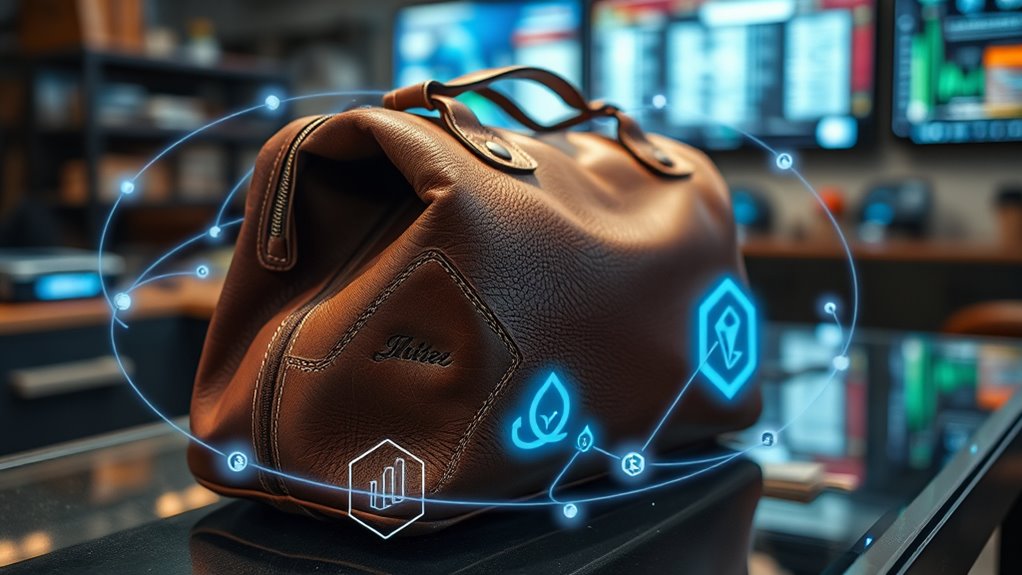

As someone interested in sustainable luxury, you might wonder how brands guarantee the authenticity and ethical sourcing of upcycled products. Blockchain technology offers a practical solution by tracking each step in a product’s second life, from raw material to finished item. This transparency not only builds trust but also differentiates brands in a competitive market. But how exactly does this digital ledger make a real difference in the world of luxury upcycling?
Key Takeaways
- Blockchain provides a transparent ledger that verifies the origin and upcycling process of luxury goods.
- It tracks each item’s lifecycle, from initial material to upcycled final product, ensuring authenticity.
- Blockchain records enable consumers to see the second-life value and sustainability credentials of luxury items.
- It enhances trust by authenticating that upcycled products meet ethical and environmental standards.
- Brands use blockchain to differentiate offerings and communicate the eco-conscious journey of their upcycled luxury goods.
Have you ever wondered how luxury brands are transforming waste into high-end fashion? The rising trend of upcycling luxury goods has gained momentum because it combines sustainability with innovative design. As a consumer, you’re increasingly drawn to products that not only stand out for their exclusivity but also align with your values of environmental responsibility. This shift pushes brands to incorporate upcycled materials into their collections, turning discarded textiles into stylish, high-quality pieces. The market for these goods is expanding rapidly, valued at around USD 9.8 billion in 2024, and expected to reach nearly USD 16.7 billion by 2032. This growth reflects a broader consumer preference for eco-conscious brands and a move toward circular economy practices. The sustainable fashion industry is projected to continue growing as consumers prioritize eco-friendly options.
Luxury brands are embracing upcycling as a way to reduce textile waste and cut down on the need for virgin materials. By transforming discarded fabrics into high-end fashion, they extend the lifecycle of materials and minimize environmental impact. You’ll notice that many brands now collaborate with artisans or use creative design strategies to elevate waste into exclusive products. For instance, Tapestry, the parent company of Coach, has successfully upcycled post-consumer denim into luxury items, showcasing how waste can become a premium product. This not only boosts their brand image but also fosters greater loyalty among environmentally aware consumers like you.
Luxury brands upcycle discarded fabrics into exclusive products, enhancing brand image and fostering loyalty among eco-conscious consumers.
The process involves transforming discarded materials through innovative design, adding value and uniqueness to each item. This approach challenges traditional luxury conventions by emphasizing creativity and sustainability over mass production. It’s about more than just eco-friendliness; it’s about offering you products that stand out due to their originality and craftsmanship. Upcycling considerably reduces textile waste, contributing to a circular fashion economy where the focus is on reuse and sustainability. Brands are increasingly adopting blockchain technology to enhance transparency and traceability in their supply chains, ensuring authenticity and ethical practices. Luxury brands see this as an opportunity to access new markets and increase margins by offering products that appeal to consumers seeking both style and purpose.

Lamyba Sel De Mer Canvas HandBag Upcycled Canvas Vegan Leather Tote Bag,Small White
Small Canvas Purse:This vintage shoulder bag is stand out from the crowd for the retro hints and a…
As an affiliate, we earn on qualifying purchases.
As an affiliate, we earn on qualifying purchases.
Conclusion
By using blockchain to track upcycled luxury goods, you can confidently verify their authenticity and sustainability. Did you know that the upcycling market is projected to grow by over 20% annually? This technology not only boosts transparency but also helps you make eco-conscious choices. As more brands adopt blockchain, you’ll find it easier to invest in unique, environmentally friendly luxury items with trust and confidence, truly making a difference in both style and sustainability.

Vintage 12.56 Ctw Cushion Tanzanite Pendant, Diamond Tester Passed Moissanite Halo, 14K White Gold Over, Royal Statement Necklace for Women, Ethically Sourced Luxury Jewelry
SPECTACULAR 12.00 CTW CUSHION CUT: This centerpiece features a massive 12.00-carat cushion-cut Tanzanite. Its soft, rounded corners and…
As an affiliate, we earn on qualifying purchases.
As an affiliate, we earn on qualifying purchases.

Crypto Cryptocurrency Gift Blockchain | DECENTRALIZE T-Shirt
Cryptocurrency Blockchain design. Perfect gift for all bitcoin enthusiasts, investors, miners, btc lovers, traders, and anyone interested in…
As an affiliate, we earn on qualifying purchases.
As an affiliate, we earn on qualifying purchases.

Sustainable Fashion: Responsible Consumption, Design, Fabrics, and Materials
As an affiliate, we earn on qualifying purchases.
As an affiliate, we earn on qualifying purchases.