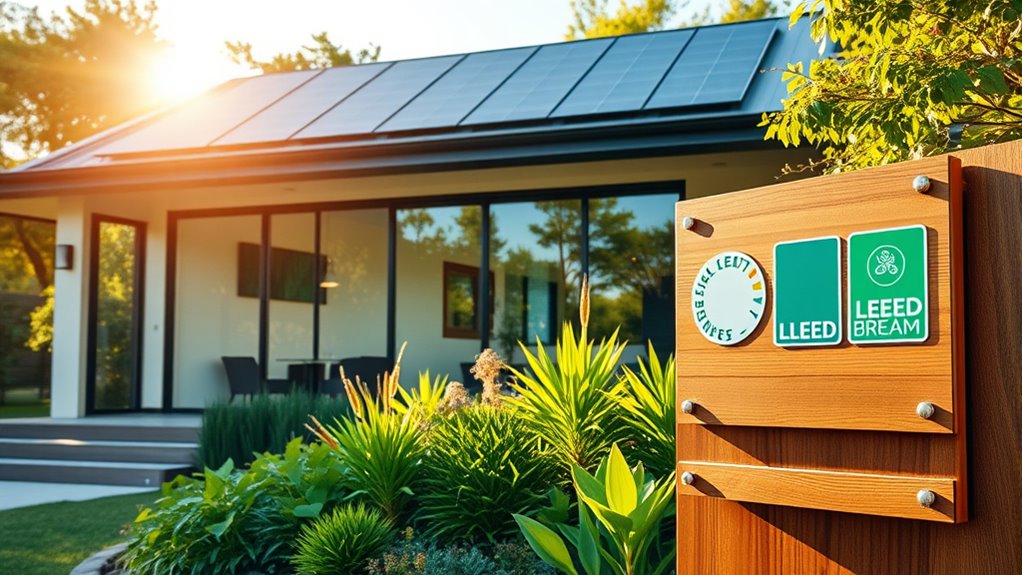

Green certifications like LEED and BREEAM are key to upgrading your luxury home sustainably. They guide you in making eco-friendly choices that enhance your property’s value and contribute to a healthier environment. LEED focuses on energy efficiency and indoor quality, while BREEAM emphasizes broader sustainability, like landscaping. Both certifications promote the use of recycled materials and ongoing green practices. Discover how adopting these certifications can profoundly impact your home’s appeal and sustainability.

Get business pricing on tech for your team
- Business-only prices and quantity discounts
- Tax-exempt purchasing
- Multiple users, one account, clear invoices
Key Takeaways
- LEED certification focuses on energy efficiency, water conservation, and indoor air quality, promoting luxurious yet sustainable living spaces.
- BREEAM emphasizes a holistic approach, incorporating sustainable landscaping and biodiversity to enhance property appeal and environmental health.
- Both certifications encourage the use of recycled or rapidly renewable materials, increasing aesthetic value while supporting eco-friendly construction practices.
- Ongoing maintenance and regular checks for energy efficiency are crucial for sustaining green certifications and maximizing long-term property value.
- Achieving LEED or BREEAM certification demonstrates a commitment to sustainability, enhancing luxury properties’ marketability and environmental impact.
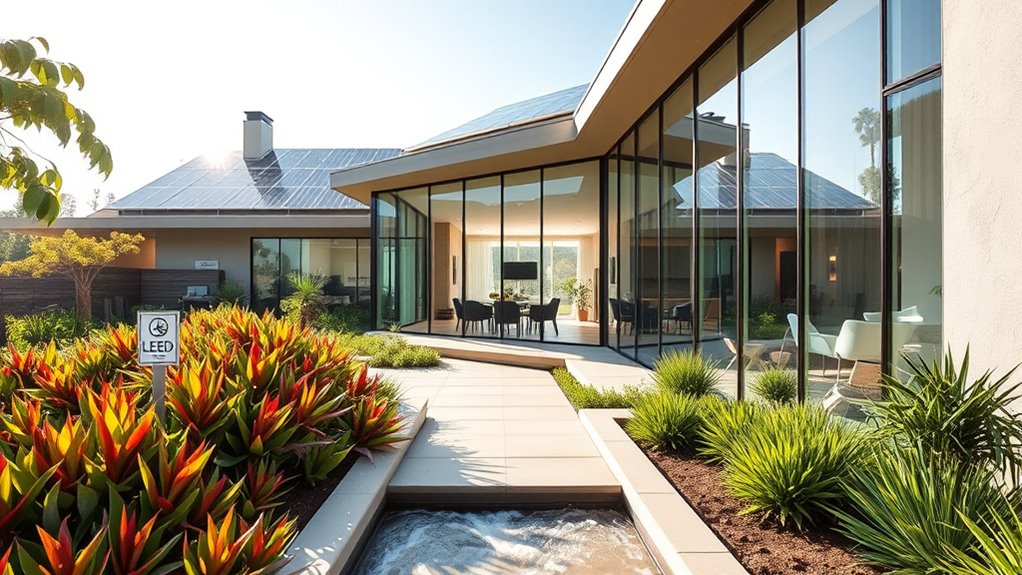
As you consider making your home more environmentally friendly, understanding green certifications can be a game-changer. Green certifications like LEED (Leadership in Energy and Environmental Design) and BREEAM (Building Research Establishment Environmental Assessment Method) can help you navigate the complex landscape of eco-friendly upgrades. These certifications not only enhance your home’s value but also contribute to a healthier planet.
LEED focuses on various aspects of sustainable building, including energy efficiency, water conservation, and indoor environmental quality. When you aim for LEED certification, you’re encouraged to incorporate renewable energy sources, such as solar panels or wind turbines. These features not only reduce your carbon footprint but can also considerably lower your utility bills. Imagine harnessing the power of the sun to energize your home while feeling good about your contribution to the environment.
BREEAM, while similar, has a slightly different approach. It emphasizes a broader range of sustainability factors, including sustainable landscaping. Incorporating native plants into your yard, for example, can help create a thriving ecosystem while minimizing water use. When you choose sustainable landscaping, you’re not just beautifying your property; you’re also promoting biodiversity and reducing the need for chemical fertilizers and pesticides. This thoughtful approach to landscaping can make your home more appealing and environmentally friendly.
Both certifications encourage the use of sustainable materials in construction and renovations. Opting for recycled or rapidly renewable materials when building or refurbishing your home not only boosts your chances of certification but also showcases your commitment to sustainability. You’ll find that using reclaimed wood or bamboo flooring can add a unique touch to your home, all while being eco-conscious.
Incorporating green practices doesn’t stop at the construction phase. You’ll want to maintain your home with sustainability in mind. Regularly checking for leaks and ensuring your heating and cooling systems are energy-efficient can go a long way. This ongoing commitment to sustainability can help you achieve a higher score in LEED or BREEAM assessments.
Ultimately, understanding and pursuing green certifications can transform your luxury property into an eco-friendly haven. You’ll not only enhance your home’s value but also play a crucial role in promoting environmental sustainability. By making these informed choices, you’re contributing to a greener future for everyone. Additionally, networking with locals who have experience in sustainable living can provide valuable insights and resources for your eco-friendly journey.
As an affiliate, we earn on qualifying purchases.
Frequently Asked Questions
How Long Does the Certification Process Typically Take?
The certification process typically takes around three to six months, depending on various factors. You’ll need to follow specific certification steps, including documentation, site assessments, and reviews. A timeline overview helps you understand each phase, from initial application to final approval. If you’re organized and proactive, you can expedite the process, ensuring your project meets all requirements efficiently while achieving the certification you’re aiming for.
What Are the Costs Associated With Obtaining These Certifications?
The average cost for obtaining LEED certification can range from $2,000 to $15,000, depending on the property’s size and complexity. You’ll want a detailed cost analysis and expense breakdown to understand the financial commitment. Consider additional fees for consultants, documentation, and potential upgrades to meet requirements. Investing in these certifications can pay off, as properties with green certifications often see higher market values and lower operating costs long-term.
Are There Tax Benefits for Certified Luxury Properties?
Yes, there are tax benefits for certified luxury properties. You can take advantage of various tax incentives that often accompany green certifications like LEED and BREEAM. These financial benefits can include property tax reductions, credits for energy-efficient upgrades, and even potential federal or state tax breaks. By investing in a certified property, you’re not only enhancing its value but also enjoying significant savings on your taxes.
Can Existing Homes Be Retrofitted for Certification?
Yes, existing homes can be retrofitted for certification, but you’ll face some retrofit challenges. Evaluating the costs versus benefits is essential; you’ll want to conduct a cost benefit analysis to determine if the upgrades are worth it. While retrofitting can be expensive initially, it often leads to long-term savings on energy bills and increases your property’s value. Weigh your options carefully to make informed decisions that align with your goals.
How Do Certifications Affect Property Resale Value?
Certifications can considerably boost your property’s resale value. Think of it like a vintage car; the more recognized and well-maintained it is, the higher the bids you’ll attract. Buyers often view certified homes as energy-efficient and sustainable, enhancing market perception. This positive outlook can lead to quicker sales and potentially higher offers. So, investing in certifications can pay off handsomely when it’s time to sell your home.
Conclusion
Incorporating green certifications like LEED and BREEAM into luxury properties not only enhances their appeal but also boosts their value. Just like a diamond shines brighter with a certification of authenticity, homes with these eco-friendly credentials stand out in the market. By embracing sustainable practices, you’re not only investing in a beautiful home but also contributing to a healthier planet. So, consider these certifications as essential features in your next luxury property venture.
Evergreen bestsellers Picks
bestsellers
As an affiliate, we earn on qualifying purchases.