A digital key can open a world where style becomes infinite, but you might wonder how influencers are turning virtual assets into powerful branding tools. As they mint limited‑edition wearables in the metaverse, their influence extends beyond traditional fashion boundaries. This shift raises questions about authenticity, scarcity, and the future of personal expression online—topics that could redefine what it means to wear your identity in a digital age.
Key Takeaways
- Fashion influencers collaborate with digital fashion brands to create exclusive, limited-edition wearables for metaverse avatars.
- They leverage blockchain and NFTs to verify ownership and authenticity of their virtual collections.
- Minting limited-edition wearables boosts influencers’ visibility and personal brand within digital communities.
- These exclusive digital items often generate buzz and demand through social media promotion and virtual events.
- Influencers use limited-edition wearables to differentiate themselves and establish authority in virtual fashion spaces.
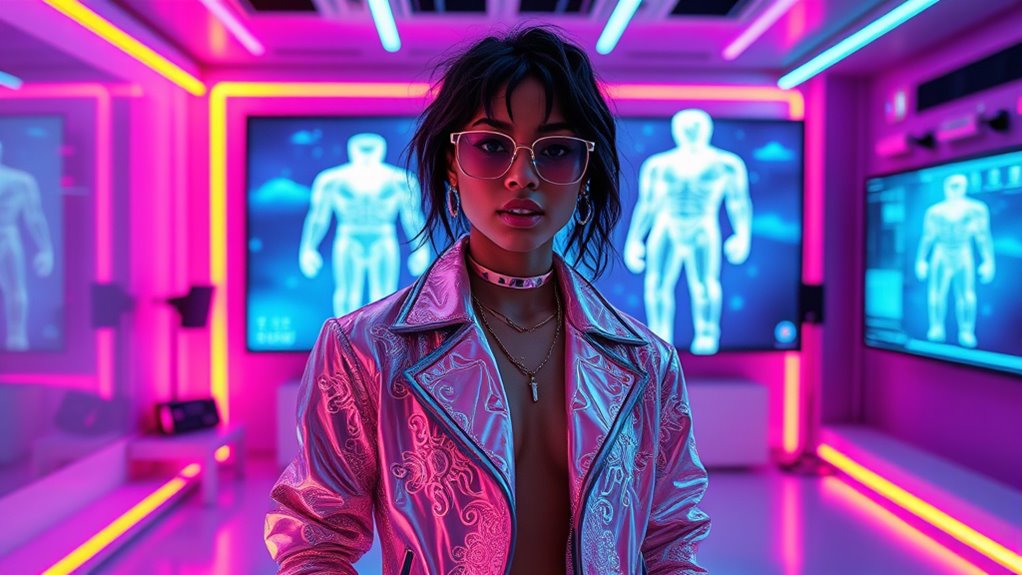
As the metaverse continues its rapid expansion, fashion influencers are increasingly minting limited-edition wearables that blend digital innovation with personal branding. This trend is fueled by the booming global metaverse fashion market, which is projected to grow by nearly USD 20 billion between 2025 and 2029, at an impressive CAGR of almost 40%. By 2026, the metaverse fashion space is expected to reach a market value of over USD 6.6 billion, driven largely by traditional and luxury brands venturing into digital environments. These brands leverage the metaverse to create immersive shopping experiences, collaborate on exclusive NFT drops, and reach younger, tech-savvy audiences eager to express themselves through virtual fashion.
In this landscape, virtual wearables have become a powerful tool for influencers seeking to enhance their personal brands. Among Gen Z users, 70% customize their avatars with digital wearables, emphasizing the importance of virtual fashion as a form of self-expression. Popular trends include cargo pants, crop tops, corsets, neon puffer jackets, mesh bodysuits, and oversized streetwear hoodies—each reflecting a mix of street style, vintage influences, and futuristic aesthetics. These items are not only fashionable but also serve as digital statements, allowing influencers to stand out in crowded virtual spaces and showcase their unique style.
Virtual wearables empower influencers to express their unique style and stand out in vibrant digital worlds.
Fashion brands like Adidas, Nike, and Meta are heavily investing in metaverse platforms to launch limited-edition collections and exclusive NFT drops. These collaborations generate buzz and exclusivity, encouraging fans and collectors to purchase digital garments that can be worn across various virtual environments. Blockchain technology plays an essential role here, ensuring that each wearable has a verifiable, unique ownership record. This creates a secondary market where influencers and consumers can buy, sell, or trade these digital assets, fostering a new economy of virtual collectibles. The ability to resell NFTs supports scarcity and drives demand for rare, limited-edition pieces.
Innovative digital fashion brands such as The Fabricant, RTFKT, DRESSX, Ecopixelwear, and Auroboros are pushing the boundaries of what’s possible in the digital domain. They develop avatar-first, digital-only fashion that eliminates physical waste, integrates storytelling, and combines science and art. These brands use NFTs to create limited-edition wearables that are both collectible and wearable across multiple metaverse platforms. As the market continues to grow, influencers mint more exclusive items, fueling a cycle of innovation and desirability. Additionally, decluttering strategies can help influencers manage their digital wardrobes more efficiently, ensuring their virtual collections stay curated and meaningful. The combination of blockchain, NFTs, and virtual wearables is transforming how fashion influencers build their digital identities, making personal branding more dynamic, exclusive, and interactive than ever before.
The Content Creator’s AI Toolkit: Smart Tools to Help You Create Faster, Post Consistently, and Grow Your Audience (AI Toolkits - Smarter Living Starts Here)
As an affiliate, we earn on qualifying purchases.
Conclusion
So, next time you see a fashion influencer flaunting their exclusive virtual hoodie, remember—they’re not just setting trends, but actually selling air. As they mint limited-edition wearables in the metaverse, you might realize that the real luxury isn’t the digital item itself, but the scarcity that makes it seem priceless. In this digital runway, it’s ironic how you’re paying for pixels—yet, somehow, it feels more real than ever.

AI Tools for Beginners 2026: A Simple Guide to Productivity, Content Creation, Automation and Online Income
As an affiliate, we earn on qualifying purchases.

THE AI ARCHITECT'S COMPLETE REFERENCE MANUAL VOLUME V AI TOOLS & TECHNOLOGY REFERENCE: The Complete Guide to Every AI Tool for Content Creation
As an affiliate, we earn on qualifying purchases.

500 AI Video Generation Prompts: Create Viral Videos for YouTube, Instagram, Ads & Content Creation Using AI Tools Like Runway, Pika, Sora & More (AI Creator Hub Book 1)
As an affiliate, we earn on qualifying purchases.