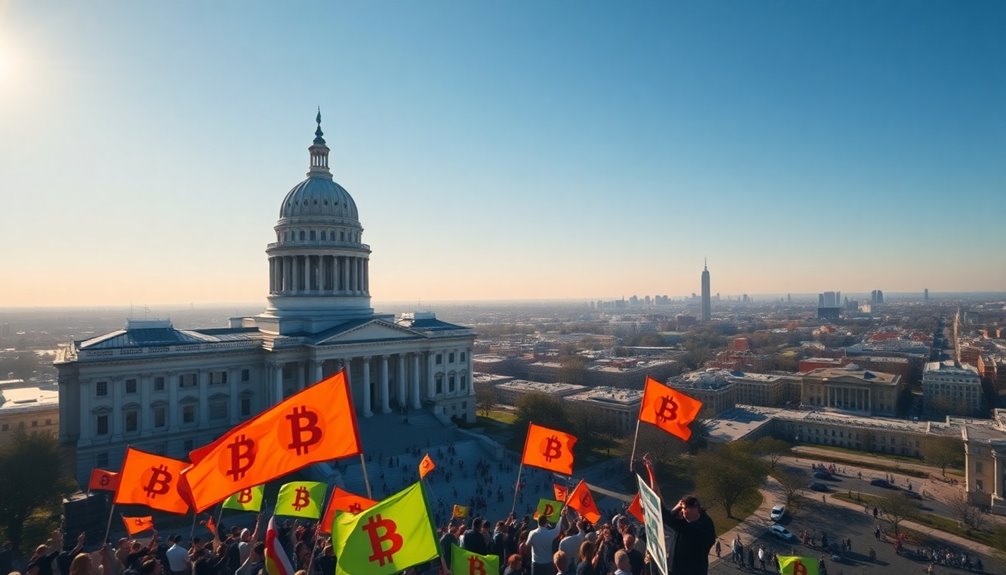

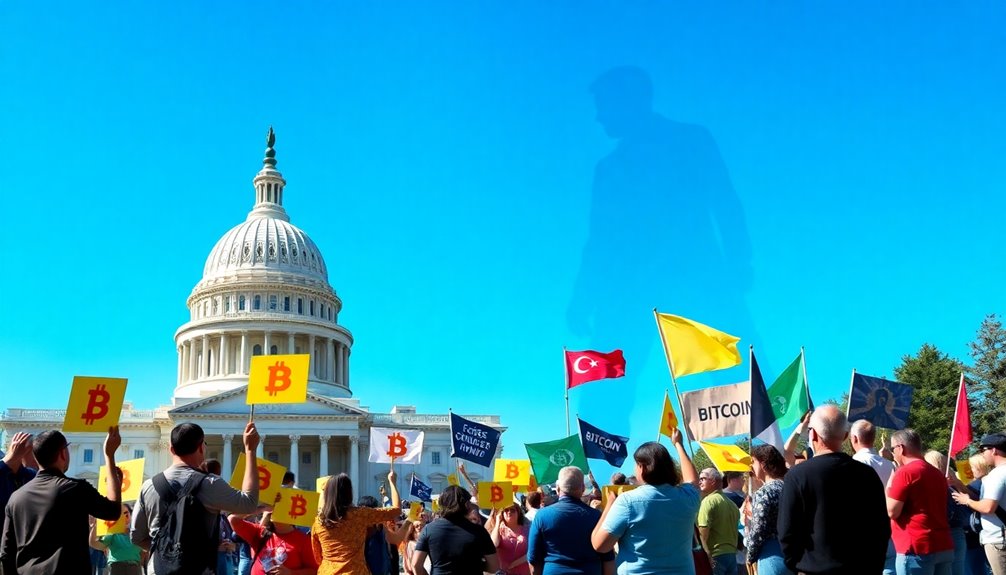
As states across the U.S. explore the potential of Bitcoin, you're likely to see a surge in legislation aimed at creating Bitcoin reserves and recognizing it as legal tender. Twelve states—Alabama, Arizona, Florida, Massachusetts, New Hampshire, North Dakota, Ohio, Oklahoma, Pennsylvania, Texas, Utah, and Wyoming—have proposed laws to establish Bitcoin reserves. The Satoshi Action Fund has been pivotal in this movement, introducing model legislation in states like Pennsylvania and Texas.

Get business pricing on tech for your team
- Business-only prices and quantity discounts
- Tax-exempt purchasing
- Multiple users, one account, clear invoices
However, experts caution that large investments in Bitcoin carry significant risks due to its notorious volatility. If states invest heavily in Bitcoin, they could face serious financial repercussions if market conditions force them to sell at a loss. This risk makes some policymakers advocate for a more cautious approach, suggesting that smaller investments could help familiarize states with Bitcoin's technology without exposing them to undue risk. This strategy allows states to learn while minimizing potential setbacks.
In Arizona, legislation like SB 1341 defines Bitcoin as legal tender, paving the way for other states to consider similar measures. Several states are contemplating recognizing Bitcoin as a legitimate medium of exchange, which could have profound implications for tax regimes. If Bitcoin gains legal tender status, it could alter how financial institutions operate regarding digital assets, possibly treating them more like traditional financial entities for state taxes.
Moreover, Arizona's SB 1127 allows state agencies to accept cryptocurrency for various payments. Bills such as SCR 1013 and SB 1493 propose that state agencies can pay employees in virtual currency if requested. Some states are even exploring the use of cryptocurrency for tax payments and other financial obligations like fines. These initiatives reflect a growing acceptance of cryptocurrency at the state level, supporting broader adoption.
Notably, the recent Executive Order prohibits Central Bank Digital Currencies (CBDC) in the US, which may further encourage states to explore their own digital asset strategies. Lobbying efforts by groups like the Blockchain Association and the DeFi Education Fund have also intensified, pushing for favorable cryptocurrency legislation. While federal bills, like Lummis', propose national oversight of Bitcoin reserves, state-level advocacy is rapidly creating a diverse regulatory environment that Washington seems to lag behind.
As states forge ahead with their own regulatory frameworks, they're not just outpacing federal initiatives; they're shaping the future of Bitcoin adoption in the U.S. Your focus should be on these state-level developments, as they could significantly impact the broader landscape of digital currency in America.
As an affiliate, we earn on qualifying purchases.
Fall Picks
fall essentials
As an affiliate, we earn on qualifying purchases.