

📊 Full opportunity report: The Switch: You Never Owned the AI You Depend On on ThorstenMeyerAI.com — validation score, market gap, and execution plan.
TL;DR
In 2026, both government orders and corporate decisions have shown that access to AI models via APIs can be cut off instantly. This highlights the dependency on external providers and raises questions about ownership and control.
On June 12, 2026, the U.S. government issued an export-control directive that forced Anthropic to disable its latest AI models, Fable 5 and Mythos 5, worldwide within approximately ninety minutes, citing national security concerns. Simultaneously, OpenAI retired GPT-4o and several other models from ChatGPT with about two weeks’ notice, with API shutdowns following shortly after. These events confirm that access to AI models can be revoked instantly by governments or companies, exposing a critical vulnerability for users and developers dependent on external APIs.
The June 12 directive from the U.S. government required Anthropic to disable Fable 5 and Mythos 5 models globally, affecting all users regardless of location or nationality. The move was made without detailed explanation, leaving the company no choice but to shut down the models entirely. This marked a rare instance of a government directly pulling the plug on deployed AI models via export controls, which are traditionally designed for physical goods but now applied to software over APIs.
Earlier in February 2026, OpenAI deprecated GPT-4o and other models used in ChatGPT, citing economic reasons such as the cost of maintaining legacy hardware. The company announced API shutdowns scheduled over two weeks, ultimately removing access to these models and returning errors to users. This process was driven by product lifecycle management rather than security concerns, but it still exemplifies how access can be revoked with little notice or recourse.
Both incidents reveal that, despite the widespread adoption of AI through APIs, users do not own or control the models they depend on. Access can be cut off instantly by a government order or a corporate decision, highlighting a dependency on external infrastructure and control points that can be manipulated at will.
The Switch: You Never Owned It
In 2026 a government turned off a frontier model worldwide in ~90 minutes — and a company retired a beloved one with ~2 weeks’ notice. You don’t own the model you build on. You access it. Access can be revoked.
Access is the only chokepoint that flips in an afternoon — and the version that hits you won’t be Washington, it’ll be a deprecation. Open weights you host can’t be deprecated, geofenced, repriced, or revoked. Short of that: route through a provider-agnostic gateway, keep a tested fallback, and treat every model string as a dependency that will be pulled.
Implications of Instant AI Access Disruptions
The recent events underscore a fundamental vulnerability: reliance on external AI APIs means users and organizations do not own the models they use. Governments can impose export controls or security bans that disable models globally, while companies can deprecate or reprice models, effectively turning off access without warning. This dependency raises critical questions about AI ownership, sovereignty, and resilience, especially as AI becomes integral to security, finance, and critical infrastructure.
For businesses and developers, these incidents highlight the importance of diversifying AI sources, maintaining local models, or developing fallback strategies. For policymakers, it emphasizes the need to consider regulations that address control and ownership of AI models, not just physical hardware or data. Overall, the ability to switch off models instantly reveals a fragile point in the AI ecosystem that could have widespread consequences if not addressed.

Tesla Apple Watch App: The Essential Guide to Unlocking, Monitoring Your Battery, and More: From Setup to Full Control — What Every Owner Needs to Know (AI, Gadget and Space Science Tech Updates)
As an affiliate, we earn on qualifying purchases.
As an affiliate, we earn on qualifying purchases.
Recent Trends in AI Model Control and Deprecation
Prior to 2026, AI models were primarily accessed through cloud APIs provided by a handful of major labs like OpenAI and Anthropic. These models were seen as a democratizing force, enabling rapid deployment without the need for extensive infrastructure. However, the 2026 events demonstrate a shift: governments are exercising control through export restrictions, and companies are managing lifecycle and pricing by retiring older models. This evolution reflects growing concerns over security, economic efficiency, and market consolidation, which are now translating into direct control over AI access.
The Anthropic episode marked a precedent where a government used export controls to disable models globally, setting a new standard for how AI can be pulled offline instantly for reasons of national security. Meanwhile, corporate deprecation practices, once seen as routine, are now recognized as a form of control that can impact users unexpectedly. Both developments emphasize that AI models are increasingly subject to external control points, rather than being owned or operated directly by end users.
“Applying export controls designed for physical goods to software over APIs is baffling and highlights the fragility of relying on external AI models.”
— Former U.S. administration AI adviser

Nimo AI NAS, Agentic Computer Mini PC and AI Server, AMD Ryzen 7 PRO 8845HS(up to 5.1 GHZ, beat i5-1235u) up to 132TB ZFS Hybrid Storage, Dual 10GbE for 24hr AI Agent
[Local AI Inference & 70B Model Ready] Equipped with the AMD Ryzen 7 PRO 8845HS processor, NEXUS is…
As an affiliate, we earn on qualifying purchases.
As an affiliate, we earn on qualifying purchases.
Unresolved Questions About AI Model Control
It remains unclear how widespread the practice of government-imposed model shutdowns will become, or whether future regulations will explicitly target AI access points. The long-term implications of these control points on innovation, competition, and security are still developing. Additionally, the extent to which organizations can mitigate these risks by developing local or open-source models is uncertain, as is the potential for new legal or technical safeguards to emerge.
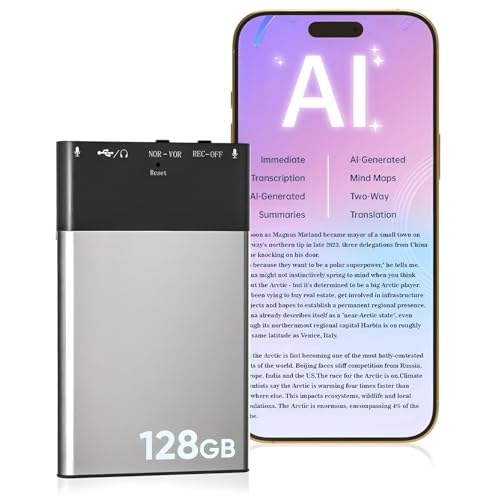
DGFAN 128GB AI Voice Recorder, Note Voice Recorder – Transcribe & Summarize, AI Noise Cancellation Technology, Supports 118 Languages, APP Control Audio Recorder for Lectures, Meetings, Calls
【AI-Driven Intelligent Recorder】 Our AI Voice Recorder is a sophisticated AI-driven device engineered for meetings, conversations, and daily…
As an affiliate, we earn on qualifying purchases.
As an affiliate, we earn on qualifying purchases.
Future Regulatory and Technical Responses to AI Control Risks
Moving forward, expect increased discussions around AI sovereignty, ownership rights, and control mechanisms. Governments may introduce new regulations to limit or standardize control over AI models, while industry players might accelerate efforts to develop local or open-source alternatives to reduce dependency. Technological innovations, such as decentralized AI or more resilient infrastructure, could also emerge as strategies to mitigate the risks associated with instant access revocation. Monitoring these developments will be crucial for understanding how AI ecosystems evolve under these pressures.
private AI hosting solutions
As an affiliate, we earn on qualifying purchases.
As an affiliate, we earn on qualifying purchases.
Key Questions
Can users prevent their AI models from being revoked?
Currently, most users rely on external APIs, which are controlled by providers. Developing local or open-source models can reduce dependency, but for cloud-based APIs, control remains with the provider or regulator.
What legal protections exist against sudden AI shutdowns?
Legal protections are limited; most depend on contractual agreements. Regulation may evolve to address control and ownership issues but is still under discussion.
How can organizations prepare for sudden AI access loss?
Organizations can diversify AI sources, maintain local models, or develop contingency plans to ensure operational resilience if external access is revoked.
Will future regulations restrict government control over AI models?
This remains uncertain. Some policymakers advocate for safeguards, but current trends suggest increased government authority over AI access points.
Source: ThorstenMeyerAI.com