TL;DR

Get business pricing on tech for your team
- Business-only prices and quantity discounts
- Tax-exempt purchasing
- Multiple users, one account, clear invoices
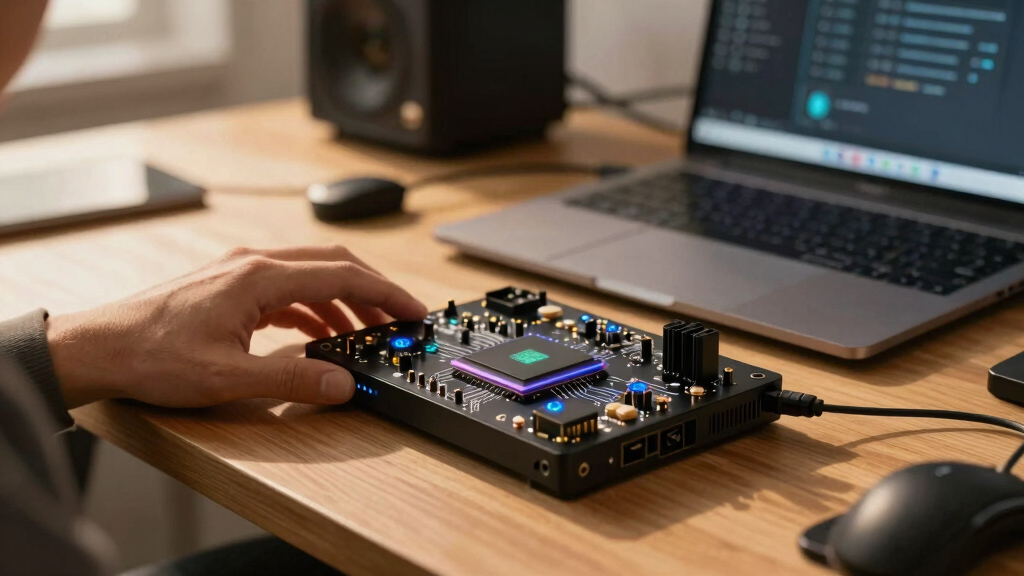
South Korea announced a $576 billion investment to develop advanced AI chips, involving Samsung and SK Hynix. This move aims to cement the country’s leadership in the global semiconductor industry amid rising competition.
South Korea has announced a $576 billion investment to develop artificial intelligence (AI) chips, with Samsung and SK Hynix as primary partners, aiming to cement the country’s leadership in AI chip production. The initiative underscores the country’s strategic push to dominate the rapidly growing AI hardware market amid intense international competition.
The Korean government revealed plans to allocate the funds over the next decade to boost domestic AI-chip manufacturing capabilities. Samsung and SK Hynix, two of the world’s largest memory chip producers, will spearhead the development of cutting-edge AI-specific semiconductors, with the government providing significant financial and policy support.
Officials from the Ministry of Trade, Industry, and Energy confirmed that the initiative is part of Korea’s broader strategy to reduce reliance on foreign chip supply chains and to become a global hub for AI hardware innovation. The investment aims to foster technological breakthroughs, create thousands of new jobs, and enhance national security by strengthening critical infrastructure.
Both Samsung and SK Hynix have announced plans to expand their R&D facilities and production lines dedicated to AI chips, which are expected to be vital for applications ranging from autonomous vehicles to data centers. The government expects this effort to position Korea as a dominant force in the next-generation semiconductor industry.
Implications for Korea’s Semiconductor Leadership
This initiative signals Korea’s intent to maintain and expand its influence in the global semiconductor market, especially as competition with China, the U.S., and other nations intensifies. By investing heavily in AI-specific chips, Korea aims to secure technological independence, attract foreign investment, and set industry standards. The move could reshape global supply chains and accelerate AI adoption across multiple sectors, making Korea a central player in future digital infrastructure.
As an affiliate, we earn on qualifying purchases.
Korea’s Longstanding Semiconductor Ambitions and Global Competition
South Korea has historically been a major player in the global semiconductor industry, with Samsung and SK Hynix ranking among the top memory chip producers worldwide. The country’s recent efforts reflect a strategic shift towards developing AI-specific chips, a segment expected to drive future growth in the industry.
The announcement comes amid rising tensions over semiconductor supply chains, with the U.S. and China investing heavily in their own chip industries. Korea’s move aligns with broader national policies to bolster technological sovereignty and economic resilience.
Previous government initiatives have focused on expanding memory chip manufacturing, but this new $576 billion plan emphasizes AI chips, which are crucial for emerging technologies such as autonomous systems, cloud computing, and 5G infrastructure.
“This investment marks a new chapter for Korea’s semiconductor industry, positioning us at the forefront of AI hardware innovation.”
— Kim Joo-hyun, Minister of Trade, Industry, and Energy
Details on Implementation and Timeline Remain Unclear
While the overall investment figure and strategic goals are confirmed, specific timelines for project milestones, funding allocations, and technological breakthroughs are still emerging. It is not yet clear how quickly Korea will ramp up production or how the collaboration between government and industry will unfold in practice.
Additionally, the global reaction from competitors and potential shifts in supply chain alliances remain uncertain, as the initiative is still in early planning stages.
Next Steps Include Detailed Planning and International Reactions
The Korean government is expected to release detailed implementation plans in the coming months, including specific investment phases and partnership agreements. Industry leaders like Samsung and SK Hynix will likely announce new R&D centers and production facilities soon.
International responses from the U.S., China, and other key players are anticipated, as they assess Korea’s move in the context of ongoing global semiconductor competition. Monitoring how these developments influence global supply chains and technological standards will be crucial.
Key Questions
What is the main goal of Korea’s $576 billion AI-chip plan?
The primary goal is to develop advanced AI-specific semiconductor chips to secure Korea’s leadership in the global industry and reduce reliance on foreign supply chains.
Which companies are involved in this initiative?
Samsung and SK Hynix are the central industry partners, with government support facilitating their expansion into AI chip development.
How does this compare to other countries’ investments?
This plan is one of the largest national investments in AI chips globally, surpassing many previous initiatives by other countries and reflecting Korea’s strategic emphasis on technological sovereignty.
When will we see tangible results from this investment?
Specific project milestones are still being finalized, but industry experts expect initial prototypes and pilot production lines within the next 2-3 years.
What are the risks associated with this initiative?
Potential risks include delays in R&D, technological challenges, and geopolitical tensions that could impact supply chains and international cooperation.
Source: google-trends
Fall Picks
fall essentials
As an affiliate, we earn on qualifying purchases.